
Loading, please wait...
LOT 0113
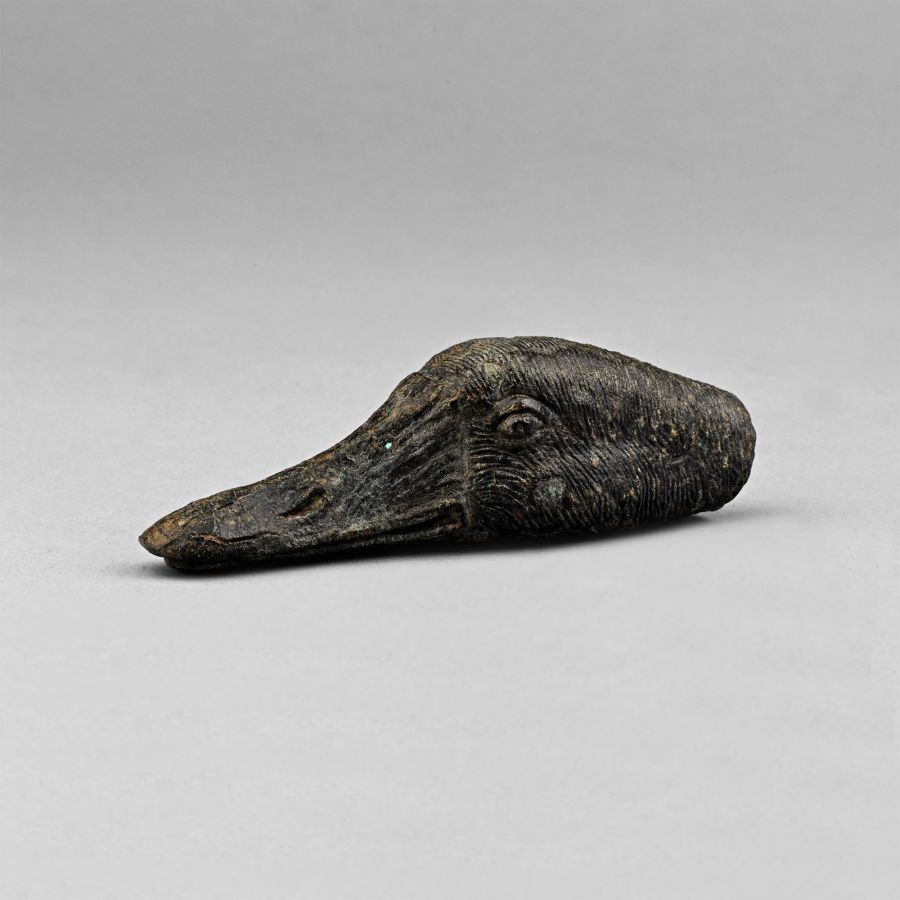
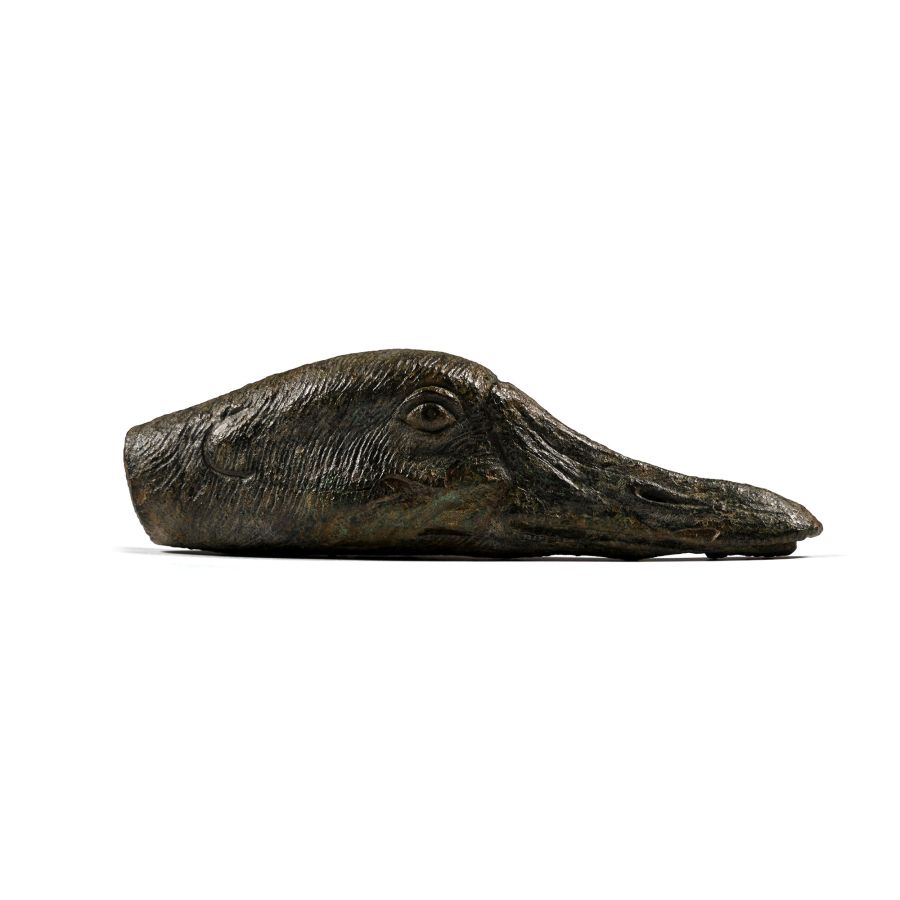
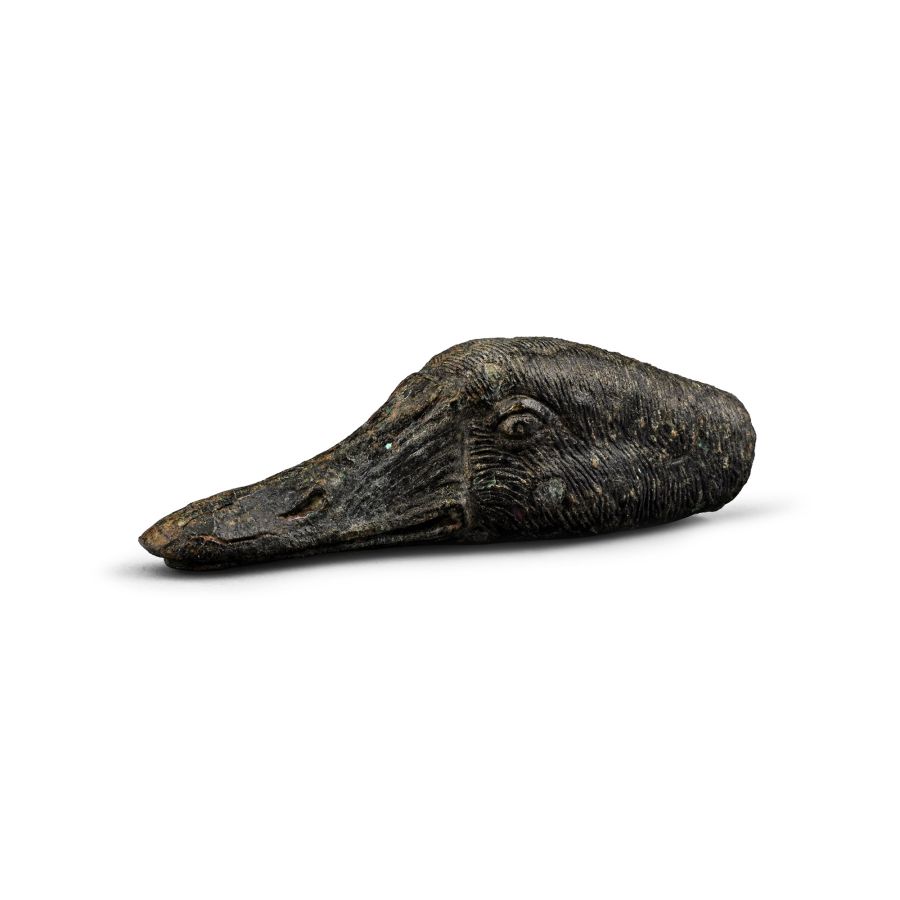
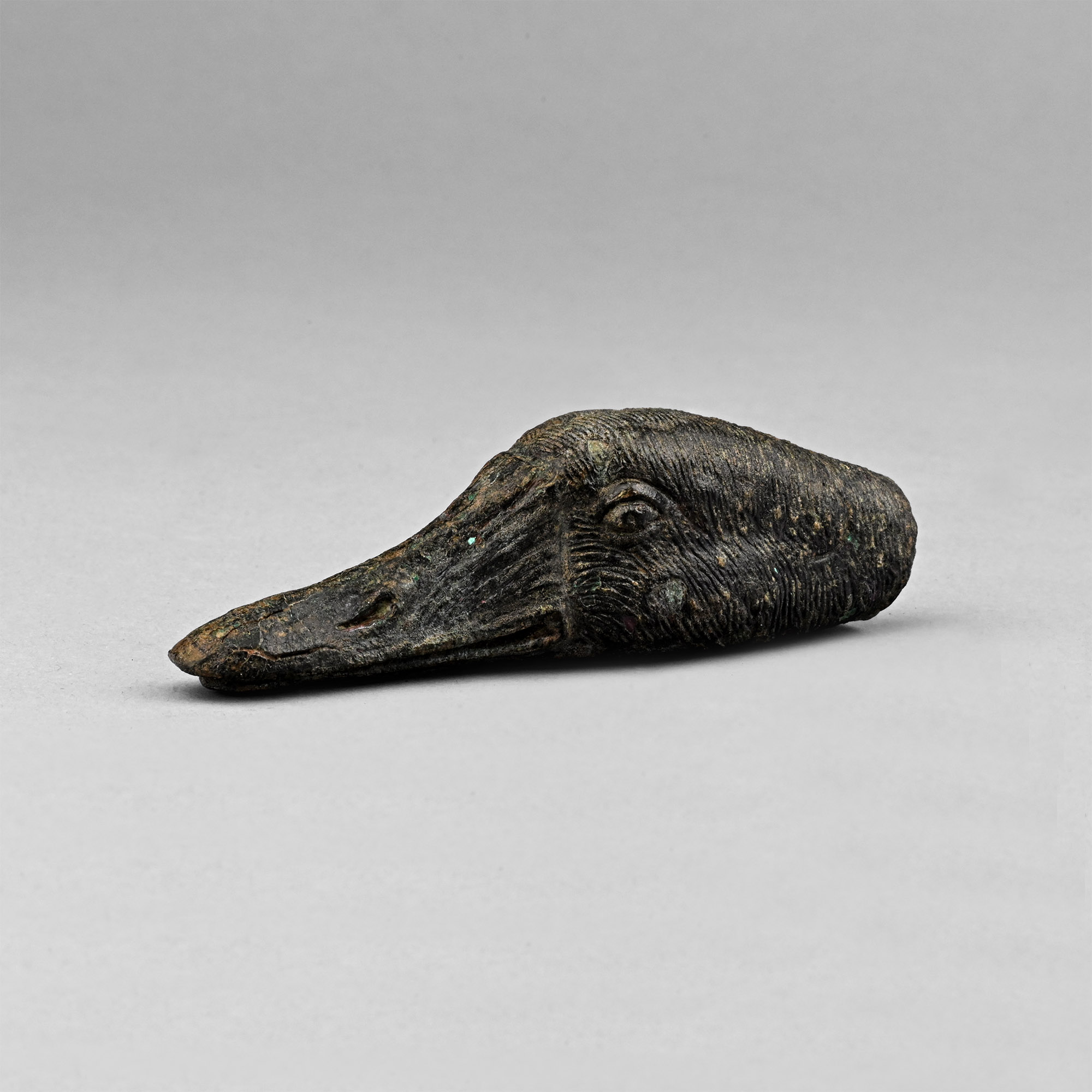
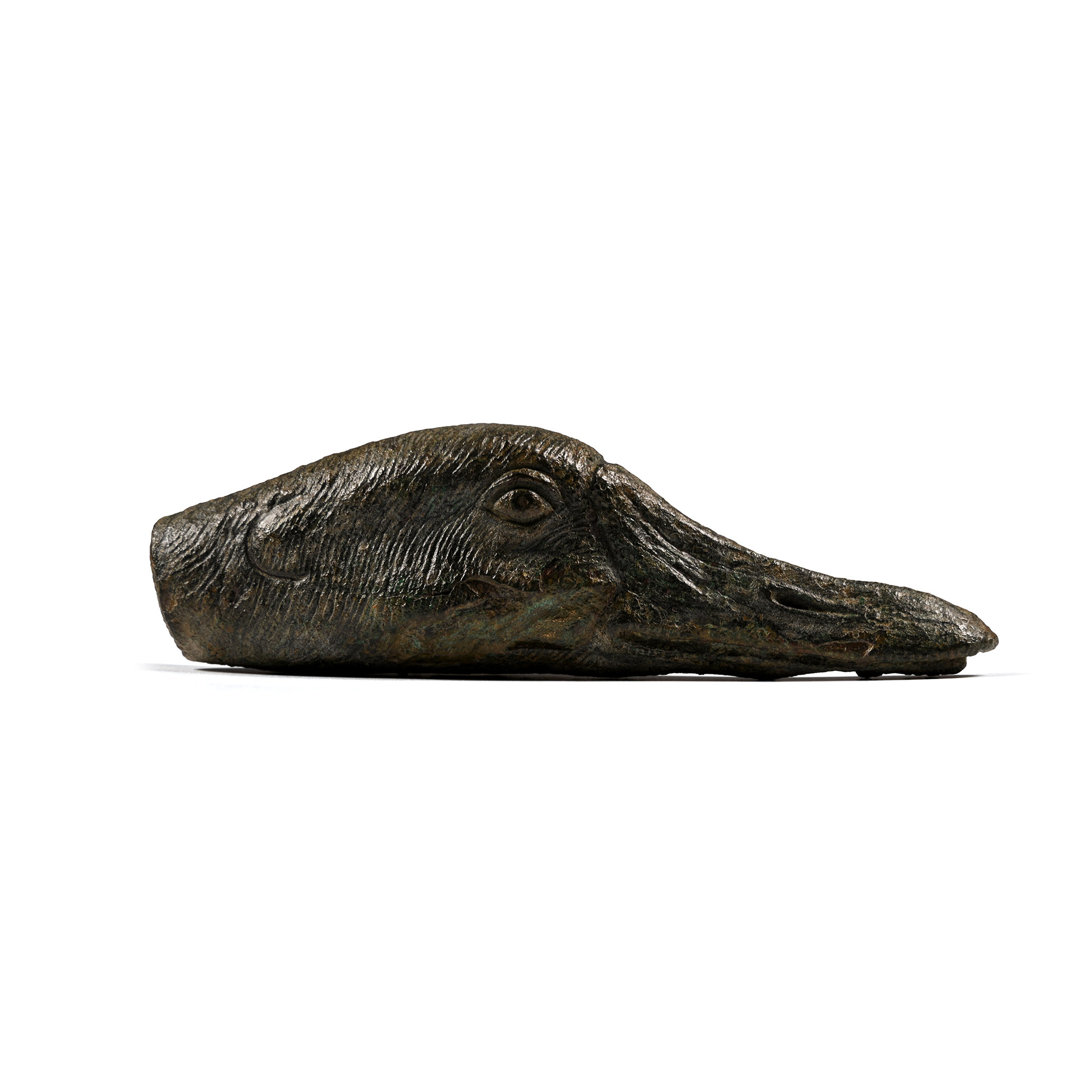
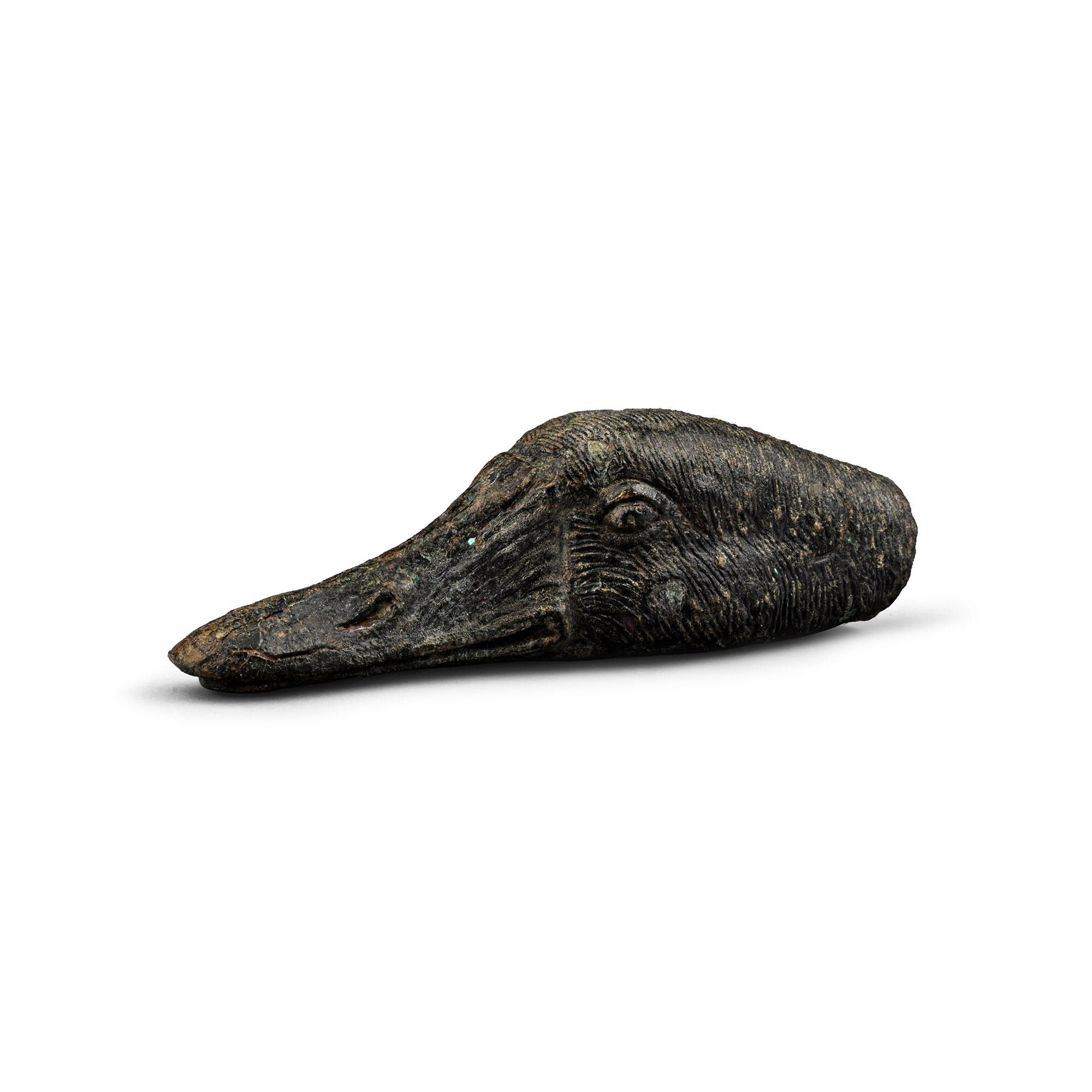
Greek Bronze Duck's Head
3RD-2ND CENTURY B.C.
4 in. (236 grams, 10.1 cm).
Modelled in the round with realistic features, textured plumage, rounded beak.
ProvenanceAcquired in the mid 1980s-1990s.
Private collection, Switzerland, thence by descent.
Private collection, since the late 1990s.
This lot has been checked against the Interpol Database of stolen works of art and is accompanied by a search certificate number no.12378-226677.
Cf. Richter, G.M.A., The Metropolitan Museum of Art, Greek, Etruscan and Roman Bronzes, New York, 1915, no.652, for similar head forming a finial.
CONDITIONTimeLine Auctions follows a vetting process to ensure the authenticity and legality of all items, reinforcing our commitment to integrity and responsible trading. Each antiquity, antique, and coin lot undergoes thorough examination by a vetting committee of at least ten external specialists, professional trade association members, scientists, and archaeologists: Our Vetting Process
AUCTIONS:
TimeLine is a leading auction house specialising in antiquities, ancient art, collectables, natural history, coins, medals, and books. Our auctions offer museums, collectors, historians, and enthusiasts the opportunity to acquire unique and historically significant pieces.
-
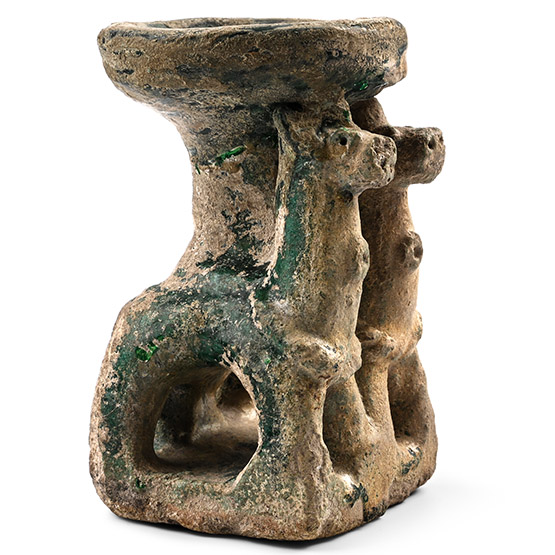
Parthian Faience Glazed Offering Chalice with Quadrupeds
Circa 3rd-1st century B.C.Sold for (Inc. bp): £546
Modelled in the round as two quadrupeds on a square base supporting a shallow bowl on a stem; the beasts with rope halter to the neck. 645 grams, 12.8 cm
Collected from 1979-1999. From the collection of the late Mr Shlomo Mousiaffee, London, UK. Acquired on the UK art market. Private collection, London, UK. -
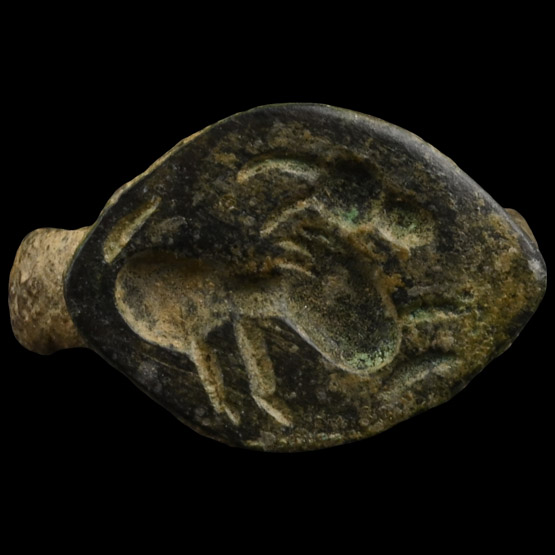
Greek Bronze Ring with Standing Antelope
3rd-2nd century B.C.Sold for (Inc. bp): £72
An interphalangial ring with a lentoid bezel with a stylised antelope facing right. 2.72 grams, 18.41 mm overall, 14.62 mm internal diameter (approximate size British G 1/2, USA 3 1/2, Europe 5.55, Japan 5)
Acquired on the UK and EU art market before 2000. From the private collection of a Surrey, UK, gentleman.
This category of rings shows a narrow band-like hoop and a slightly convex exterior surface, undecorated, retaining its width all around. The large bezel is in the form of a pointed oval. -
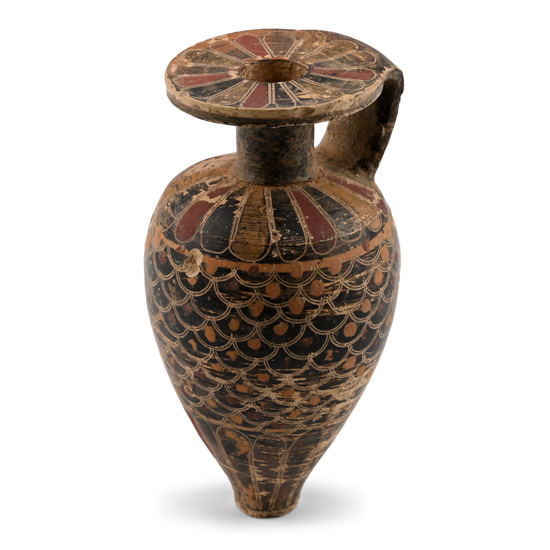
Proto-Corinthian Painted Terracotta Aryballos
7th century B.C.Estimate: £2,000 - 3,000 (‡+bp*)
Opening Bid: £1,000
Comprising a piriform body and a tubular neck with a wide rim, a strap handle to the rear, the rim with painted polychrome petals, the pattern repeating beneath the neck and on the base of the vessel; the body decorated with fishscale decoration. 79 grams, 10.5 cm
Swiss private collection, assembled in the 1960s and 1970s. Acquired by the present owner in 2004. Accompanied by an academic report by Dr Raffaele D’Amato. This lot has been checked against the Interpol Database of stolen works of art and is accompanied by search certificate number no.30017-246794.
The aryballoi were used to hold perfumed oil, an essential item for the wealthy middle classes of the time. Similar piriform vases are fairly common in Corinthian contexts. There is utmost precision in both the potting and the execution of the incised scale pattern of the present example. The fish-scale decoration was realised with the incision technique, by executing the scales neatly with their ends meeting.
