
Loading, please wait...
LOT 0540
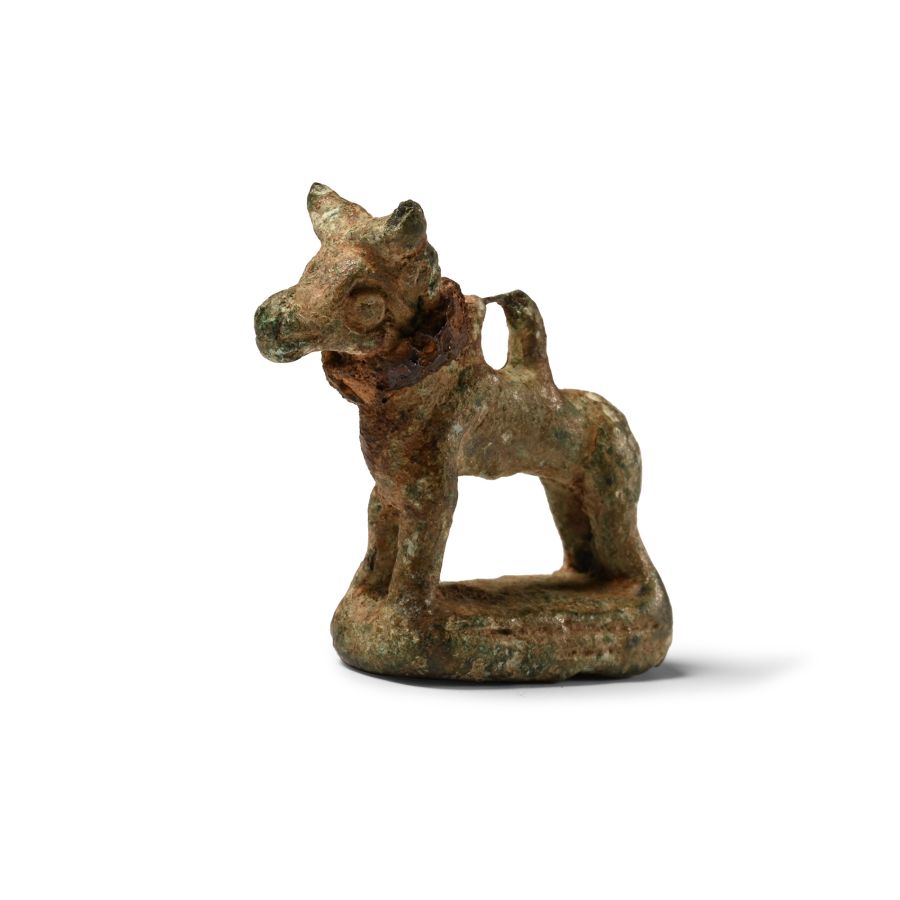
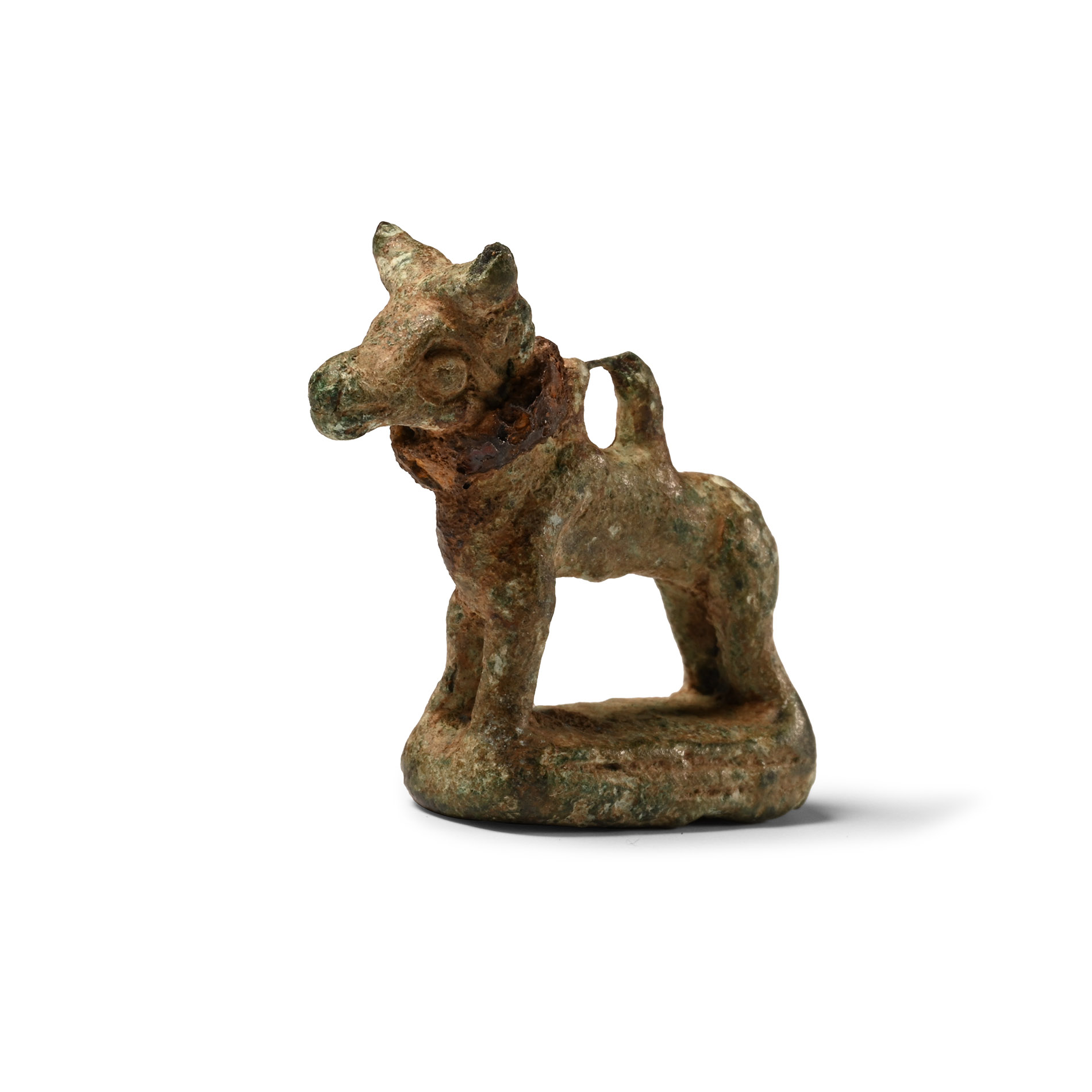
Greek Bronze Dog Seal with Animal Matrix
8TH-6TH CENTURY B.C.
1 in. (13.1 grams, 27 mm).
Comprising a quadruped modelled in the round, possibly a dog or a bull, with an iron collar around its neck and loop to the back; standing on a rectangular matrix with a stylised dog.
ProvenancePrivate collection formed in the 1990s.
UK art market.
Property of an Essex gentleman.
TimeLine Auctions follows a vetting process to ensure the authenticity and legality of all items, reinforcing our commitment to integrity and responsible trading. Each antiquity, antique, and coin lot undergoes thorough examination by a vetting committee of at least ten external specialists, professional trade association members, scientists, and archaeologists: Our Vetting Process
AUCTIONS:
TimeLine is a leading auction house specialising in antiquities, ancient art, collectables, natural history, coins, medals, and books. Our auctions offer museums, collectors, historians, and enthusiasts the opportunity to acquire unique and historically significant pieces.
-
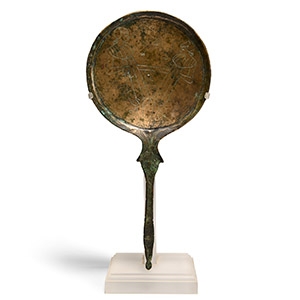
Etruscan Bronze Handled Mirror with Robed Female Dancers
Circa 5th century B.C.Sold for (Inc. bp): £2,080
Disc mirror with handle comprising: slightly dished mirror with thick rim and low-relief image of two females dancing with a sash connecting them; punched crescents in the field; reverse with dentilled border; D-section handle with angled junction and knop finial; provided with a custom-made stand; later engraving. 300 grams, 26 cm including stand
Acquired Sotheby's, New York, U.S.A., early 1980s. Private New York City collection. Acquired from Arte Primitivo, New York City, U.S.A., 7 December 2016, lot 342. Private collection of Professor Kenneth Graham, London, UK. Accompanied by the original catalogue page and a print-out of the online listing. -
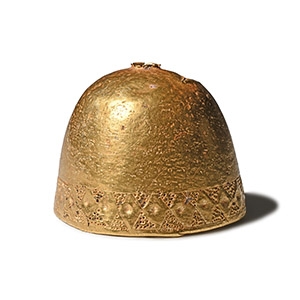
Scythian Decorated Gold Bell
1st millennium B.C.Sold for (Inc. bp): £780
Domed with a rolled rim and vent at the apex; decorative band above the rim with reserved lozenges on a pounced field each with an impressed dimple to the centre; cracked to one side. 19.47 grams, 48 mm
Cracked
Acquired early 1990s. Ex private American collection; thence by descent. Private Swiss collection since 1998. -
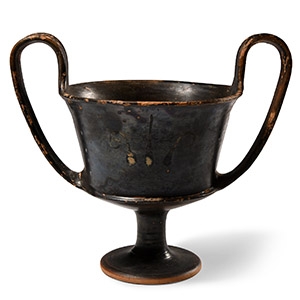
Greek Blackware Kantharos
5th-4th century B.C.Estimate: £500 - 700 (+bp*)
Opening Bid: £250
With broad disc foot, drum-shaped bowl with carinated lower edge, flared rim, two ribbed strap handles rising above the rim; below on each face vine tendrils in a splayed array. 381 grams, 20.5 cm wide
From a West Coast collection, Devon, UK, 1980s.
