
Loading, please wait...
LOT 0586
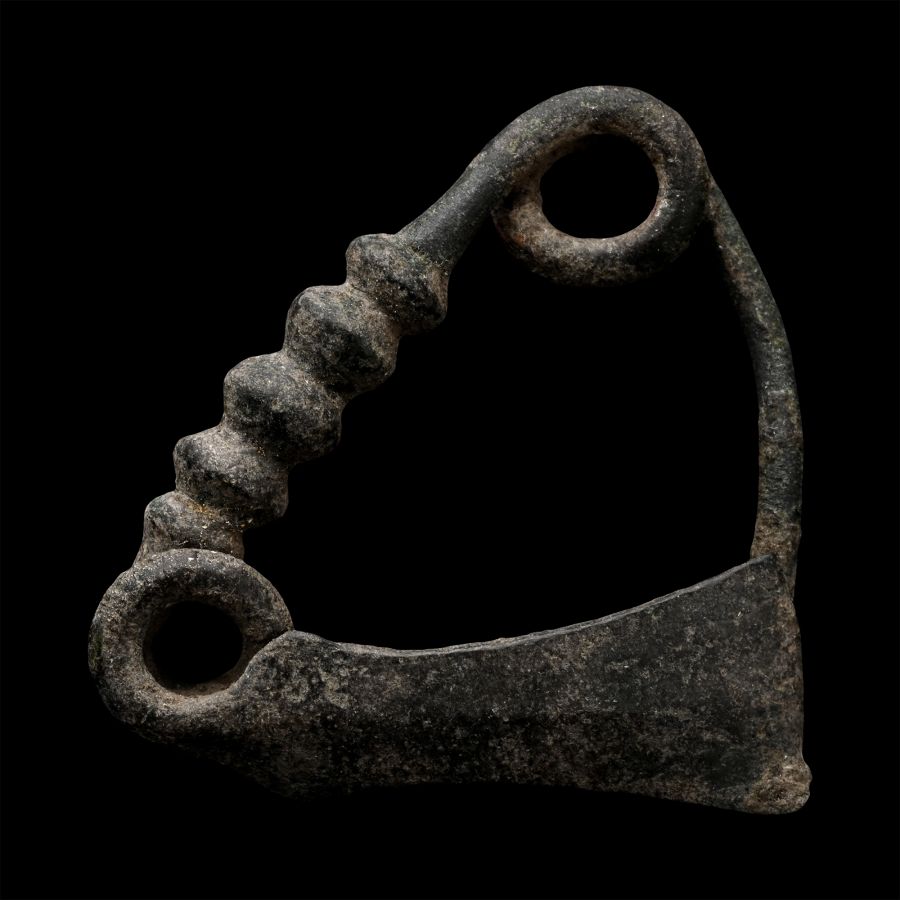
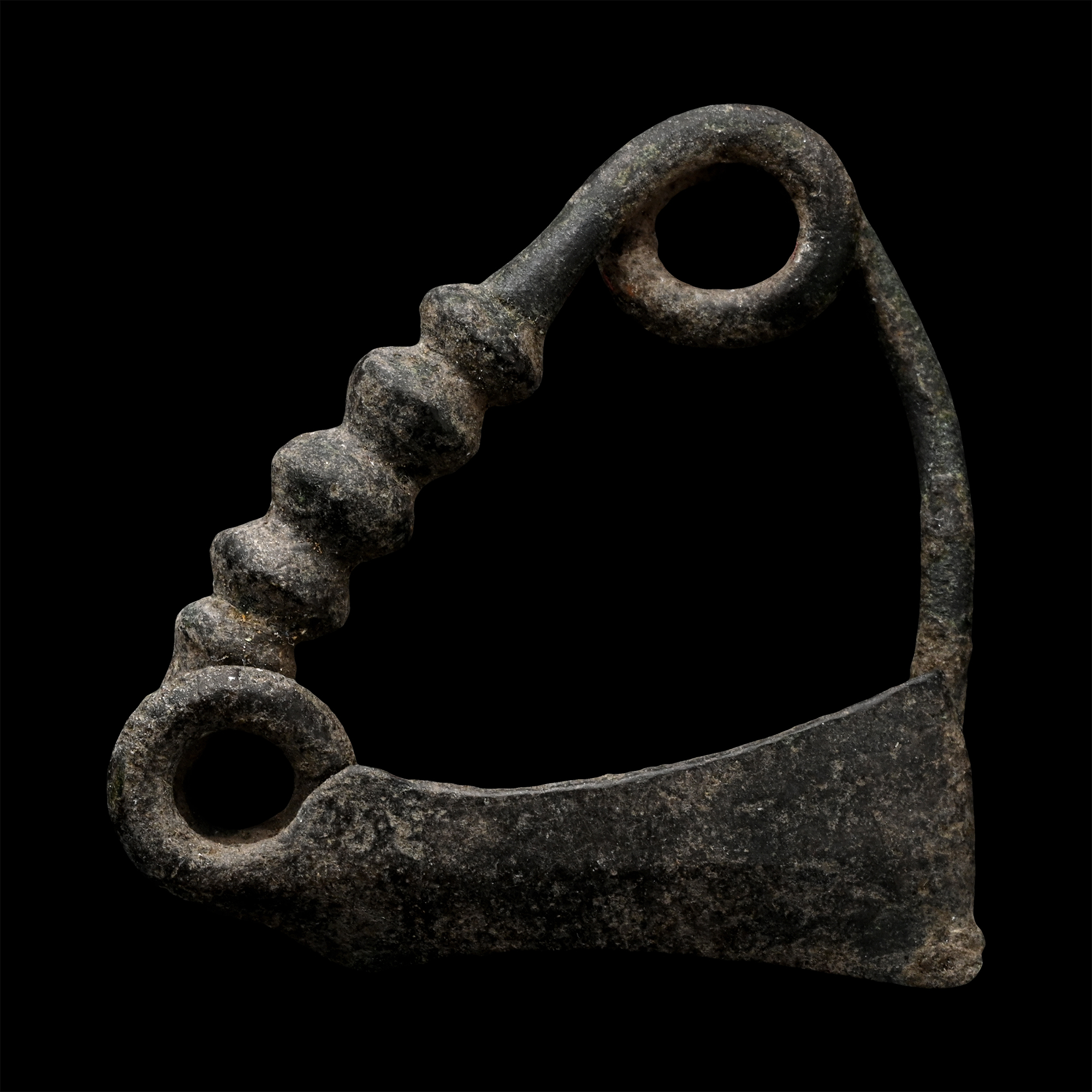
Greek Bronze Bow Brooch
CIRCA 7TH CENTURY B.C.
5/8 in (11.19 grams, 42.09 mm.).
Comprising a corrugated bow with coil to each end, one extending to the spring and the other to a broad plate with a catch at the lower end. [No Reserve]
ProvenanceFrom the private collection of a European gentleman (1942-2024), formed since the 1970s.
LiteratureCf. Hattatt, R., Brooches of Antiquity, Oxford, 1987, item 1369.
CONDITIONTimeLine Auctions follows a vetting process to ensure the authenticity and legality of all items, reinforcing our commitment to integrity and responsible trading. Each antiquity, antique, and coin lot undergoes thorough examination by a vetting committee of at least ten external specialists, professional trade association members, scientists, and archaeologists: Our Vetting Process
AUCTIONS:
TimeLine is a leading auction house specialising in antiquities, ancient art, collectables, natural history, coins, medals, and books. Our auctions offer museums, collectors, historians, and enthusiasts the opportunity to acquire unique and historically significant pieces.
-
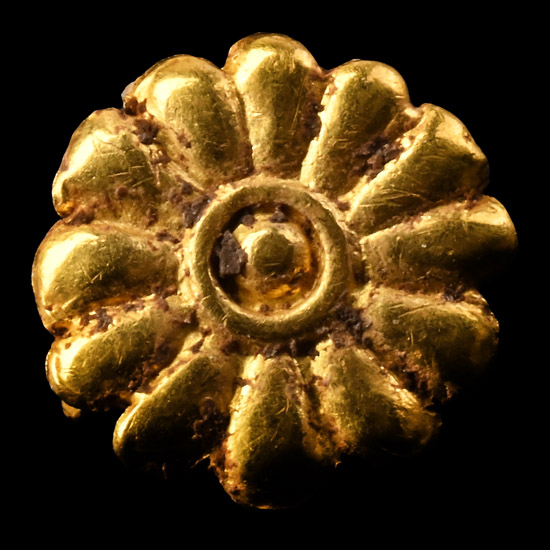
Greek Gold Floral Mount
4th-2nd century B.C.Sold for (Inc. bp): £91
Repoussé mount of a twelve-petalled flower, two loops on the underside. 0.24 grams, 8.25 mm
From the private collection of a European gentleman (1942-2024), formed since the 1970s. -

Scythian Gold Ibex Plaque Pair
Circa 7th century B.C.Estimate: £7,000 - 9,000 (+bp*)
Opening Bid: £3,500
Each a profile ibex with head reversed, horn returned to attach at the neck, pellet eye, beaded ring-and-dot motif to the shoulder and hip; thick attachment loop to the reverse. 15.6 grams total, 34-34.2 mm
Acquired in the 1980s. Private collection, London, UK. Accompanied by an academic report by Dr Raffaele D'Amato. This lot has been checked against the Interpol Database of stolen works of art and is accompanied by search certificate number no.13253-252971.
It is possible to hypothesise that these two elements were bridle plaques, like the two wolf-shaped bridle plaques, in a similar position and style, found in the Kurgan of Pazyrik (Piotrowskij, 1987, p.107, no.137). Belt plaques with zoomorphic motifs illustrate not only the recognised unity of the zoomorphic art of the Steppes, but also the links between the Scythians and the eastern nomadic groups. -
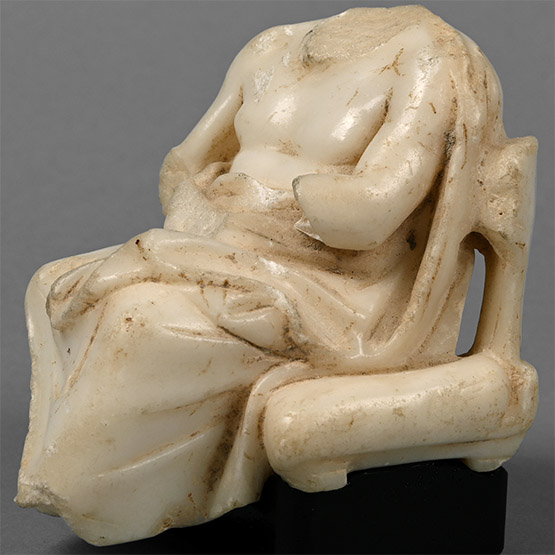
Greek Marble Figure of a Seated God or Philosopher
Hellenistic, 3rd-1st century B.C.Estimate: £15,000 - 20,000 (‡+bp*)
Opening Bid: £7,500
Carved in the round male figure in a seated pose wearing a loosely draped pallium on the shoulders and lower body, legs crossed at the knees; openwork frame to the chair with deep undercuts; mounted on a custom-made stand. 563 grams total, 86 mm high including stand
Formerly in a private collection, London. European private collection, acquired in 2002. Accompanied by a copy of an Art Loss Register certificate, 8 June 2004. This lot has been checked against the Interpol Database of stolen works of art and is accompanied by search certificate number no.13210-249309.
The statuette could represent Zeus or Chronos, based on similarities with two statues in the Vatican Museums and two statues in the Thebes Museum. The god is depicted seated, with his torso exposed, and his left hand, which normally holds the sceptre in statues of seated Zeus, is instead stretched out across his legs.
