
Loading, please wait...
LOT 0565
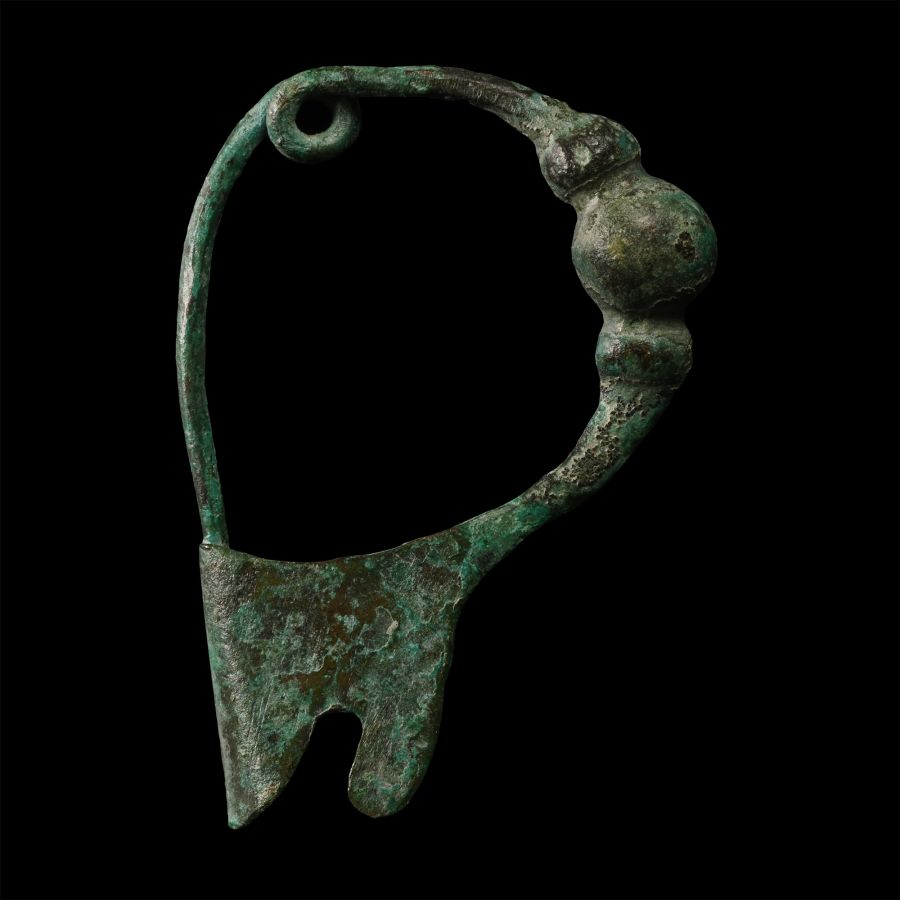
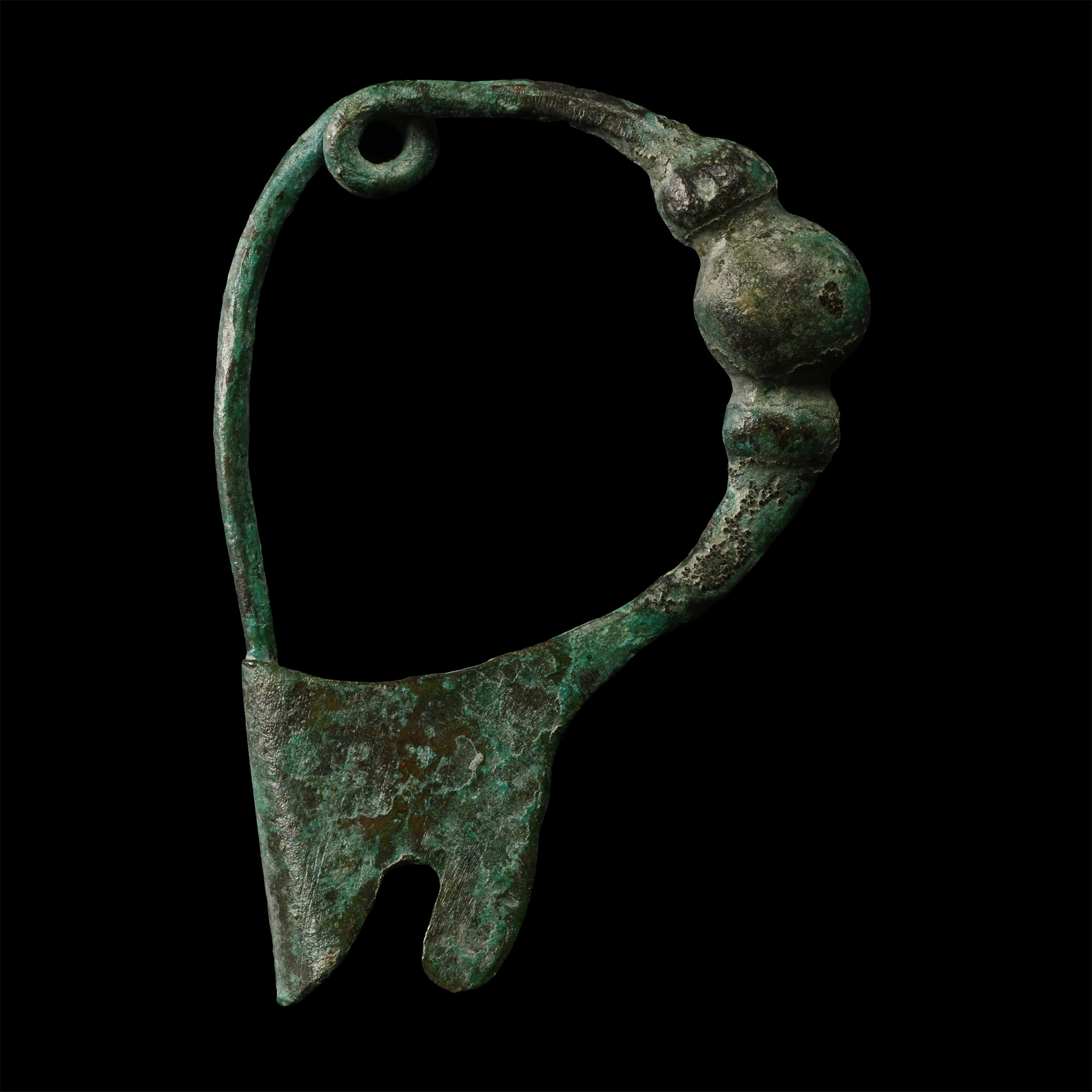
Greek Bronze Bow Brooch
6TH-5TH CENTURY B.C.
21/2 in. (22.6 grams, 65 mm).
Comprising a tapering bow with median cluster of three bulbs, one arm extending to a single-loop spring and pin, the other widening to a flat catch with curved edge and lateral spur above.
ProvenanceEx important German collection, 1990s.
This lot is accompanied by an illustrated lot declaration signed by the Head of the Antiquities Department, Dr Raffaele D’Amato.
Cf. Hattatt, R., Iron Age and Roman Brooches, Oxford, 1985, item 712, for type.
CONDITIONTimeLine Auctions follows a vetting process to ensure the authenticity and legality of all items, reinforcing our commitment to integrity and responsible trading. Each antiquity, antique, and coin lot undergoes thorough examination by a vetting committee of at least ten external specialists, professional trade association members, scientists, and archaeologists: Our Vetting Process
AUCTIONS:
TimeLine is a leading auction house specialising in antiquities, ancient art, collectables, natural history, coins, medals, and books. Our auctions offer museums, collectors, historians, and enthusiasts the opportunity to acquire unique and historically significant pieces.
-
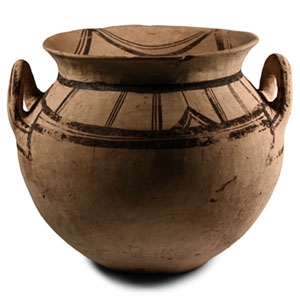
Daunian Terracotta Olla
Subgeometric, 6th-5th century B.C.Estimate: £600 - 800 (‡+bp*)
Opening Bid: £270
With a deep body on round base, flaring mouth, short loop handles to the shoulders; pendant circle segments on interior of mouth; Metope-like frieze on shoulder with triglyphs and suspended triangles, U-shaped motif at the root of the handle, horizontal bands; monochrome ware. 2.33 kg, 25.5 cm wide
The estate of Hans-Ulrich Rutschmann, Switzerland, circa 1950s-1970s. Accompanied by a copy of an Art Loss Register certificate no.S00097644. This lot is accompanied by an illustrated lot declaration signed by the Head of the Antiquities Department, Dr Raffaele D’Amato. -
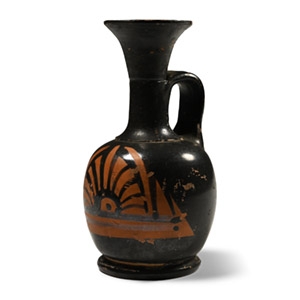
Greek Attic Black-Glazed Squat Lekythos
400-350 B.C.Sold for (Inc. bp): £494
Of ovoid form with trumpet-shaped spout and strap handle, reserved palmette motif; with record card 'Squat pattern Lekythos. Attic? Palmette in red on black glaze. 400-350 B.C. / 22. (22.11.84) Charles Ede. H 10.0 Di 5.4 B 4.1 cm.'. 69 grams, 10 cm
with Sotheby's, London, 7 July, no.376. with Charles Ede Ltd, 12 November 1984. The collection of the late Sir Clinton Charles Donald Cory (1937-2022), 5th Baronet of Coryton. Private collection, UK. Accompanied by an old handwritten collector's ticket. This lot is accompanied by an illustrated lot declaration signed by the Head of the Antiquities Department, Dr Raffaele D’Amato.
Sir Clinton Charles Donald Cory was a lifelong connoisseur with a deep appreciation for objets d’art and antiquities, particularly Attic pottery and numismatics. He took great pleasure in meticulously cataloguing and archiving his collection. The selection of pottery, glass, and stone fragments will be presented across twenty-four lots, many of which boast provenance from renowned dealerships and auction houses, including Charles Ede, Sotheby’s, and Bonhams. -
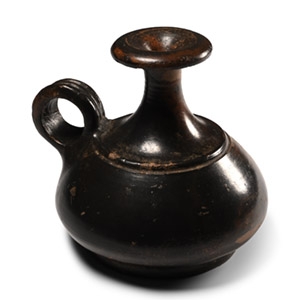
Greek Attic Black-Glazed Terracotta Squat Askos
Circa 350 B.C.Sold for (Inc. bp): £598
With carination and off-set ring at shoulder, loop handle with triple-band profile; slender neck and flaring lip. 192 grams, 99 mm wide
Ex Mr Guy Talbot, acquired between 1963-1982, Brussels. Large parts of his collection were acquired from Mr d'Allemagne, curator of the Château de Laarne, Belgium. with Bailly-Pommery & Voutier Associes, Paris, 17 March 2006. Accompanied by a copy of an Art Loss Register certificate no.S00075547. This lot is accompanied by an illustrated lot declaration signed by the Head of the Antiquities Department, Dr Raffaele D’Amato.
