
Loading, please wait...
LOT 0506
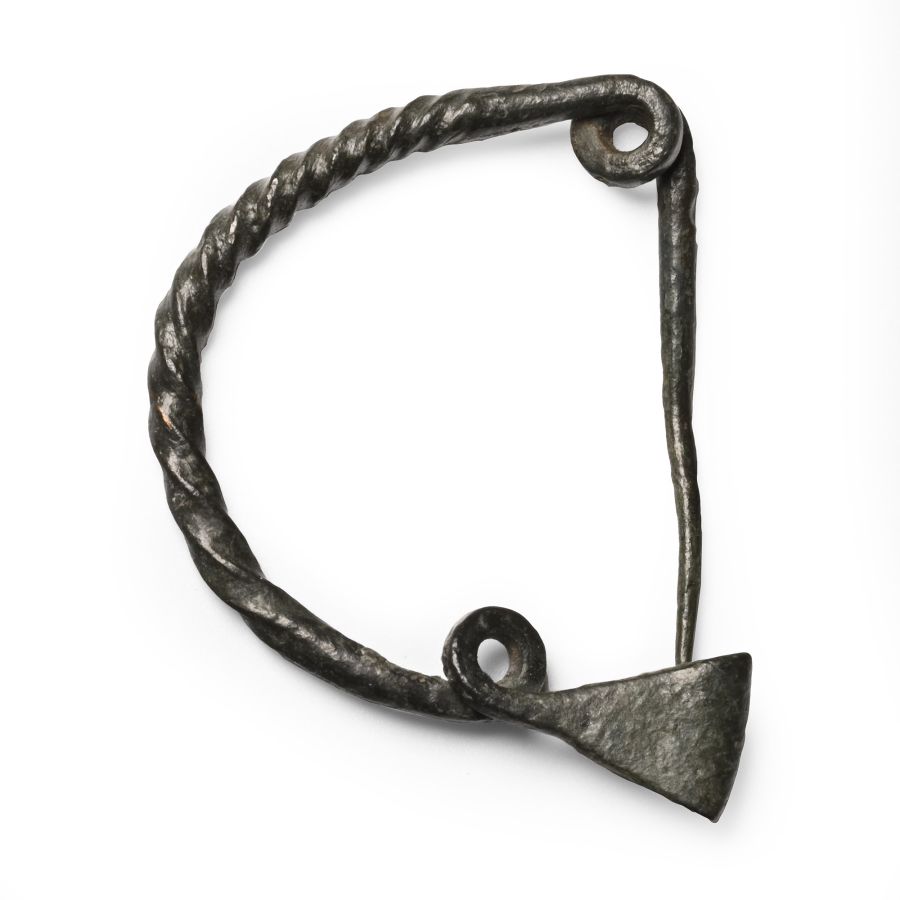
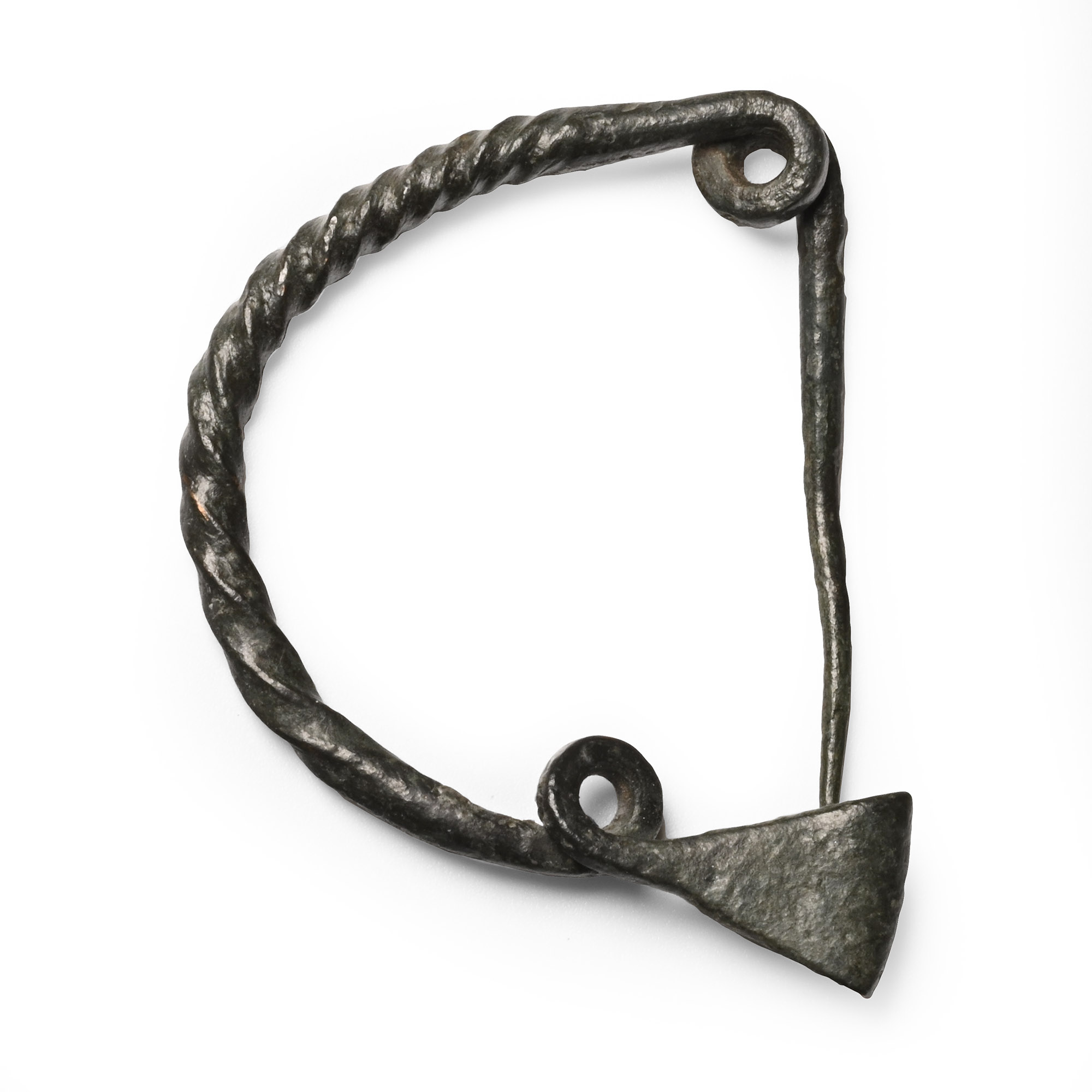
Greek Bronze Bow Brooch
EARLY IRON AGE, 8TH CENTURY B.C.
1 3/8 in. (2.69 grams, 34 mm).
Single-piece fibula comprising a thick twisted bow with integral coiled spring to one end developing to a sturdy pin; to the other end, a U-section lobed catchplate on a single-coil spring. [No Reserve]
ProvenanceFrom the private collection of Kenneth Machin (1936-2020), Buckinghamshire, UK; his collection of antiquities and natural history was formed since 1948; thence by descent.
This lot is accompanied by an illustrated lot declaration signed by the Head of the Antiquities Department, Dr Raffaele D’Amato.
Cf. Beck, H. et al., Fibel und Fibeltracht, Berlin, 2000, abb.86, for type.
CONDITIONTimeLine Auctions follows a vetting process to ensure the authenticity and legality of all items, reinforcing our commitment to integrity and responsible trading. Each antiquity, antique, and coin lot undergoes thorough examination by a vetting committee of at least ten external specialists, professional trade association members, scientists, and archaeologists: Our Vetting Process
AUCTIONS:
TimeLine is a leading auction house specialising in antiquities, ancient art, collectables, natural history, coins, medals, and books. Our auctions offer museums, collectors, historians, and enthusiasts the opportunity to acquire unique and historically significant pieces.
-
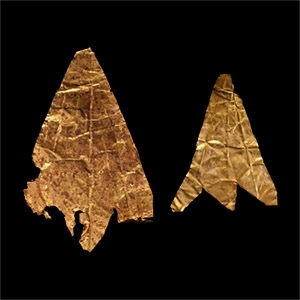
Hellenistic Gold Wreath Leaves
2nd-1st century B.C.Sold for (Inc. bp): £117
Comprising two sheet-gold leaf elements from a diadem, teach with dentilled end and impressed divergent bands. 0.31 grams total, 24-35 mm
Acquired from Brigantia Antiques, York, UK, in the early 1990s. Ian Wilkinson collection, Nottinghamshire, UK, formed since 1985. This lot is accompanied by an illustrated lot declaration signed by the Head of the Antiquities Department, Dr Raffaele D’Amato. -
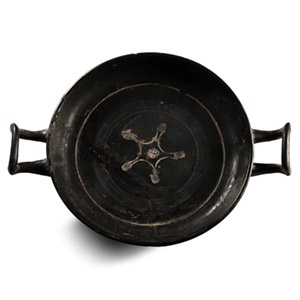
Greek Terracotta Black-Glazed Stemless Cup
4th century B.C.Estimate: £800 - 1,000 (‡+bp*)
Opening Bid: £360
With two lateral handles on a low, profiled ring foot; incised and stamped decoration to the interior comprising a central blossom surrounded by palmettes connected by curved lines, the whole framed by a concentric circle made up of dashes; restored. 227 grams, 20.5 cm
with S.C., Basel, prior 2003. Accompanied by a copy of an Art Loss Register certificate no.S00075178. This lot is accompanied by an illustrated lot declaration signed by the Head of the Antiquities Department, Dr Raffaele D’Amato. -
.jpg)
Very Large Cypriot Terracotta Bichrome Ware Plate
Circa 750-600 B.C.Sold for (Inc. bp): £1,300
Broad disc with basal ring; tondo with outer band of wave-pattern in black and red on cream field, concentric inner bands with geometric and hatched patterns; two holes close to rim; repaired and partly restored with fresh painted extension of the existing design, iron retaining rim with attachment lugs. 6.7 kg, 54 cm
with Bonhams, London, 29 April 2009, no.339. Accompanied by a copy of an Art Loss Register certificate no.S00075782. Accompanied by a copy of the relevant Bonham's catalogue pages. This lot is accompanied by an illustrated lot declaration signed by the Head of the Antiquities Department, Dr Raffaele D’Amato.
