
Loading, please wait...
LOT 0520
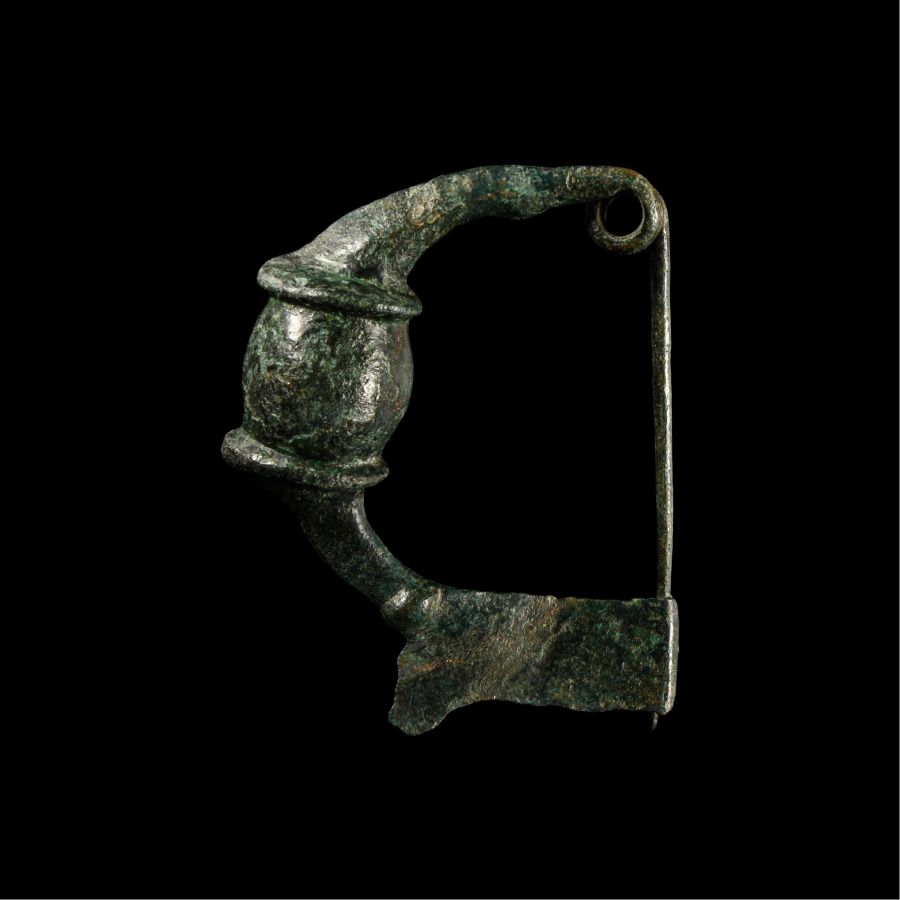
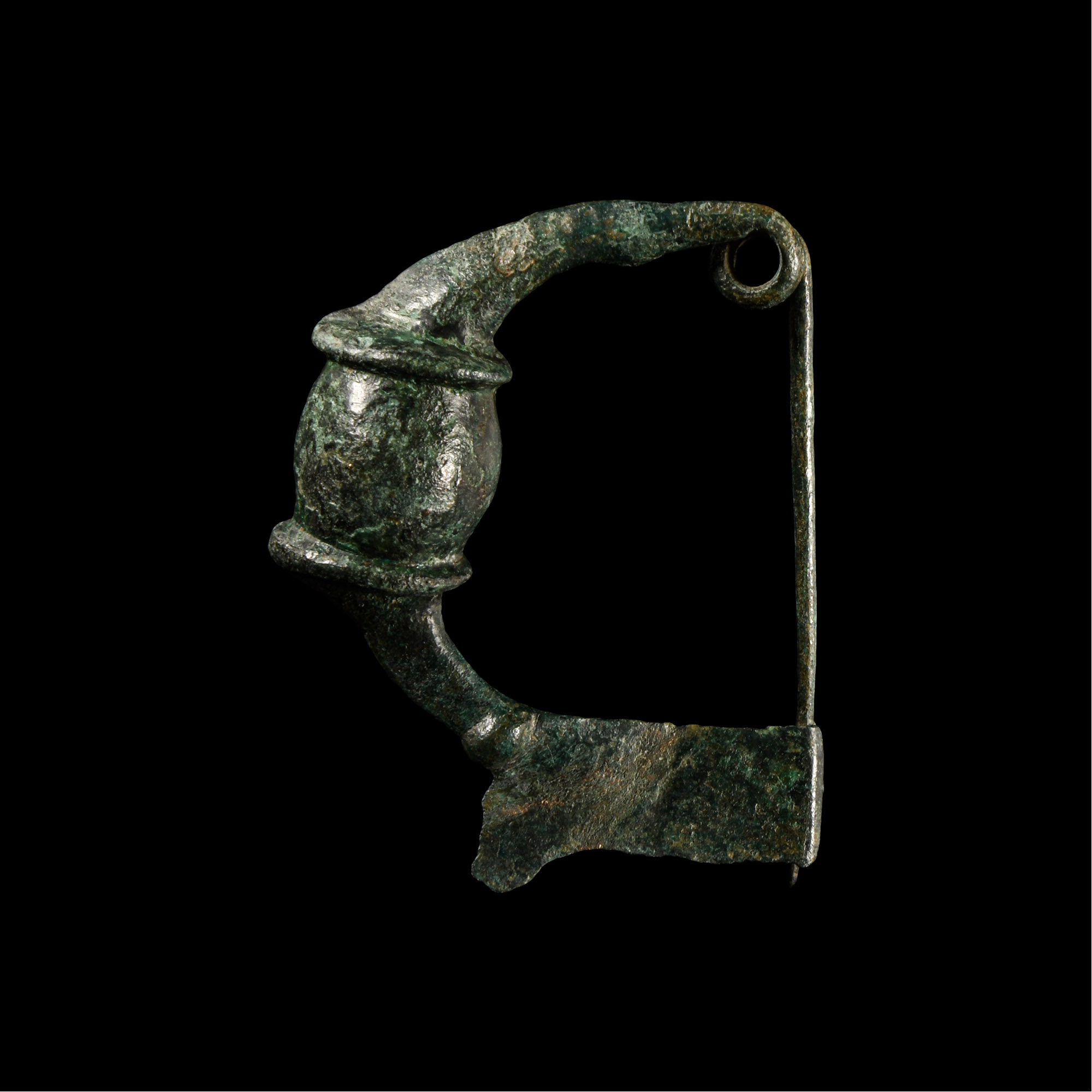
Greek Bronze Bow Brooch
8TH-7TH CENTURY B.C.
2 3/8 in. (46.8 grams, 60 mm).
Deeply arched bow with a central barrel-shaped extension, integral pin and rectangular footplate. [No Reserve]
ProvenanceFrom the family collection of a Surrey gentleman since before 1960.
LiteratureCf. Furtwängler, A., Olympia. Die Ergebnisse der von dem Deutschen Reich veranstalteten Ausgrabung, Band 4. 2 Bände (Textband, Tafelband), Asher, Berlin, 1890, pl.XXII, nos.367, 368, 369, for prototypes.
FootnotesThe distinctive form of this fibula seems to be an Italic variant of characteristic Geometric period examples from Thessaly that have been discovered in large numbers, for example in the sanctuary of Zeus Thaulios near Pharos. It belongs to the category of Greek catch plate brooches, although the rectangular footplate is substantially reduced than the Greek prototypes, and the two grooves on the bow are narrower than the continental Greek ones.
CONDITIONTimeLine Auctions follows a vetting process to ensure the authenticity and legality of all items, reinforcing our commitment to integrity and responsible trading. Each antiquity, antique, and coin lot undergoes thorough examination by a vetting committee of at least ten external specialists, professional trade association members, scientists, and archaeologists: Our Vetting Process
AUCTIONS:
TimeLine is a leading auction house specialising in antiquities, ancient art, collectables, natural history, coins, medals, and books. Our auctions offer museums, collectors, historians, and enthusiasts the opportunity to acquire unique and historically significant pieces.
-
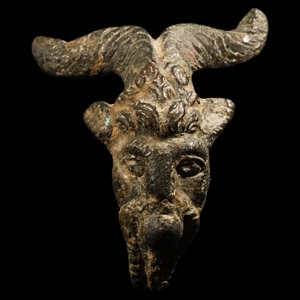
Greek Bronze Handle with Human-Headed Ram
4th-3rd century B.C.Sold for (Inc. bp): £234
Featuring stylised horn and tufted coat detailing, the ram's face with humanesque features; curved profile. 22.2 grams, 39 mm
Collected from 1969-1999. From the collection of the late Mr S.M., London, UK. -
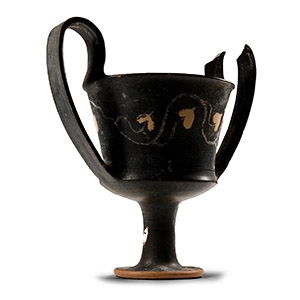
South Italian Blackware Kantharos with Ivy Branch
5th-4th century B.C.Estimate: £1,500 - 2,000 (‡+bp*)
Opening Bid: £750
The high-handled drinking cup with carinated lower body, discoid feet and vines painted to the equator. 525 grams, 22.2 cm
Acquired in the late-1980. Ex S.A. collection. -
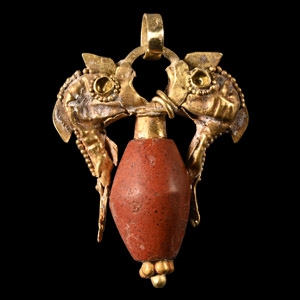
Greek Large Gold Dolphin Pendant
Circa 4th-3rd century B.C.Estimate: £600 - 800 (+bp*)
Opening Bid: £300
Formed as an amphora with dolphin handles, the body composed of a biconical jasper bead, repoussé and filigree detailing to the animals, suspension loops between; restored. 4.68 grams, 33 mm
From a late Japanese specialist collector, 1970-2000s.
