
Loading, please wait...
LOT 0535
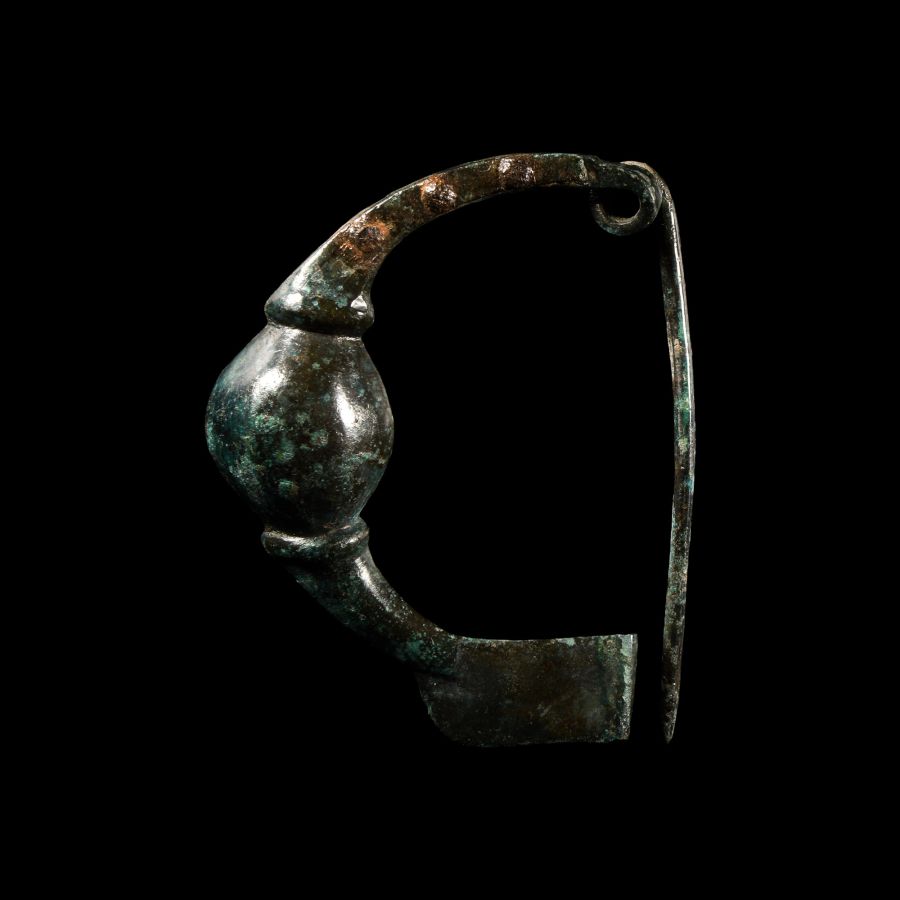
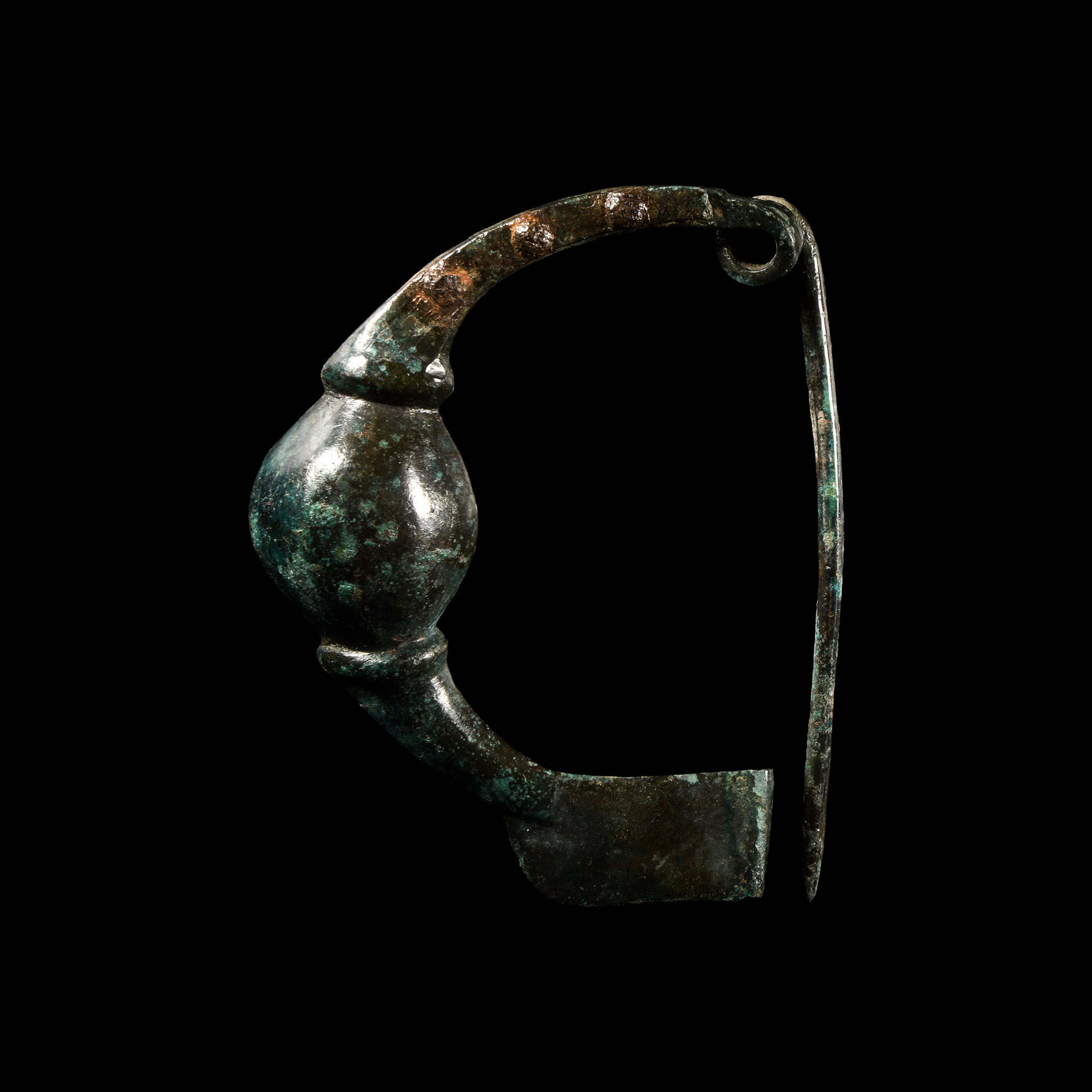
Greek Bronze Bow Brooch
8TH-7TH CENTURY B.C.
2 7/8 in. (55.9 grams, 72 mm).
The keeled bow with a large central boss, integral pin and rectangular footplate. [No Reserve]
ProvenanceFrom the family collection of a Surrey gentleman since before 1960.
LiteratureCf. Furtwängler, A., Olympia. Die Ergebnisse der von dem Deutschen Reich veranstalteten Ausgrabung, Band 4. 2 Bände (Textband, Tafelband), Asher, Berlin, 1890, pl.XXII, nos.367, 368, 369, for prototypes.
FootnotesThe distinctive form of this fibula seems to be an Italic variant of characteristic Geometric period examples from Thessaly that have been discovered in large numbers, for example in the sanctuary of Zeus Thaulios near Pharos. It belongs to the category of Greek catch plate brooches, although the rectangular footplate is substantially reduced compared to the Greek prototypes.
CONDITIONTimeLine Auctions follows a vetting process to ensure the authenticity and legality of all items, reinforcing our commitment to integrity and responsible trading. Each antiquity, antique, and coin lot undergoes thorough examination by a vetting committee of at least ten external specialists, professional trade association members, scientists, and archaeologists: Our Vetting Process
AUCTIONS:
TimeLine is a leading auction house specialising in antiquities, ancient art, collectables, natural history, coins, medals, and books. Our auctions offer museums, collectors, historians, and enthusiasts the opportunity to acquire unique and historically significant pieces.
-
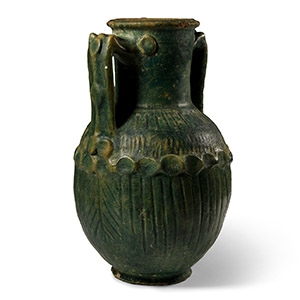
Parthian Green-Glazed Amphora
3rd century B.C.-2nd century A.D.Sold for (Inc. bp): £468
With broad columnar neck and everted rim, angled strap handles, vertical ribbing to the shoulder and body, bands of applied scooped discs to the handle and equator, feathered panels. 1.67 kg, 30 cm high
Hani Farsi collection, London, UK. Acquired Christie's, King Street, London, circa 1990. Ex central London gallery. -
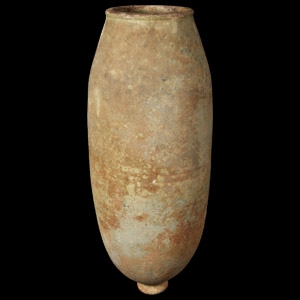
Parthian Blue Glazed Amphora-Type Vessel
2nd century B.C.-1st century A.D. or laterEstimate: £500 - 700 (+bp*)
Opening Bid: £200
The buff, capsule-shaped body with a tapering shoulder and pronounced rim, knop-shaped foot and remains of glaze to the mouth. 4.1 kg, 42.5 cm
London, UK, gallery, 1971-early 2000s. -
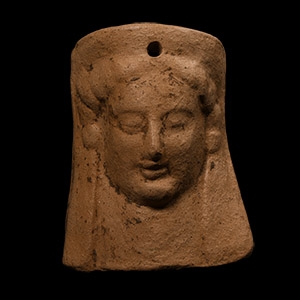
Greek Terracotta Protome Mask
Circa 4th-3rd century B.C.Sold for (Inc. bp): £182
C-section moulding with female face, pierced at the brow. 127 grams, 10.4 cm
Acquired 1970s-1996. Property of a North American collector. London collection, 2016.
