
Loading, please wait...
LOT 0615
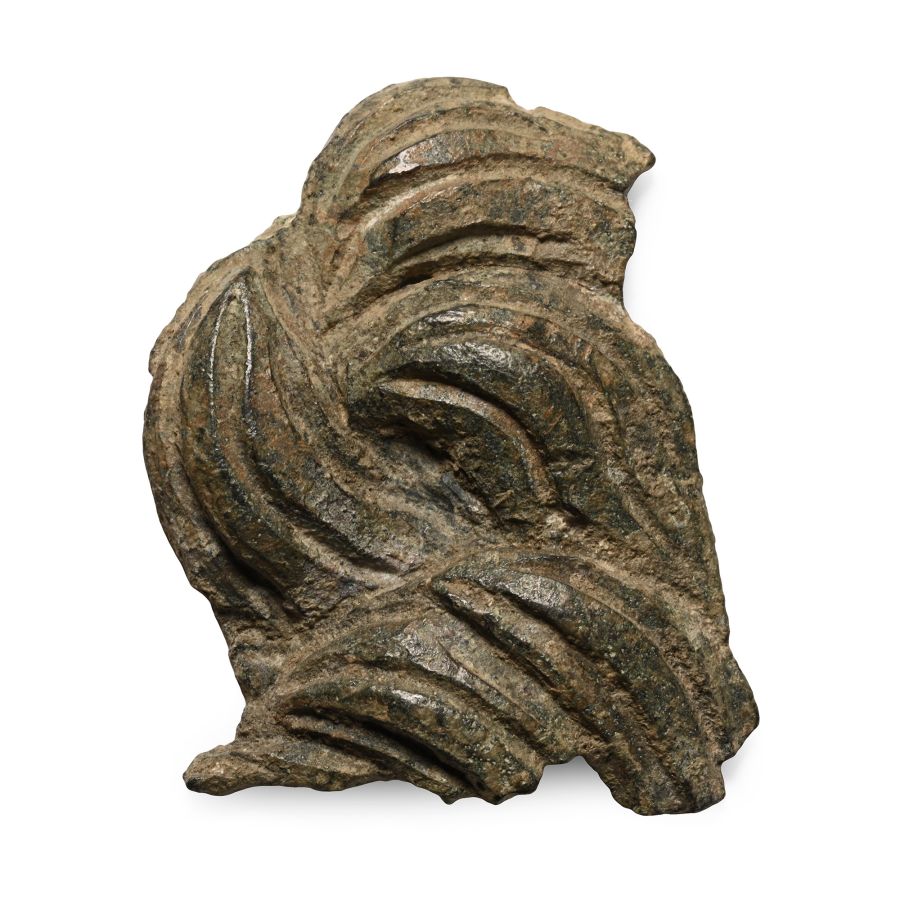
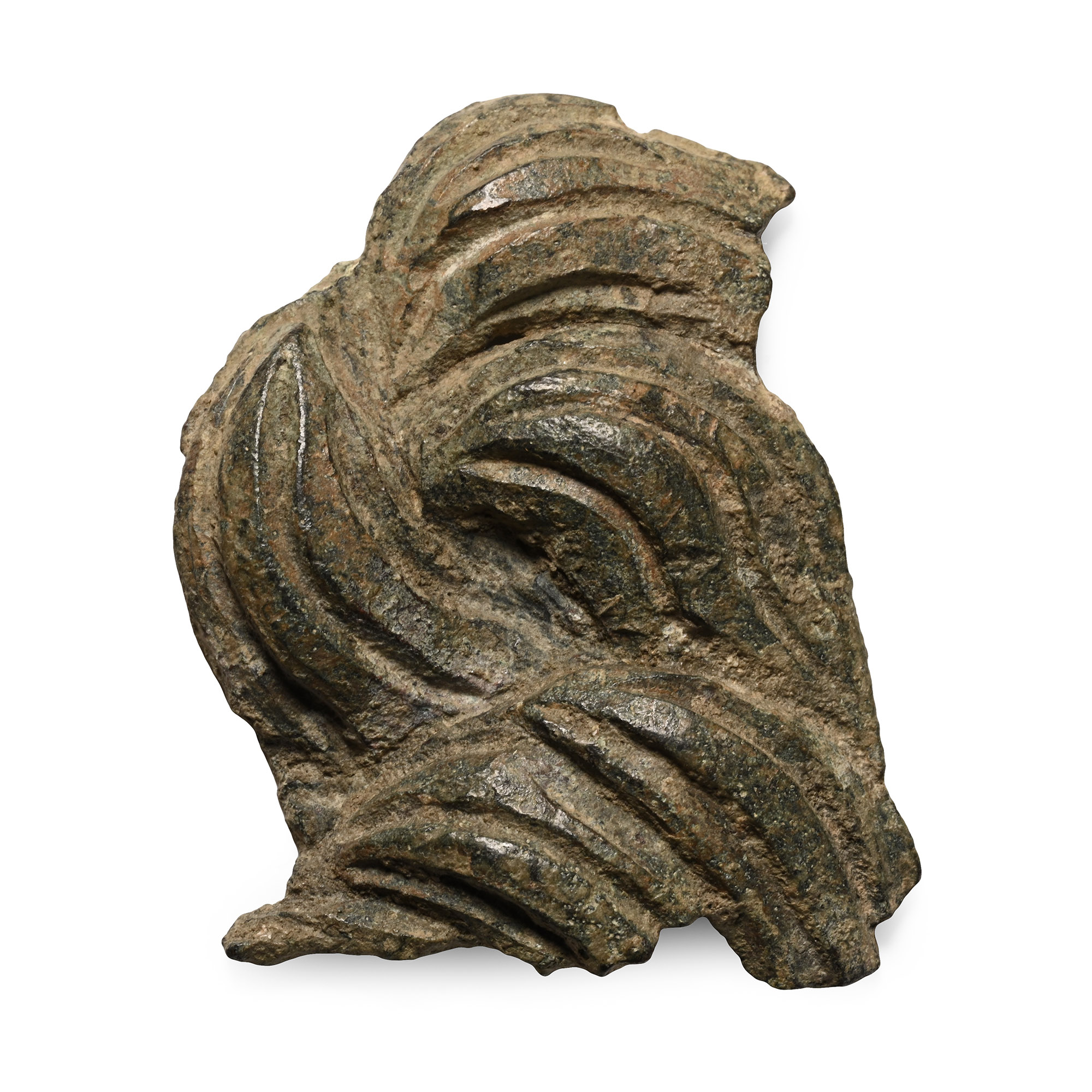
Greek Bronze Beard Fragment from a Life-Size Statue
HELLENISTIC, 2ND-1ST CENTURY B.C.
1 3/4 in. (20.77 grams, 46 mm).
Section from a groomed beard showing neatly arranged curls with incised striations. [No Reserve]
ProvenanceLondon, UK, art market, 1980s.
Private collection, London, UK.
TimeLine Auctions follows a vetting process to ensure the authenticity and legality of all items, reinforcing our commitment to integrity and responsible trading. Each antiquity, antique, and coin lot undergoes thorough examination by a vetting committee of at least ten external specialists, professional trade association members, scientists, and archaeologists: Our Vetting Process
AUCTIONS:
TimeLine is a leading auction house specialising in antiquities, ancient art, collectables, natural history, coins, medals, and books. Our auctions offer museums, collectors, historians, and enthusiasts the opportunity to acquire unique and historically significant pieces.
-
.jpg)
Italic Carnelian Scarab with Satyr Mounted in a Gold Swivel Ring
4th-3rd century B.C.Sold for (Inc. bp): £1,404
Carved scarab with detailed carapace, legs and mouth; underside with intaglio standing figure holding an amphora; set into a later gold swivel ring. 5.30 grams, 23.85 mm overall, 14.56 x 17.70 mm internal diameter (approximate size British J 1/2, USA 5, Europe 9.32, Japan 9)
Private collection, Europe. Acquired on the English art market.
It is clear that the sculptor devoted more care and attention to carving the scarab itself rather than its intaglio. -
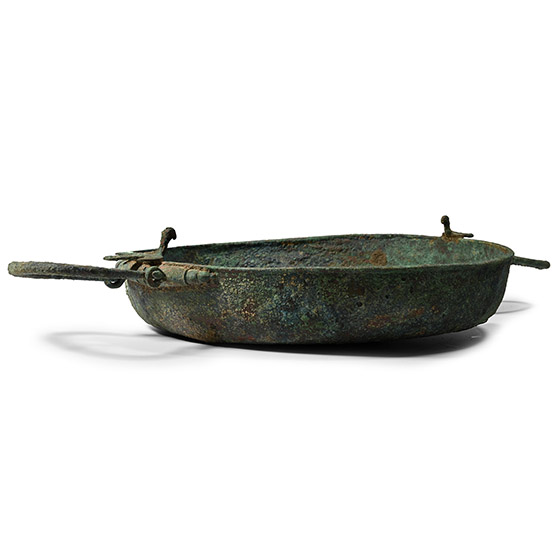
Greek Archaic Bronze Phiale with Handles
7th-6th century B.C.Estimate: £1,500 - 2,000 (‡+bp*)
Opening Bid: £833
Broad and squat in profile with thickened rim, two lateral omega-shaped drop handles each mounted below the rim on a crescentic bar surmounted by a model bird facing inwards; base fragmentary. 915 grams, 44 cm wide
Acquired in the mid 1980s-1990s. Private collection, Switzerland, thence by descent. Private collection, since the late 1990s. This lot has been checked against the Interpol Database of stolen works of art and is accompanied by search certificate number no.12210-222327. -
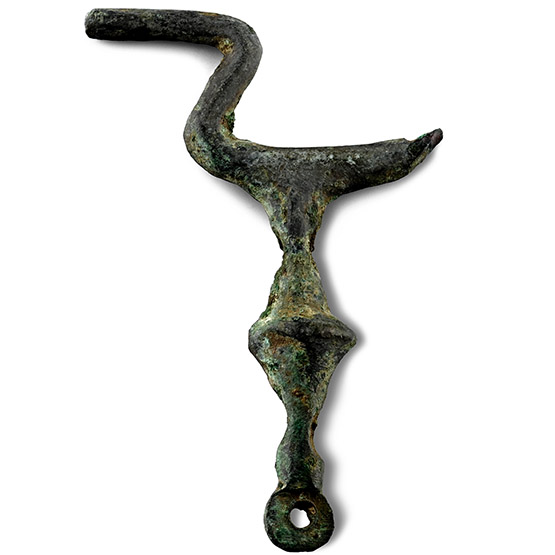
Greek Geometric Bronze Bird
8th century B.C.Sold for (Inc. bp): £39
Stylised bird figure perching on a convex panel, shank beneath pierced and lug finial pierced perpendicularly. 16.9 grams, 60 mm
Acquired in the 1994. Private collection, Switzerland, thence by descent. Private collection, since the late 1990s.
