
Loading, please wait...

LOT 1439
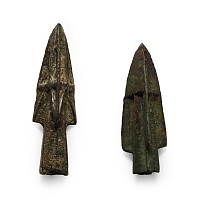
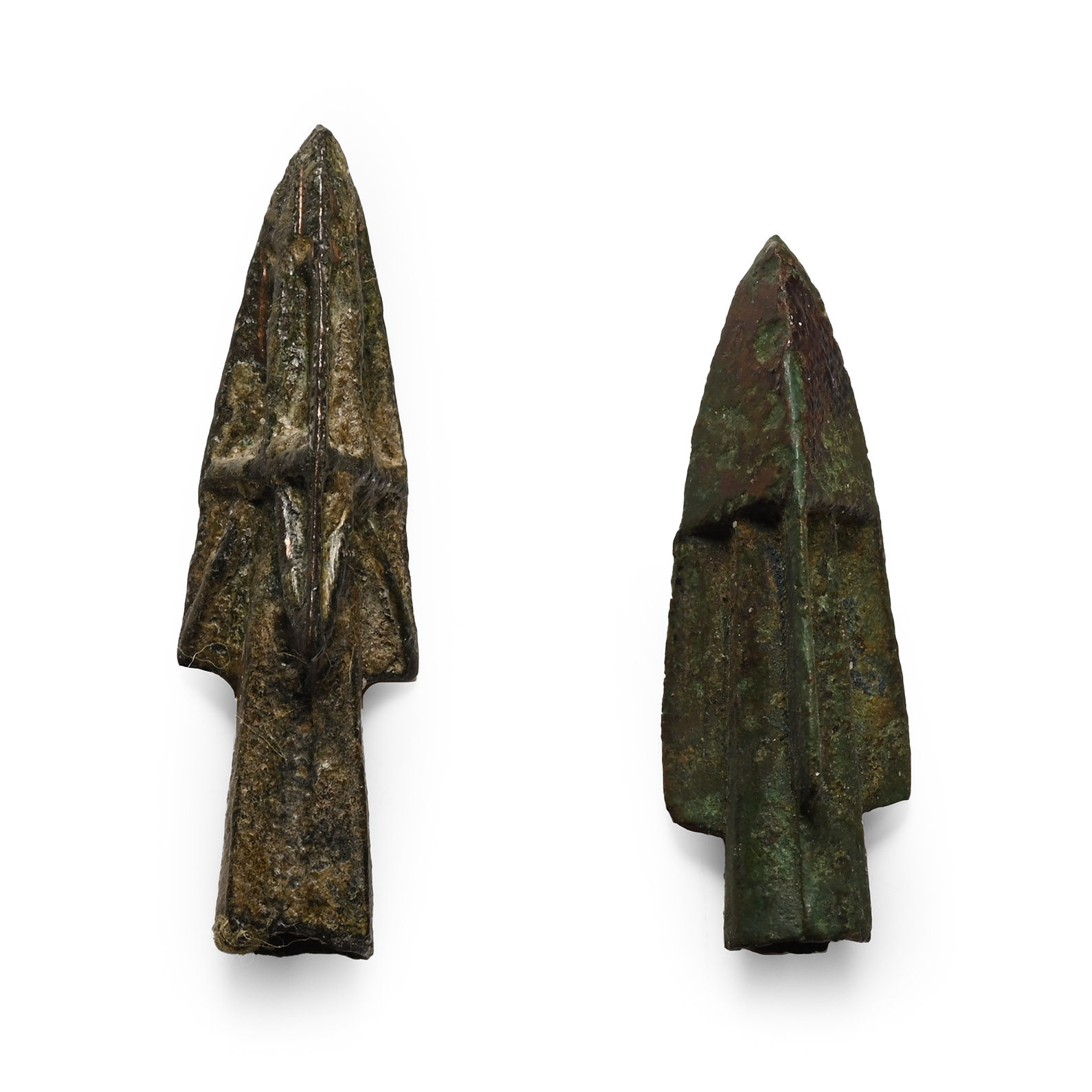
Greek Bronze Arrowhead Group
5TH-3RD CENTURY B.C.
1 1/8 - 1 1/4 in. (6.75 grams total, 29-33 mm).
Each a small socketted arrowhead. triangular in section with shallow point; one with ribbing to the barbs. [2, No Reserve]
ProvenanceUK private collection before 2000.
Acquired on the UK art market.
Property of a London gentleman.
TimeLine Auctions follows a vetting process to ensure the authenticity and legality of all items, reinforcing our commitment to integrity and responsible trading. Each antiquity, antique, and coin lot undergoes thorough examination by a vetting committee of at least ten external specialists, professional trade association members, scientists, and archaeologists: Our Vetting Process
AUCTIONS:
TimeLine is a leading auction house specialising in antiquities, ancient art, collectables, natural history, coins, medals, and books. Our auctions offer museums, collectors, historians, and enthusiasts the opportunity to acquire unique and historically significant pieces.
-
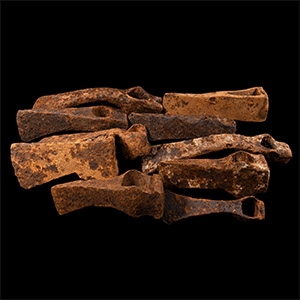
Viking Age and Later Axehead Group
Circa 10th-18th century A.D.Sold for (Inc. bp): £52
Comprising socketted axeheads of various types; some possibly stamped with maker's marks. 7 kg total, 16-24.5 cm
Acquired 1990s-early 2000s. East Anglian private collection.
An axe similar to those of our group was found in the fortified camp of Péran, in Brittany, among the objects that emerged from a conflagration due to the attack of Alain Barbetorte's Bretons on a Viking camp, in 936 A.D. These axes were certainly work tools, although in case of necessity they could also serve as improvised weapons -
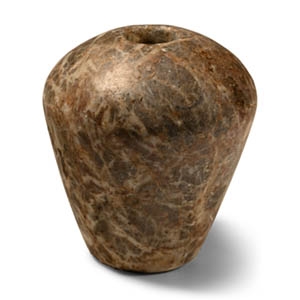
Western Asiatic White Flecked Grey Stone Mace Head
3rd-2nd millennium B.C.Sold for (Inc. bp): £338
Piriform in profile with vertical socket expanding towards the base. 351 grams, 70 mm
Ex London gentleman's collection, 1990s. -
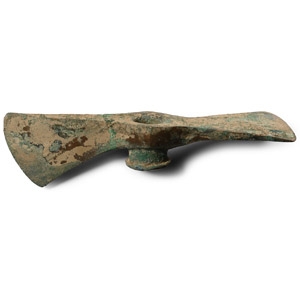
Luristan Bronze Adze-Axe
2nd-1st millennium B.C.Sold for (Inc. bp): £143
With central shaft hole and blade set at a right angle. 1.25 kg, 25.7 cm
Acquired 1980-2015. Ex Abelita family collection.
The adze-axe was a fundamental axe of many Bronze Age ancient cultures. Its form was one that lends itself to dual purposes - for war and work. As a tool, it functioned in woodwork in fabricating a variety of objects and as a weapon, its heavy mass and compact form make it a very deadly striking and chopping weapon, even able to defeat light armour.
