
Loading, please wait...

LOT 0599
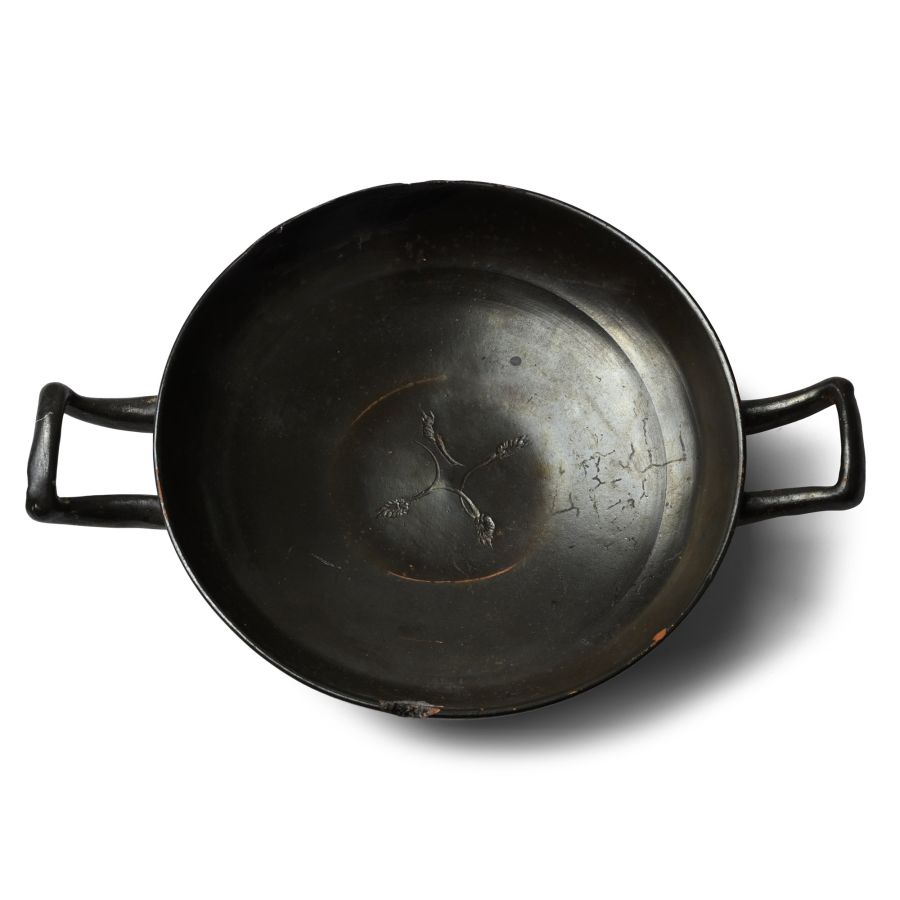
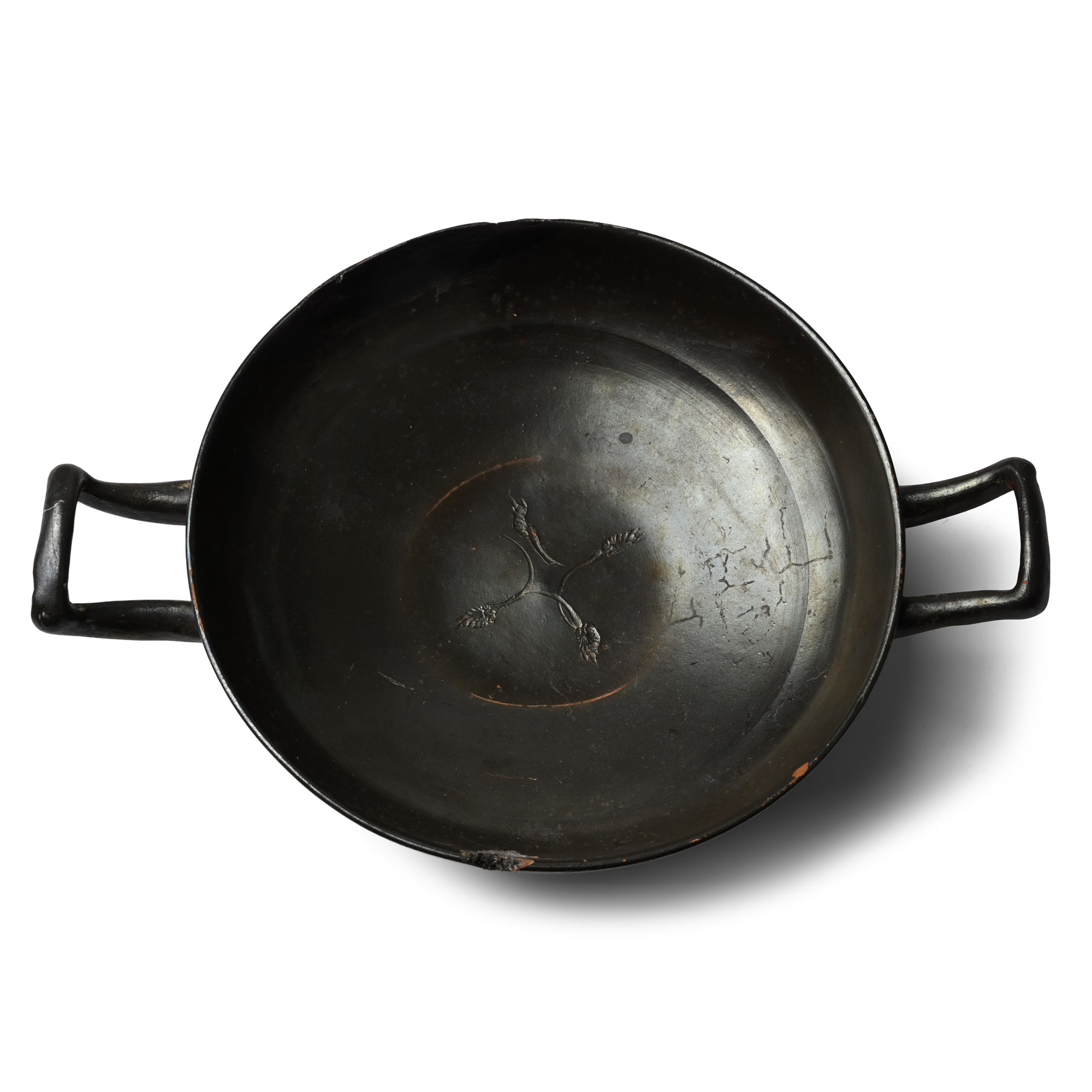
Greek Blackware Stemless Cup
CAMPANIAN, 4TH CENTURY B.C.
8 1/8 in. (191 grams, 20.8 cm wide).
Broad and shallow dish with carination to inner face, two loop handles, central motif of radiating fronds.
ProvenanceFrom the collection of a gentleman, acquired on the London art market in the 1990s.
This lot is accompanied by an illustrated lot declaration signed by the Head of the Antiquities Department, Dr Raffaele D'Amato.
TimeLine Auctions follows a vetting process to ensure the authenticity and legality of all items, reinforcing our commitment to integrity and responsible trading. Each antiquity, antique, and coin lot undergoes thorough examination by a vetting committee of at least ten external specialists, professional trade association members, scientists, and archaeologists: Our Vetting Process
AUCTIONS:
TimeLine is a leading auction house specialising in antiquities, ancient art, collectables, natural history, coins, medals, and books. Our auctions offer museums, collectors, historians, and enthusiasts the opportunity to acquire unique and historically significant pieces.
-
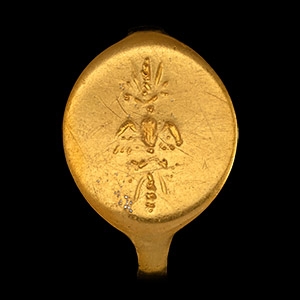
Greek Gold Ring with Thunderbolt
4th-3rd century B.C.Sold for (Inc. bp): £1,690
Flat-section hoop expanding to a flat discoid bezel with engraved stylised Zeus's thunderbolt. 3.78 grams, 21.88 mm overall, 20.32 mm internal diameter (approximate size British R 1/2, USA 8 3/4, Europe 19.38, Japan 18)
UK private collection before 2000. Acquired on the UK art market. Private collection, London, UK. This lot has been cleared against the Art Loss Register database, and is accompanied by an illustrated lot declaration signed by the Head of the Antiquities Department, Dr Raffaele D'Amato. -
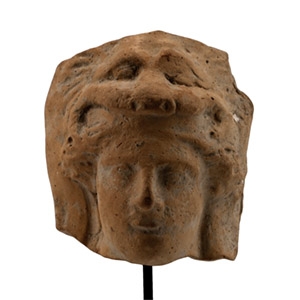
Greek Terracotta Head of a Goddess
5th-3rd century B.C.Sold for (Inc. bp): £338
Hollow to the reverse, with high-relief female mask wearing a lion-head headdress; mounted on a custom-made stand. 154 grams total, 16 cm including stand
Acquired on the European art market in the early 2000s. with Galerie Rhéa, Zurich, Switzerland. This lot is accompanied by an illustrated lot declaration signed by the Head of the Antiquities Department, Dr Raffaele D'Amato. -
.jpg)
Greek Bronze Head of Alexander 'The Great'
3rd-2nd century B.C.Estimate: £8,000 - 10,000 (‡+bp*)
Opening Bid: £2,778
Modelled in the round with wavy hair brushed forwards, large lentoid eyes in low-relief, angular nose and small mouth; attachment lug to underside; mounted on a custom-made stand. 142 grams total, 10.2 cm including stand
Collection of Mr C., Geneva, Switzerland (1936-2016), assembled between 1985 and 2010. This lot has been checked against the Interpol Database of stolen works of art and is accompanied by a search certificate number no.12857-241703. This lot has been cleared against the Art Loss Register database, and is accompanied by an illustrated lot declaration signed by the Head of the Antiquities Department, Dr Raffaele D'Amato.
