
Loading, please wait...


LOT 0104
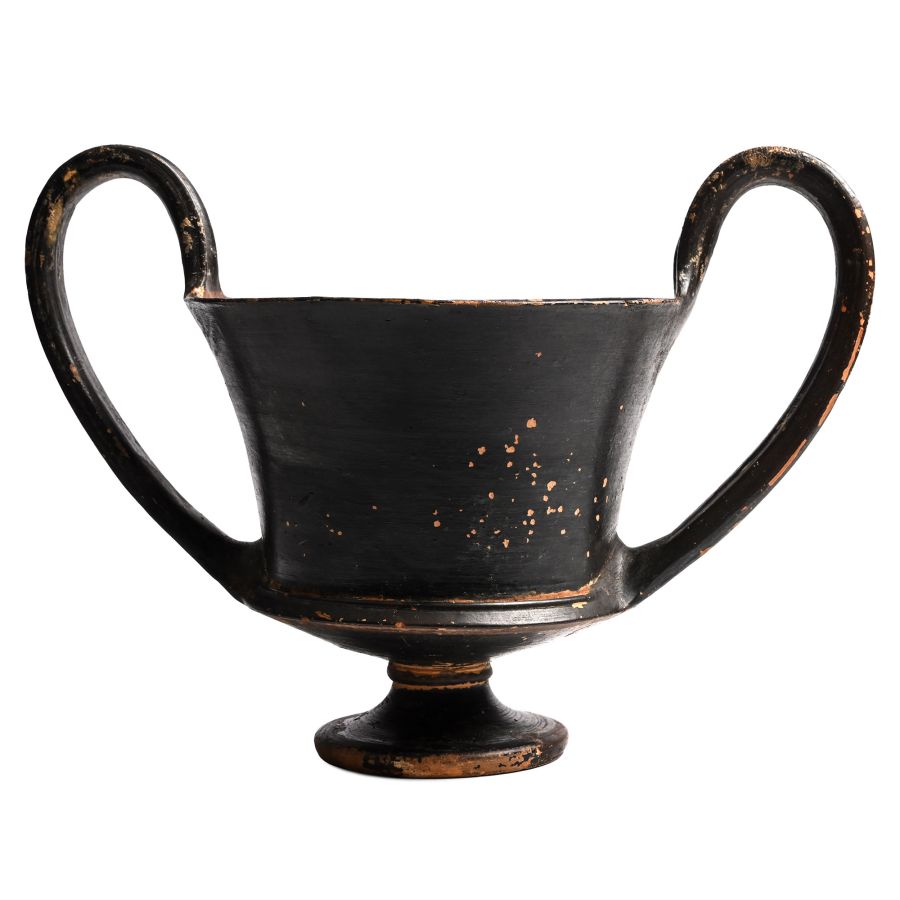
Greek Blackware Short-Stemmed Kantharos
CIRCA 5TH-4TH CENTURY B.C.
9 in. (354 grams, 23 cm wide).
With a flared foot, tapering body and two lateral high strap handles with ribs to the outer edges, the sidewall set off from the foot by a carination.
ProvenanceEx Norri collection, Milton Keynes, Bedfordshire, UK, 1980s-1990s.
CONDITIONTimeLine Auctions follows a vetting process to ensure the authenticity and legality of all items, reinforcing our commitment to integrity and responsible trading. Each antiquity, antique, and coin lot undergoes thorough examination by a vetting committee of at least ten external specialists, professional trade association members, scientists, and archaeologists: Our Vetting Process
AUCTIONS:
TimeLine is a leading auction house specialising in antiquities, ancient art, collectables, natural history, coins, medals, and books. Our auctions offer museums, collectors, historians, and enthusiasts the opportunity to acquire unique and historically significant pieces.
-
.jpg)
Italic Carnelian Scarab with Satyr Mounted in a Gold Swivel Ring
4th-3rd century B.C.Sold for (Inc. bp): £1,404
Carved scarab with detailed carapace, legs and mouth; underside with intaglio standing figure holding an amphora; set into a later gold swivel ring. 5.30 grams, 23.85 mm overall, 14.56 x 17.70 mm internal diameter (approximate size British J 1/2, USA 5, Europe 9.32, Japan 9)
Private collection, Europe. Acquired on the English art market.
It is clear that the sculptor devoted more care and attention to carving the scarab itself rather than its intaglio. -
.jpg)
Greek Terracotta of Drunken Silenus Seated on a Ram
South Italian, 3rd century B.C.Sold for (Inc. bp): £1,300
Hollow-formed and modelled in the round figure of a shaggy ram standing on a rectangular base with the slouching figure of Silenus on his back, clutching a large drinking horn in his right hand; white and red pigment; hollow underside. 257 grams, 12.2 cm
with Fortuna, Galerie fur alte Kunst, Zurich, 1998. Private collection, Zurich, acquired from the above in 2002. with Bonhams, New Bond Street, London, 1 December 2020, no.67. Private collection, UK. Accompanied by copies of the relevant Fortuna, Galerie fur alte Kunst catalogue pages. Accompanied by copies of the relevant Bonhams catalogue pages. -
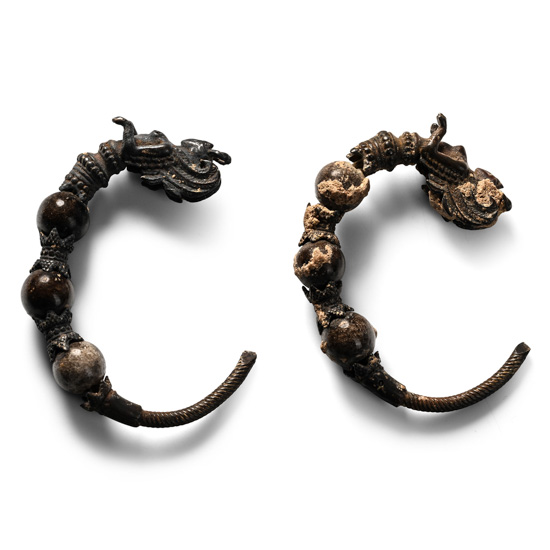
Greek Silver Earring Pair with Nike
3rd-2nd century B.C.Estimate: £600 - 800 (+bp*)
Opening Bid: £300
Each with a hook and spherical beads, applied collars and a winged figure of Nike with arms extended. 9.66 grams total, 34-37 mm
Acquired before 1983. Ex London gallery, 1990s. Private collection, London, UK.
