
Loading, please wait...
LOT 0559
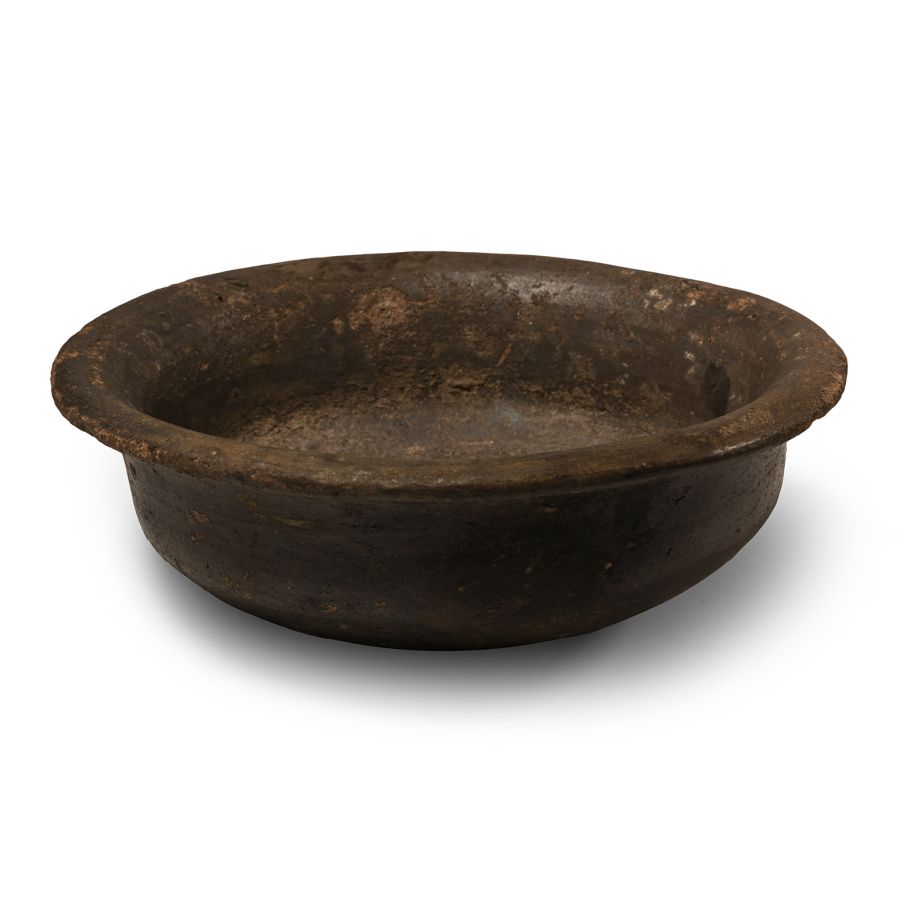
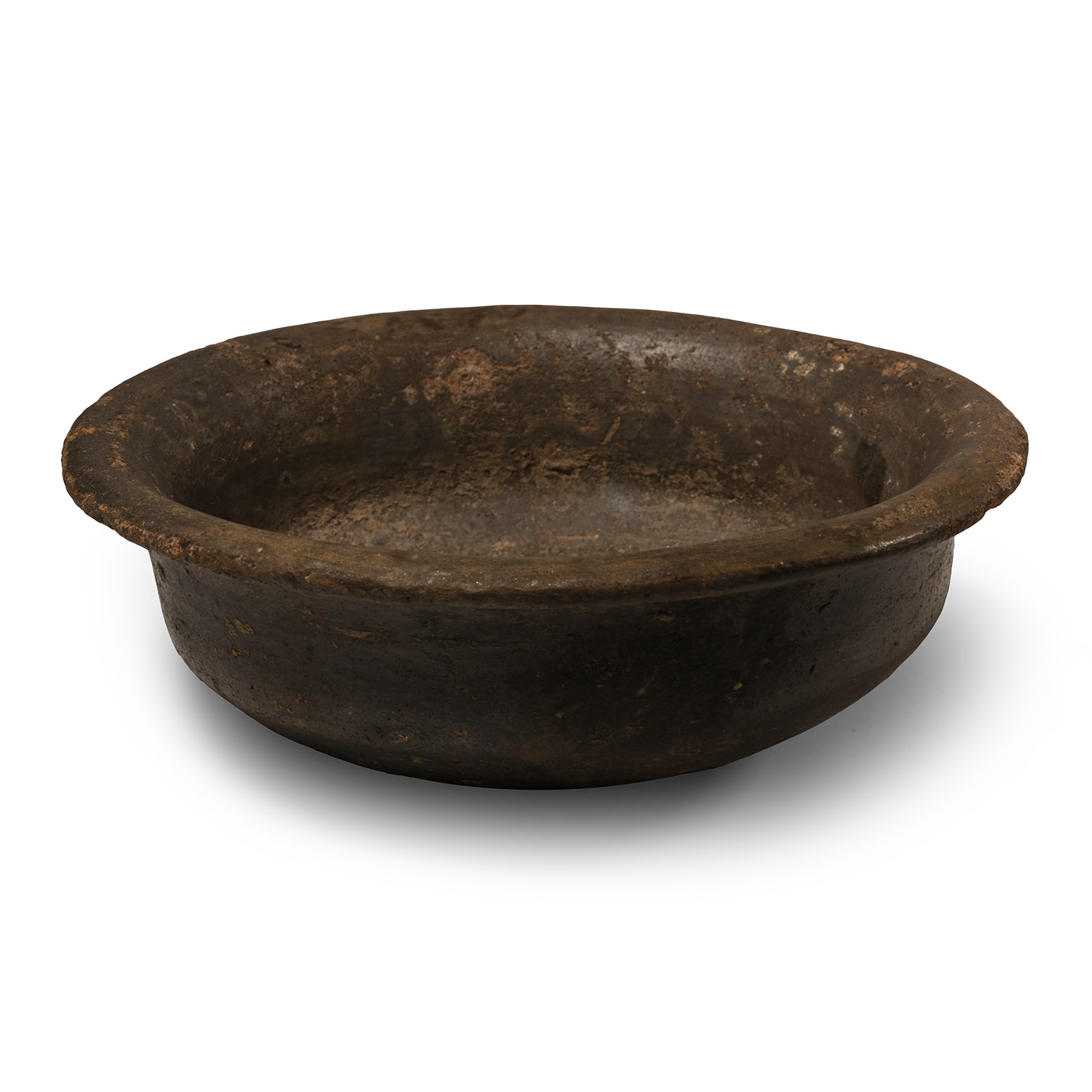
Greek Blackware Dish
4TH-3RD CENTURY B.C.
6 1/8 in. (292 grams, 15.5 cm).
With rounded underside and carinated sidewall, flared rim with rolled edge. [No Reserve]
ProvenanceFrom a family collection mostly formed in the 1940s-1950s, thence by descent.
CONDITIONTimeLine Auctions follows a vetting process to ensure the authenticity and legality of all items, reinforcing our commitment to integrity and responsible trading. Each antiquity, antique, and coin lot undergoes thorough examination by a vetting committee of at least ten external specialists, professional trade association members, scientists, and archaeologists: Our Vetting Process
AUCTIONS:
TimeLine is a leading auction house specialising in antiquities, ancient art, collectables, natural history, coins, medals, and books. Our auctions offer museums, collectors, historians, and enthusiasts the opportunity to acquire unique and historically significant pieces.
-
Etruscan Bronze Statuette
Circa 6th century B.C.Sold for (Inc. bp): £130
Standing figure wearing a tunic with straight arms placed to the sides, with exaggerated facial features including bulbous eyes; mounted on a custom-made stand. 49.6 grams total, 84 mm including stand
From a collection acquired on the UK art market from various auction houses and collections mostly before 2000. From an important Cambridgeshire estate; thence by descent.
The statuette belongs to a group of standing archaic statuettes, with short hair rendered by incised lines. They are usually depicted with legs together, arms at the sides or bent forward if they are holding objects (see the augur statuette from Lapis Niger, Rome). -
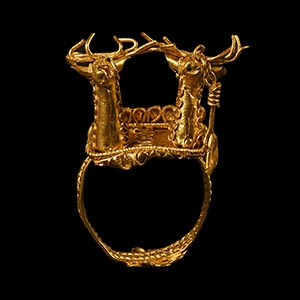
Scythian Gold Ring with Pair of Stags
Circa 6th century B.C.Sold for (Inc. bp): £11,700
Comprising a broad hoop of gold filigree ropework with wire borders, applied filigree rosette to underside; rectangular plaque with band of filigree loops to both long edges, applied filigree meander to centre; two hollow-formed model stags' heads each with applied filigree meander to both sides of the neck and to the spine, filigree and granule facial and other features, filigree antlers; disc dangle and filigree shank and hoop attaching to right stag's head. 7.59 grams, 38.13 mm overall, 18.63 mm internal diameter (approximate size British P 1/2, USA 7 3/4, Europe 16.86, Japan 16)
Private collection formed in Europe in the 1980s. Westminster collection, central London, UK. Accompanied by an academic report by Dr Raffaele D’Amato. This lot has been checked against the Interpol Database of stolen works of art and is accompanied by search certificate number no.12355-225025.
The presence of stags on the ring is a clear reference to the cult of Artemis, the hunting goddess, whose favourite animal was the deer. A particular cult of Artemis was celebrated at Brauron, in Attica. According to some stories, this was the place where Iphigenia, daughter of Agamemnon, was sacrificed to the goddess after Agamemnon offended the goddess by killing one of her sacred stags. -
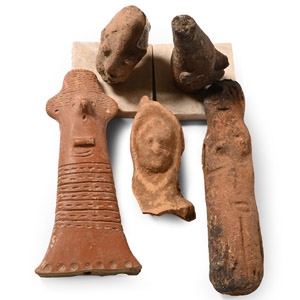
Cypriot and Other Idol Group
1st millennium B.C. and laterSold for (Inc. bp): £208
Anthropomorphic figures, some mounted on a ceramic stand; plank idol after the antique. 410 grams total, 6.1-12.9 cm
From a collection acquired on the UK art market from various auction houses and collections mostly before 2000. From an important Cambridgeshire estate; thence by descent.
