
Loading, please wait...
LOT 0536
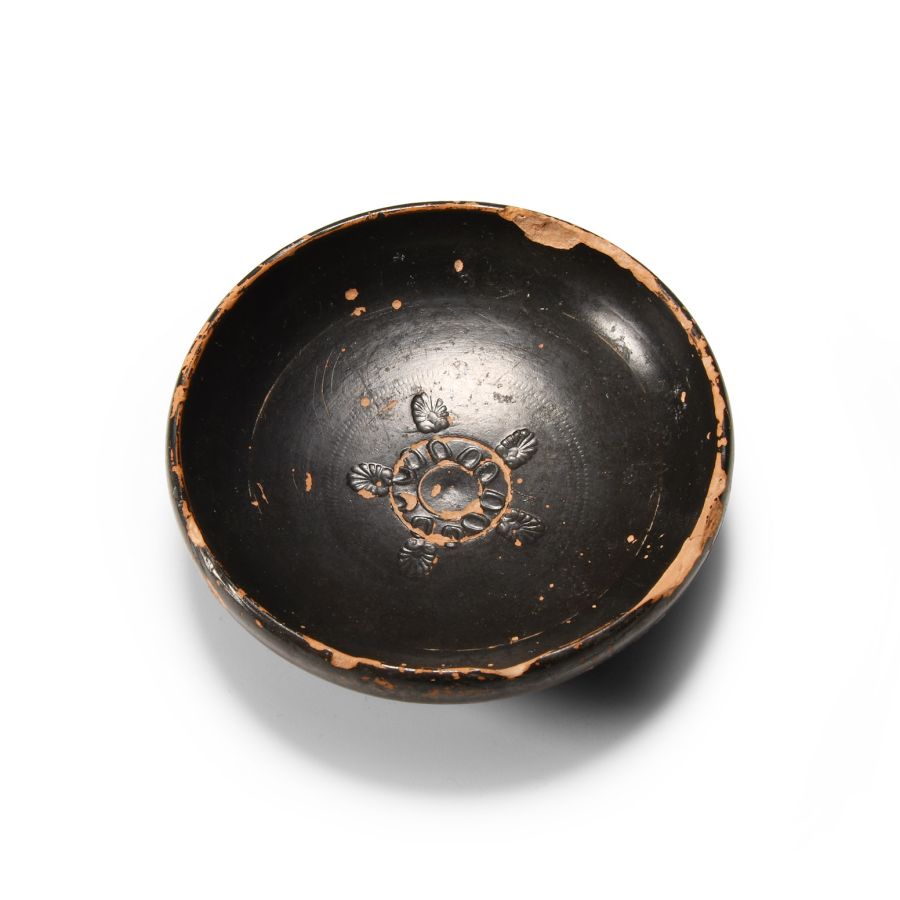
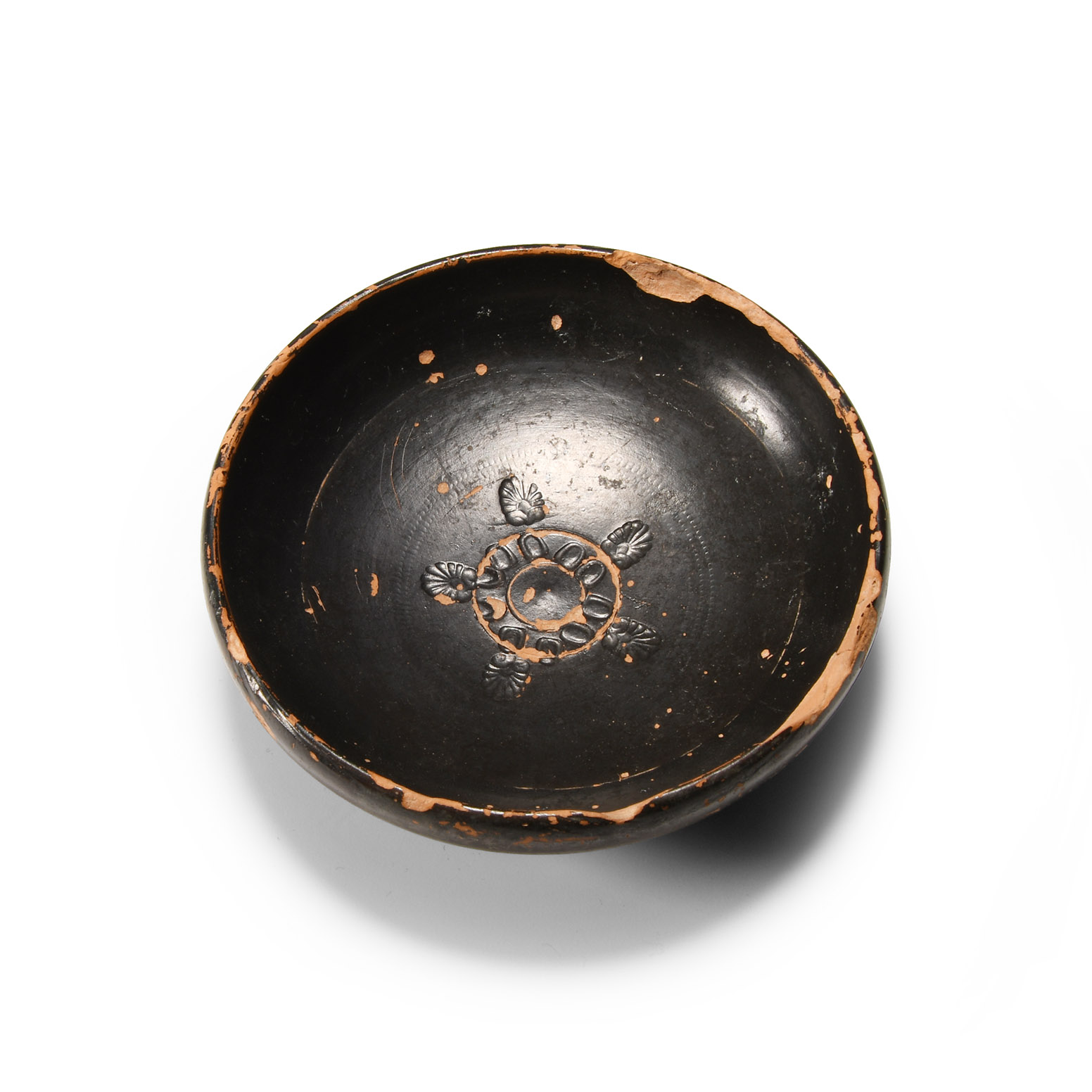
Greek Black-Ware Dish with Shell Decoration
CIRCA 5TH-4TH CENTURY B.C.
4 1/4 in. (118 grams, 10.7 cm wide).
Composed of a shallow bowl with D-section wall, broad convex stem and foot; interior stamped with seashell and geometric motifs. [No Reserve]
ProvenancePrivate UK collection formed 1990s-2000s.
Property of an East Sussex, UK, teacher.
TimeLine Auctions follows a vetting process to ensure the authenticity and legality of all items, reinforcing our commitment to integrity and responsible trading. Each antiquity, antique, and coin lot undergoes thorough examination by a vetting committee of at least ten external specialists, professional trade association members, scientists, and archaeologists: Our Vetting Process
AUCTIONS:
TimeLine is a leading auction house specialising in antiquities, ancient art, collectables, natural history, coins, medals, and books. Our auctions offer museums, collectors, historians, and enthusiasts the opportunity to acquire unique and historically significant pieces.
-
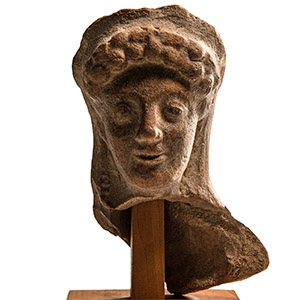
Greek Archaic Terracotta Head of Kore
6th-5th century B.C.Sold for (Inc. bp): £975
Modelled in the round wearing a diadem or headdress, either a Kore or Aphrodite, hollow-formed; accompanied by a custom-made display stand. 229 grams, 12 cm (263 grams total, 13.5 cm high including stand)
Acquired in the 1970s. Ex European private collection.
The type belongs to the evolution of the ‘Aphrodite Group’ that was distributed and copied by local workshops in Ionia and the rest of Greece. The figurines of this type are found in sanctuaries of female deities, as well as graves (eg. in Molyvoti). Similar figurines have also been found in Thassos. -
.jpg)
Cypriot Terracotta Goddess Figurine
Late 2nd millennium B.C.Sold for (Inc. bp): £1,690
With columnar body and flared base, arms raised, applied domed breasts, pinched facial features with applied mouth and ears; applied band to the brow for the hair or headdress; remains of coral-pink painted detailing. 299 grams, 20.2 cm
From the collection of French scholar and diplomat Auguste Dozon (1822-1890). Subsequently Hotel Des Ventes Monte Carlo, 6th May 2018, lot 7. With French cultural property passport. -
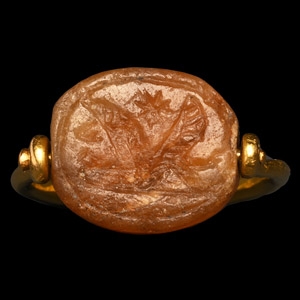
Graeco-Phoenician Stone Scaraboid with Winged Beast in Gold Swivel Ring
Circa 7th-5th century B.C.Sold for (Inc. bp): £546
The scaraboid engraved to one face with a winged creature facing left, possibly a gryphon, a star in the field above; set in a later gold ring with round cross-section and stamped maker's mark in a triangular cartouche; articulate swivel. 7.68 grams, 30.50 mm overall, 20.15 mm internal diameter (approximate size British T 1/2, USA 9 3/4, Europe 21.89, Japan 21)
Collected since the 1970s. Ex Everitt collection, acquired by descent 2017.
