
Loading, please wait...
LOT 0580
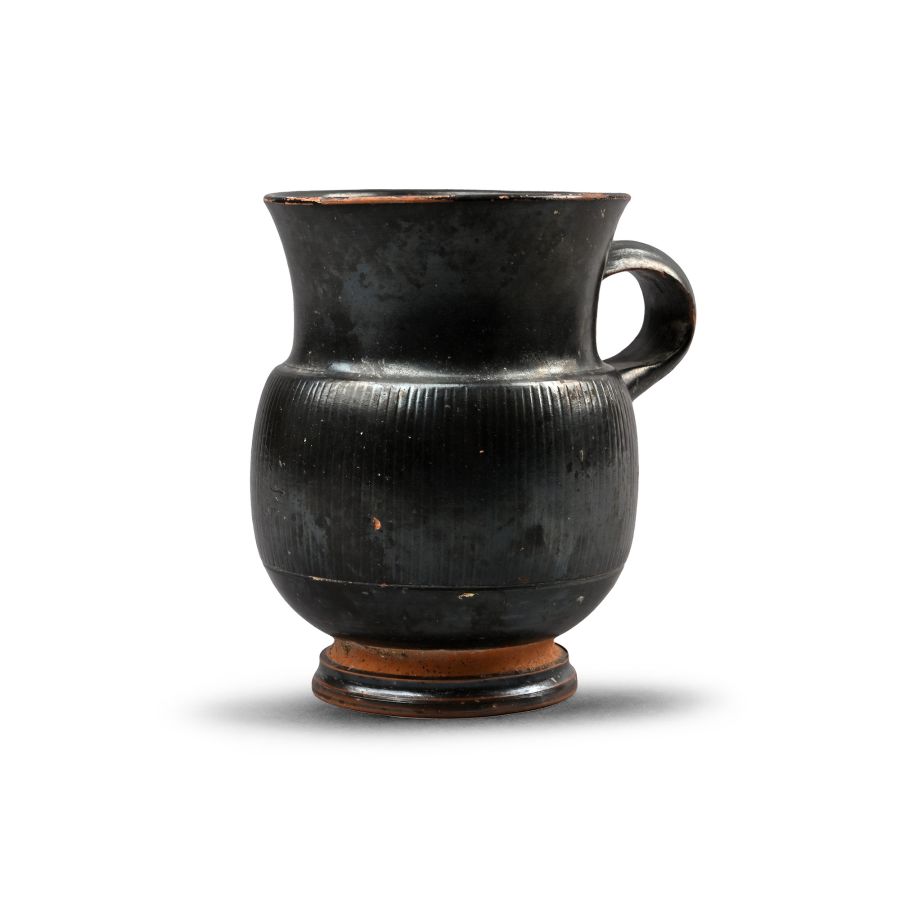
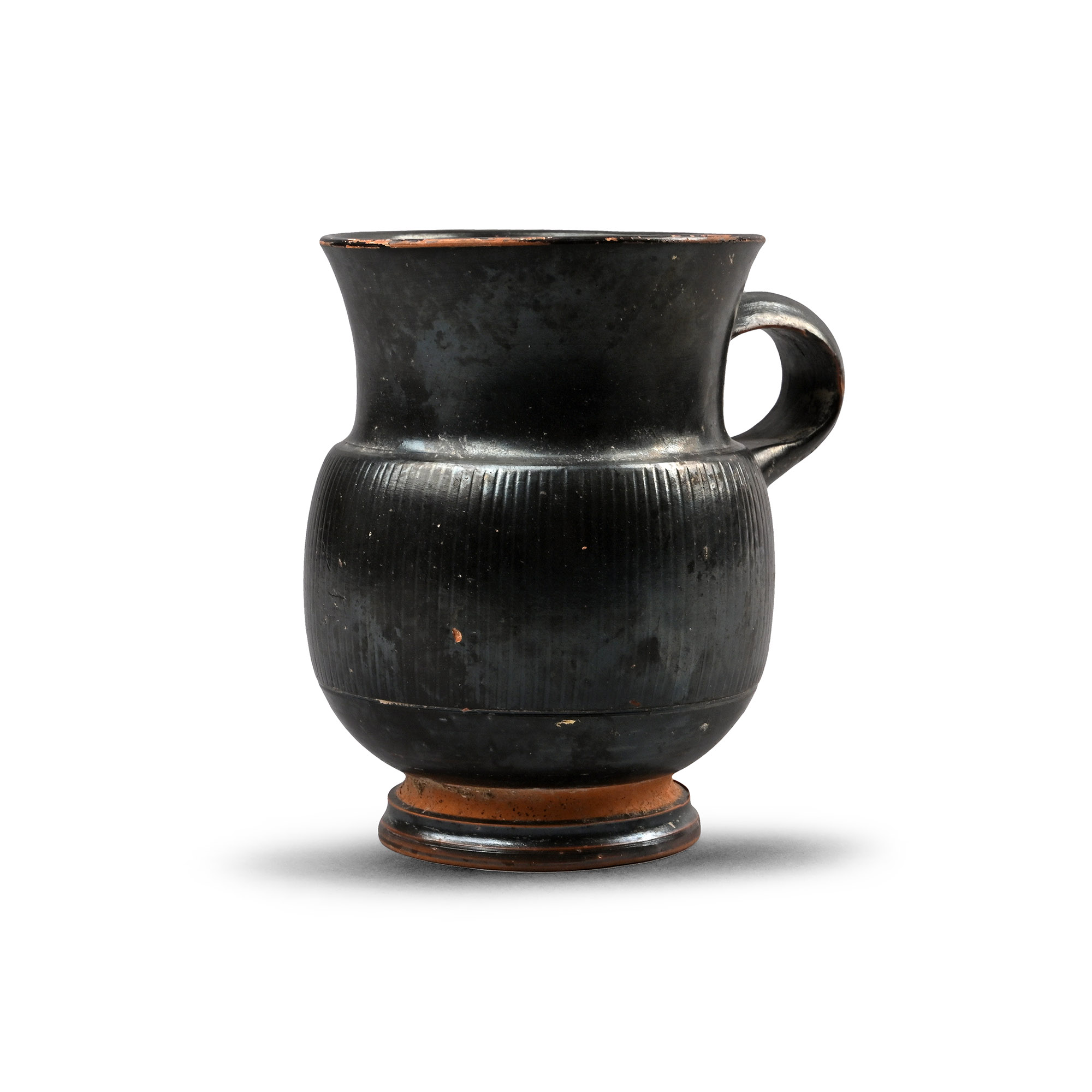
Greek Black-Glazed Thistle Mug
APULIAN, 4TH CENTURY B.C.
3 3/4 in. (109 grams, 96 mm).
In black glaze with a single looped handle, expanding neck, ribbed belly and stepped foot with red ochre band.
ProvenanceAcquired on the art market between the late 1990s and mid-2000s.
Estate of the late Barry Paul Buxton (1944–2024), Oakham, Rutland.
Acquired on the UK art market, 2025.
See T. B.L. Webster, "Towards a Classification of Apulian Gnathian," Bulletin of the Institute of Classical Studies at the University of London, vol.15, 1968.
CONDITIONTimeLine Auctions follows a vetting process to ensure the authenticity and legality of all items, reinforcing our commitment to integrity and responsible trading. Each antiquity, antique, and coin lot undergoes thorough examination by a vetting committee of at least ten external specialists, professional trade association members, scientists, and archaeologists: Our Vetting Process
AUCTIONS:
TimeLine is a leading auction house specialising in antiquities, ancient art, collectables, natural history, coins, medals, and books. Our auctions offer museums, collectors, historians, and enthusiasts the opportunity to acquire unique and historically significant pieces.
-
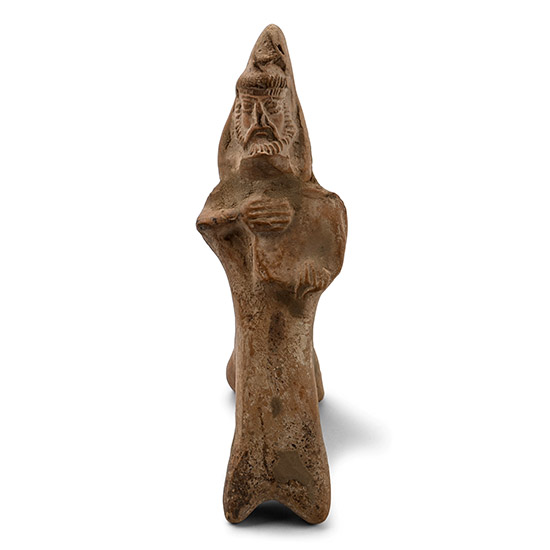
Parthian Horse and Rider Figurine
1st century B.C.-3rd century A.D.Estimate: £150 - 200 (+bp*)
Opening Bid: £75
Formed as a stylised horseman on four splayed legs, with finely modelled facial features and beard; the head of the horse integrated into the rider's body. 97 grams, 12.9 cm
Acquied on the UK art market. Private collection, London, UK. -
.jpg)
Eastern Greek Marble Figure of Aphrodite
1st century B.C.-1st century A.D.Estimate: £5,000 - 7,000 (‡+bp*)
Opening Bid: £2,778
Carved in the round figure of the goddess standing nude with one hand raised and the other on her pudendum, her hair gathered into a chignon with lateral bunches on the crown and with voids to allow for the suspension of small gold earrings; putto at her left knee; left hand partly absent; remounted on a socle base. 1.2 kg, 32.7 cm
Acquired in the 1992. Private collection, Switzerland, thence by descent. Private collection, since the late 1990s. This lot has been checked against the Interpol Database of stolen works of art and is accompanied by a search certificate number no.12860-241669. -
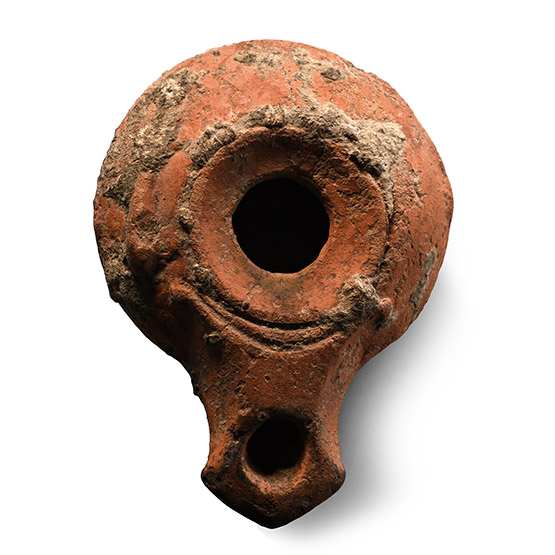
Greek Terracotta Oil Lamp
Hellenistic, 1st century B.C.Sold for (Inc. bp): £85
Biconvex in section, with a large central filler hole and a flange on the shoulder; elongated volute nozzle; low basal pad; some accretions to the shoulder. 67.9 grams, 81 mm
From the Lloyd and Jeanne Raport collection, Washington, D.C. and Florida, USA, formed between 1972-2000. Acquired through Bonhams, London, UK.
