
Loading, please wait...
LOT 0516
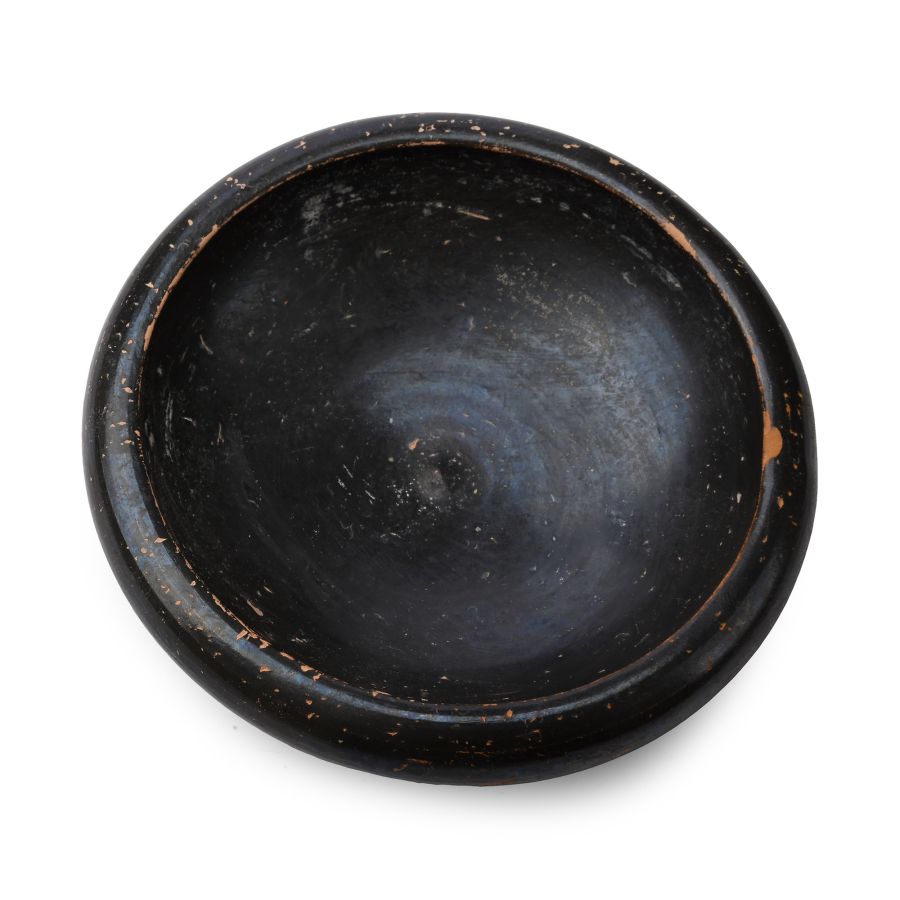
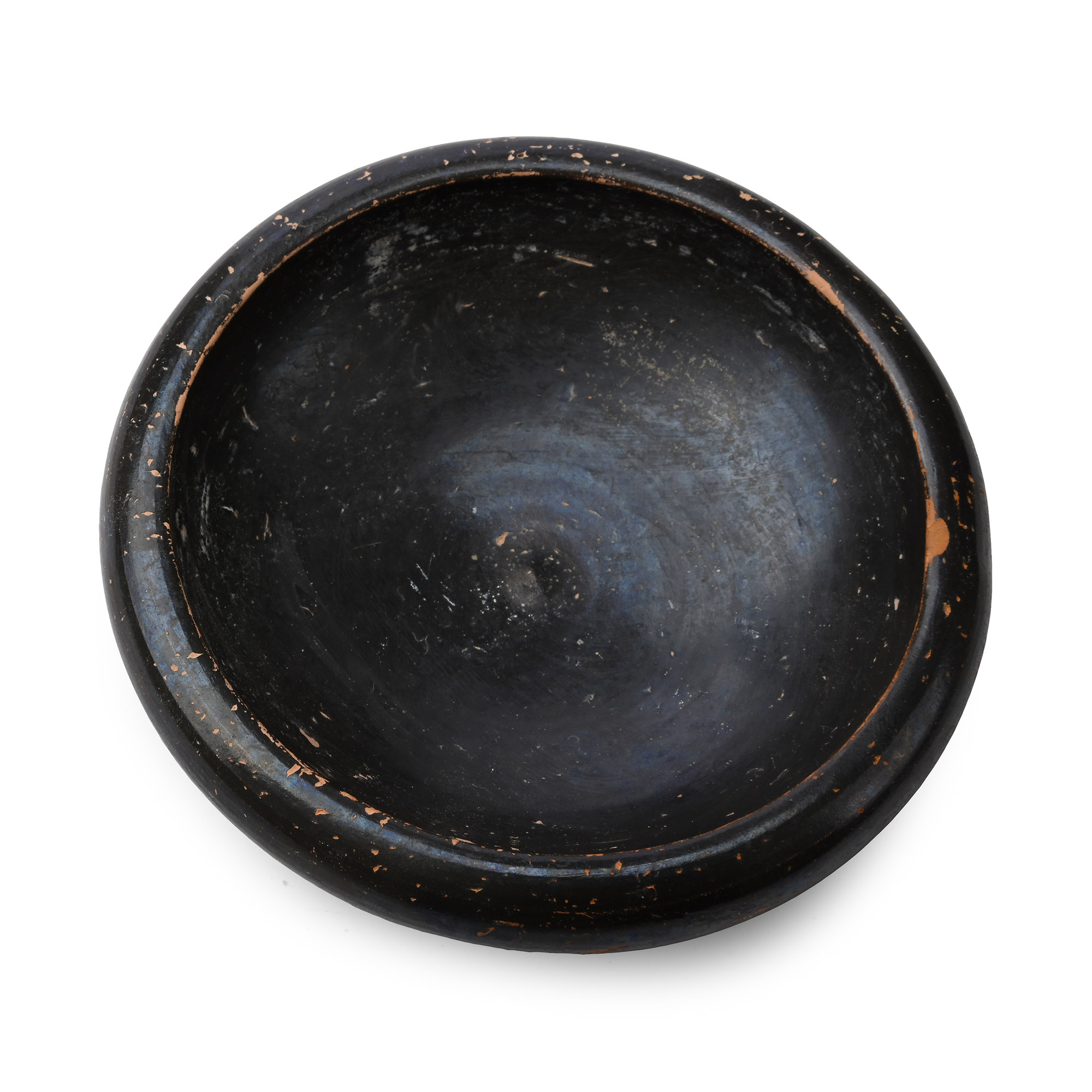
Greek Black Glazed Terracotta Dish
5TH-4TH CENTURY B.C.
4 in. (149 grams, 10.2 cm wide).
Squat in profile with a rounded rim and flared foot.
ProvenanceAcquired on the London art market.
TimeLine Auctions, 4 June 2017, no.1447.
Private collection, Suffolk.
TimeLine Auctions follows a vetting process to ensure the authenticity and legality of all items, reinforcing our commitment to integrity and responsible trading. Each antiquity, antique, and coin lot undergoes thorough examination by a vetting committee of at least ten external specialists, professional trade association members, scientists, and archaeologists: Our Vetting Process
AUCTIONS:
TimeLine is a leading auction house specialising in antiquities, ancient art, collectables, natural history, coins, medals, and books. Our auctions offer museums, collectors, historians, and enthusiasts the opportunity to acquire unique and historically significant pieces.
-
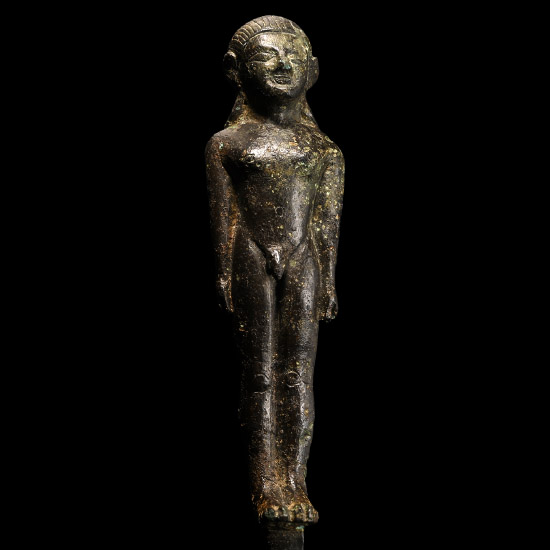
Etruscan Bronze Figure of a Kouros
Late 6th century B.C.Estimate: £2,000 - 3,000 (+bp*)
Current Winning Bid: £1,200
Depicting a youthful nude kouros standing frontally, with a long, slender body, broad shoulders, a narrow waist, and arms hanging close to the sides; the head, slightly oversized, characterised by an oval face, large almond-shaped eyes, an Archaic smile, and finely modelled ears, the hair arranged in beaded locks framing the forehead and falling onto the shoulders, reflecting the influence of contemporary Greek Archaic sculpture; standing on an integral rectangular base provided with a long tang for attachment. 118 grams, 11.2 cm
Acquired on the European art market between 1960s and 1980s. English private collection, property of a gentleman. Bertolami Fine Art, London, Auction 54, 9 November 2018, no.88. This lot has been checked against the Interpol Database of stolen works of art and is accompanied by search certificate number no.13320-258214.
The elegant proportions and linear modelling place the statuette within the widespread production of Etruscan votive bronzes of the Late Archaic period, probably intended as a sanctuary dedication. -
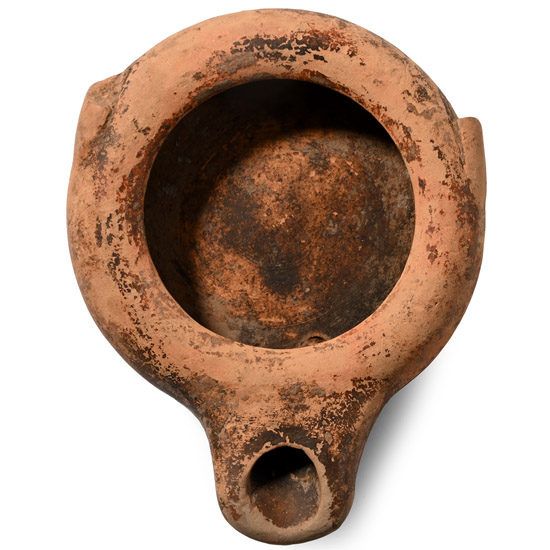
Greek Terracotta Oil Lamp
Circa late 5th century B.C.Sold for (Inc. bp): £85
Shallow, round body with inturned rim to the central vent, square-ended nozzle and low foot; lateral lugs forming attachment points for a handle (absent); old collector's labels to underside and '1801' to nozzle; typed data panel. 56 grams, 90 mm
From the collection of the late Bernard C. Pickard, Hampshire, UK, the owner of Bernard C. Pickard Antiquities, which closed in 1987, he had been collecting since the mid 1950s. Accompanied by a typed information display card.
Bernard Pickard was a close friend of Richard Hattatt, the renowned author of several books on ancient brooches. Hattatt acknowledges in his first book, Ancient & Romano-British Brooches, published in 1982, that Mr Pickard first aroused his interest in brooches and inspired him in writing his books during his retirement. Mr Pickard also wrote the foreword to the section on Roman animal brooches, op.cit. p.158-160. -
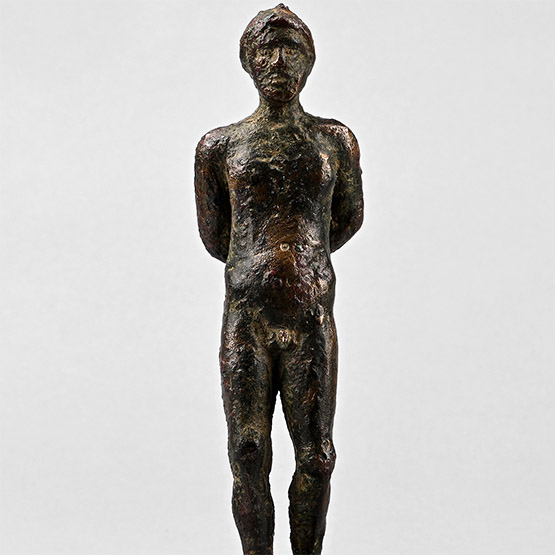
Greek Bronze Figure of a Bound Captive
Hellenistic, 2nd century B.C.Sold for (Inc. bp): £2,860
Modelled in the round nude male standing with hands bound behind his back; with short cropped hair and slender figure; left foot absent; mounted on a custom-made stand. 491 grams, 17 cm including stand
Ex S.K. collection. Acquired on the German art market, July 1995. Accompanied by an academic report by Dr Raffaele D'Amato. This lot has been checked against the Interpol Database of stolen works of art and is accompanied by a search certificate number no.12518-232076.
The character's hairstyle of the statuette is simple, and his hair is short, not treated with chalk like that of the famous ‘dying Galatian’ from Pergamon. The gaze is fixed on the distance, while the bony, beardless, long-limbed figure conveys the prisoner's energy. The nose here takes on a strong characteristic together with the broad jaw, which is also recognisable in later statuettes of Roman age. These characteristics, combined with those of nudity, allow us to recognise the figure of the prisoner as a Celtic warrior.
