
Loading, please wait...


LOT 0529
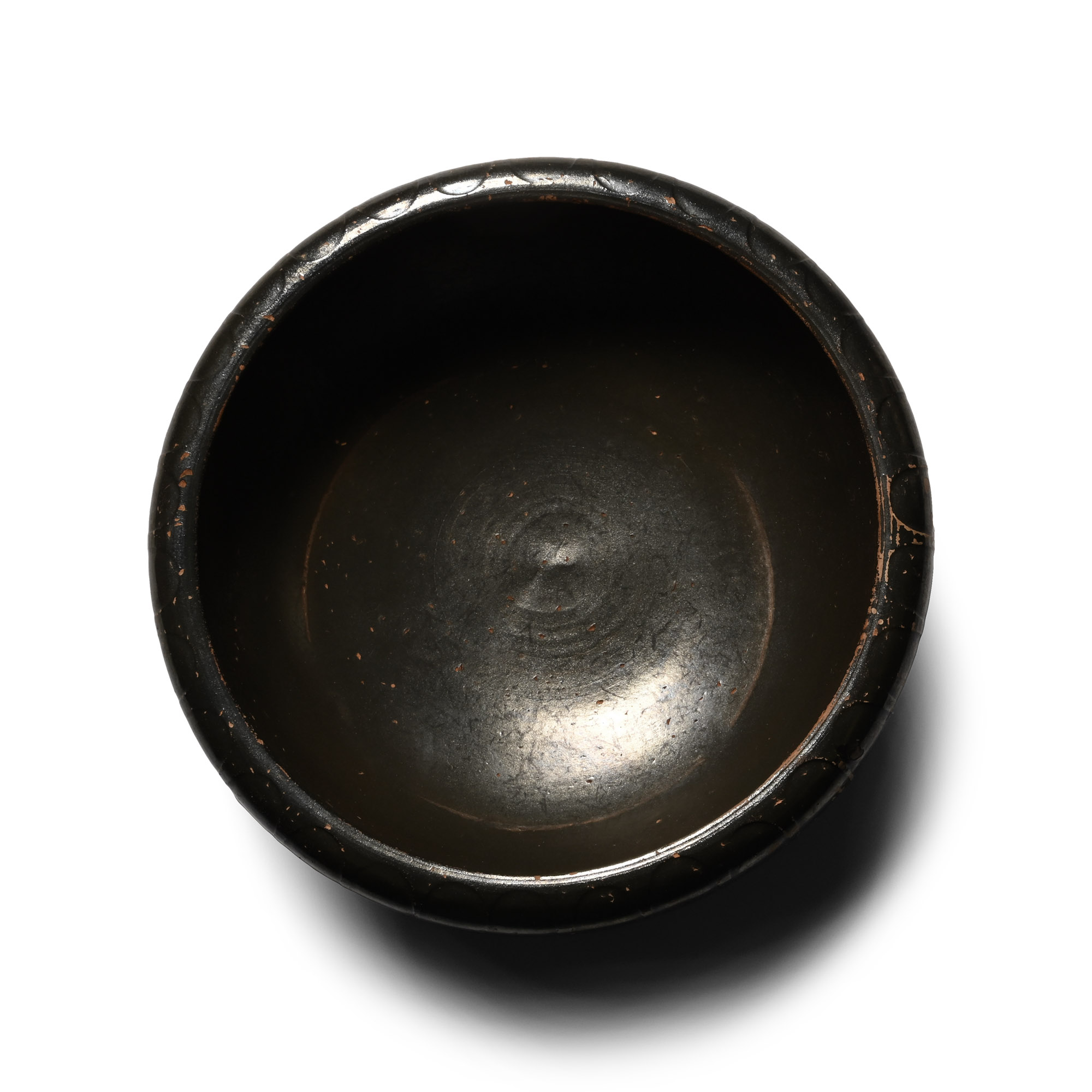
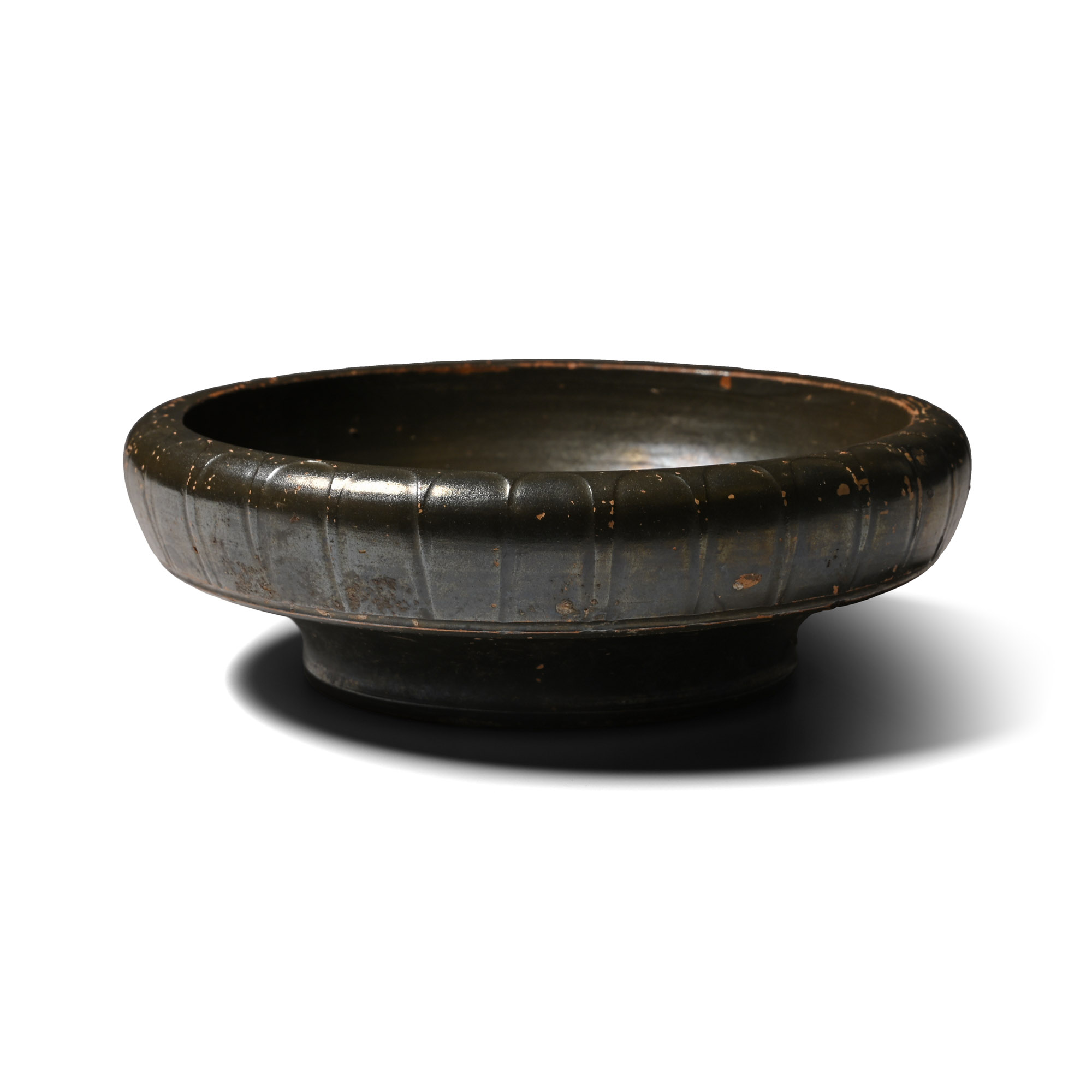
Greek Black-Glazed Terracotta Bowl with Stamped Decoration
CIRCA 330 B.C.
4 3/4 in. (183 grams, 12.2 cm).
Flat bowl on a ring-base, convex rim decorated with a flat-profiled tongue-leaf frieze and fine groove beneath.
Provenancewith Galerie Gilgamesh, prior 2003.
Accompanied by a copy of an Art Loss Register certificate no.S00035402.
This lot is accompanied by an illustrated lot declaration signed by the Head of the Antiquities Department, Dr Raffaele D’Amato.
TimeLine Auctions follows a vetting process to ensure the authenticity and legality of all items, reinforcing our commitment to integrity and responsible trading. Each antiquity, antique, and coin lot undergoes thorough examination by a vetting committee of at least ten external specialists, professional trade association members, scientists, and archaeologists: Our Vetting Process
AUCTIONS:
TimeLine is a leading auction house specialising in antiquities, ancient art, collectables, natural history, coins, medals, and books. Our auctions offer museums, collectors, historians, and enthusiasts the opportunity to acquire unique and historically significant pieces.
LOT 0529
Greek Black-Glazed Terracotta Bowl with Stamped Decoration
Estimate £200 - 300€230 - 350 (for guidance only)$270 - 410 (for guidance only)
-
Greek Terracotta Vessel and Fragment Group
Circa 6th-3rd century B.C. and laterSold for (Inc. bp): £143
Including a hollow-formed femal figurine, aryballos, dish, and various fragments; piriform aryballos after the antique. 773 grams total, 3.6-15.2 cm
Cambridgeshire, UK, collection, 1990s. This lot is accompanied by an illustrated lot declaration signed by the Head of the Antiquities Department, Dr Raffaele D’Amato. -
Italic Navicella Bronze Fibula with Figural Decoration
7th century B.C.Sold for (Inc. bp): £52
With navicella-shaped bow decorated with incised parallel lines, three miniature appliqués in the form of stylised monkeys and two lateral knops, foot preserved, pin tip absent. 29.4 grams, 68 mm
W. Rosenbaum, Ascona, before 1984. Accompanied by a copy of an Art Loss Register certificate no.S00091284. This lot is accompanied by an illustrated lot declaration signed by the Head of the Antiquities Department, Dr Raffaele D’Amato. -
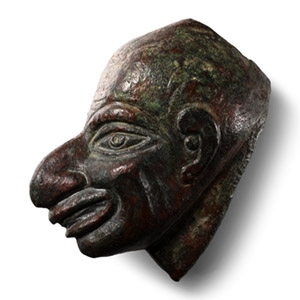
Greek Bronze Head of a Grotesque Man
3rd century B.C.Estimate: £2,500 - 3,500 (‡+bp*)
Opening Bid: £1,250
Hollow-formed 'moneybox' with exaggerated nose and lips, small crescent-and-pellet ears, low-relief eyes with impressed pupils, small lock of hair to the scalp, vesica-shaped socket to the underside; pierced at the scalp and at the right ear. 67 grams, 48 mm
with Artemis Gallery, Munich, before 1998. Acquired by the present owner from the above in 2003. This lot has been checked against the Interpol Database of stolen works of art and is accompanied by search certificate number no.12212-222320. This lot has been cleared against the Art Loss Register database, and is accompanied by an illustrated lot declaration signed by the Head of the Antiquities Department, Dr Raffaele D’Amato.
