
Loading, please wait...
LOT 0106
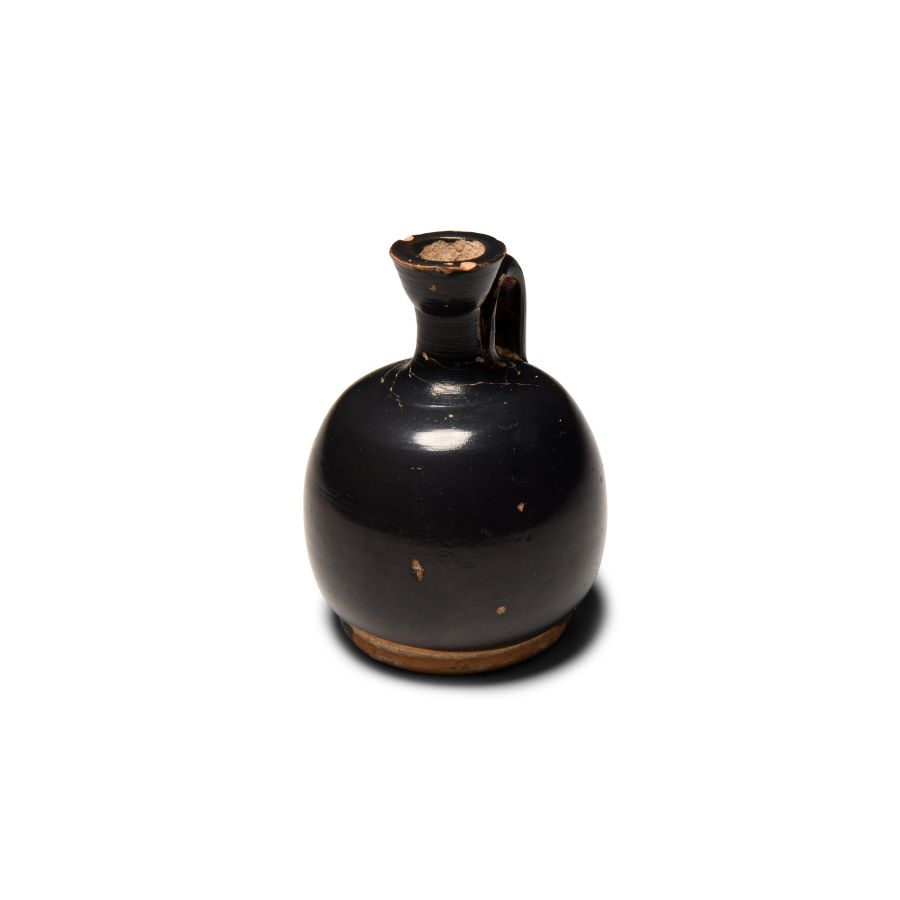
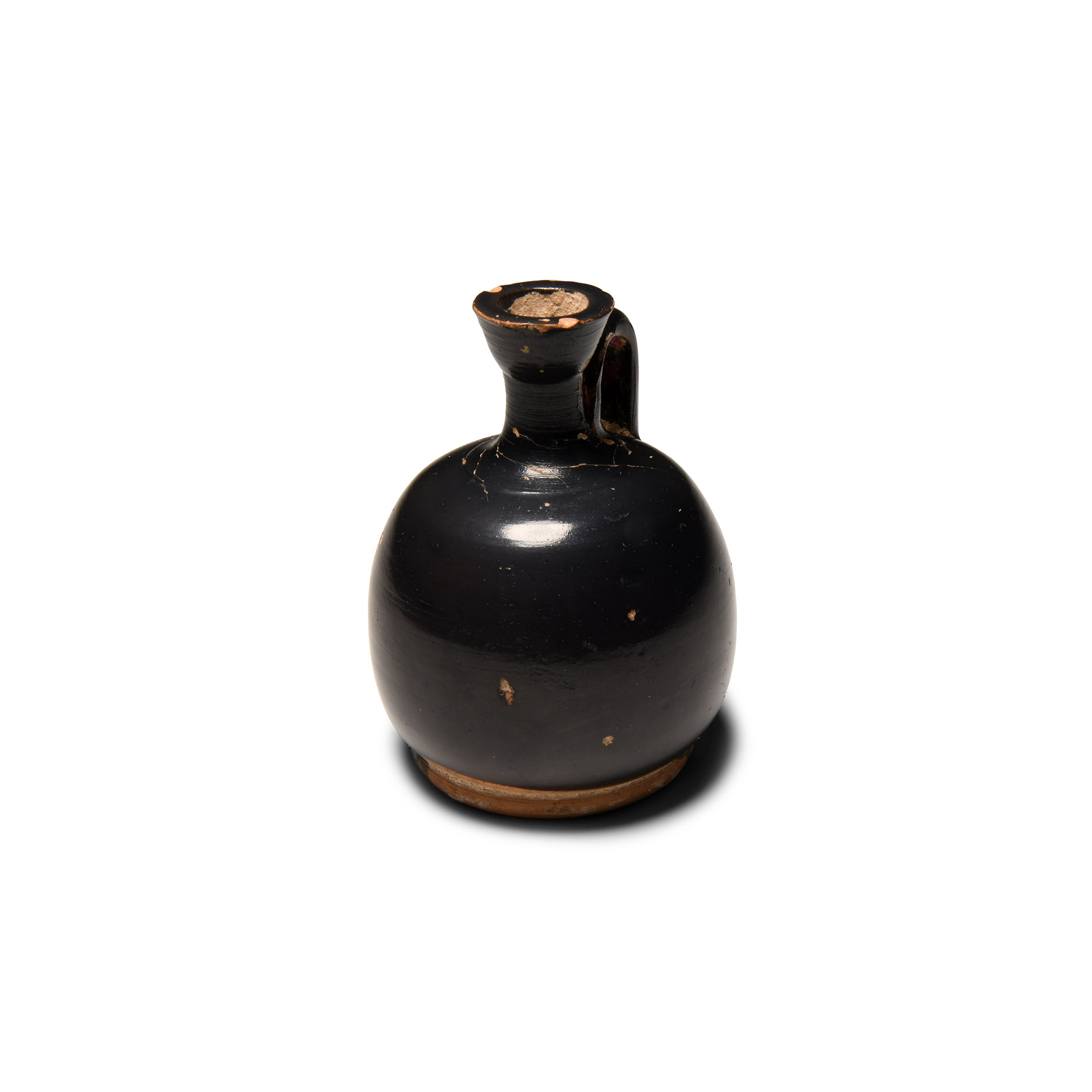
Greek Black-Glazed Lekythos
5TH CENTURY B.C.
2 5/8 in. (47 grams, 66 mm).
Squat-bodied with a slender neck, shaped neck and D-section handle.
ProvenanceAcquired in Europe before 2001.
European collection.
TimeLine Auctions follows a vetting process to ensure the authenticity and legality of all items, reinforcing our commitment to integrity and responsible trading. Each antiquity, antique, and coin lot undergoes thorough examination by a vetting committee of at least ten external specialists, professional trade association members, scientists, and archaeologists: Our Vetting Process
AUCTIONS:
TimeLine is a leading auction house specialising in antiquities, ancient art, collectables, natural history, coins, medals, and books. Our auctions offer museums, collectors, historians, and enthusiasts the opportunity to acquire unique and historically significant pieces.
-
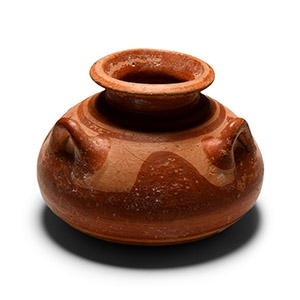
Mycenaean Painted Pottery Alabastron
14th-13th century B.C.Estimate: £2,000 - 3,000 (‡+bp*)
Opening Bid: £1,000
Formed with a squat globular body, everted rim and three lug handles to the shoulder; painted reddish-brown over a cream slip with concentric bands and rings to the mouth, neck, shoulder and base, larger solid undulating forms covering the lower body. 70 grams, 69 mm
Acquired from Royal Athena Gallery, 2003. This lot has been checked against the Interpol Database of stolen works of art and is accompanied by search certificate number no.11851-206833.
Late Helladic IIIA period of Mycenaean culture. -
.jpg)
Cypriot Bichrome Ware Horse Model
Circa 850–750 B.C.Sold for (Inc. bp): £910
Modelled in the round, detailed in black and crimson. 183 grams, 13 cm high
Lt. Col. H.A. Hill, R.A.M.C. while stationed in Cyprus as S.M.O in the 1920s, thence by descent. -
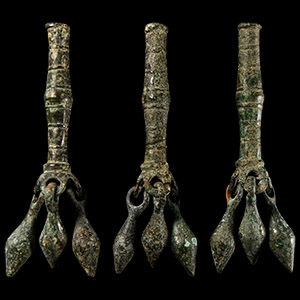
Etruscan Bronze Pendant Group
Circa 8th century B.C.Estimate: £400 - 600 (+bp*)
Opening Bid: £200
Comprising three pendant clusters, each a tube with balustered middle section and ribs, radiating loops at the lower end with suspended biconvex dangles. 90 grams total, 78 mm each
Acquired in the late 1970s. Ex Herr Bernhard Muller collection. with Galerie Ostracon, circa 2015. Accompanied by detailed collector's catalogue pages including description and photograph.
