
Loading, please wait...
LOT 0802
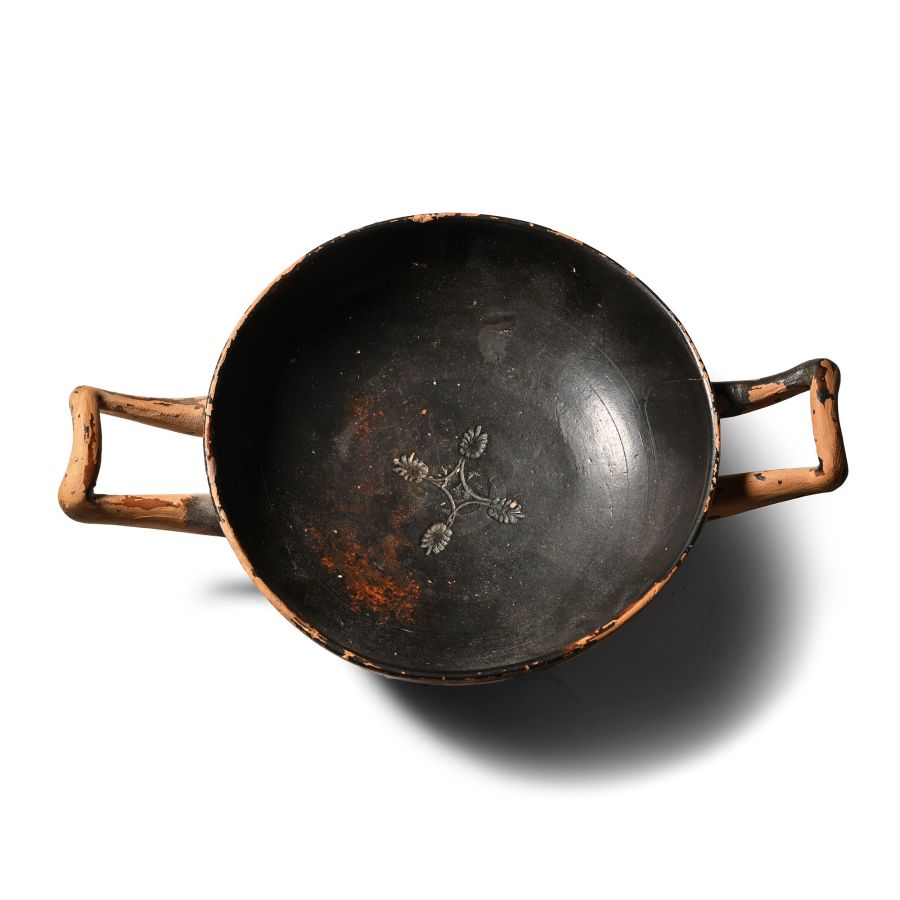
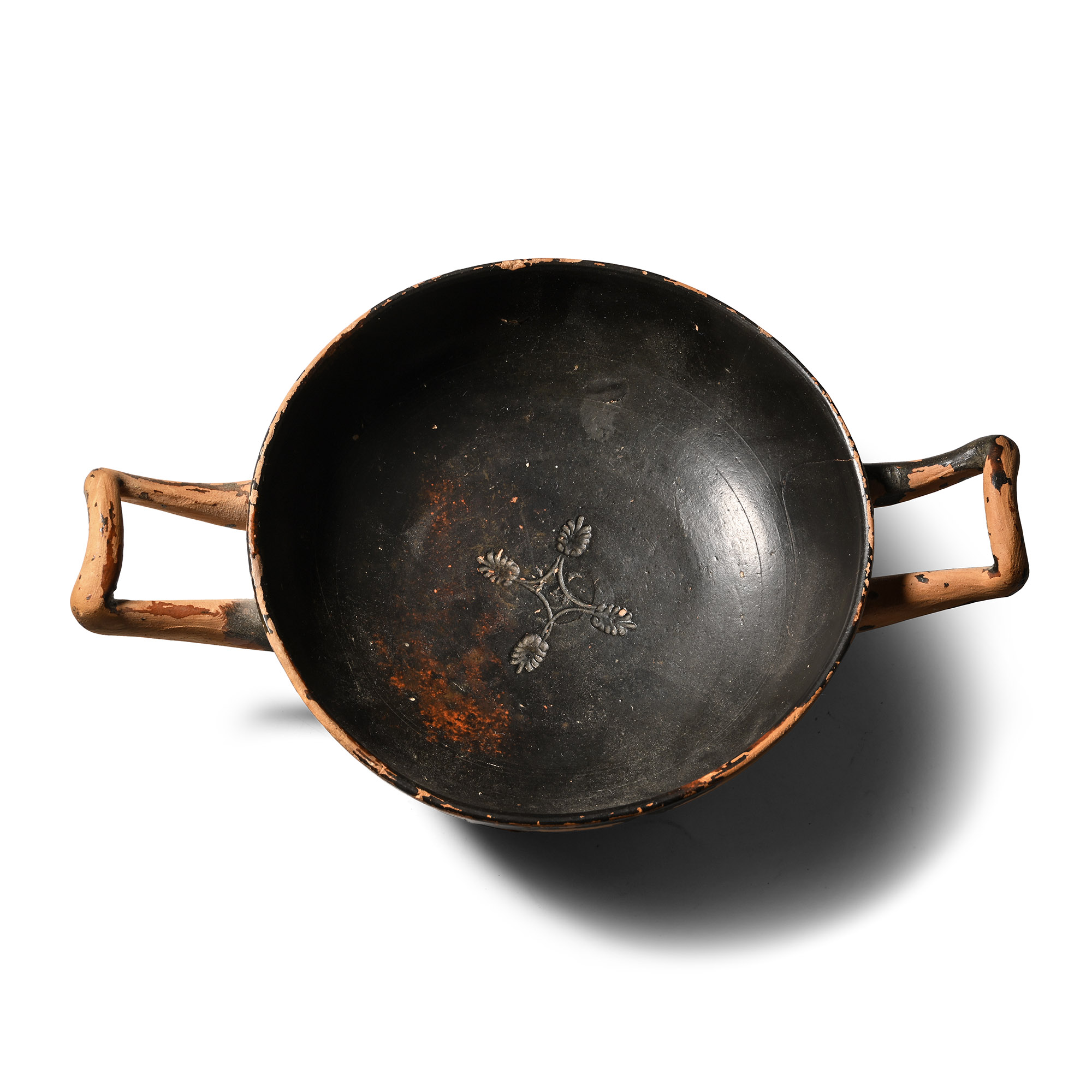
Greek Black-Glazed Kylix with Floral Design
ETRUSCAN, CIRCA 5TH CENTURY B.C.
8 in. (169 grams, 20.1 cm wide).
Comprising a low foot of rare profile; four interconnected palmettes to the tondo; concentric rib on the interior; looped handles; old collector's ticket: 'Etruscan black pottery squat kylix with two handles. Incised in the tondo are four vine leaves. Found at Gervetei. Fifth century BC. Bought in Rome, Via del Populo, September 1964'. [No Reserve]
ProvenanceFrom the private collection of Peter Clayton, FCILIP, Dip, Arch, FSA, FRNS, Hemel Hempstead, Hertfordshire, UK; formed since the late 1950s.
Accompanied by an old handwritten identification card written by Peter Clayton.
TimeLine Auctions follows a vetting process to ensure the authenticity and legality of all items, reinforcing our commitment to integrity and responsible trading. Each antiquity, antique, and coin lot undergoes thorough examination by a vetting committee of at least ten external specialists, professional trade association members, scientists, and archaeologists: Our Vetting Process
AUCTIONS:
TimeLine is a leading auction house specialising in antiquities, ancient art, collectables, natural history, coins, medals, and books. Our auctions offer museums, collectors, historians, and enthusiasts the opportunity to acquire unique and historically significant pieces.
LOT 0802
Greek Black-Glazed Kylix with Floral Design
Estimate £200 - 300€230 - 350 (for guidance only)$270 - 410 (for guidance only)
-
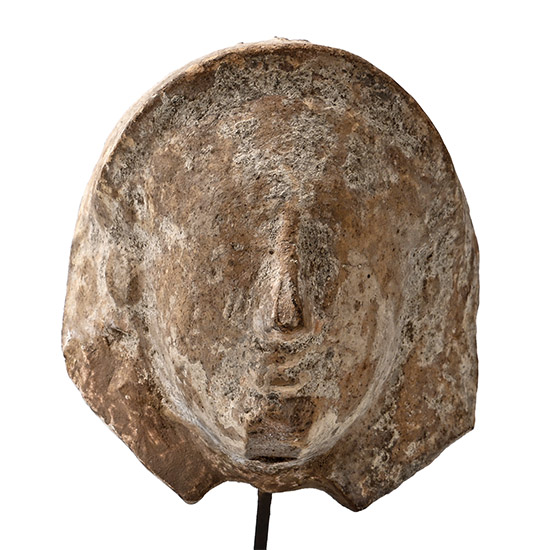
Greek Terracotta Female Protome Head
Late 6th century B.C.Estimate: £150 - 200 (‡+bp*)
Opening Bid: £70
Hollow-formed female face with a pointed nose and narrow lips, wearing a pair of disc earrings, head covered by a stephane headdress and a veil, a small hole on top for suspension; mounted on a custom-made stand. 178 grams total, 13.5 cm including stand
Ex André Lorenceau (1930-2019), Baselland, 1960s-2000; thence by descent.
Terracottas of this type typically served as votive offerings and may represent the deity to whom the offering was presented. -
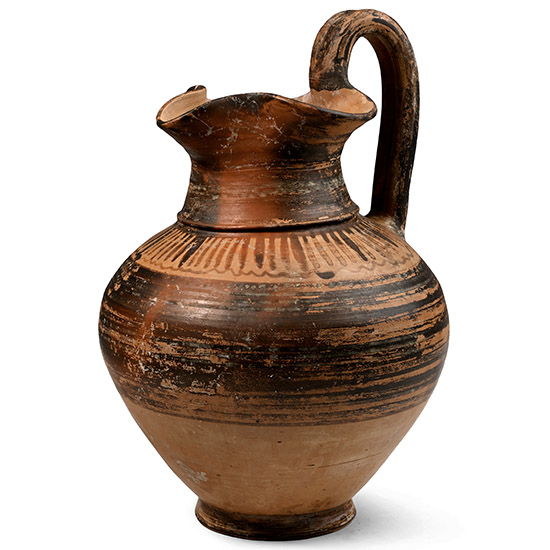
Etruscan Oinochoe with Tongue Frieze
7th-6th century B.C.Estimate: £1,800 - 2,400 (‡+bp*)
Opening Bid: £825
Bulbous in profile with a high, double-ribbed handle from the trefoil mouth to the shoulder; carinated collar above frieze of radiating tongues in glaze on the shoulder; two wavy bands on the neck, lines on the belly in opaque white. 1.04 kg, 28 cm
Ex Prof. A., Basel, Switzerland; thence by descent. This lot has been checked against the Interpol Database of stolen works of art and is accompanied by search certificate no.13535-263127.
Greek influence in the Etruscan world emerged during the Orientalizing period with the introduction of wine, likely an Eastern variety, following the tradition of spiced Syro-Phoenician wines that had been significant in the preceding era. This involved not merely the importation of the product itself, but also the introduction and subsequent local production of the associated ceramic vessels used for its consumption, such as this oinochoe. This is significant, given that the banquet custom and the ritual of the symposium,in which participants reclined while dining, would not emerge in Etruria until later. -
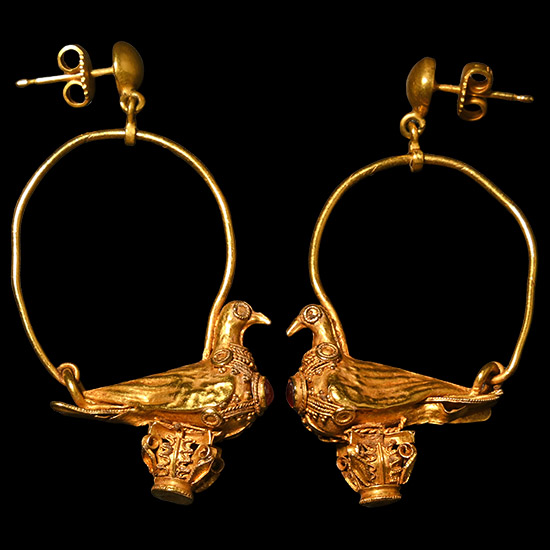
Greek Gold Earring Pair with a Dove above a Corinthian Capital
Hellenistic, circa 3rd-2nd century B.C.Estimate: £3,000 - 4,000 (‡+bp*)
Bids: 1 | Current Bid: £1,500
Each a filigree hoop with a hollow-formed sheet-gold dove with applied filigree and granulation collar, a cell to the chest with inset garnet cabochon, perching on the scrolled capital of a column; supplied with modern earring attachments so that they can be worn, with a presentation box. 10.08 grams total, 51-52 mm
Acquired from Derek Content, 8 July 1976 ($3,800). Private collection of Kal Noselson, New York, acquired between 1976 and the late 1990s; thence by descent. Accompanied by a handwritten invoice/letter with references from Derek Content for the piece, dated 8 July 1976. This lot has been checked against the Interpol Database of stolen works of art and is accompanied by search certificate no.13421-259832.
The earrings belong to the class of figure-pendant type, which was popular in Greece from the 4th century B.C. The Hellenistic period shows a distinctive spirit in the varied designs of these little earrings. One of the most employed motifs was that of the dove, which owed its popularity in close connection with the cult of Aphrodite.
