
Loading, please wait...
LOT 0574
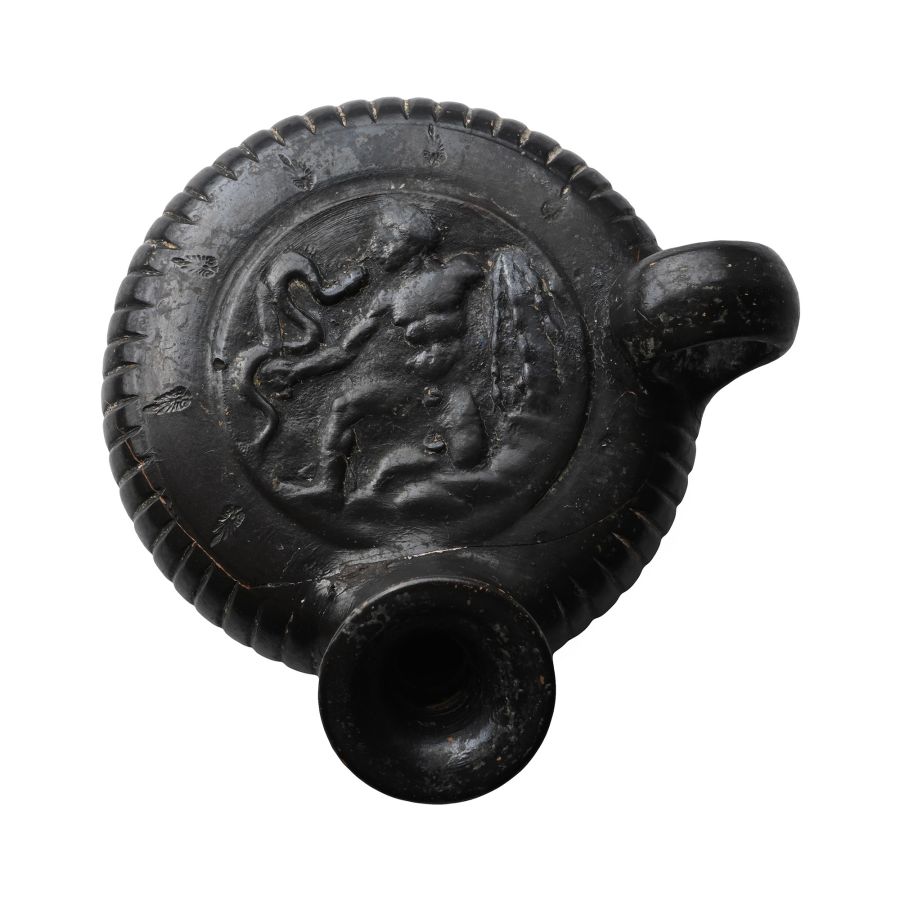
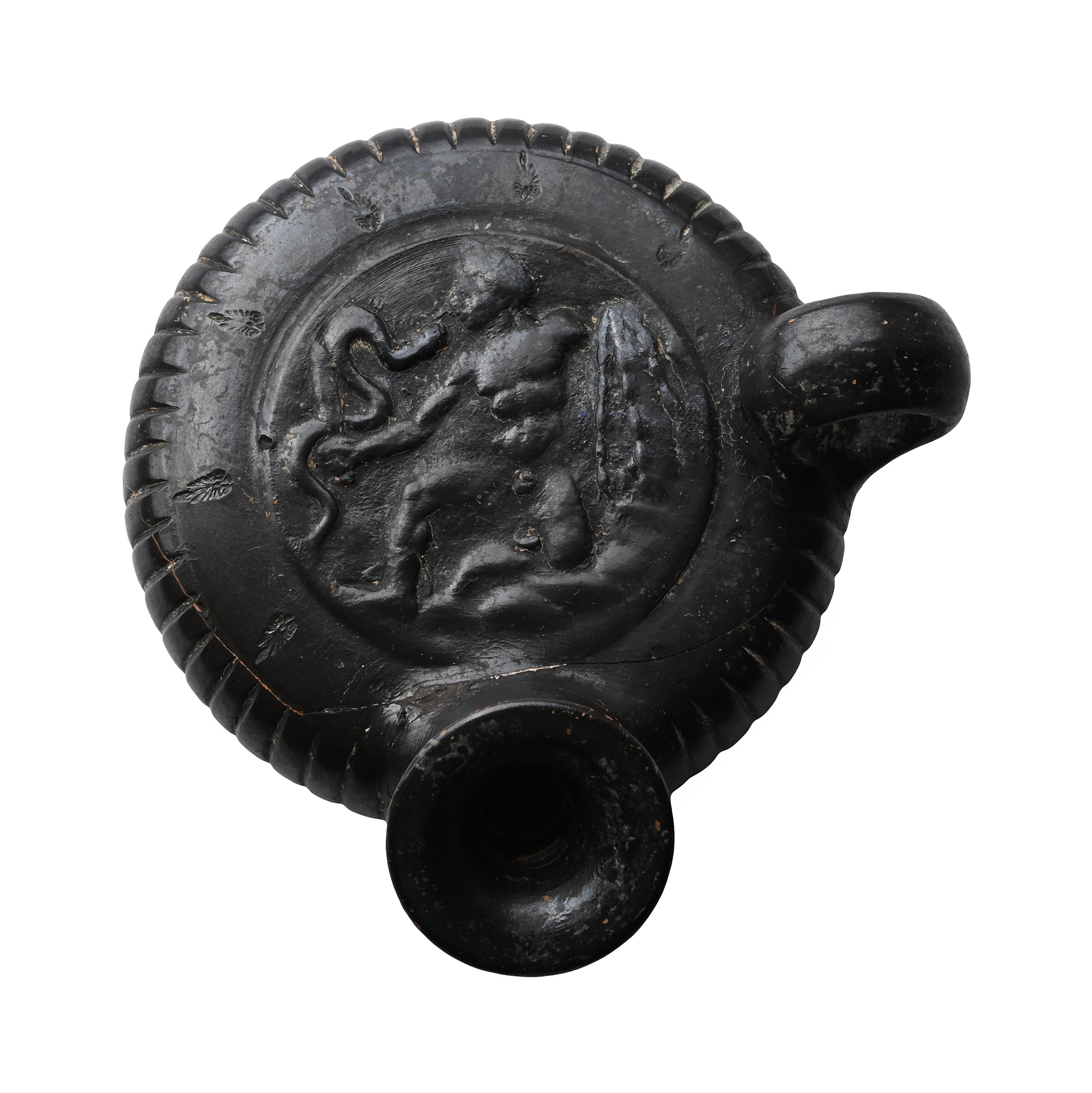
Greek Black-Glazed Guttus with Infant Hercules
APULIAN, 3RD-2ND CENTURY B.C.
4 1/2 in. (165 grams, 11.5 cm).
With basal ring, trumpet-shaped spout and ring handle, disc decorated with low-relief image of infant Hercules battling a snake, shoulder with palmettes; crack across the body.
ProvenanceFrom the stock of a former UK antiquarian, acquired at trade fairs and from private collection formed in the 1980s-1990s.
Private collection, Europe.
Angered by his infidelity, Zeus' wife Hera attempted to kill the infant Herakles by sending two snakes to his cradle, where he slept. As the snakes coiled around the baby Herakles woke and strangled them, thus displaying his superhuman strength at an early age.
CONDITIONTimeLine Auctions follows a vetting process to ensure the authenticity and legality of all items, reinforcing our commitment to integrity and responsible trading. Each antiquity, antique, and coin lot undergoes thorough examination by a vetting committee of at least ten external specialists, professional trade association members, scientists, and archaeologists: Our Vetting Process
AUCTIONS:
TimeLine is a leading auction house specialising in antiquities, ancient art, collectables, natural history, coins, medals, and books. Our auctions offer museums, collectors, historians, and enthusiasts the opportunity to acquire unique and historically significant pieces.
-
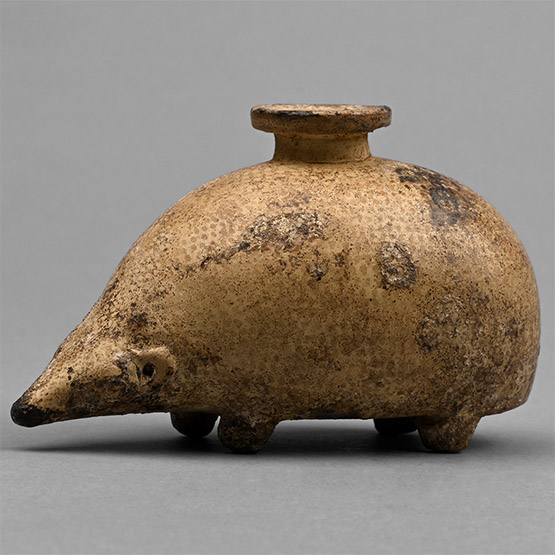
Eastern Greek Terracotta Hedgehog Aryballos
6th century B.C.Sold for (Inc. bp): £1,690
Hollow-formed with textured body and four stub legs, conical nose and lateral flanges with impressed point eyes; discoid flange rim to the neck with incised petal detailing. 55 grams, 98 mm
Ex Mrs IM collection, nr 18 (widow of Leo Mildenberg), formed in Zurich, gift from her husband between 1975-2000. Acquired by the present owner from the above. This lot has been checked against the Interpol Database of stolen works of art and is accompanied by search certificate number no.12208-222174. -
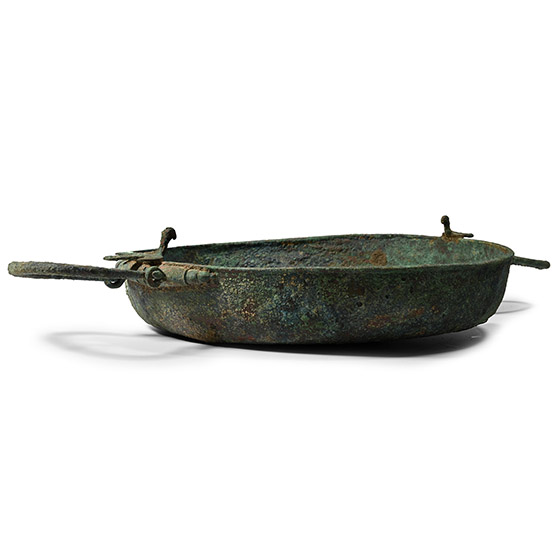
Greek Archaic Bronze Phiale with Handles
7th-6th century B.C.Estimate: £1,500 - 2,000 (‡+bp*)
Opening Bid: £833
Broad and squat in profile with thickened rim, two lateral omega-shaped drop handles each mounted below the rim on a crescentic bar surmounted by a model bird facing inwards; base fragmentary. 915 grams, 44 cm wide
Acquired in the mid 1980s-1990s. Private collection, Switzerland, thence by descent. Private collection, since the late 1990s. This lot has been checked against the Interpol Database of stolen works of art and is accompanied by search certificate number no.12210-222327. -
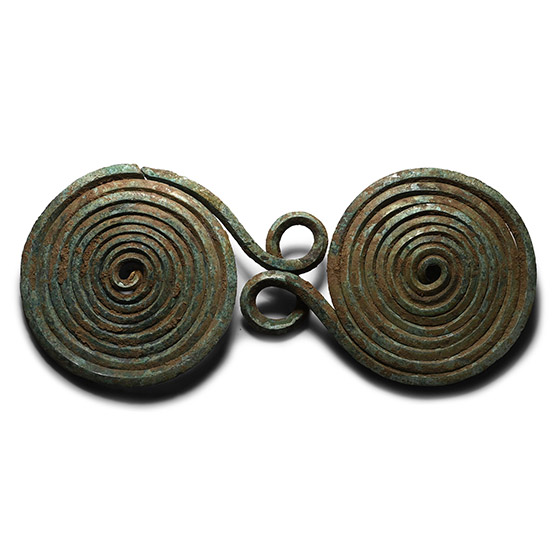
Large Greek Bronze Spiral Fibula
Geometric, 7th-6th century B.C.Estimate: £400 - 600 (‡+bp*)
Opening Bid: £200
Formed from a single square-section filament rolled into two 'spectacle' discs; one of the spirals terminating in a long pin, the other in a hook serving as the catchplate; openwork figure-of-eight at the centre; pin broken, coils separated. 159 grams, 17 cm
Acquired in the mid 1980s-1990s. Private collection, Switzerland, thence by descent. Private collection, since the late 1990s.
