
Loading, please wait...
LOT 0646
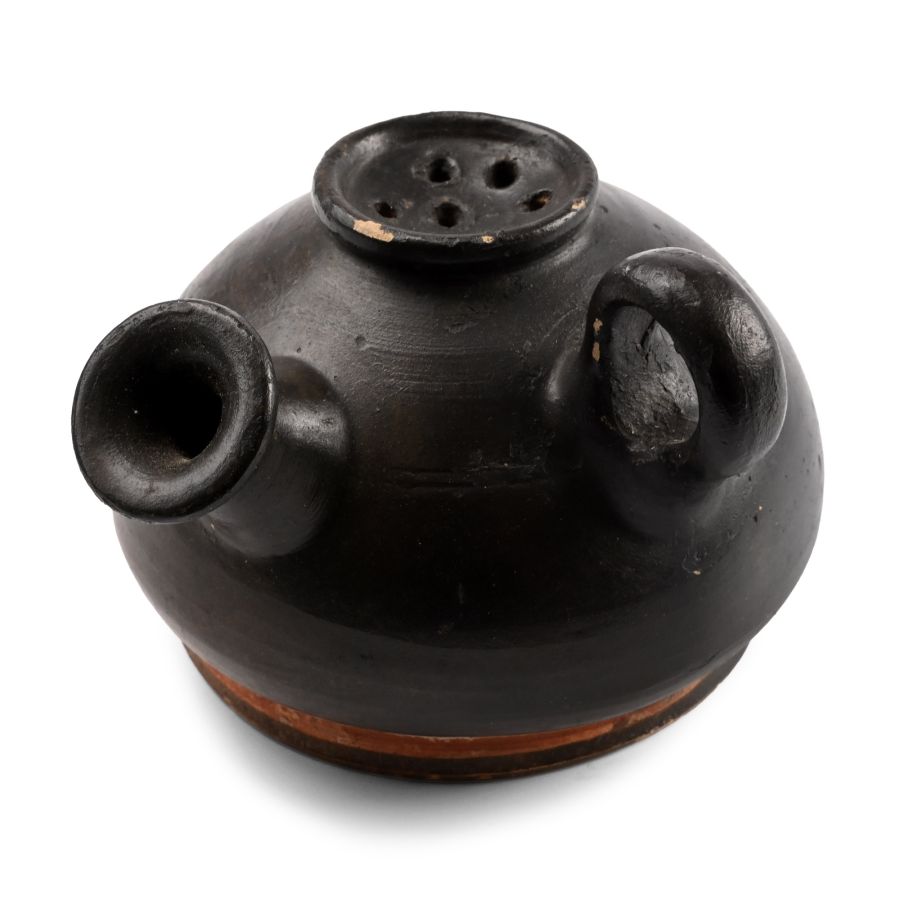
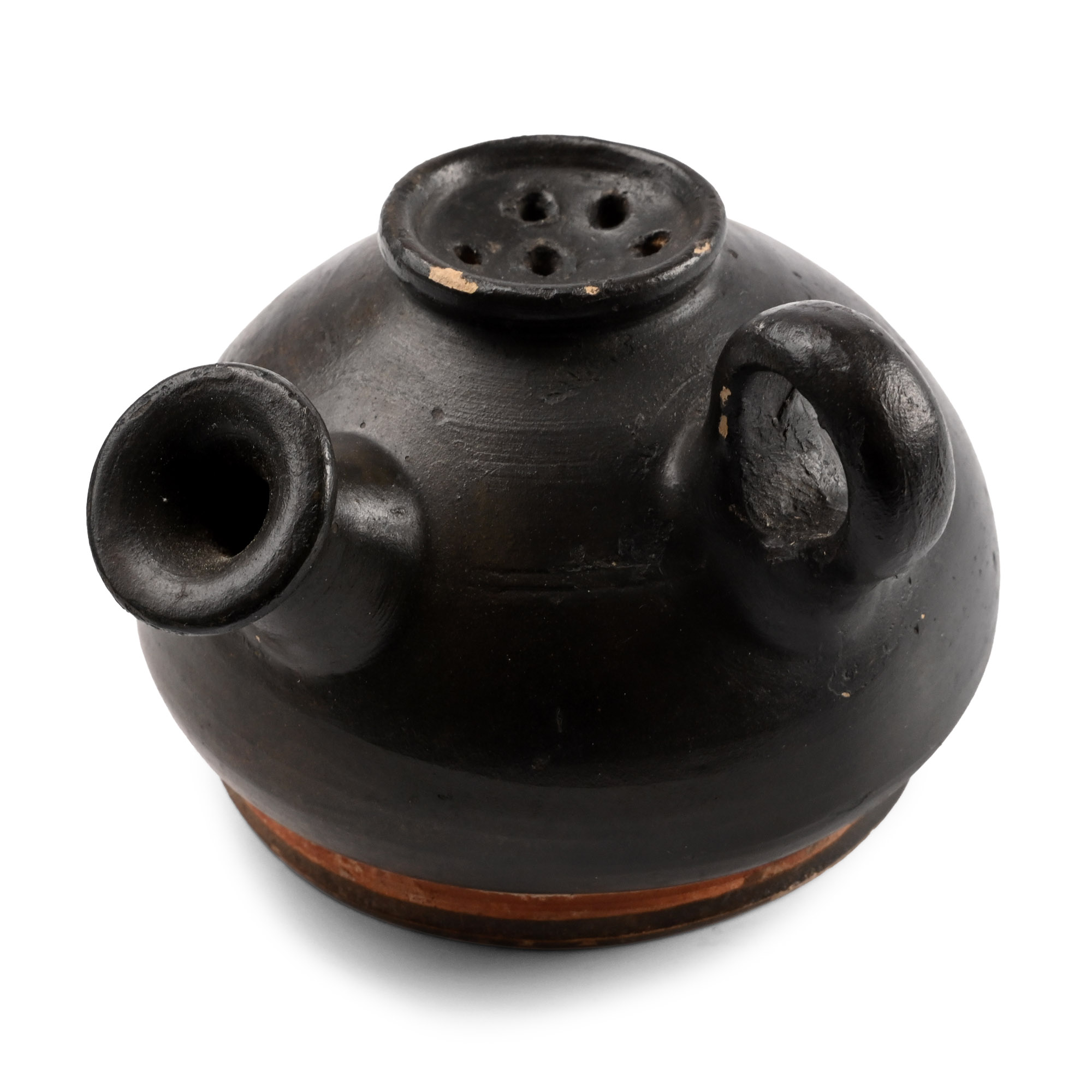
Greek Black-Glazed Guttos with Strainer
SOUTH ITALIC, CIRCA 4TH CENTURY B.C.
4 in. (130 grams, 10 cm).
Discoid in plan with trumpet-shaped spout and one loop handle; strainer to centre. [No Reserve]
ProvenanceFrom the private collection of a Canadian gentleman living in Essex, UK, formed since the 1920s-circa 1990.
Property of an Essex lady until the late 1990s; thence by descent.
From the private collection of an Essex gentleman since the late 1990s.
This lot is accompanied by an illustrated lot declaration signed by the Head of the Antiquities Department, Dr Raffaele D'Amato.
TimeLine Auctions follows a vetting process to ensure the authenticity and legality of all items, reinforcing our commitment to integrity and responsible trading. Each antiquity, antique, and coin lot undergoes thorough examination by a vetting committee of at least ten external specialists, professional trade association members, scientists, and archaeologists: Our Vetting Process
AUCTIONS:
TimeLine is a leading auction house specialising in antiquities, ancient art, collectables, natural history, coins, medals, and books. Our auctions offer museums, collectors, historians, and enthusiasts the opportunity to acquire unique and historically significant pieces.
-
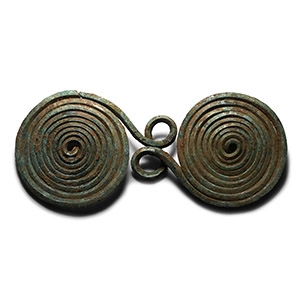
Large Greek Geometric Bronze Spiral Fibula
7th-6th century B.C.Estimate: £450 - 550 (‡+bp*)
Opening Bid: £225
Formed from a single square-section filament rolled into two 'spectacle' discs; one of the spirals terminating in a long pin, the other in a hook serving as the catchplate; openwork figure-of-eight at the centre; pin present broken, coils separated. 159 grams, 17 cm
Acquired in the mid 1980s-1990s. Private collection, Switzerland, thence by descent. Private collection, since the late 1990s. This lot is accompanied by an illustrated lot declaration signed by the Head of the Antiquities Department, Dr Raffaele D’Amato. -
.jpg)
Greek Bronze Head of Alexander 'The Great'
3rd-2nd century B.C.Estimate: £8,000 - 10,000 (‡+bp*)
Opening Bid: £2,778
Modelled in the round with wavy hair brushed forwards, large lentoid eyes in low-relief, angular nose and small mouth; attachment lug to underside; mounted on a custom-made stand. 142 grams total, 10.2 cm including stand
Collection of Mr C., Geneva, Switzerland (1936-2016), assembled between 1985 and 2010. This lot has been checked against the Interpol Database of stolen works of art and is accompanied by a search certificate number no.12857-241703. This lot has been cleared against the Art Loss Register database, and is accompanied by an illustrated lot declaration signed by the Head of the Antiquities Department, Dr Raffaele D'Amato. -
.jpg)
Large Villanovan Geometric Black-Glazed Vase with Handle
9th-8th century B.C.Sold for (Inc. bp): £1,820
Biconical impasto body with broad flaring rim, bell-shaped upper section with bands of incised geometric decoration and impressed roundels, lower section tiered and sharply funicular with narrow flat base, a lateral upturned loop handle; small hole beneath the carination, rim partly restored. 4.5 kg, 41 cm
Dr. Gonik and the late Mr. Wirth, Geneva, Switzerland. European private collection. Accompanied by an academic report by Dr Raffaele D'Amato. This lot has been checked against the Interpol Database of stolen works of art and is accompanied by search certificate number no.12205-222203. This lot has been cleared against the Art Loss Register database, and is accompanied by an illustrated lot declaration signed by the Head of the Antiquities Department, Dr Raffaele D'Amato.
