
Loading, please wait...


LOT 0561
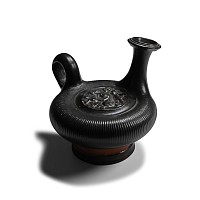
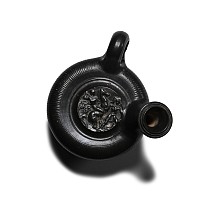
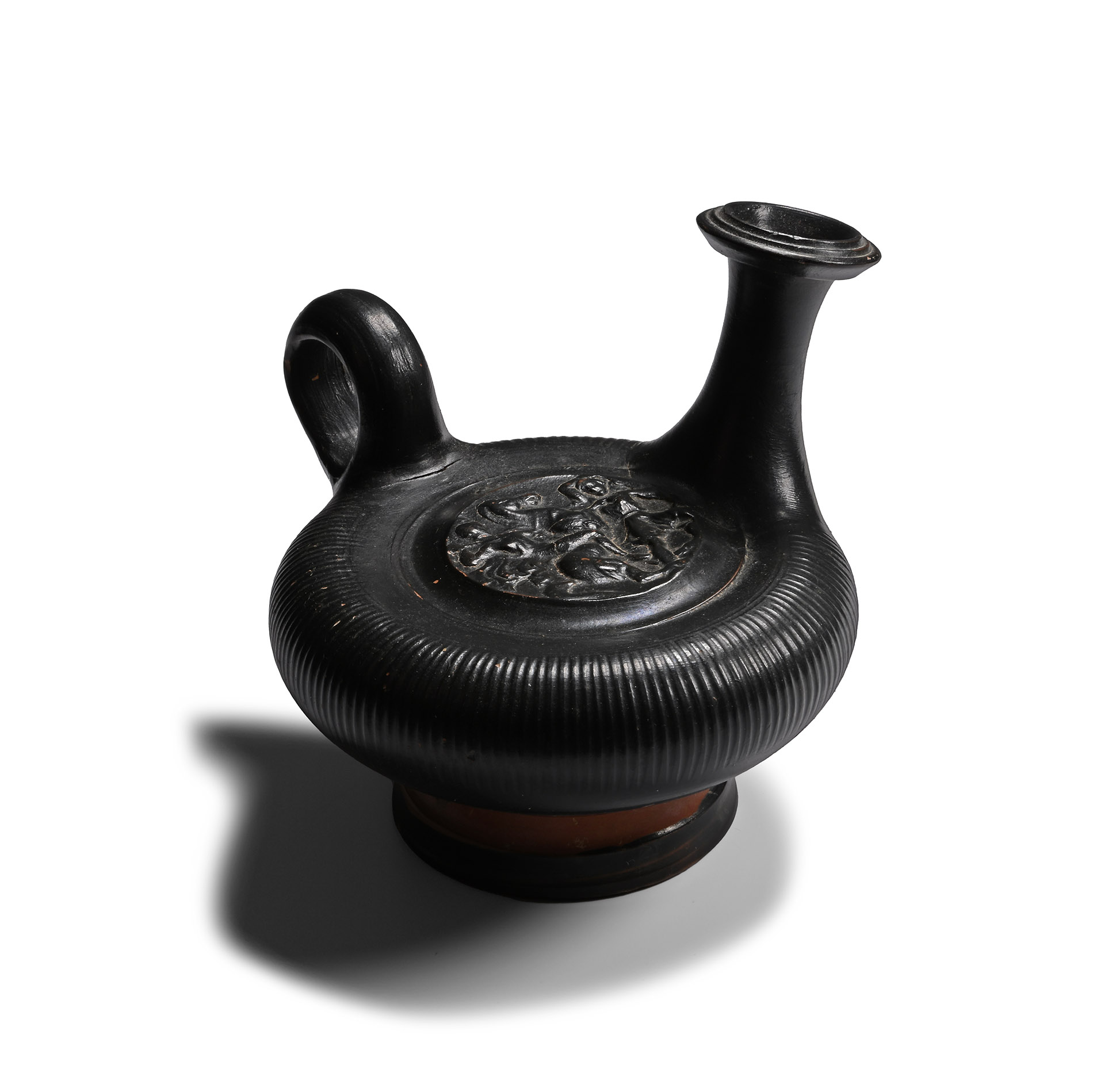
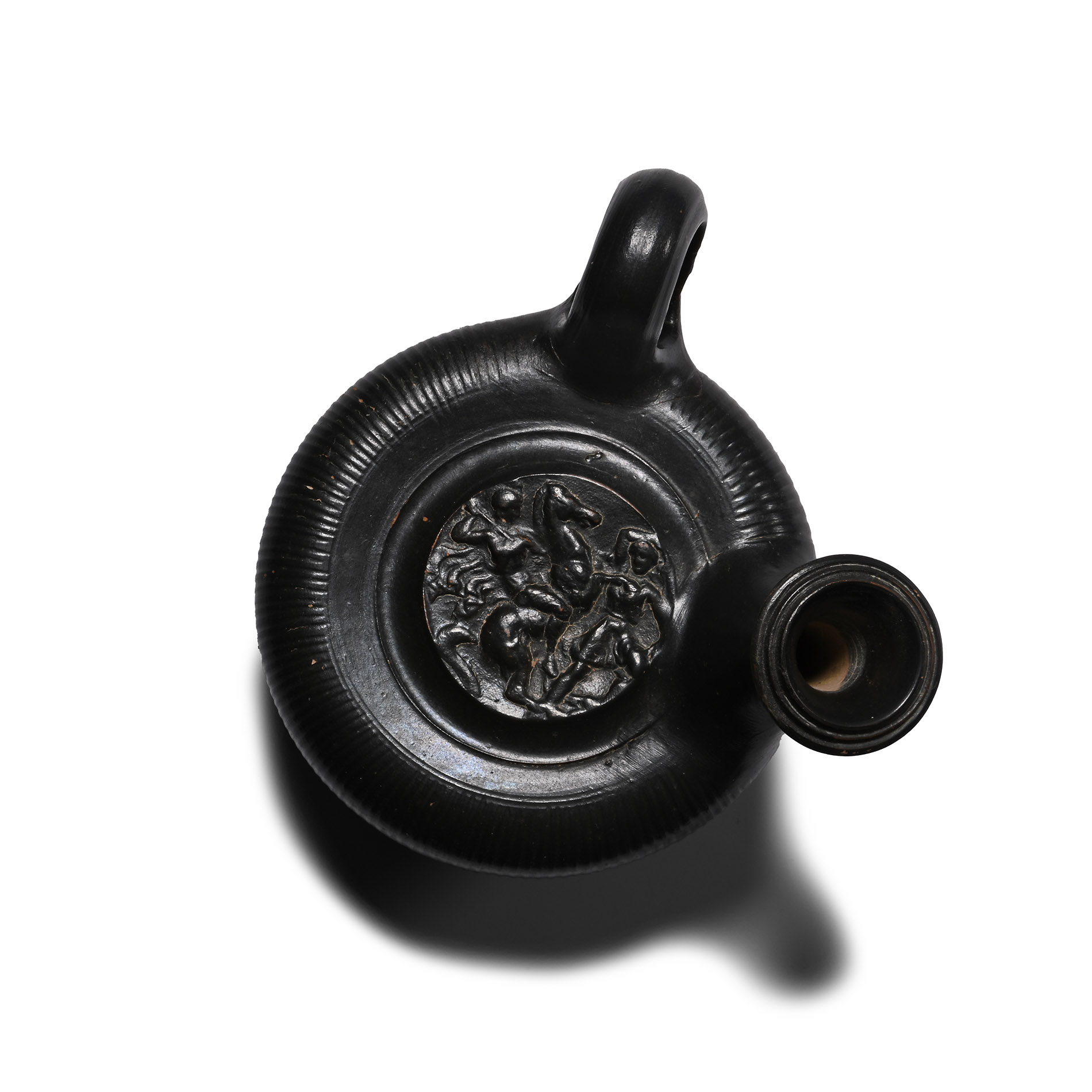
Greek Black-Glazed Guttos with Horseman Spearing an Amazon
SOUTHERN ITALY, 4TH CENTURY B.C.
4 5/8 in. (168 grams, 11.7 cm).
High-angled spout and loop handle to the shoulder, the body decorated with vertical ribs around the perimeter, central image of a helmetted warrior on horseback, cloak billowing in the wind and his right arm raised in the act of spearing the fallen foe beneath the horse, the horse standing on its back legs and trampling the amazon with its front hooves.
ProvenanceMr F.D. collection, acquired on the European art market, 1975 to present.
This lot is accompanied by an illustrated lot declaration signed by the Head of the Antiquities Department, Dr Raffaele D’Amato.
See Metropolitan Museum of Art, New York, accession no.06.1021.271, for a guttos with head of Athena.
CONDITIONTimeLine Auctions follows a vetting process to ensure the authenticity and legality of all items, reinforcing our commitment to integrity and responsible trading. Each antiquity, antique, and coin lot undergoes thorough examination by a vetting committee of at least ten external specialists, professional trade association members, scientists, and archaeologists: Our Vetting Process
AUCTIONS:
TimeLine is a leading auction house specialising in antiquities, ancient art, collectables, natural history, coins, medals, and books. Our auctions offer museums, collectors, historians, and enthusiasts the opportunity to acquire unique and historically significant pieces.
LOT 0561
Greek Black-Glazed Guttos with Horseman Spearing an Amazon
Sold for (Inc. bp): £598
-
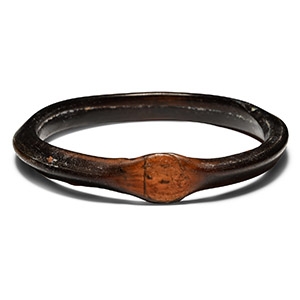
Hellenistic Brown Glass Bracelet
3rd-2nd century B.C.Sold for (Inc. bp): £169
D-section bangle with one flat panel at juncture. 32.64 grams, 87 mm
with François de Riqles Auction, Paris, 27 October 2000. Accompanied by a copy of an Art Loss Register certificate no.S00072881. This lot is accompanied by an illustrated lot declaration signed by the Head of the Antiquities Department, Dr Raffaele D’Amato.
This type of bracelet still reflects the old Celtic production technique of La Tène period, where the bracelets were formed by pressing two extremities to form a single body, giving the bracelet a brownish colour. -
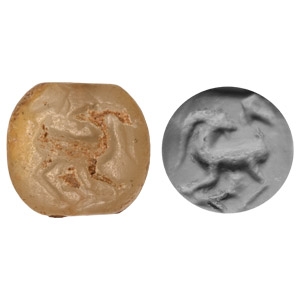
Post Minoan Agate Gemstone with Goat
Aegean, 9th-8th century B.C.Sold for (Inc. bp): £130
Lentoid in section with intaglio goat looking backwards towards a bird in flight; supplied with a museum-quality impression. 1.52 grams. 13 mm
From the collection of a London antiquarian, formed since the 1980s. This lot is accompanied by an illustrated lot declaration signed by the Head of the Antiquities Department, Dr Raffaele D’Amato. -
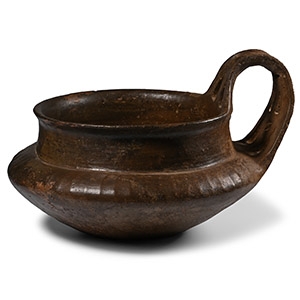
Large Villanovan Terracotta Impasto Kyathos
Early 7th century B.C.Sold for (Inc. bp): £715
With burnished deep brown surfaces, the body tapering to a flat foot, the shoulders decorated with vertical ribbing, short neck with flared mouth; wide openwork handle perforated with small triangles and rectangles, hatched bands along the edges of the handle and the perforations. 1.1 kg, 24 cm
Acquired from Mr Eugene Berman circa 1960. From the private collection of Mr Ulfert Wilke. In the collection of Dr Howard Sirak, Columbus, Ohio, USA; acquired from the above in 1969. Ancient Resource Auctions, California, USA, May 2020. Property of a South Australian private collector, with collection reference 20.02. Accompanied by a detailed collector's catalogue page including description and photograph. This lot is accompanied by an illustrated lot declaration signed by the Head of the Antiquities Department, Dr Raffaele D’Amato.
The de Puma catalogue cites this piece as no. 5.5 from the Sirak Collection (original sticker is on base; note De Puma’s appraisal does not provide a concordance with Wilke). The catalogue was for the exhibition at the University of Iowa Museum of Art from 17 March to 30 April 1971. Richard De Puma appraised Sirak’s collection of ancient pottery on 18 September 1979; Inv. 20.02 was noted as appraisal item 15 and valued at USD 650. Old collection sticker '188' on base; overlain is sticker from Sirak collection, 'LR 3V'. Sticker 147B refers to the lot number for the first time it was offered at auction by Ancient Resource Auctions in 2015.
