
Loading, please wait...
LOT 0818
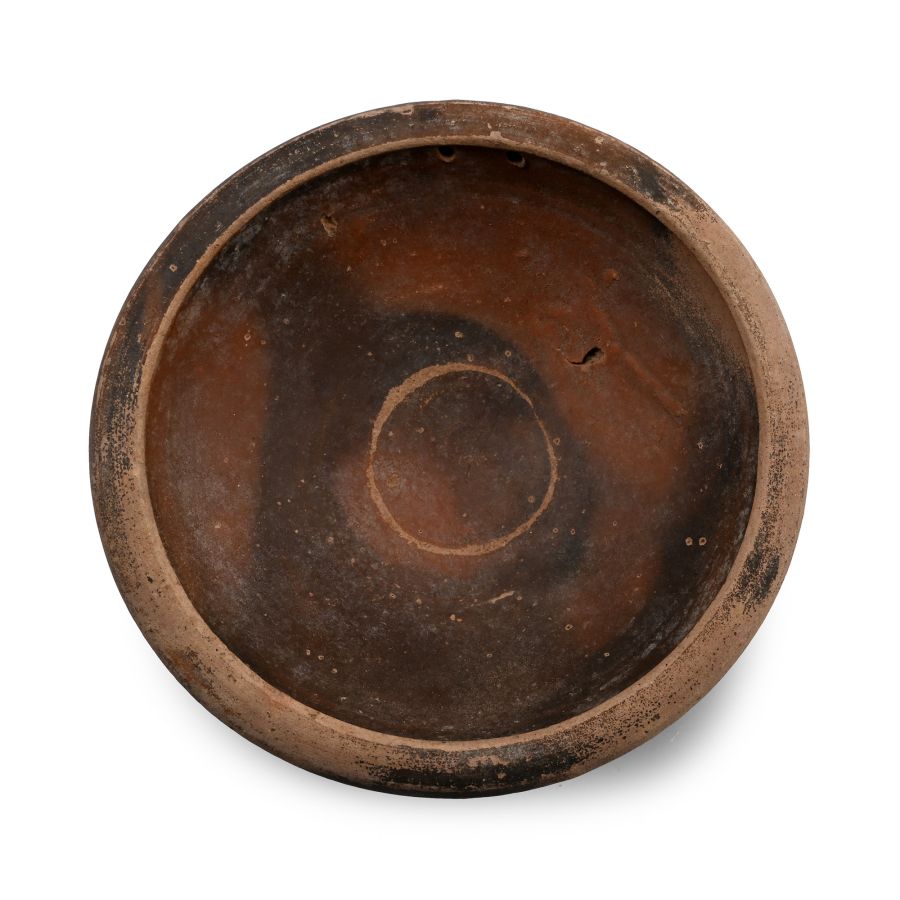
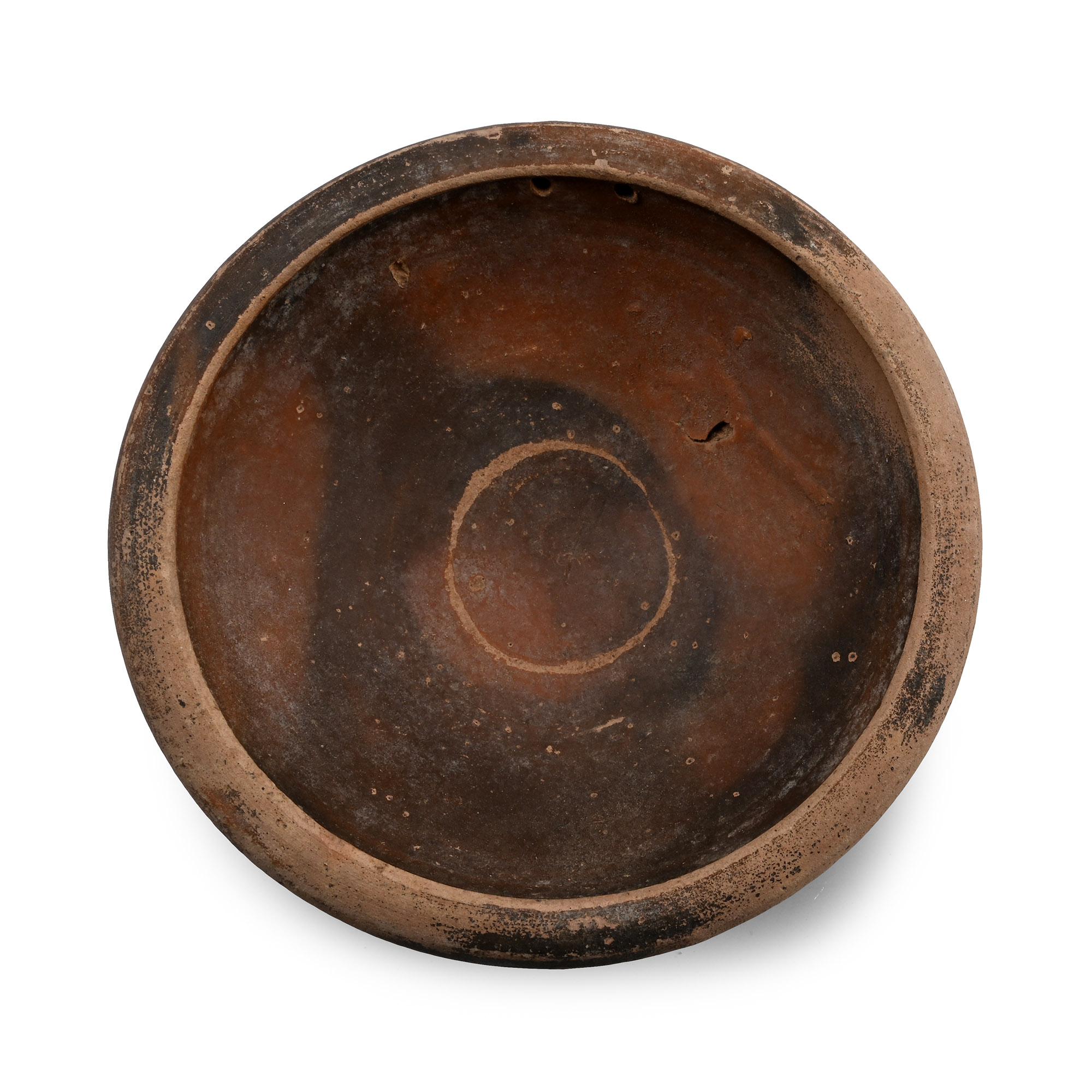
Greek Black Glazed Dish
SOUTH ITALIAN, 3RD-2ND CENTURY B.C.
4 in. (87 grams, 10.1 cm wide).
With broad shallow profile, carinated rim; two holes below the rim. [No Reserve]
ProvenanceAcquired on the UK art market since the 1990s.
From the property of a late Lincolnshire, UK, gentleman; thence by descent.
TimeLine Auctions follows a vetting process to ensure the authenticity and legality of all items, reinforcing our commitment to integrity and responsible trading. Each antiquity, antique, and coin lot undergoes thorough examination by a vetting committee of at least ten external specialists, professional trade association members, scientists, and archaeologists: Our Vetting Process
AUCTIONS:
TimeLine is a leading auction house specialising in antiquities, ancient art, collectables, natural history, coins, medals, and books. Our auctions offer museums, collectors, historians, and enthusiasts the opportunity to acquire unique and historically significant pieces.
LOT 0818
Greek Black Glazed Dish
Estimate £40 - 60€46 - 70 (for guidance only)$54 - 81 (for guidance only)
Opening Bid
£5 (EUR 6; USD 7) +BP*
-
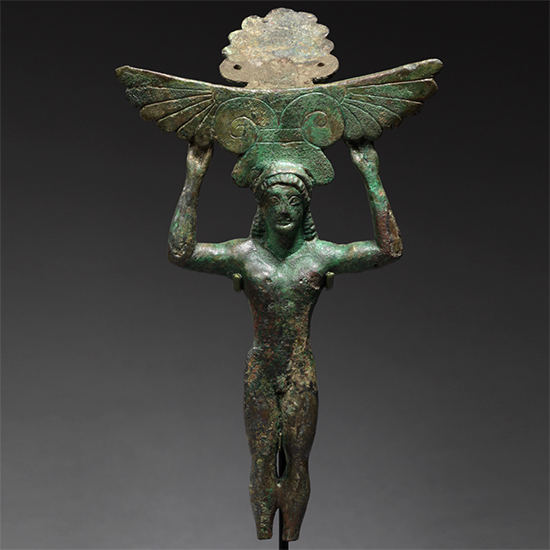
Greek Bronze Patera Handle in the form of a Naked Youth
5th century B.C.Estimate: £4,000 - 6,000 (+bp*)
Opening Bid: £2,000
Formed as a nude kouros, hands raised to touch the elaborate palmette sitting atop the boy's head, his face framed by a thick fringe, his hair, held by a band, falling down his back in serpentine waves; the figure standing with legs held close together, broken at mid-shin; a palmette-shaped fixing plate projecting at the back with two holes for rivets to attach to the broad, shallow dish which would have been used for libations. 178 grams total, handle: 17.3 cm high, 23.5 cm high including stand
Private collection UK (N.E.), acquired prior to 1970, and thence by descent. This lot has been checked against the Interpol Database of stolen works of art and is accompanied by search certificate no.13550-263433.
Anthropomorphic handles with images of young naked boys connected with animals were widespread and used for mirrors. The object, in particular, is part of the group of mirrors and paterae with standing youths (male and female, probably symbolising athletes) and nude female mirror caryatids (Mitten-Doeringer, 1968, figs.87-88) serving as vertical handles. -
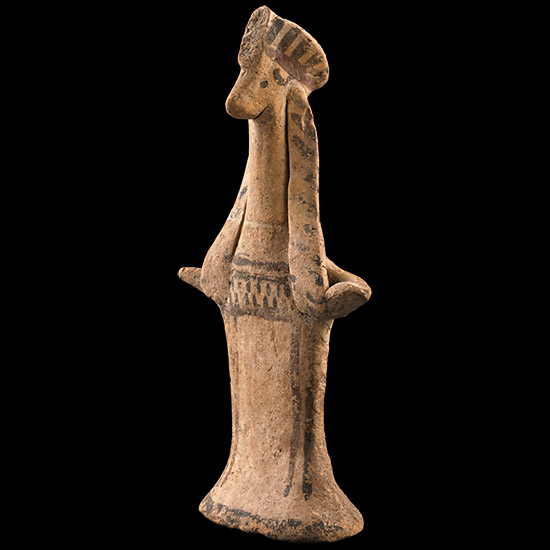
Boeotian Terracotta Idol
6th century B.C.Estimate: £1,500 - 2,000 (‡+bp*)
Opening Bid: £825
Formed with pinched stub arms, a pinched head crowned with a headpiece and two strands of hair framing an elongated neck; remains of geometric detailing in painted pigment; repaired. 100 grams, 14.5 cm
Ex Prof. Hans Dahn (1919-2019), Swiss Chemist, Lausanne; acquired 15 July 1958 in Basel (Inventory Inv.GT 5). -
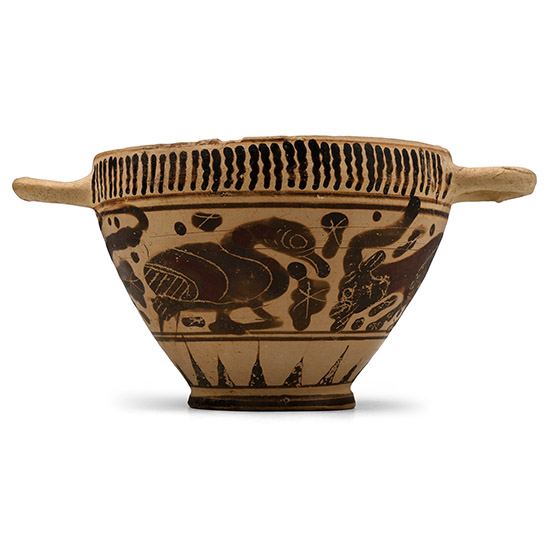
Greek White-Ground Kotyle with Panther, Goat and Swan
Corinthian, 6th century B.C.Estimate: £2,500 - 3,500 (‡+bp*)
Opening Bid: £1,250
Squat in profile with lateral loop handles, vertical stripes to the rim, frieze with a grazing goat, a panther to its rear and a perching swan. 102 grams, 15.1 cm
Ex private collection, Tokyo, Japan, since the 1980s. Private European collection, acquired in 2010. This lot has been checked against the Interpol Database of stolen works of art and is accompanied by a search certificate no.13227-249320.
In agreement with most scholars of the Corinthian pottery, Amyx and Payne used the term kotyle, rather than skyphos, to designate the distinctive group of deep cups with no offset lip, horizontal handles set near the rim, a convex tapering body and a narrow, echinoid foot.
