
Loading, please wait...
LOT 0079
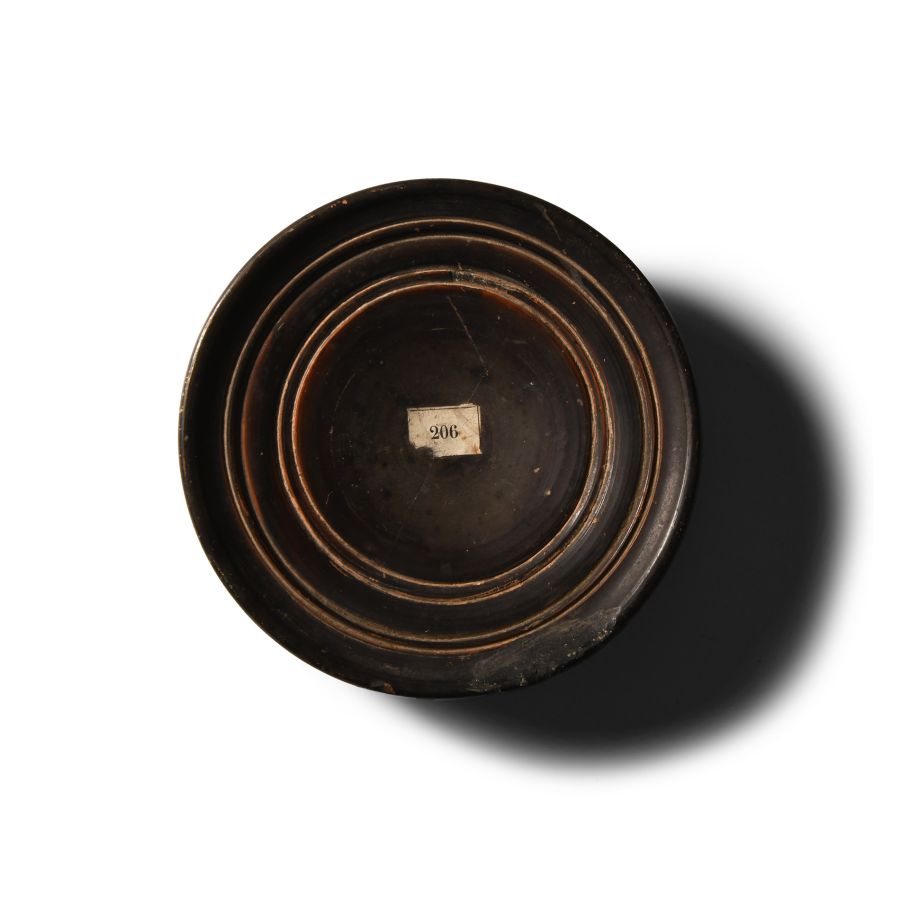
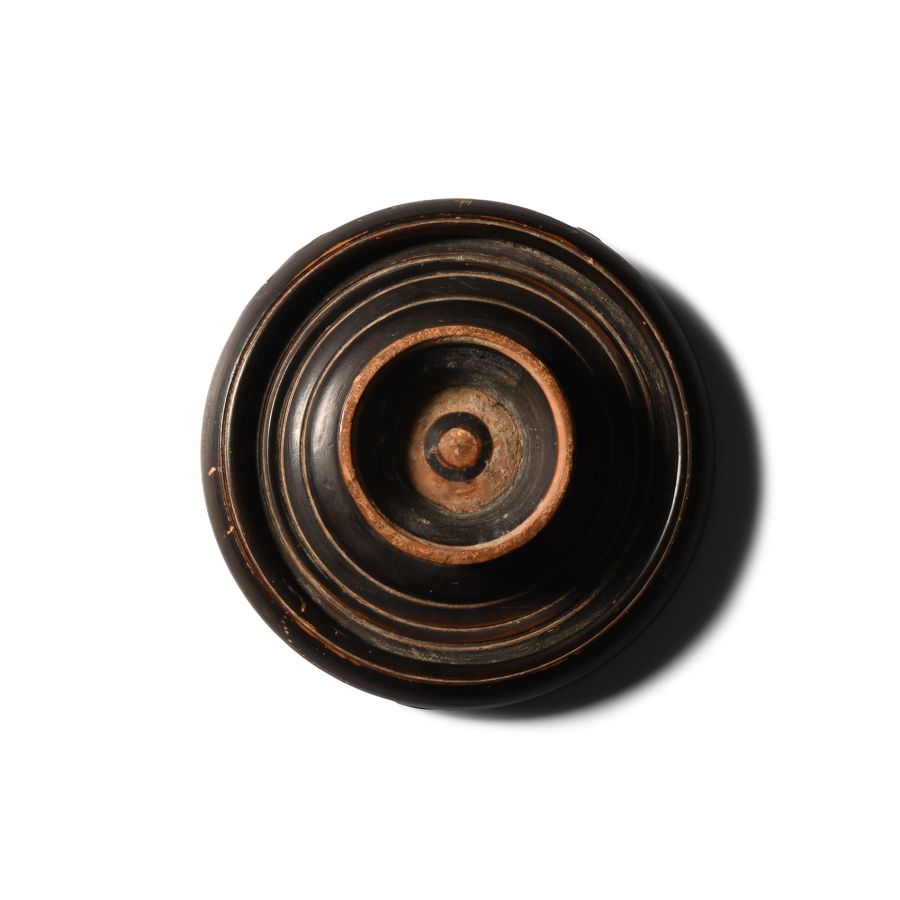
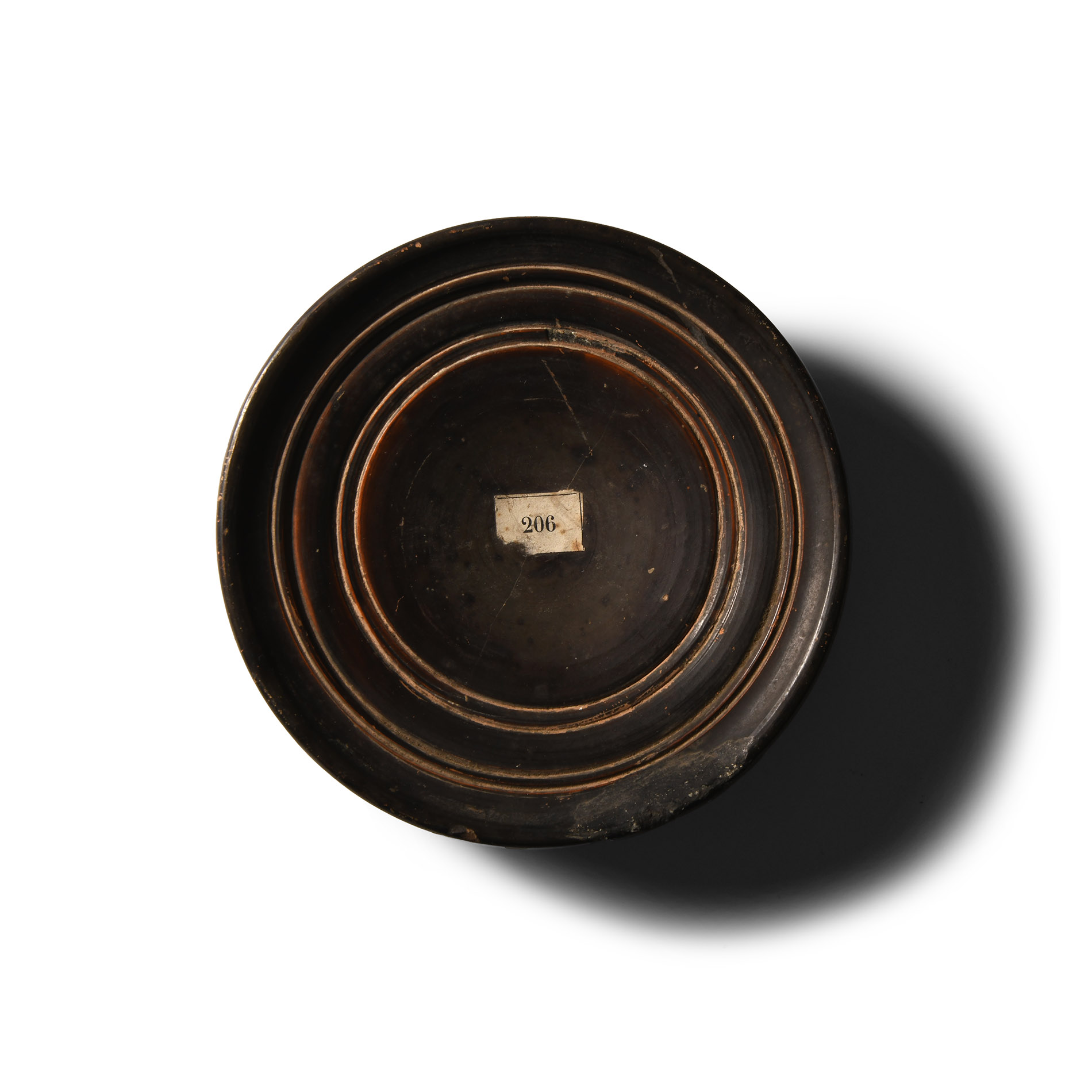
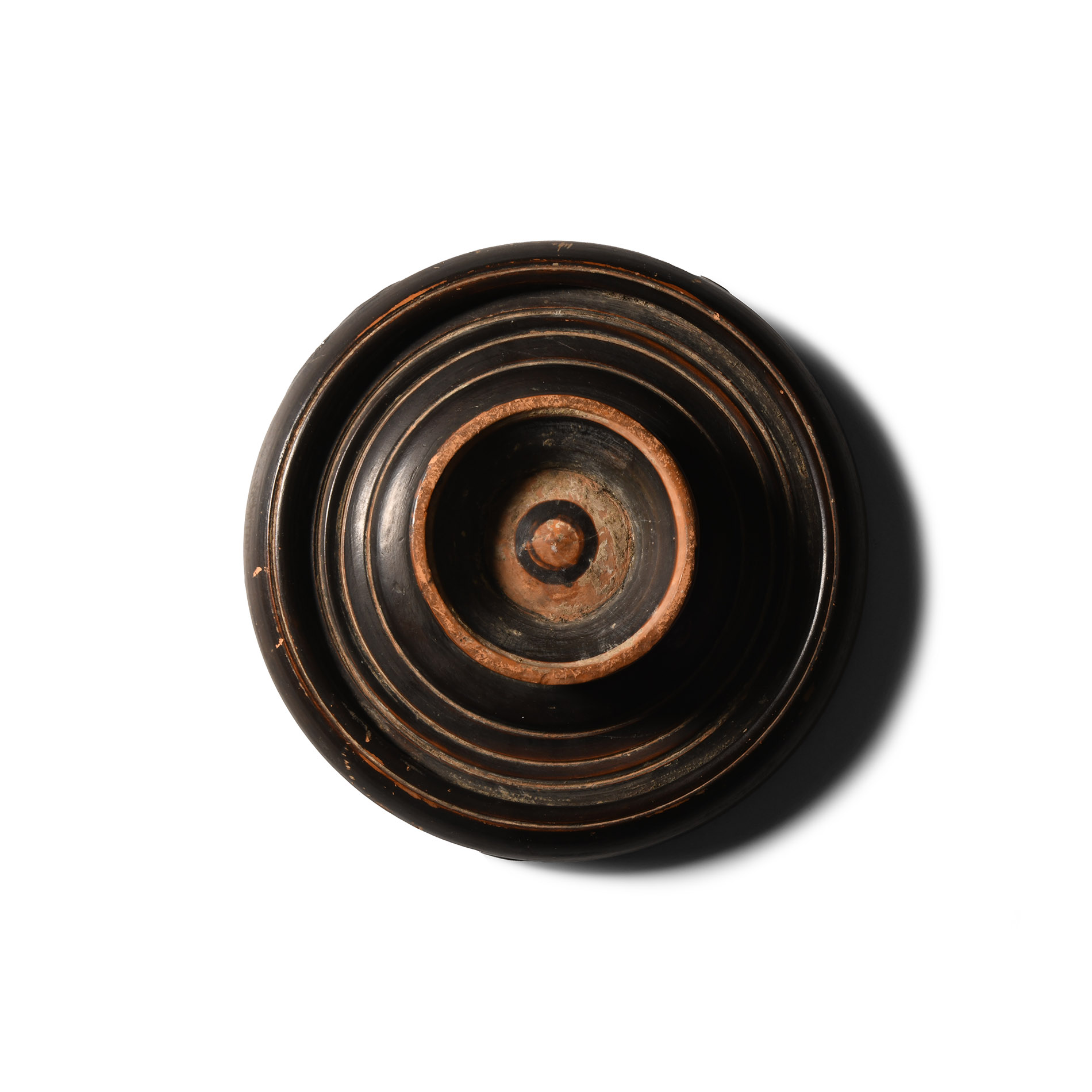
Greek Black Glazed Dish
4TH CENTURY B.C.
6 1/4 in. (325 grams, 16 cm wide).
With tiered foot, thick rim and ribbed upper face; old collector's ticket number '206'. [No Reserve]
ProvenanceFrom the collection of Louis-Gabriel Bellon (1819-1899), Saint-Nicolas-lez-Arras and Rouen, thence by descent.
with Millon & Associes Auctions, Paris, 6th December 2021, lot 29.
TimeLine Auctions follows a vetting process to ensure the authenticity and legality of all items, reinforcing our commitment to integrity and responsible trading. Each antiquity, antique, and coin lot undergoes thorough examination by a vetting committee of at least ten external specialists, professional trade association members, scientists, and archaeologists: Our Vetting Process
AUCTIONS:
TimeLine is a leading auction house specialising in antiquities, ancient art, collectables, natural history, coins, medals, and books. Our auctions offer museums, collectors, historians, and enthusiasts the opportunity to acquire unique and historically significant pieces.
-
Parthian Hammered Silver Drinking Vessel
2nd-1st century B.C.Estimate: £400 - 600 (+bp*)
Opening Bid: £200
Squat bowl with integral raised foot,incised line beneath the rim. 171 grams, 16 cm
London, UK gallery, 1971-early 2000s. -
.jpg)
Eastern Greek Bronze Standing Bull Statuette
Circa 11th-9th century B.C.Sold for (Inc. bp): £780
With thick ribbed neck, crescent horns and prominent genitals; mounted on a custom-made stand. 141 grams total, 86 mm wide including stand
From the collection of D. Smith, Sussex, UK, 1990s.
Like dozens of similar statuettes depicting animals or human figures, this bronze bull was probably offered by a worshipper during a sacrifice. A large number of statuettes were found in a thick layer of ash from the altar of Zeus at Olympia. In 2021, a similar statuette, with protruding horns, was found in the sanctuary. Bulls and horses were the favourite cultic animals in the Cretan, Achaean and Archaic Greek civilisations. The model of the long and narrow body was borrowed from the Near East. -
Greek Terracotta Head Fragment
6th-5th century B.C.Estimate: £2,000 - 3,000 (‡+bp*)
Opening Bid: £1,000
Hollow-formed with neatly dressed hair confined by a cap or fillet; traces of pigment to the eyes. 1.1 kg, 27 cm high
Acquired early 1990s. Ex private American collection; thence by descent. Private Swiss collection since 1998. This lot has been checked against the Interpol Database of stolen works of art and is accompanied by search certificate no.11607-198986.
