
Loading, please wait...
LOT 0033
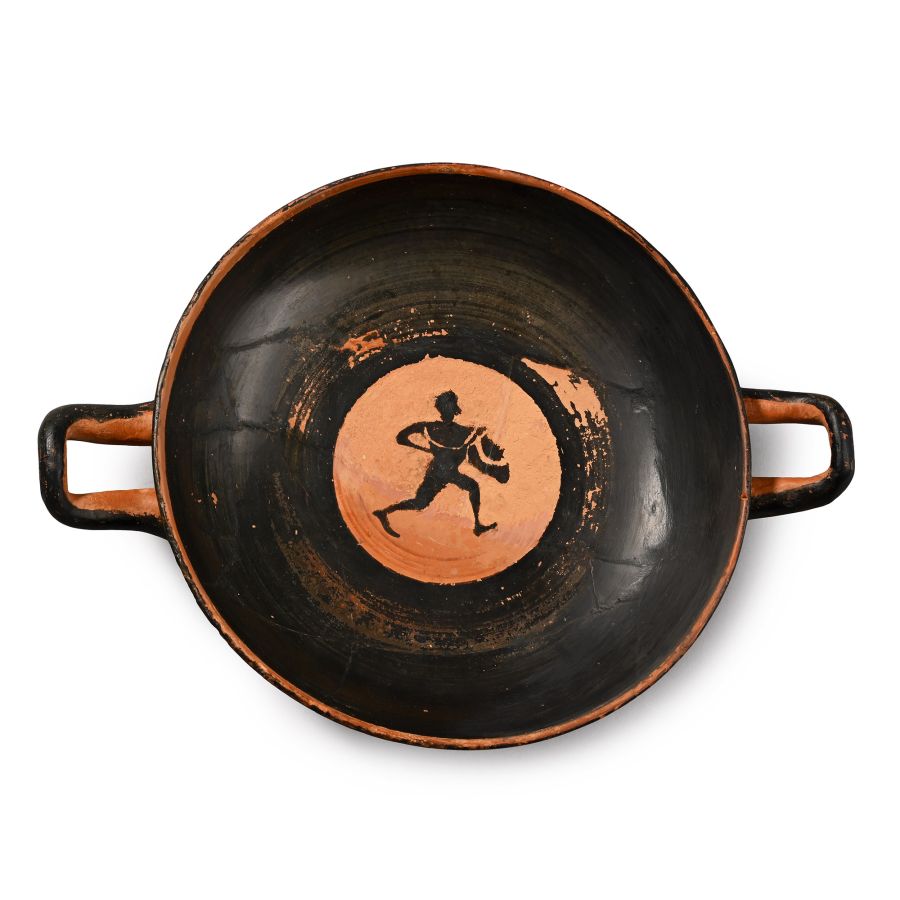
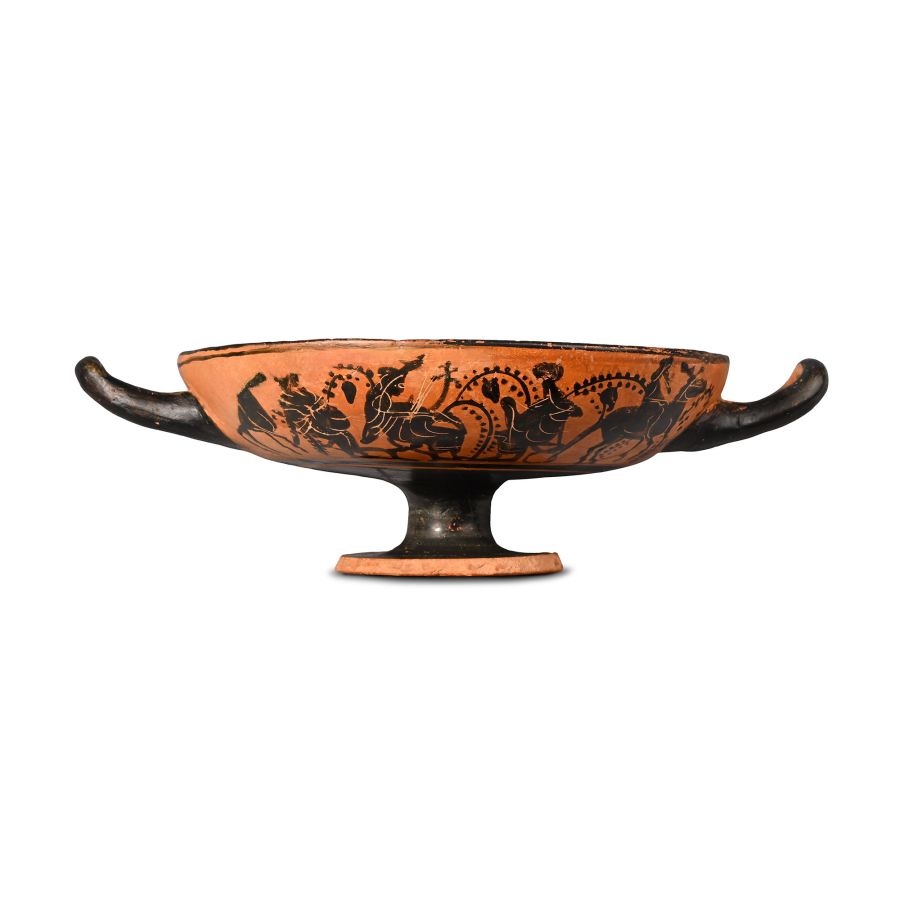
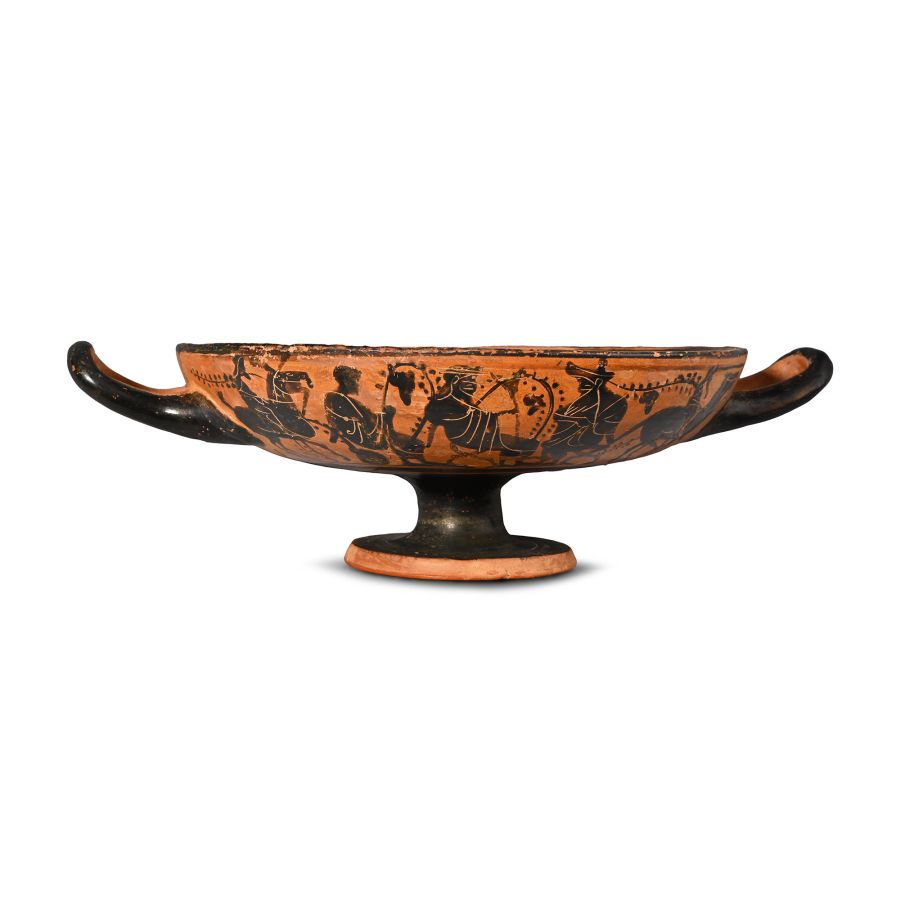
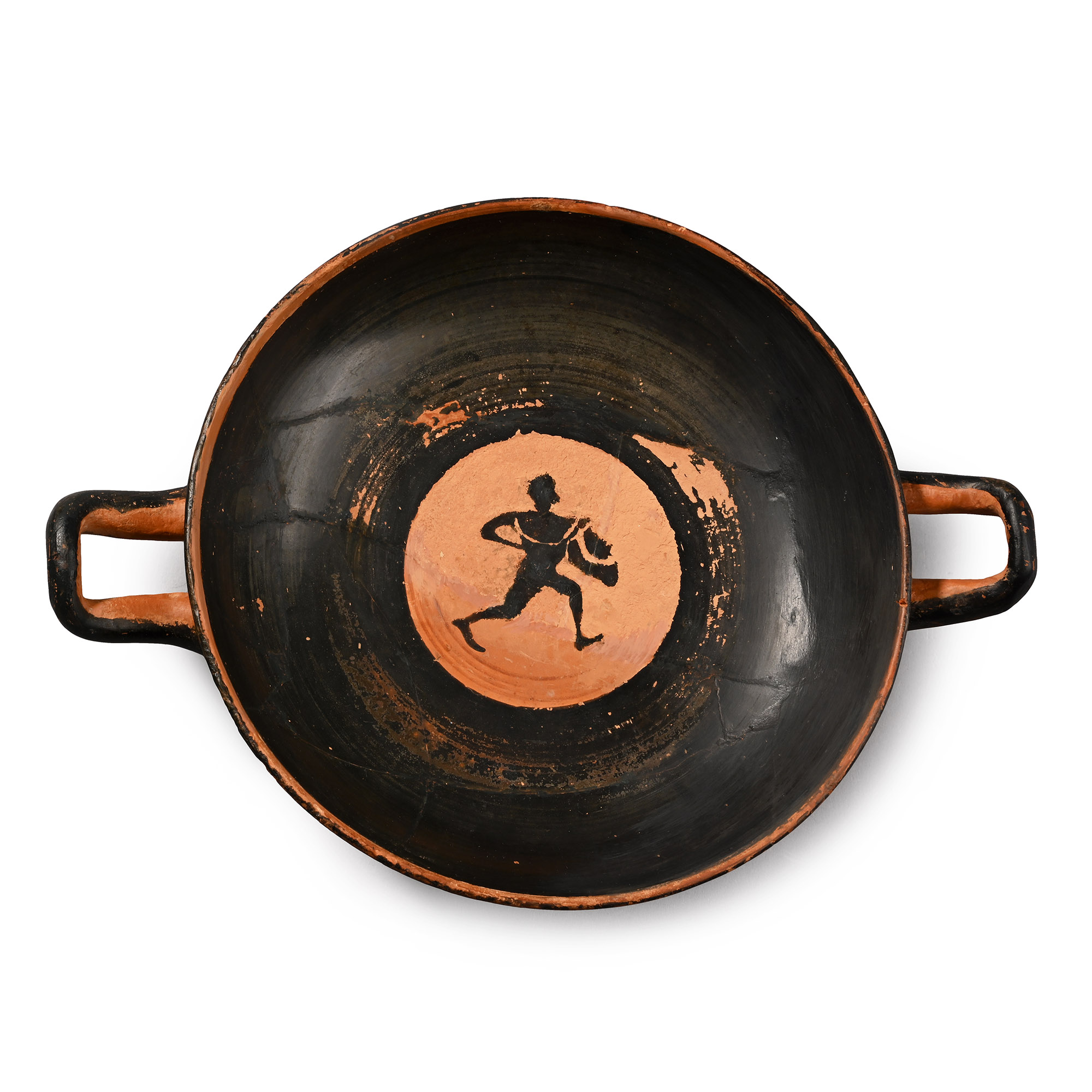
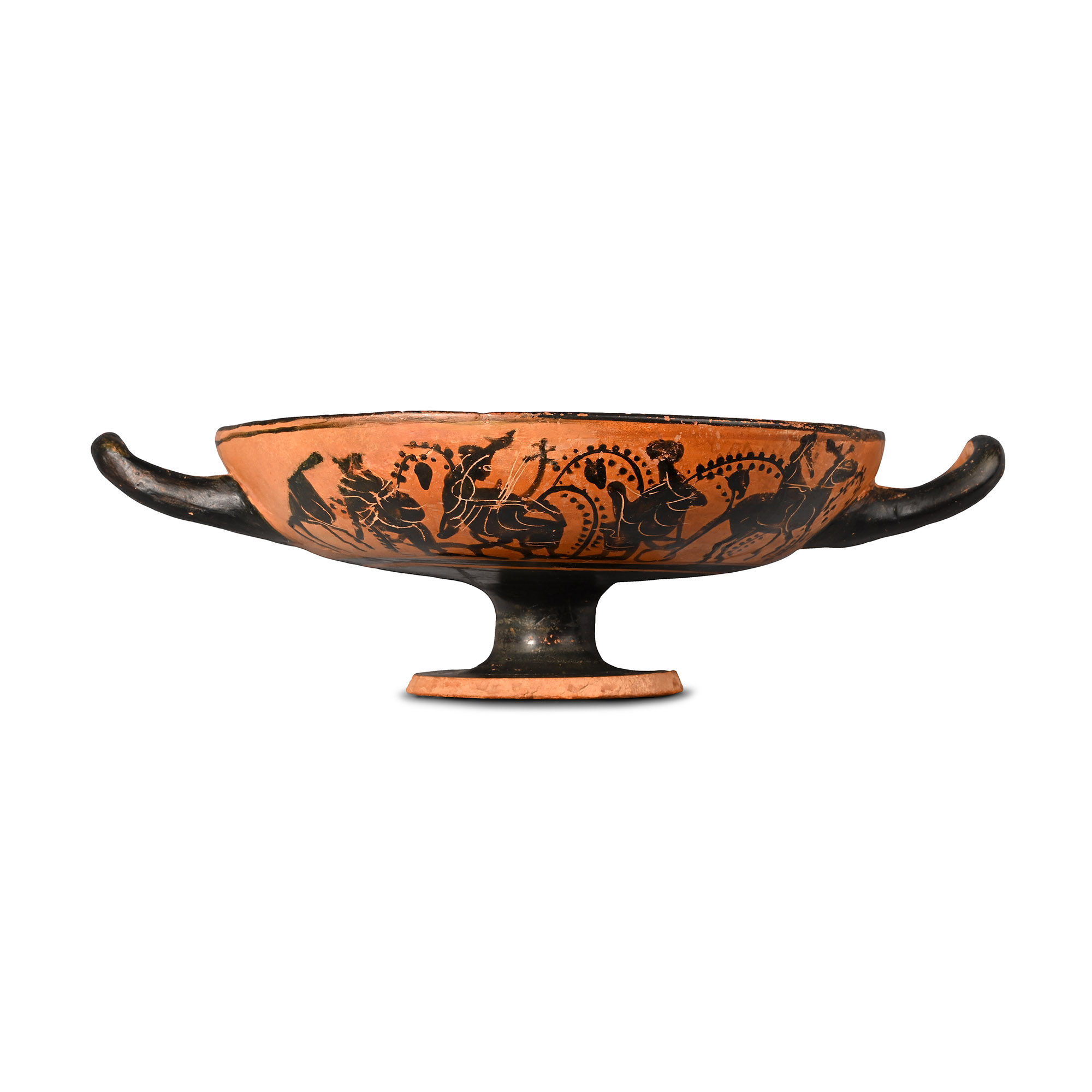
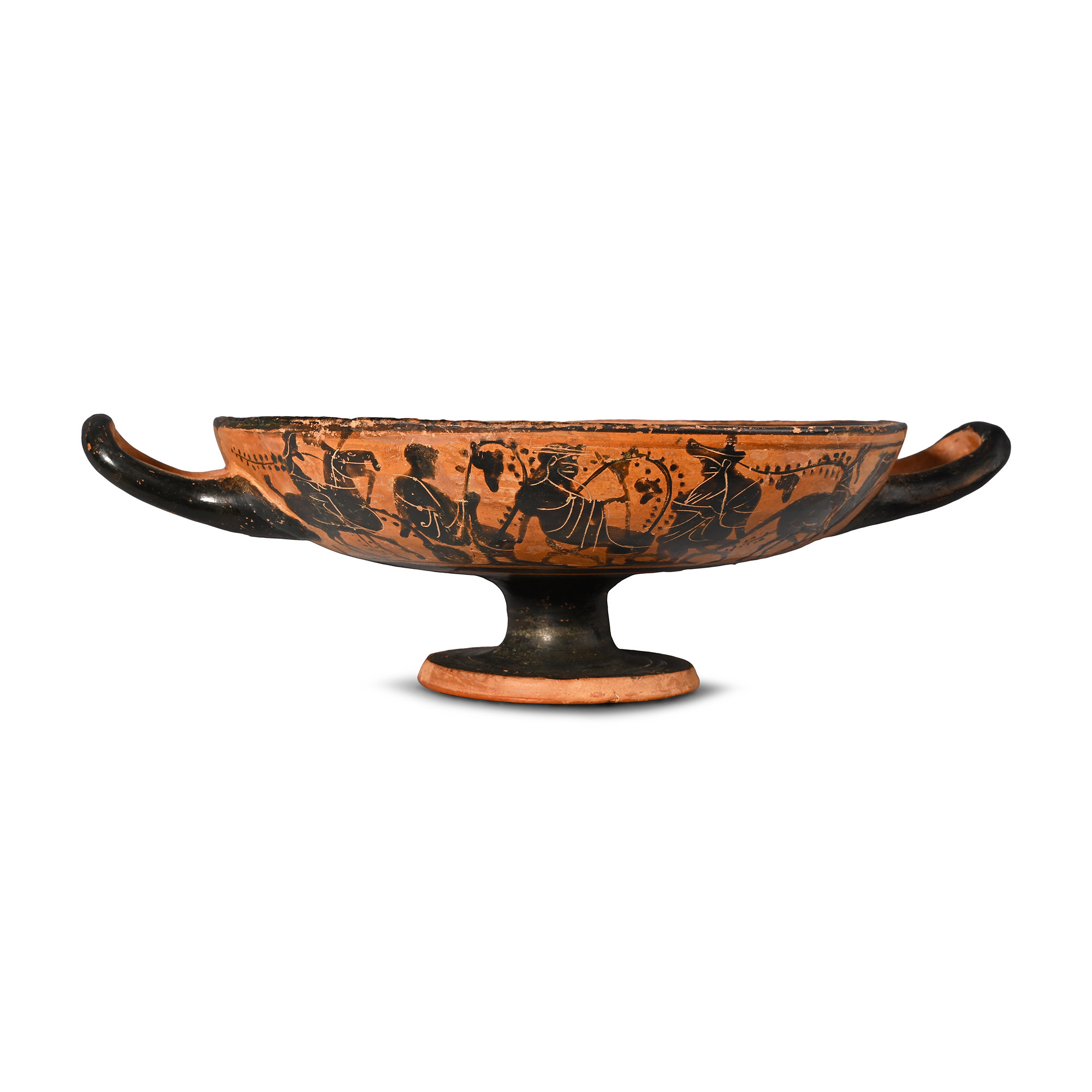
Greek Black-Figure Ware Kylix
ATTIC, CIRCA 5TH CENTURY B.C.
10 1/4 in. (373 grams, 26 cm).
Broad and shallow with two strap handles, an advancing figure holding a shield at the tondo, outside with a figural frieze of two robed figures in discussion, seated on churule chairs, an attendant behind the left figure, a rider on horseback on each side of the scene; restored.
ProvenanceFrom a German collection, pre 1970.
This lot has been checked against the Interpol Database of stolen works of art and is accompanied by search certificate number no.13316-258818.
For similar examples of kylikes with black-attic figures see the British Museum, London, 1836,0224.65 (Gorgoneion and hippalectryon), 1864,1007.1701 (Hermes and Dionysos); compare with 1864,1007.1688 (Heracles and the Erymanthian boar), 1864,1007.296 (satyrs and dolphin); Athens, Museum of Cycladic Art ΝΓ0702 (‘eyes’ kylix); New York, Metropolitan Museum of Art 44.11.1 (Menelaos and Helen), 56.171.36 (‘eyes’ kylix with ships and warriors), 96.18.64 (‘eyes’ kylix), 98.8.25 ((‘eyes’ kylix with satyrs), 96.18.65 (‘eyes’ kylix); Los Angeles, J. Paul Getty Museum 96.AE.96 (fish market); Brooklyn, Brooklyn Museum 33.399 (procession of men).
FootnotesThe present piece is a wide-bowled drinking cup known as a kylix - one of the most popular forms of pottery from the Achaean times (1600-1100 B.C.) through to the classical period (c.510-323 B.C.). It dates to an important moment in the development of Greek ceramics, just as the black-figure technique was being perfected by Athenian painters. Painted in black slip with details incised on top, kylikes usually had a frieze around the outside of the bowl as well as another scene on the tondo of the inside.
CONDITIONTimeLine Auctions follows a vetting process to ensure the authenticity and legality of all items, reinforcing our commitment to integrity and responsible trading. Each antiquity, antique, and coin lot undergoes thorough examination by a vetting committee of at least ten external specialists, professional trade association members, scientists, and archaeologists: Our Vetting Process
AUCTIONS:
TimeLine is a leading auction house specialising in antiquities, ancient art, collectables, natural history, coins, medals, and books. Our auctions offer museums, collectors, historians, and enthusiasts the opportunity to acquire unique and historically significant pieces.
-
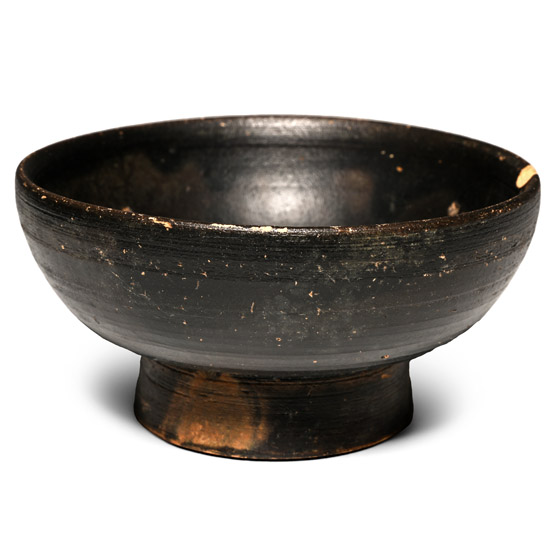
Greek Black Ware Footed Cup with Concentric Circles
South Italian, circa 4th century B.C.Sold for (Inc. bp): £286
With broad bowl and rounded rim, flared foot; old collector's label to the underside 'Z17.91'. 147 grams, 10.4 cm wide
From the collection of the late Bernard C. Pickard, Hampshire, UK, the owner of Bernard C. Pickard Antiquities, which closed in 1987, he had been collecting since the mid 1950s.
Bernard Pickard was a close friend of Richard Hattatt, the renowned author of several books on ancient brooches. Hattatt acknowledges in his first book, Ancient & Romano-British Brooches, published in 1982, that Mr Pickard first aroused his interest in brooches and inspired him in writing his books during his retirement. Mr Pickard also wrote the foreword to the section on Roman animal brooches, op. cit. p.158-160. -
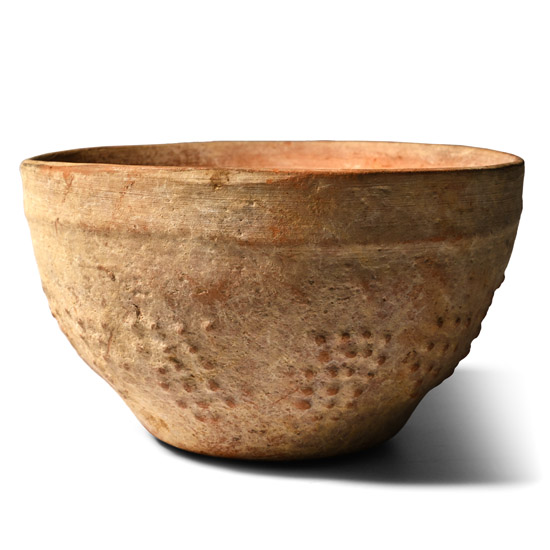
Greek Terracotta Wine Cup with Pellets Representing Bunches of Grapes
Hellenistic, circa 2nd century B.C.Sold for (Inc. bp): £221
Squat in profile with low foot, sidewall with triangular pellet clusters in swags; carination to inner rim; old collector's label to underside 'Q/15'. 197 grams, 10.9 cm wide
From the collection of the late Bernard C. Pickard, Hampshire, UK, the owner of Bernard C. Pickard Antiquities, which closed in 1987, he had been collecting since the mid 1950s.
Bernard Pickard was a close friend of Richard Hattatt, the renowned author of several books on ancient brooches. Hattatt acknowledges in his first book, Ancient & Romano-British Brooches, published in 1982, that Mr Pickard first aroused his interest in brooches and inspired him in writing his books during his retirement. Mr Pickard also wrote the foreword to the section on Roman animal brooches, op. cit. p.158-160. -
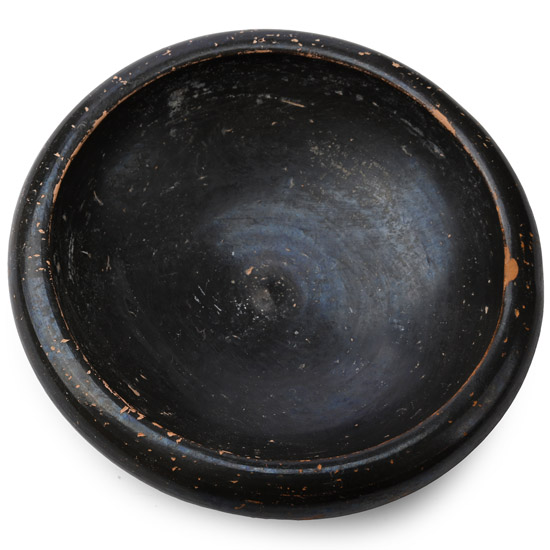
Greek Black Glazed Terracotta Dish
5th-4th century B.C.Sold for (Inc. bp): £234
Squat in profile with a rounded rim and flared foot. 149 grams, 10.2 cm wide
Acquired on the London art market. TimeLine Auctions, 4 June 2017, no.1447. Private collection, Suffolk.
