
Loading, please wait...
LOT 0032
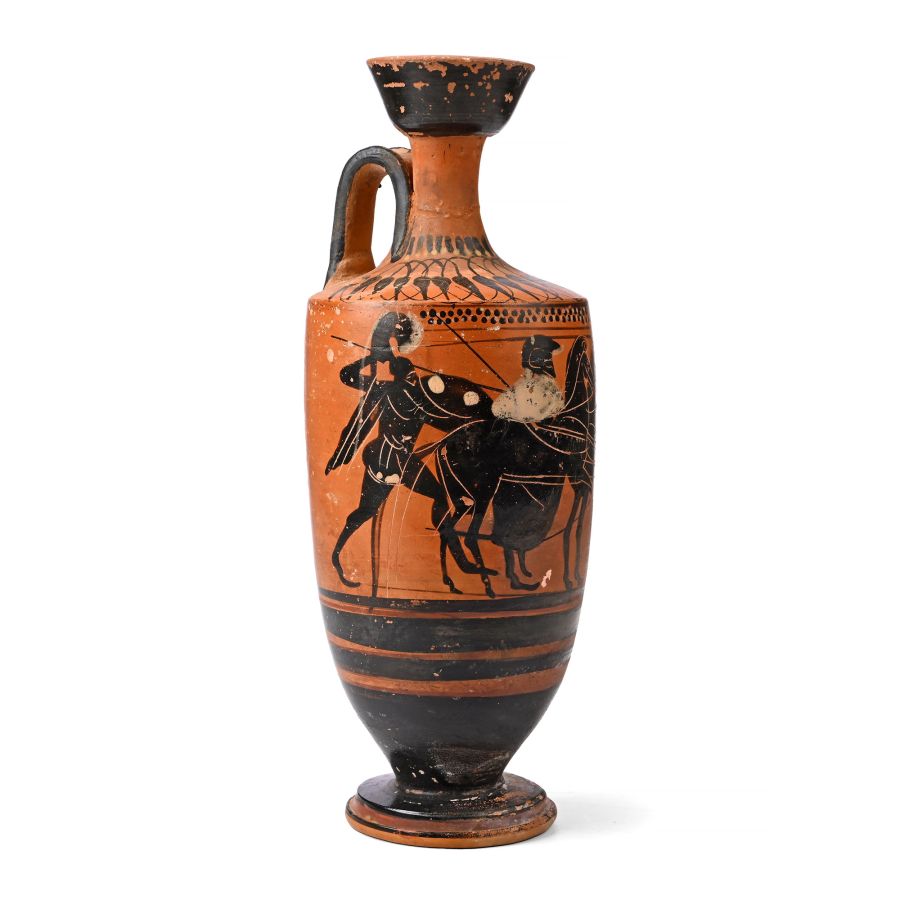
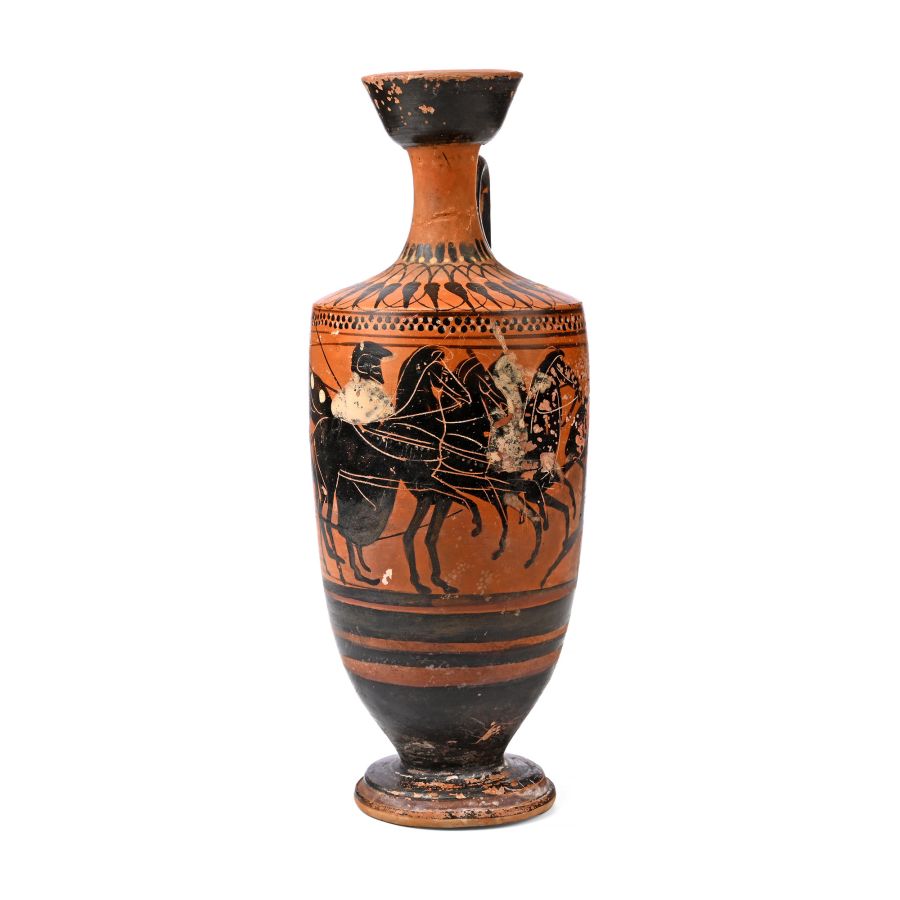
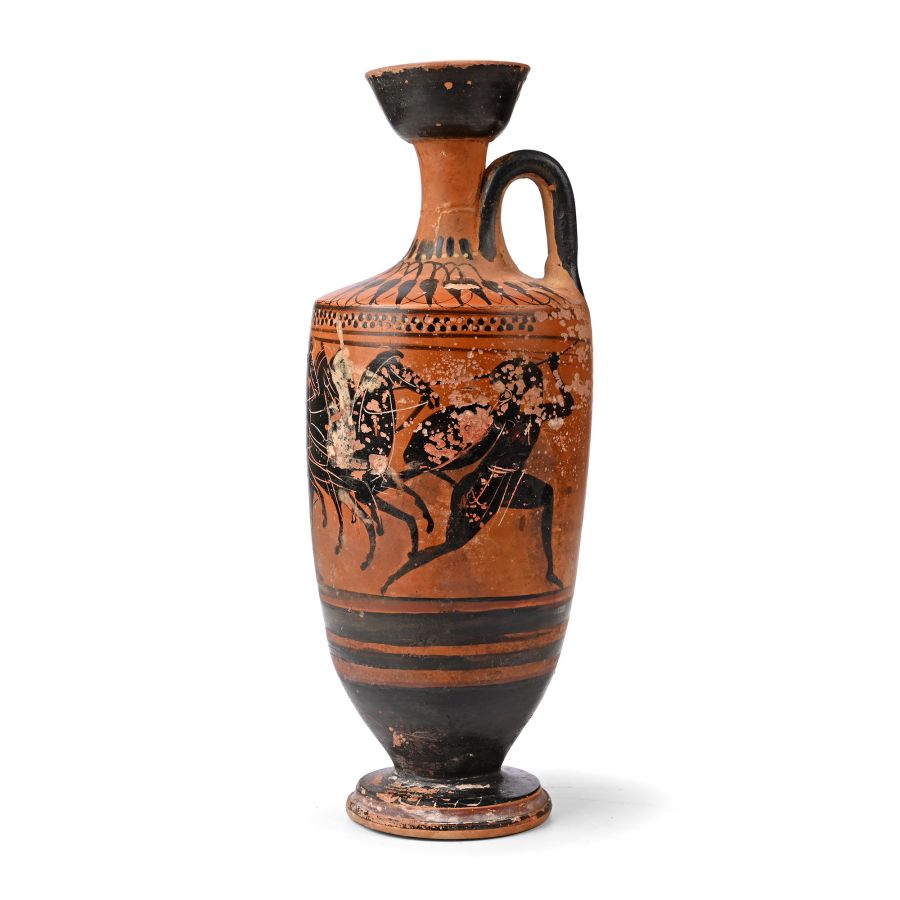
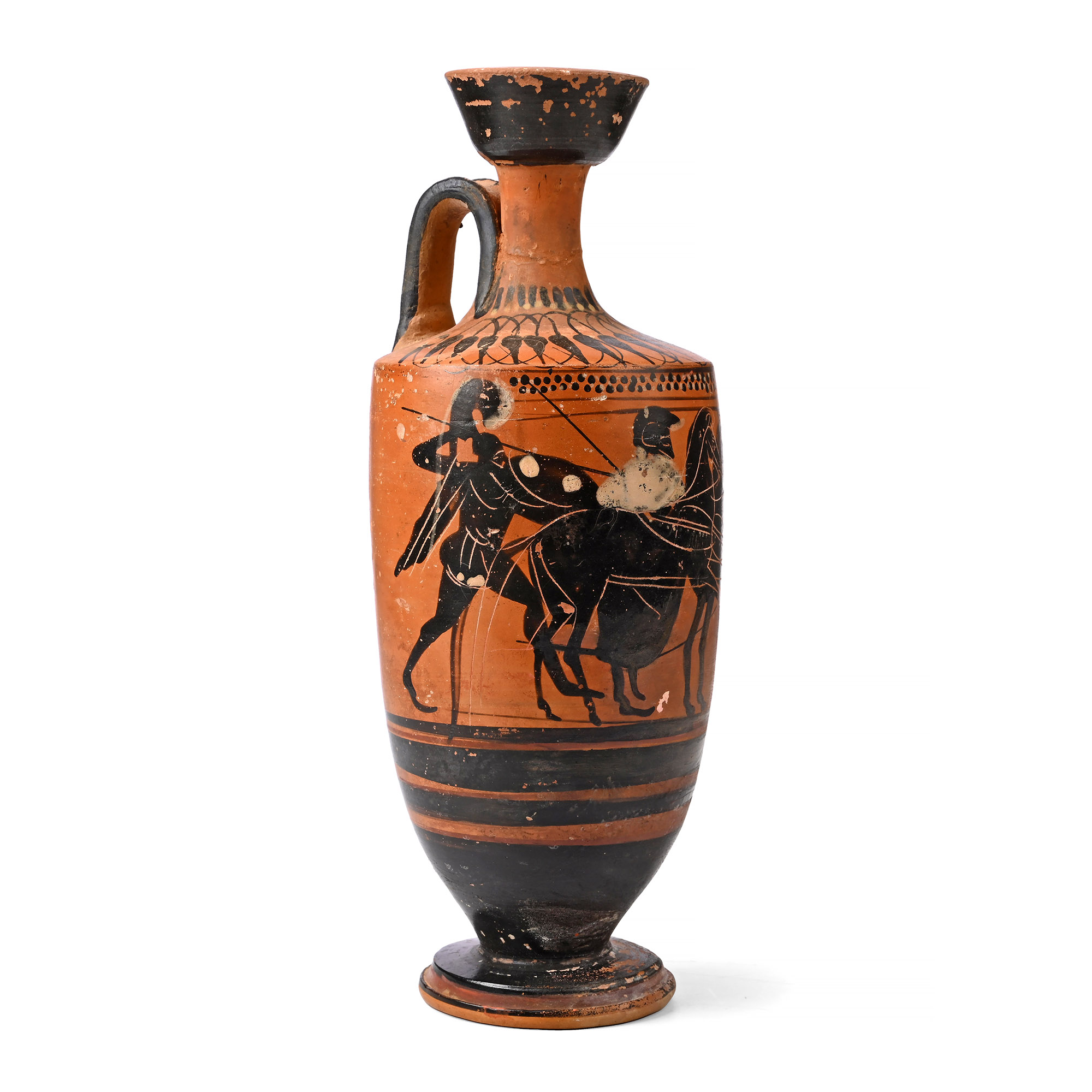
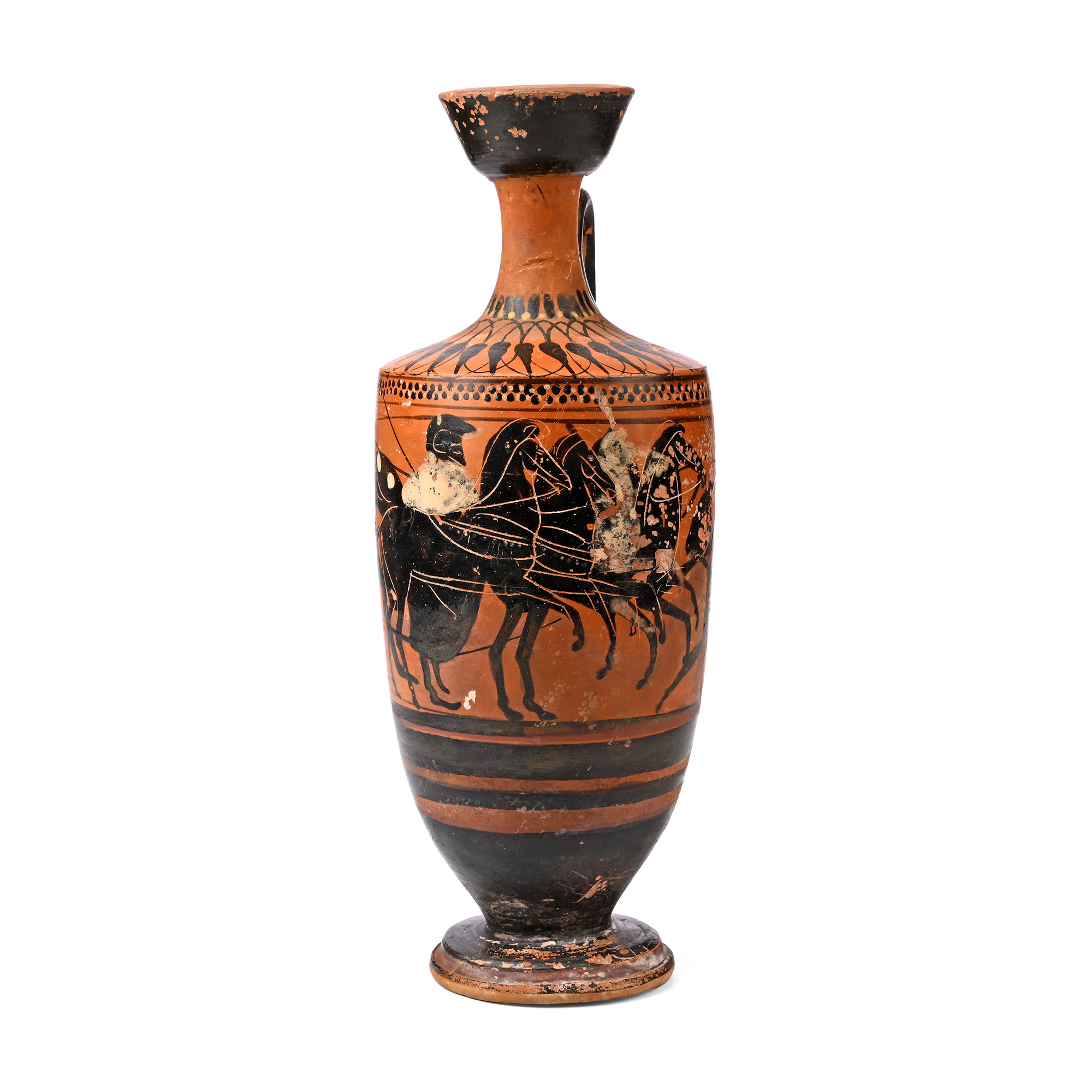
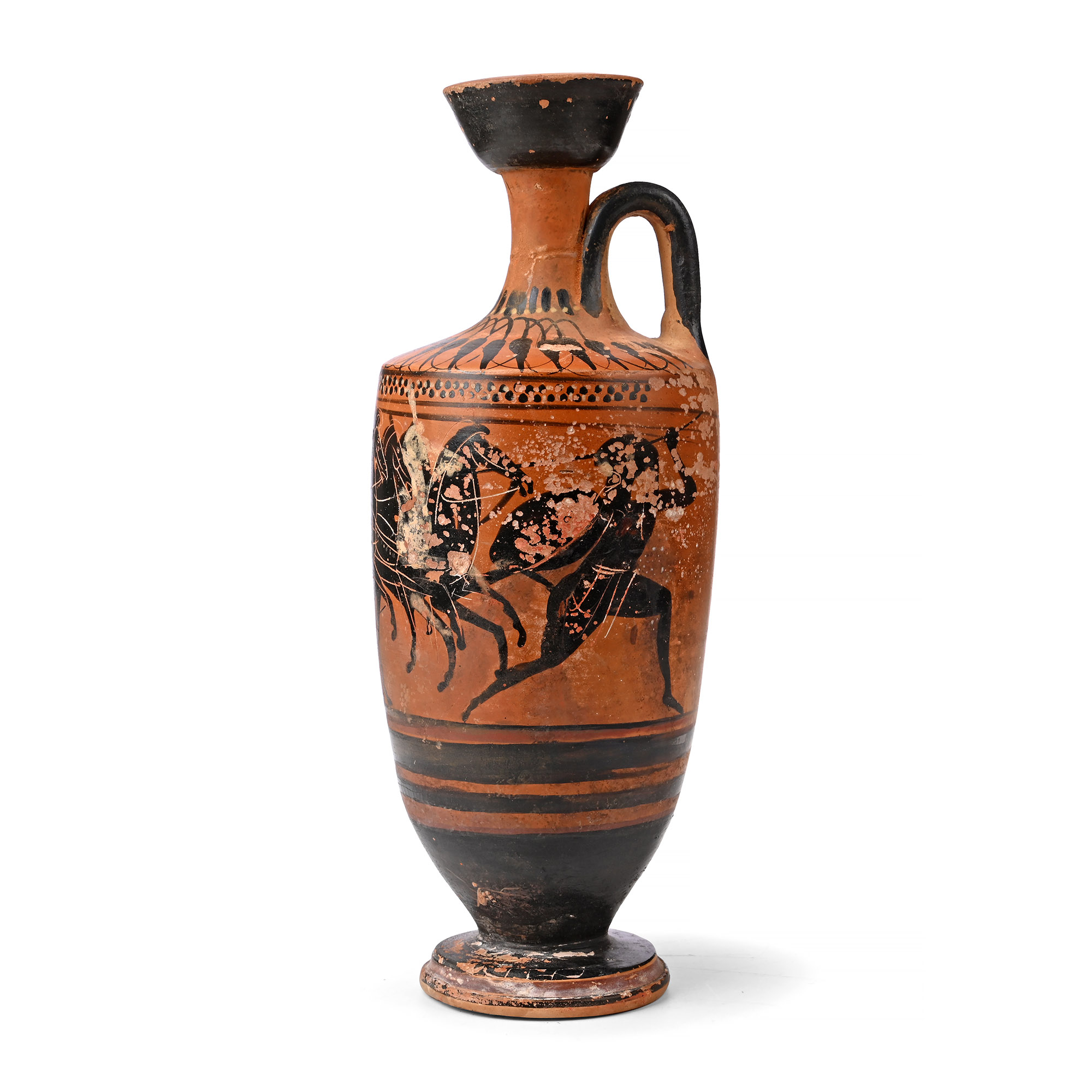
Greek Black-Figure Lekythos with Horses and Fighting Warriors
ATHENS, 550-500 B.C.
9 1/4 in. (472 grams, 23.5 cm).
Cylindrical with echinus mouth and stepped torus foot, on the body a dynamic scene consisting of four rearing horses, side-by-side and wearing harnesses, nestled between the horses a standing warrior wearing a crested helmet, behind the horses an advancing warrior wearing a plumed helmet, holding a long spear in his raised hand a round shield in the other; before the horses a fleeing opponent in a running pose, facing back and holding a spear in one hand while protecting himself with a shield held in the other; long tongue motifs on the shoulder; restored.
ProvenanceEx Bonhams, Knightsbridge, London, 1990s.
Private collection, Suffolk.
Cf. for similar lekhitoi Madigan, B., Corinthian and Attic Vases in the Detroit Institute of Art, Geometric, Black-Figure, and red-figure, Leiden-Boston, 2008, figs.58-77 for the type, especially 61-62.
FootnotesThe scene depicts a battle between hoplites, possibly an episode from the Iliad. Originally, one or two of the combatants were positioned on a chariot; four horses from it remain visible. The scene may represent the wounding of Ares, the god of war, as he is pursued by Diomedes and accompanied by the goddess Pallas, whose helmet is emerging from behind the horses.
CONDITIONTimeLine Auctions follows a vetting process to ensure the authenticity and legality of all items, reinforcing our commitment to integrity and responsible trading. Each antiquity, antique, and coin lot undergoes thorough examination by a vetting committee of at least ten external specialists, professional trade association members, scientists, and archaeologists: Our Vetting Process
AUCTIONS:
TimeLine is a leading auction house specialising in antiquities, ancient art, collectables, natural history, coins, medals, and books. Our auctions offer museums, collectors, historians, and enthusiasts the opportunity to acquire unique and historically significant pieces.
LOT 0032
Greek Black-Figure Lekythos with Horses and Fighting Warriors
Sold for (Inc. bp): £3,900
-
Graeco-Roman Bronze Ring with Inscription
1st century B.C.-1st century A.D.Sold for (Inc. bp): £33
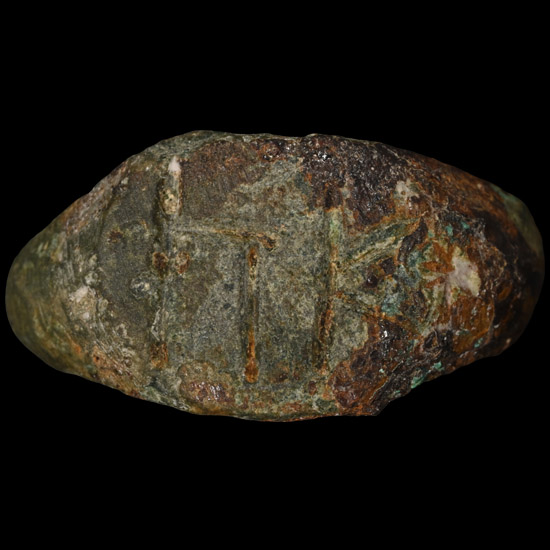
A substantial ring with expanding shoulders, a large oval bezel with 'ΠK'. 9.03 grams, 26.58 mm overall, 18.68 x 16.06 mm internal diameter (approximate size British M, USA 6, Europe 12.46, Japan 12)
From the private collection of a European gentleman (1942-2024), formed since the 1970s. -
Greek Terracotta Oil Lamp
Circa late 5th century B.C.Sold for (Inc. bp): £85
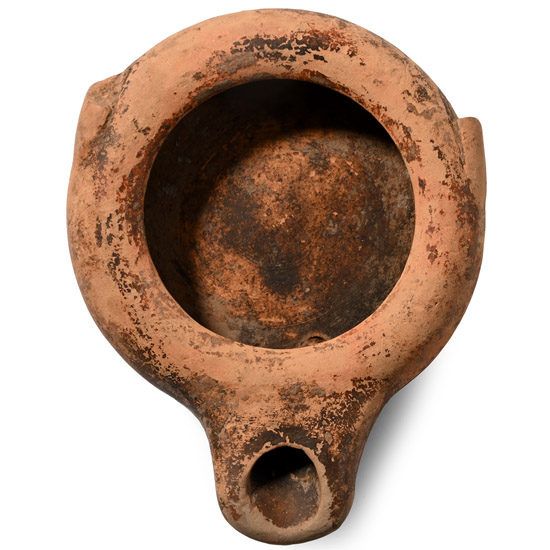
Shallow, round body with inturned rim to the central vent, square-ended nozzle and low foot; lateral lugs forming attachment points for a handle (absent); old collector's labels to underside and '1801' to nozzle; typed data panel. 56 grams, 90 mm
From the collection of the late Bernard C. Pickard, Hampshire, UK, the owner of Bernard C. Pickard Antiquities, which closed in 1987, he had been collecting since the mid 1950s. Accompanied by a typed information display card.
Bernard Pickard was a close friend of Richard Hattatt, the renowned author of several books on ancient brooches. Hattatt acknowledges in his first book, Ancient & Romano-British Brooches, published in 1982, that Mr Pickard first aroused his interest in brooches and inspired him in writing his books during his retirement. Mr Pickard also wrote the foreword to the section on Roman animal brooches, op.cit. p.158-160. -
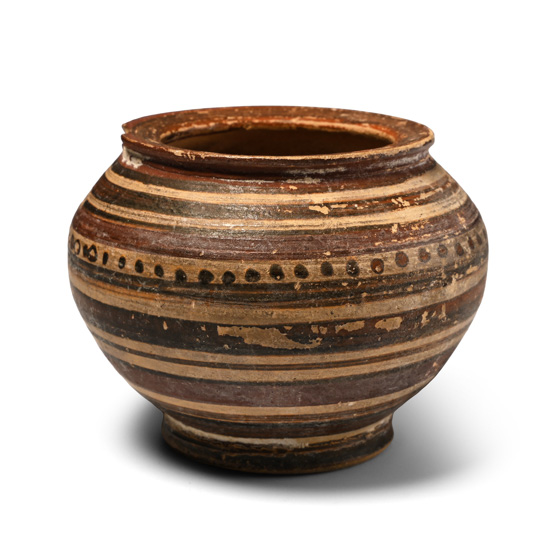
Phoenician Bowl with Crimson and Black Decorations
4th century B.C.Sold for (Inc. bp): £1,040
With a narrow basal ring, a flared rim, and painted circumferential bands. 49.2 grams, 63 mm
Private collection, Los Angeles, USA. Acquired on the American art market. European private collection.
Similar pottery has been found in the Phoenician necropolis of Villaricos near Madrid (tomb 1082), although undecorated. The pottery seems to be of Iberian-Phoenician style, being bowls of similar type and decorated found also in the necropolis of Tutugi, Galera, Granada, Andalusia.
