
Loading, please wait...
LOT 0068
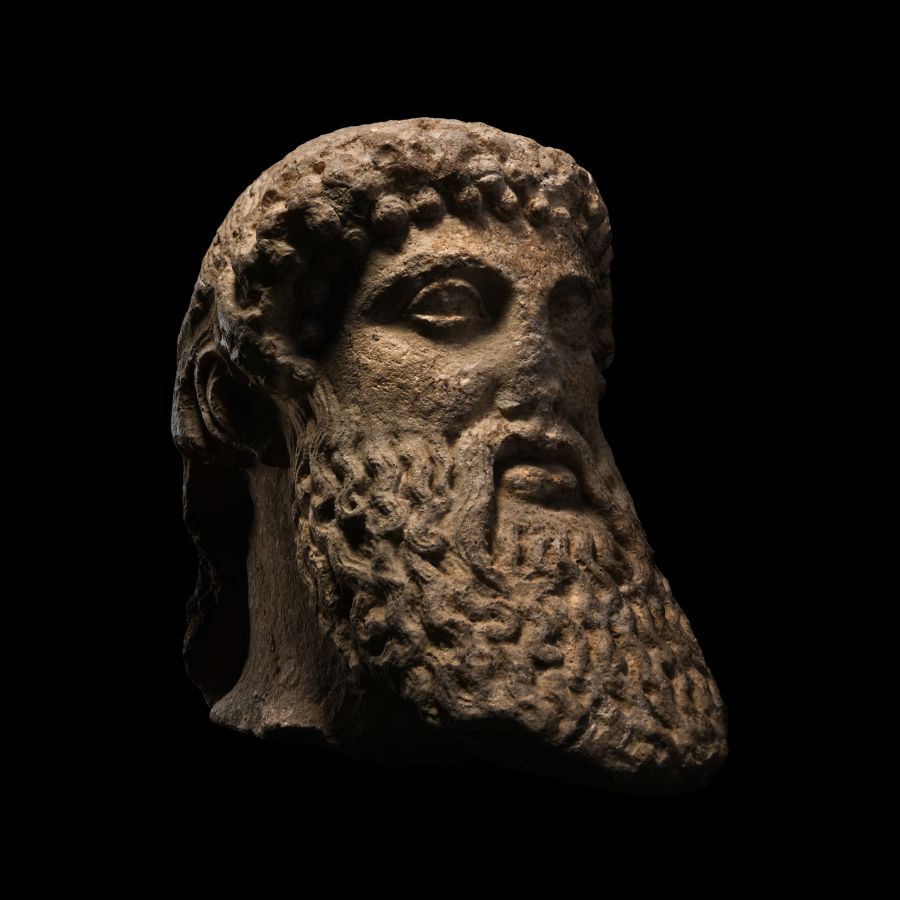
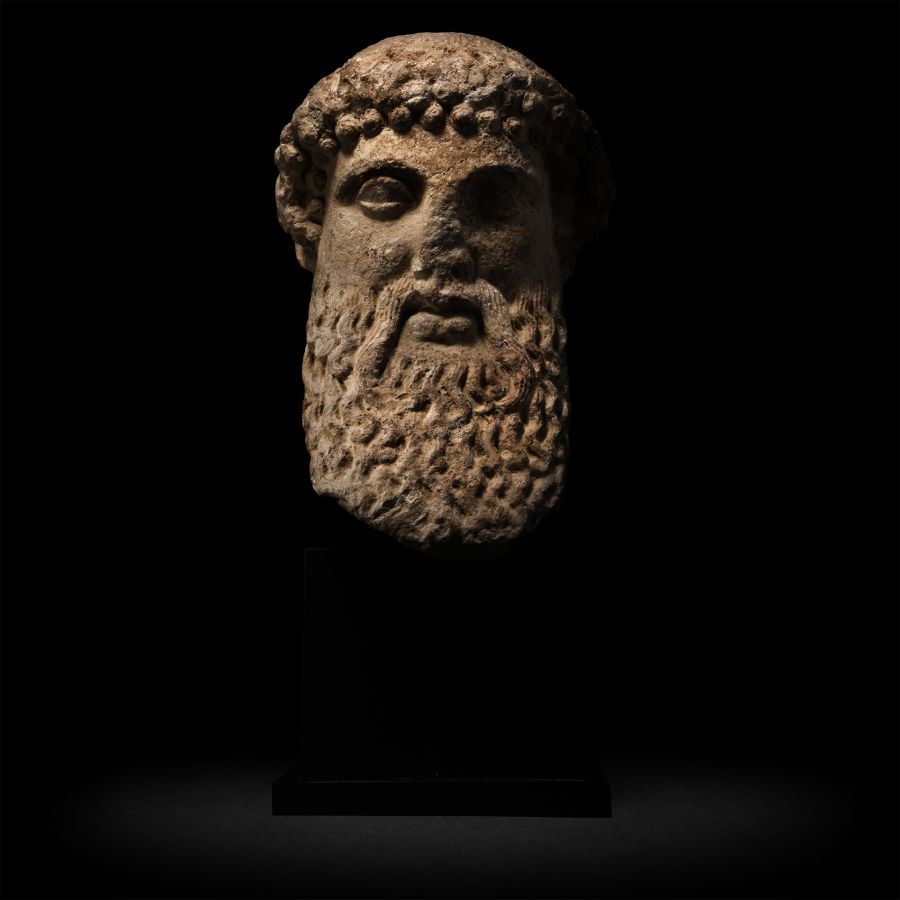
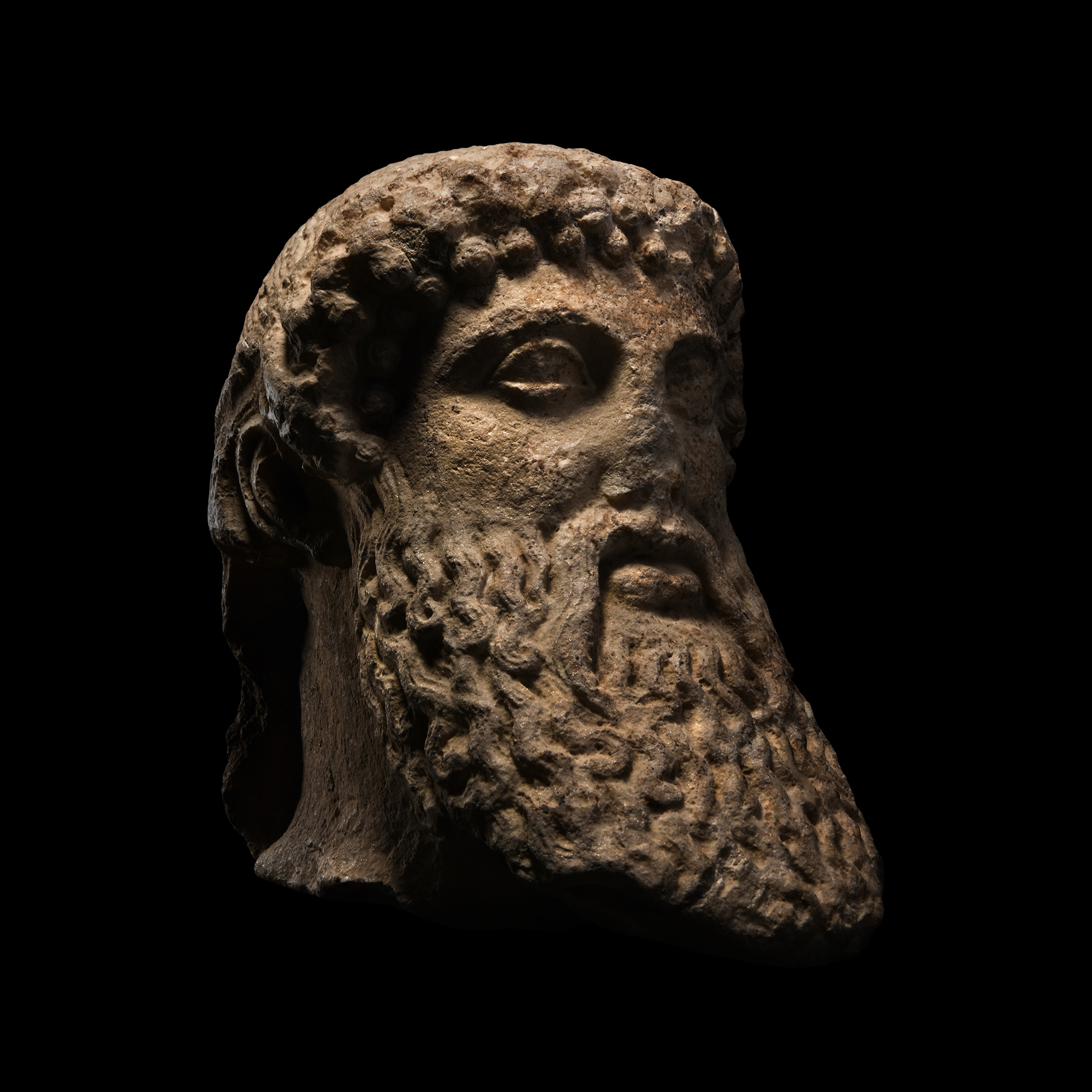
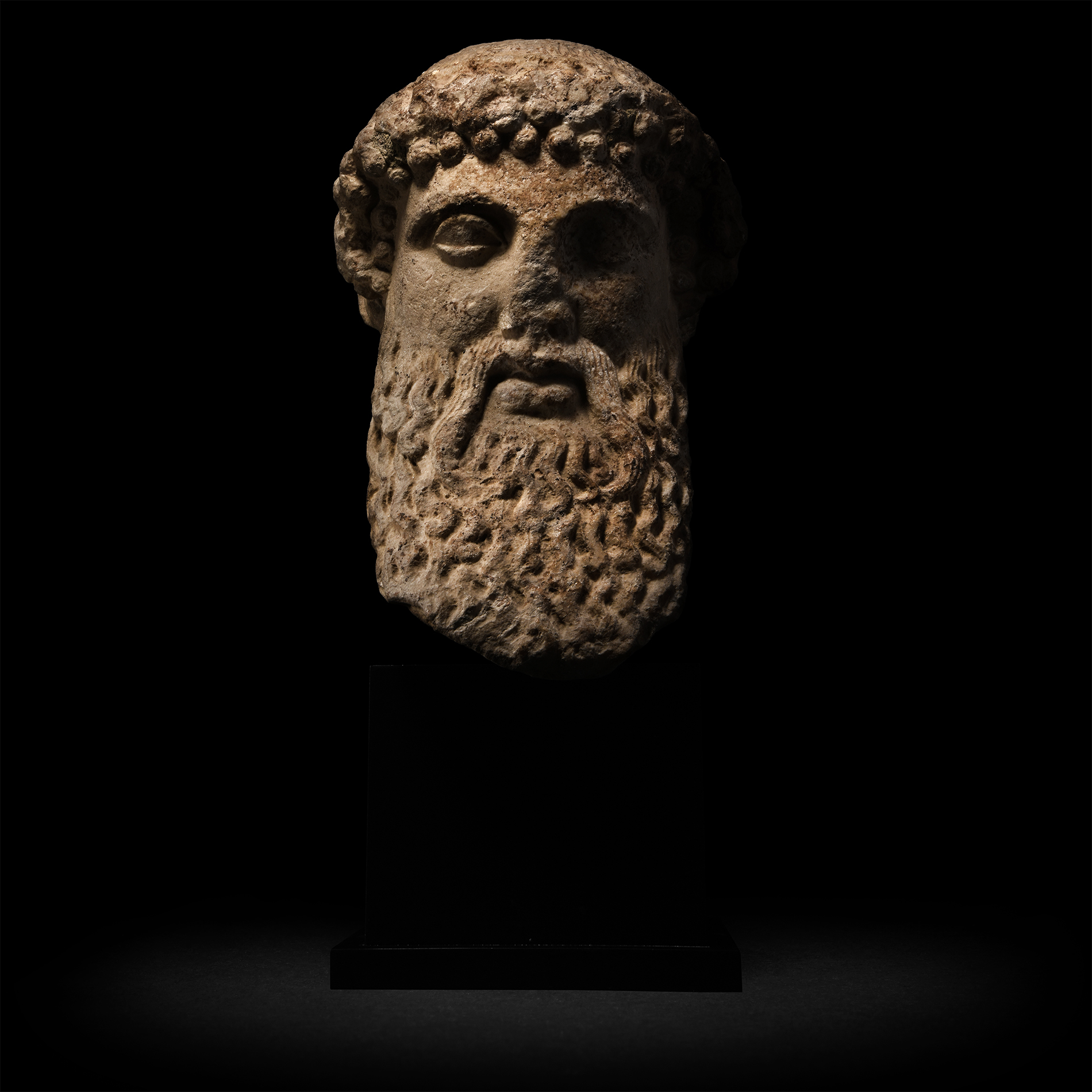
Greek Bearded Hermes Head
1ST -2ND CENTURY A.D.
20 1/2 in. (32.2 kg total, 52 cm high including stand).
A carved marble head of Hermes with densely curled hair, stern facial expression beneath a broad brow, luxuriant curled beard falling in waves and cut square at the lower edge; mounted on a custom-made display stand; a Roman copy after a 5th century B.C. Greek original.
Provenancewith Chaucer Fine Arts Ltd, 1980s.
English private collection.
Accompanied by an academic report by Dr Marina Mattei and Dr Laura Maria Vigna.
This lot has been checked against the Interpol Database of stolen works of art and is accompanied by search certificate no.11615-199747.
Cf. Capuis L., Alkamenes, Fonti storiche e archeologiche, Firenze, 1968, p.48 ss.; Traversari G., Sculture del V-IV secolo a.C. del Museo Archeologico di Venezia, Venezia, 1973, pp.20-23, n.5; Faedo L., in Camposanto Monumentale di Pisa, Le Antichità II, a cura di Salvatore Settis, pp.158-162, n.76; Bonanome, D., in Palazzo Massimo alle Terme, Le Collezioni, a cura di Carlo Gasparri e Rita Paris, Milano, 2013, p.269, n.194; Giobbe, C., in Palazzo Altemps, Le Collezioni, p.50; Gagliano, E., Hermes Propylaios (e le Charites) sull’Acropoli di Atene in Annuario della Scuola Archeologica di Atene e delle Missioni Italiane in Oriente, vol. XCII, Serie III, 14, 2014, pp.33-68
FootnotesThis type of this archaic sculpture can be traced back to the original of which many copies and variants have been preserved: the Hermes Propylaios by the Attic sculptor Alkamenes, a pupil of Phidias, active in the second half of the 5th century B.C. According to some theories, the herma was created for the Propylaea of the acropolis of Athens, as patron deity of doors and entrances; according to others, this type of bearded Hermes is not to be located at the Propylaea, but in various possible places inside the Acropolis.
CONDITIONTimeLine Auctions follows a vetting process to ensure the authenticity and legality of all items, reinforcing our commitment to integrity and responsible trading. Each antiquity, antique, and coin lot undergoes thorough examination by a vetting committee of at least ten external specialists, professional trade association members, scientists, and archaeologists: Our Vetting Process
AUCTIONS:
TimeLine is a leading auction house specialising in antiquities, ancient art, collectables, natural history, coins, medals, and books. Our auctions offer museums, collectors, historians, and enthusiasts the opportunity to acquire unique and historically significant pieces.
LOT 0068
Greek Bearded Hermes Head
Estimate £40,000 - 60,000€46,400 - 69,600 (for guidance only)$54,000 - 81,000 (for guidance only)
-
Large Greek Attic Black Figure Kylix with Chariot Scene
5th century B.C.Sold for (Inc. bp): £1,950
A terracotta kylix with broad flat foot, short stem, broad bowl with carination at the shoulder, glared mouth and two square strap handles; frieze of black-painted decoration including two scenes of a chariot yoked to two centaurs, one with sgraffito markings, between palmettes; restored. 566 grams, 25.5 cm wide
Restored.; fine condition, repaired.
Cambridgeshire collection, 1990s-2000s. Ex property of a Sussex gentleman. Accompanied by an academic report by Raffaele D’Amato. This lot has been checked against the Interpol Database of stolen works of art and is accompanied by search certificate number no.11579-198944.
These Attic kylikes were usually presented with a stemmed base, a deep bowl and twin, upturned loop handles, all upon a concave base. The exterior walls were decorated with black-figure technique on red background, here in a style remarkably similar to that of the Haimon Painter, especially in the rendering of facial features, and feet. The imagery on the exterior of these kylikes, used in the symposia, varied a lot. Just as the cup could be a mask (in the so-called typology of the Attic black-figure eye cups) to transform the drinker, to give a “complex painted character”. Daily life scenes, or fantasies like the chariot here pulled by centaurs, were among the various subjects. -
Greek Terracotta Head of a Woman
3rd-2nd century B.C.Estimate: £2,000 - 3,000 (‡+bp*)
Opening Bid: £1,000
A terracotta bust of a woman with elaborate band of curls to the brow; spout or hole to the rear of the head; mounted on a custom-made display stand with old lot sticker to base. 675 grams total, 19 cm high including stand
Private European collection. with Genève Enchères, 12th December 2017, lot 861. This lot has been checked against the Interpol Database of stolen works of art and is accompanied by search certificate no.11612-199036. -
.jpg)
Greek Marble Head of a Female
4th-1st century B.C.Sold for (Inc. bp): £715
A head of a female carved in white marble, modelled in the round with semi-naturalistic facial features and hair tied back into a chignon at the nape of the neck. 163 grams, 59 mm high
Acquired early 1990s. Ex private American collection; thence by descent. Private collection since 1998.
