
Loading, please wait...
LOT 0490
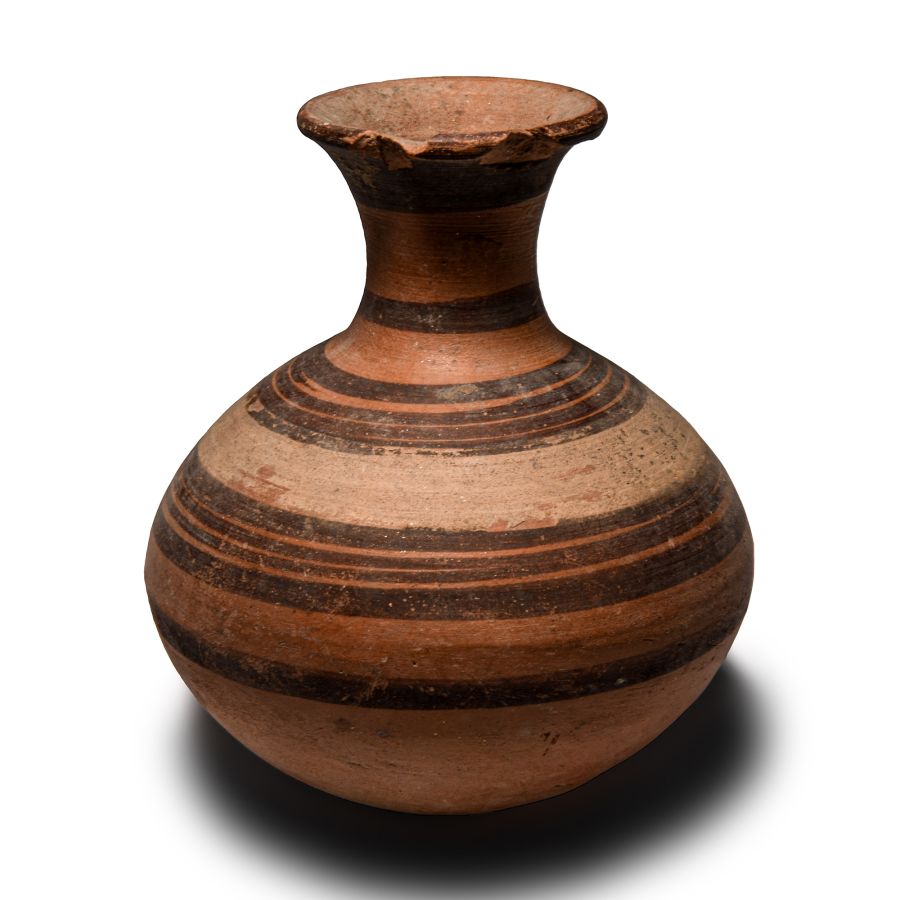
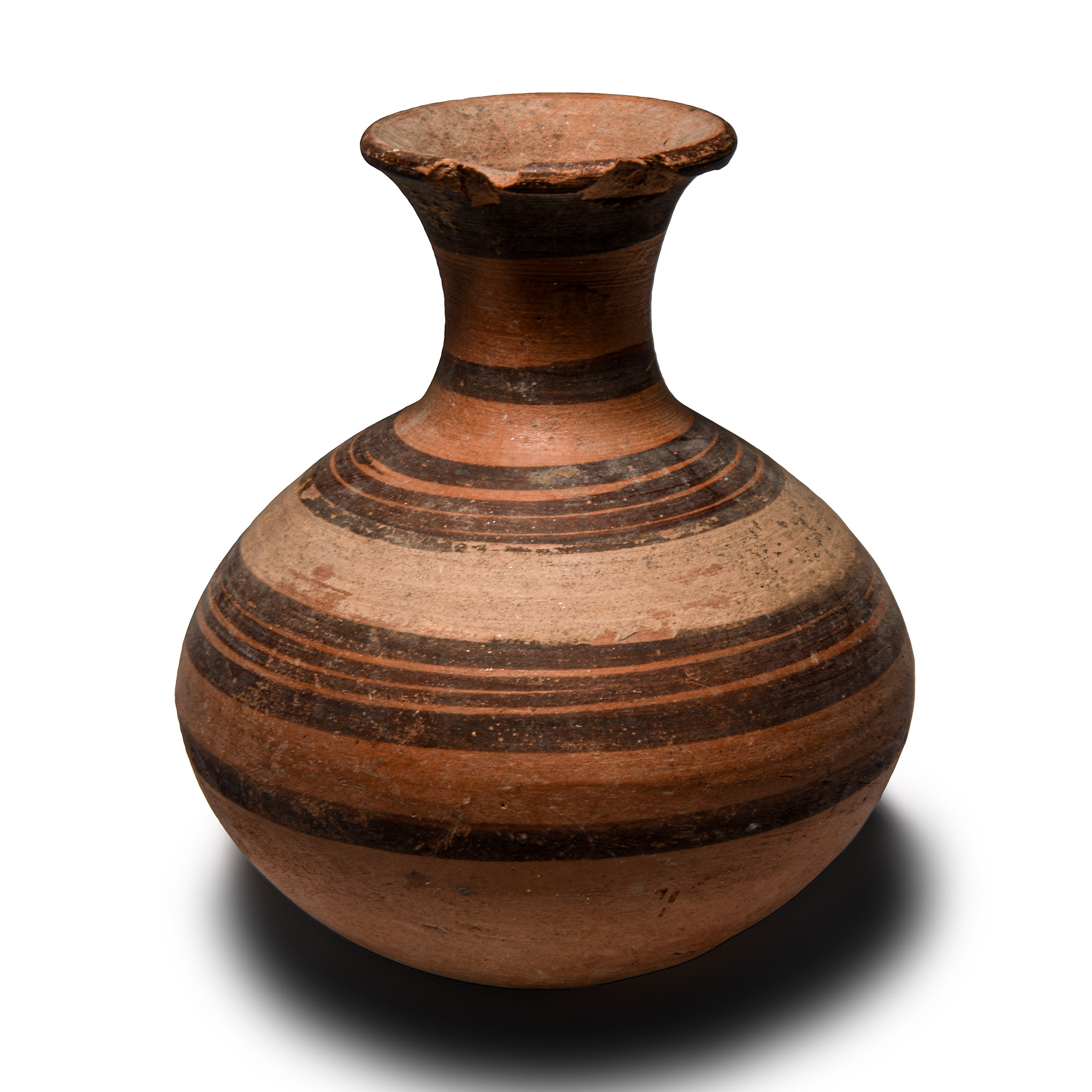
Greek Banded Bichrome Terracotta Jar
IRON AGE, CIRCA 8TH CENTURY B.C.
4 1/2 in. (260 grams, 11.6 cm high).
With rounded bottom and trumpet-shaped mouth, painted circumferential bands to the shoulder and neck. [No Reserve]
ProvenanceAcquired 1980-2015.
Ex Abelita family collection.
TimeLine Auctions follows a vetting process to ensure the authenticity and legality of all items, reinforcing our commitment to integrity and responsible trading. Each antiquity, antique, and coin lot undergoes thorough examination by a vetting committee of at least ten external specialists, professional trade association members, scientists, and archaeologists: Our Vetting Process
AUCTIONS:
TimeLine is a leading auction house specialising in antiquities, ancient art, collectables, natural history, coins, medals, and books. Our auctions offer museums, collectors, historians, and enthusiasts the opportunity to acquire unique and historically significant pieces.
-
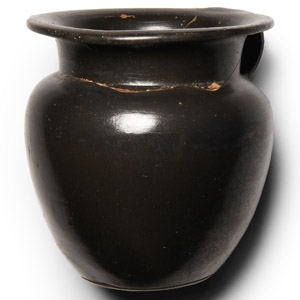
Greek Apulian Black-Glazed Mug
Circa 4th-3rd century B.C.Estimate: £300 - 400 (+bp*)
Opening Bid: £100
With a high-gloss black slip, ovoid body and a short wide neck with a flaring rim, a wide strap handle and a flat base. 144 grams, 95 mm wide
Ex P. A., Hertfordshire, UK, specialist collection of Greek art, 1980-1990s.
The black glaze technique uses the same glaze used by the Greeks on the red-figure and black-figure ceramics, but covering the entire piece, without figurative decoration. It was a transparent raw glaze, which took on its characteristic intense, glossy black tone after firing. -

Minoan Bronze Votary Statue
Circa 3000–1100 B.C.Sold for (Inc. bp): £1,820
The figure standing on a small discoid base, wearing a short kilt, with broad chest and slender waist; the left arm bent across the chest and the right arm raised to the forehead in an act of worship; mounted on a custom-made stand. 447 grams total, 22.4 cm high including stand
British private collection, acquired by 2000. Accompanied by a copy of an old photograph showing this item on display in a display cabinet within the previous collectors home. This lot has been checked against the Interpol Database of stolen works of art and is accompanied by search certificate no.11950-210856. -
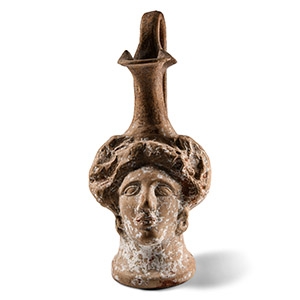
Greek Canosan Terracotta Anthropomorphic Oinochoe
Circa 4th century B.C.Estimate: £800 - 1,000 (+bp*)
Opening Bid: £400
The body formed as a female bust with elaborately styled hair; discoid foot, tall stem with pinched rim giving a broad pouring lip, strap handle to the rear; some pigment remaining. 446 grams, 22.2 cm high
Old French private collection. Swiss private collection, Basel-Landschaft. Private collection of M. Tritten, Binningen, Switzerland. Property of an East Sussex, UK, gentleman.
