
Loading, please wait...
LOT 0497
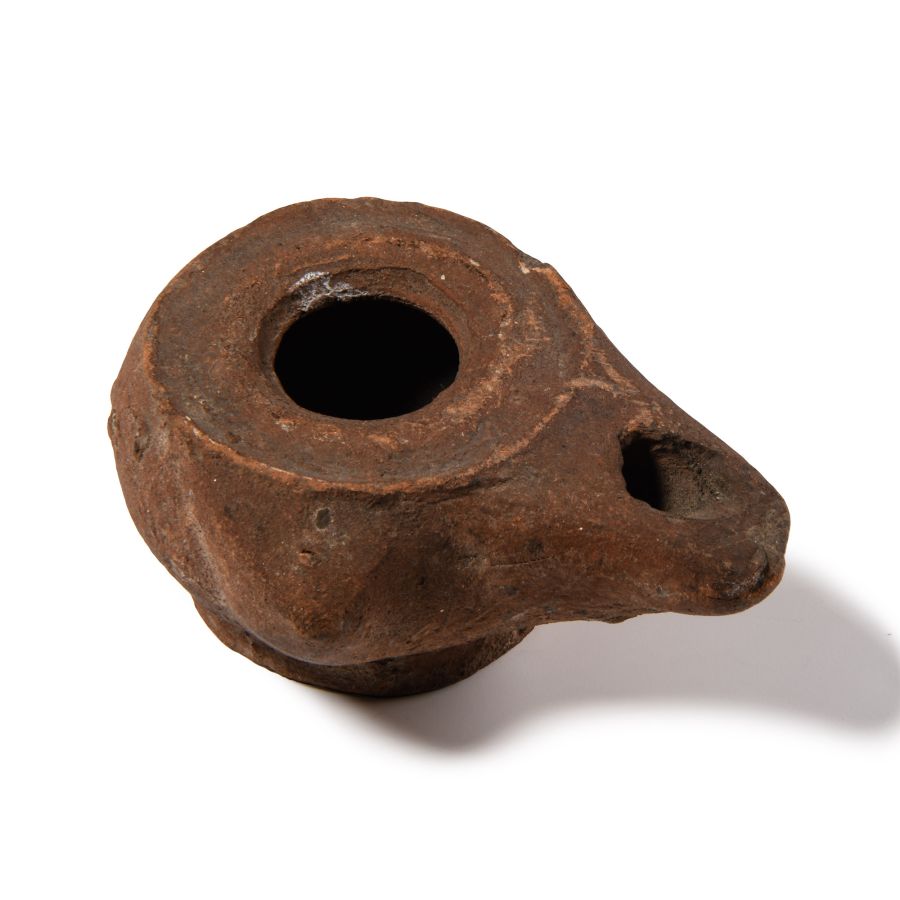
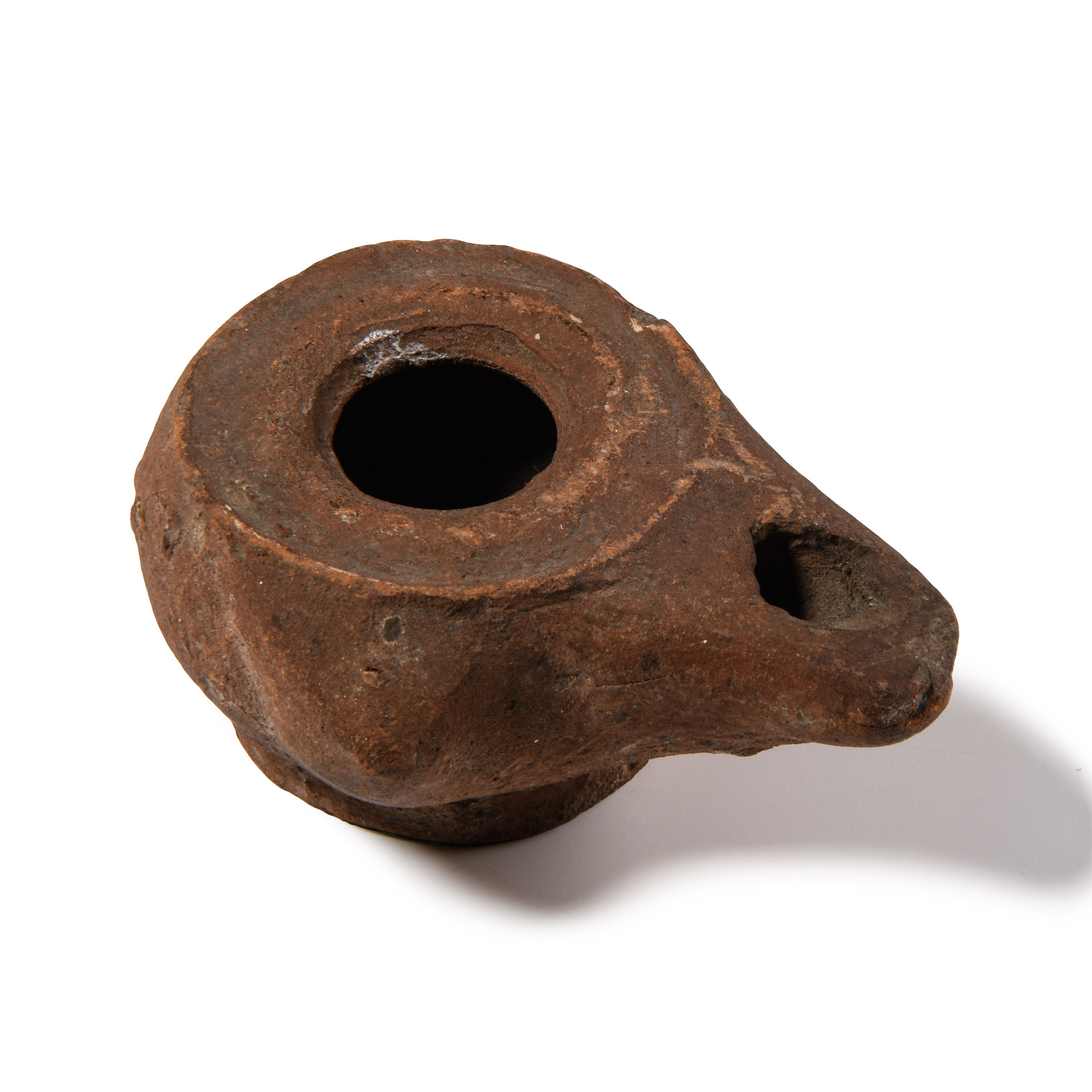
Greek Attic Terracotta Lamp
CIRCA 6TH-5TH CENTURY B.C.
2 3/4 in. (55 grams, 69 mm).
Squat terracotta bowl with large discus and broad nozzle, lateral lug handle. [No Reserve]
ProvenanceEx P. A., Hertfordshire, UK, specialist collection of Greek art, 1980-1990s.
c
Cf. similar in the Metropolitan Museum of Art, New York, under accession number 74.51.2146.
CONDITIONTimeLine Auctions follows a vetting process to ensure the authenticity and legality of all items, reinforcing our commitment to integrity and responsible trading. Each antiquity, antique, and coin lot undergoes thorough examination by a vetting committee of at least ten external specialists, professional trade association members, scientists, and archaeologists: Our Vetting Process
AUCTIONS:
TimeLine is a leading auction house specialising in antiquities, ancient art, collectables, natural history, coins, medals, and books. Our auctions offer museums, collectors, historians, and enthusiasts the opportunity to acquire unique and historically significant pieces.
-
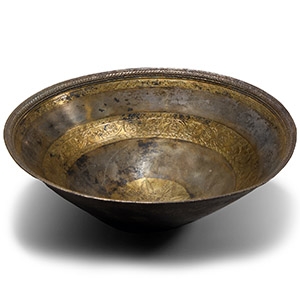
Hellenistic Decorated Silver-Gilt Bowl
Late 2nd-early 1st century B.C.Estimate: £15,000 - 20,000 (+bp*)
Opening Bid: £7,500
The bell-shaped bowl with everted flaring rim, raised from a single sheet with parcel-gilding; the inner rim with raised wreath ornament, a band of geometric motifs below; central band composed of an elaborate garland of leaves and flowers flanked by bands of volutes; the base with an eight-petalled flower with radiating large leaves; small repair. 246 grams, 20.2 wide (1.58 kg total, 28.5 x 28 cm including case)
From the collection of George Ortiz (1927-2013). with Mansour Gallery, early 2000s. Subsequently in a French collection. Accompanied by an academic report by Dr Raffaele D’Amato. This lot has been checked against the Interpol Database of stolen works of art and is accompanied by search certificate number no.11936-210132.
Similar segment-shaped silver bowls with partial gilding, decorated on the inside with friezes in the form of garlands or wickerwork on the bottom, have been found in many nomad mounds of the Caucasus and in the territories once dominated by the Arsacid Empire. They are attributed to Parthian workshops by Pfrommer and M. Treister. -
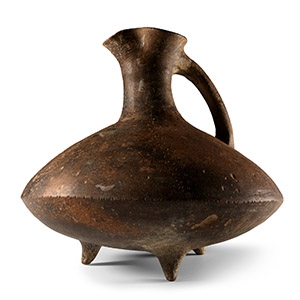
Eastern Mediterranean Tripod Footed Jug with Strainer
1st millennium B.C. or laterSold for (Inc. bp): £910
With a carinated body with conical feet to the base, a slender neck with trefoil mouth and pierced strainer panel to the spout, integral handle to the rear; displaying vertical notching to the equator and columns composed of shallow dimples to the upper body; chipped. 1.64 kg, 24 cm wide
with a London, UK, gallery, 1971-early 2000s. -
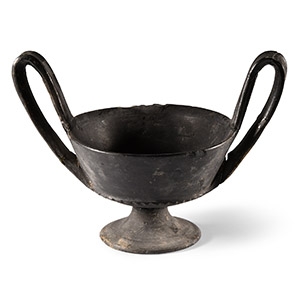
Etruscan Bucchero Kantharos Cup
Circa 7th-6th century B.C.Sold for (Inc. bp): £390
Black ceramic with broad bowl and two loop handles, short stem and trumpet-shaped foot; bowl with fluted carination; repaired. 339 grams, 18.5 cm wide
From the Steel family collection, 1950s-late 1990s.
