
Loading, please wait...
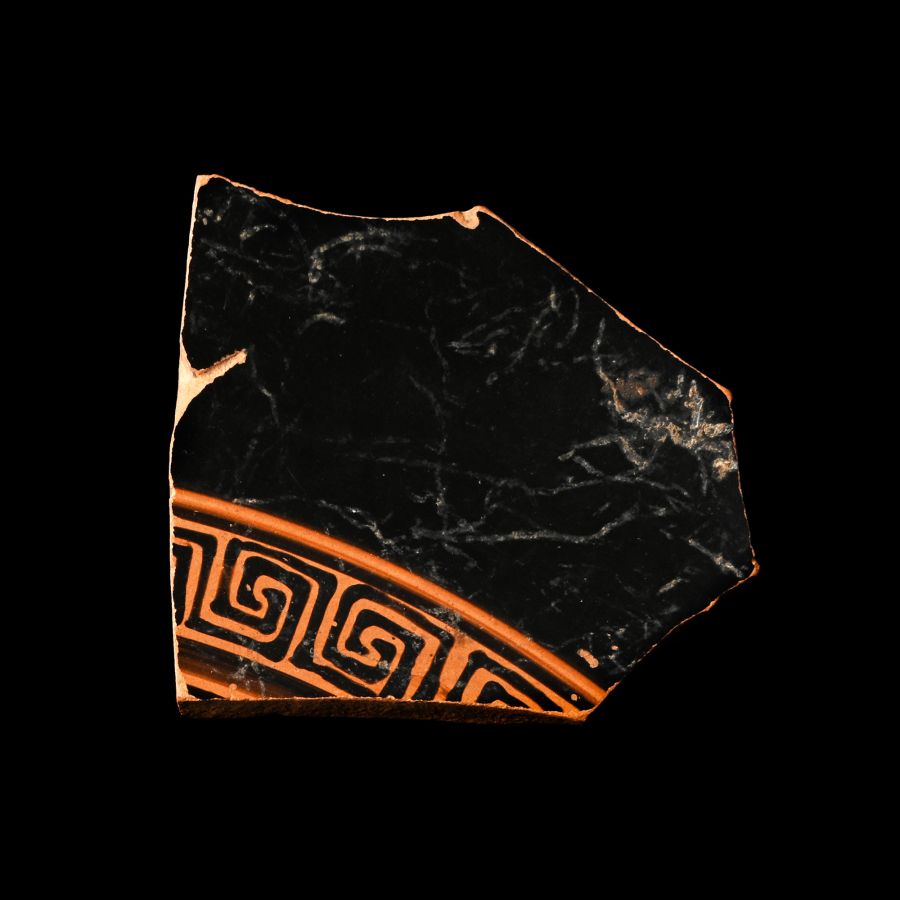
_900x900.jpg "Greek Attic Red-Figure Kylix Fragment Depicting a Lyre Player")
_200x200.jpg "Greek Attic Red-Figure Kylix Fragment Depicting a Lyre Player")
.jpg "Greek Attic Red-Figure Kylix Fragment Depicting a Lyre Player")
LOT 0627
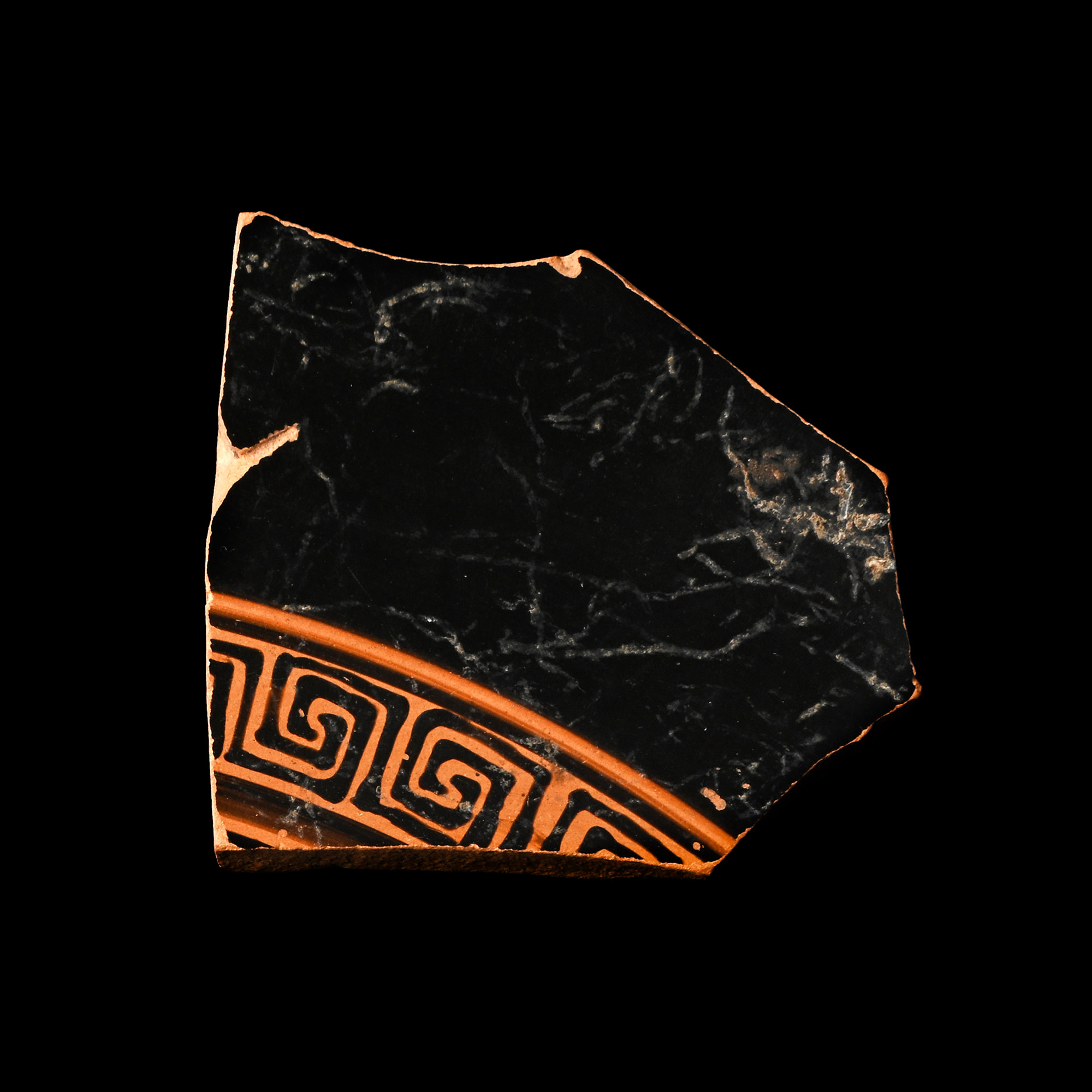
Greek Attic Red-Figure Kylix Fragment Depicting a Lyre Player
EARLY 5TH CENTURY B.C.
1 5/8 in. (7.25 grams, 42 mm).
Irregular fragment depicting a draped figure playing a lyre, possibly Apollo; meander line to the reverse.
ProvenanceFrom the stock of a former UK antiquarian, acquired at trade fairs and from private collection formed in the 1980s-1990s.
Private collection, Europe.
TimeLine Auctions follows a vetting process to ensure the authenticity and legality of all items, reinforcing our commitment to integrity and responsible trading. Each antiquity, antique, and coin lot undergoes thorough examination by a vetting committee of at least ten external specialists, professional trade association members, scientists, and archaeologists: Our Vetting Process
AUCTIONS:
TimeLine is a leading auction house specialising in antiquities, ancient art, collectables, natural history, coins, medals, and books. Our auctions offer museums, collectors, historians, and enthusiasts the opportunity to acquire unique and historically significant pieces.
LOT 0627
Greek Attic Red-Figure Kylix Fragment Depicting a Lyre Player
Sold for (Inc. bp): £234
-
.jpg)
Phoenician Terracotta Bulla with a Dolphin
5th century B.C.Estimate: £150 - 200 (‡+bp*)
Opening Bid: £80
Plano-convex in profile with impressed dolphin and legend. 1.05 grams, 17.71 mm
Acquired in 1994. Private collection, Switzerland, thence by descent. Private collection, since the late 1990s. -
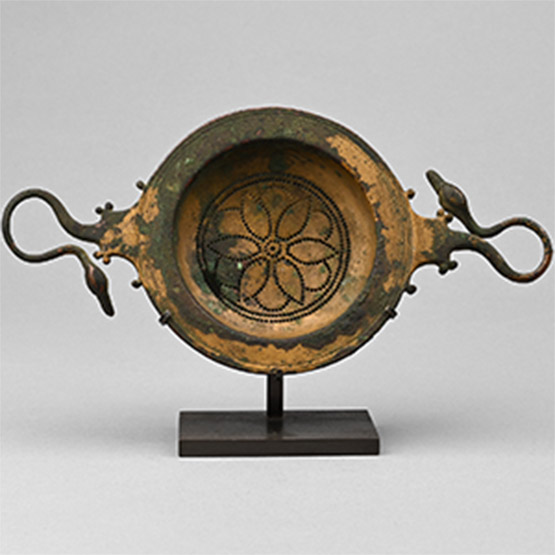
Greek Bronze Wine Strainer with Swan-Head Handles
4th-3rd century B.C.Estimate: £10,000 - 14,000 (‡+bp*)
Opening Bid: £5,000
Comprising a shallow bowl and broad flange rim, two integral scalloped handles with lateral scrolled flourishes, each tapering to a S-curved handle with swan-head terminals with incised eye and beak detailing; perforated whirl within roundel to interior base; accompanied by a custom-made display stand with mirror. 402 grams total, 19.7 cm including stand
with Hôtel des ventes de Belfort Sarl, October 2011, no.16. Acquired by the present owner at the above sale. Accompanied by an academic report by Dr Raffaele D'Amato. This lot has been checked against the Interpol Database of stolen works of art and is accompanied by search certificate number no.12209-222140.
Elaborate gilded strainers, such as this present example, were used at symposia and festive occasions for the purpose of preventing the dregs of wine from entering the wine cup. This and other related silver utensils became popular in the late 4th and 3rd century B.C. These highly decorated wine strainers were fitted with dual handles forming loops in the shape of twisting animals, here a swan. Usually, they took the form of a shallow dish complete with four rings of perforations in the centre in order to drain the wine. Strainers of this type were used to separate out sediments found in the thick Greek wine. Examples similar to this one have been found in royal tombs in northern Greece, as well as the tomb of a monarch in Sudan. -
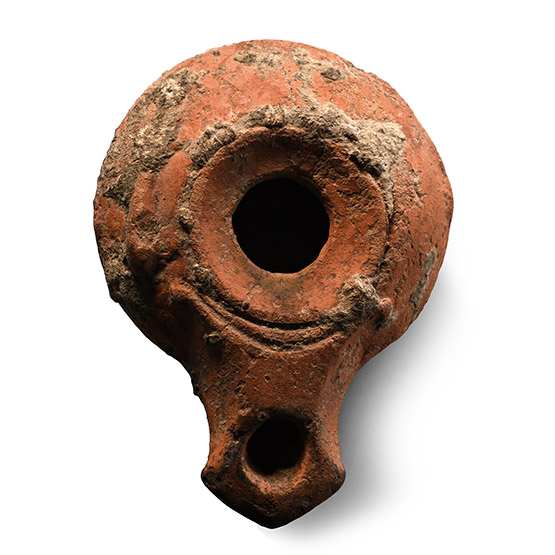
Greek Terracotta Oil Lamp
Hellenistic, 1st century B.C.Sold for (Inc. bp): £85
Biconvex in section, with a large central filler hole and a flange on the shoulder; elongated volute nozzle; low basal pad; some accretions to the shoulder. 67.9 grams, 81 mm
From the Lloyd and Jeanne Raport collection, Washington, D.C. and Florida, USA, formed between 1972-2000. Acquired through Bonhams, London, UK.
