
Loading, please wait...
LOT 0611
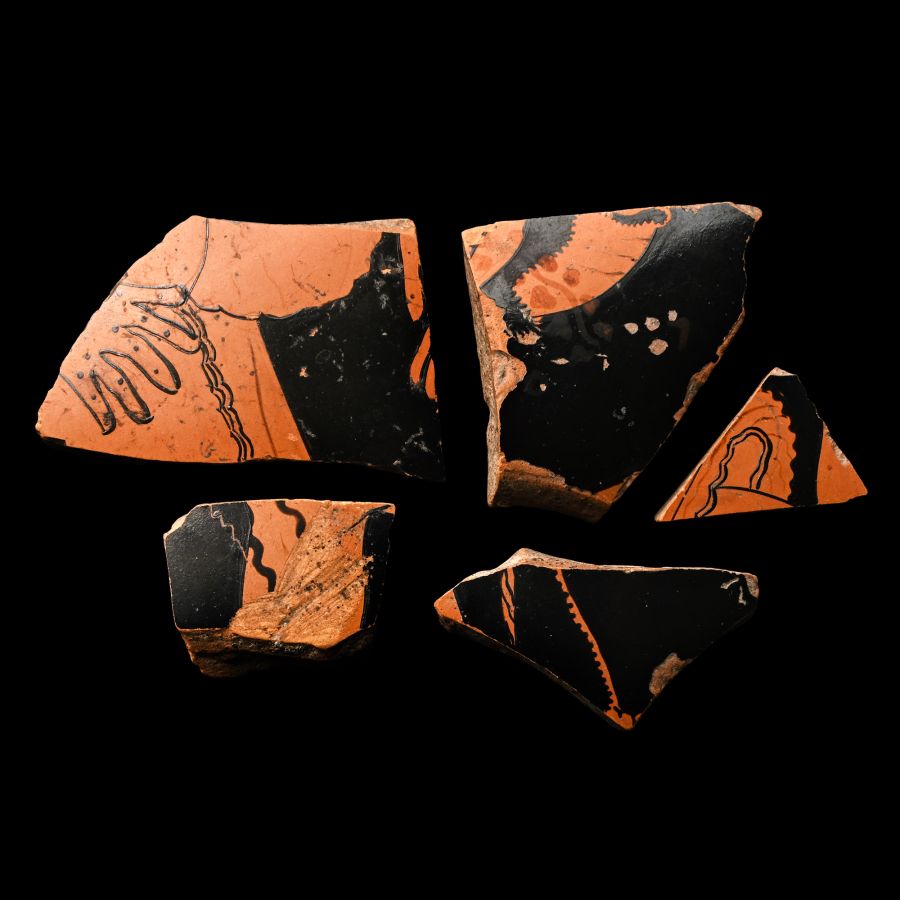
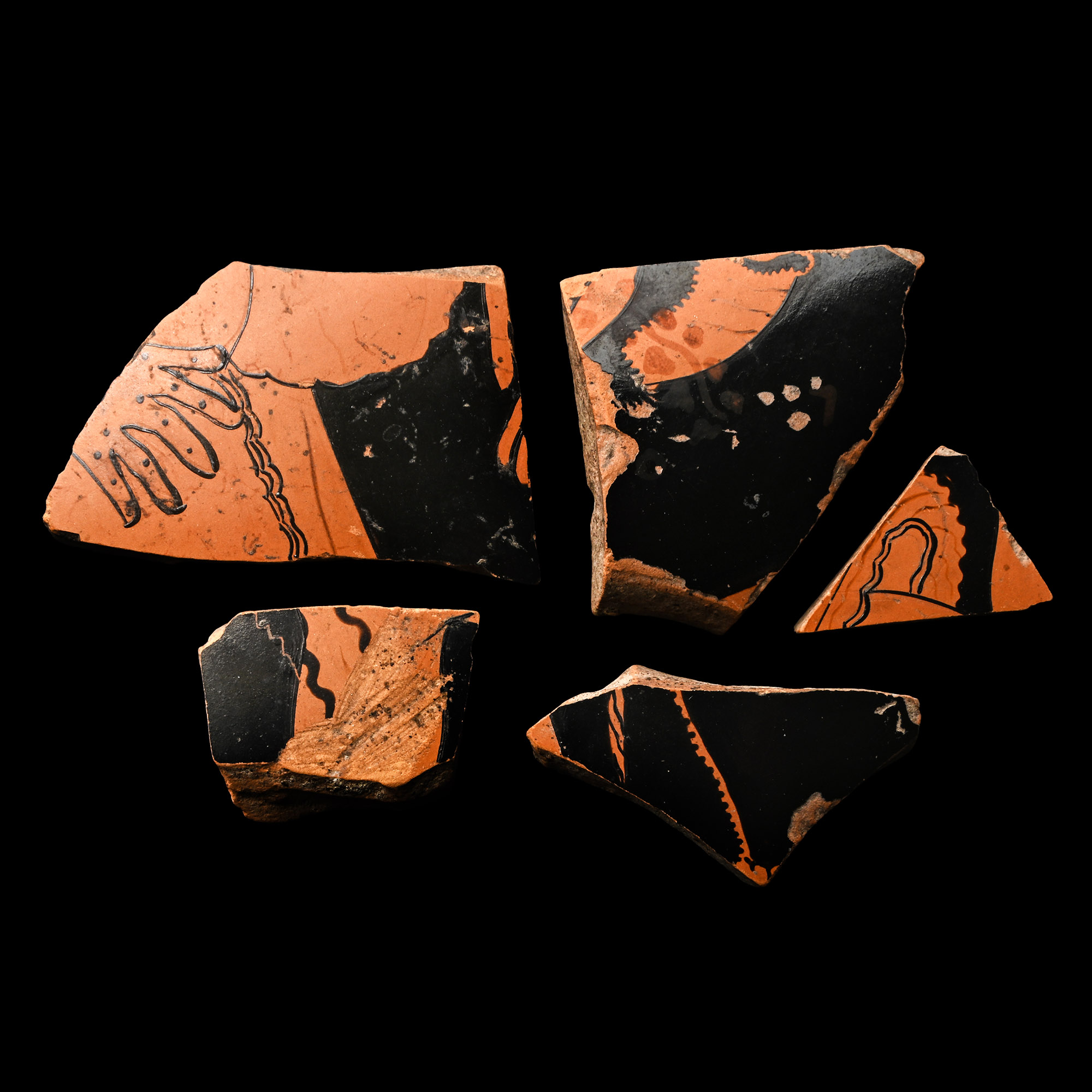
Greek Attic Red-Figure Fragments
CIRCA 490-470 B.C.
3/4 - 1 5/8 in. (20 grams total, 20-41 mm).
Comprising irregular, finely painted fragments, one with letters and one with prominent dotted hand; possibly attributable to the Brygos Painter. [5]
ProvenanceFrom the stock of a former UK antiquarian, acquired at trade fairs and from private collection formed in the 1980s-1990s.
Private collection, Europe.
TimeLine Auctions follows a vetting process to ensure the authenticity and legality of all items, reinforcing our commitment to integrity and responsible trading. Each antiquity, antique, and coin lot undergoes thorough examination by a vetting committee of at least ten external specialists, professional trade association members, scientists, and archaeologists: Our Vetting Process
AUCTIONS:
TimeLine is a leading auction house specialising in antiquities, ancient art, collectables, natural history, coins, medals, and books. Our auctions offer museums, collectors, historians, and enthusiasts the opportunity to acquire unique and historically significant pieces.
-
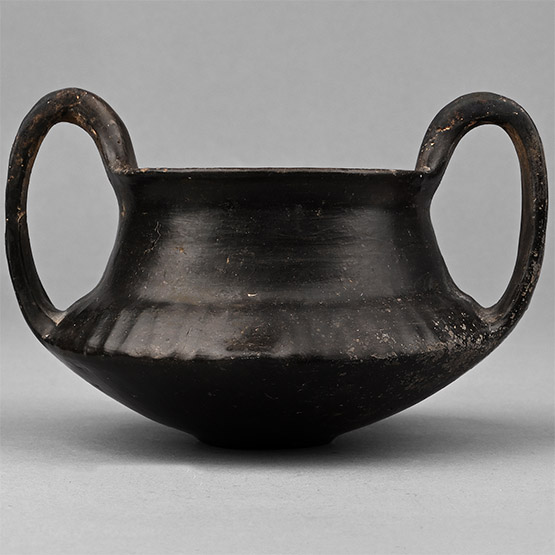
Two-handled Villanova Bowl
8th-7th century B.C.Sold for (Inc. bp): £572
A squat vessel with a small base, raised neck and slightly projecting rim, carinated shoulder with two projecting bosses and a pair of high strap handles. 221 grams, 13.4 cm wide
Old Basel private collection. Elsa Bloch-Diener, Antike Kunst, Bern, 27 July 1990. Private collection, Bern, Switzerland. Private collection, UK. -
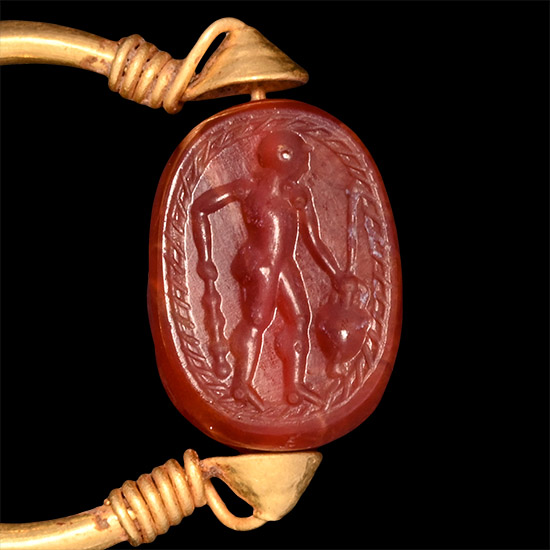
Etruscan Carnelian Scarab with Hercules at a Fountain in Gold Ring
3rd century B.C.Estimate: £1,500 - 2,000 (+bp*)
Opening Bid: £750
Hoop made from D-section wire with coils to the shoulders, scarab bezel with carapace detailing and intaglio of a standing nude figure of Hercules holding a club and amphora at a stream, enclosed by a roped border. 5.73 grams, 22.52 mm overall, 18.68 x 16.58 mm internal diameter (approximate size British P, USA 7 1/2, Europe 16.23, Japan 15)
Acquired on the UK art market. Private collection, England. -
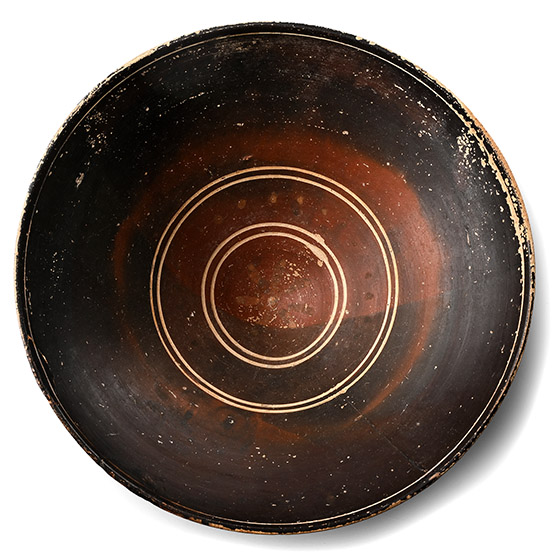
Large Greek Terracotta Deep Glazed Bowl
3rd-1st century B.C.Sold for (Inc. bp): £468
Glazed Slope-Ware vessel with narrow base, reserved concentric rings to the iner face; some restoration to rim; supplied with a display stand. 337 grams, 21.5 cm wide
Property of a private collector. with Bonhams, London, 16 May 2002, no.551. Private collection, UK. Accompanied by a copy of an Art Loss Register certificate no.S00075157. Accompanied by copies of the relevant Bonhams catalogue pages.
