
Loading, please wait...
LOT 0573
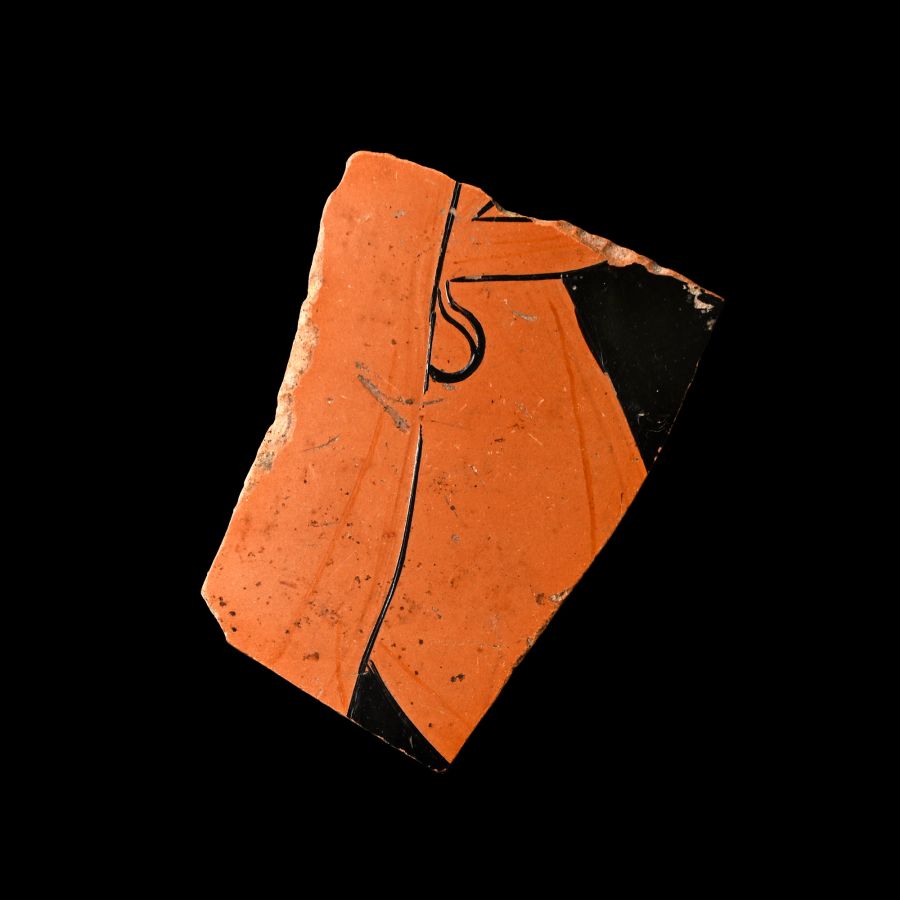
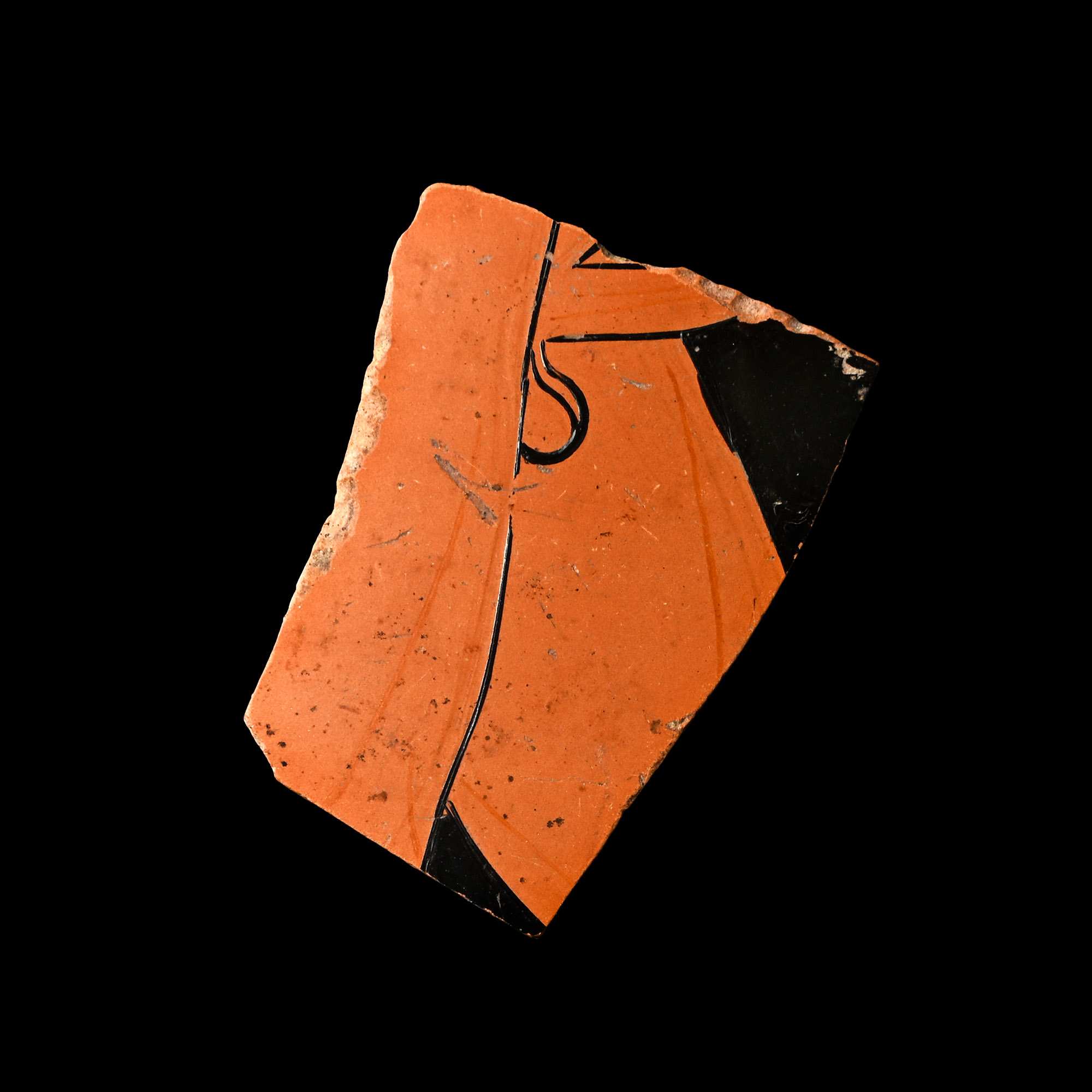
Greek Attic Red-Figure Fragment Depicting an Erect Phallus
EARLY 5TH CENTURY B.C.
1 1/2 in. (5.65 grams, 37 mm).
A rectangular fragment with a male hip area depicting thighs, an erect phallus and an emphasised pair of testicles; probably belonging to a satyr.
ProvenanceFrom the stock of a former UK antiquarian, acquired at trade fairs and from private collection formed in the 1980s-1990s.
Private collection, Europe.
TimeLine Auctions follows a vetting process to ensure the authenticity and legality of all items, reinforcing our commitment to integrity and responsible trading. Each antiquity, antique, and coin lot undergoes thorough examination by a vetting committee of at least ten external specialists, professional trade association members, scientists, and archaeologists: Our Vetting Process
AUCTIONS:
TimeLine is a leading auction house specialising in antiquities, ancient art, collectables, natural history, coins, medals, and books. Our auctions offer museums, collectors, historians, and enthusiasts the opportunity to acquire unique and historically significant pieces.
LOT 0573
Greek Attic Red-Figure Fragment Depicting an Erect Phallus
Sold for (Inc. bp): £1,430
-
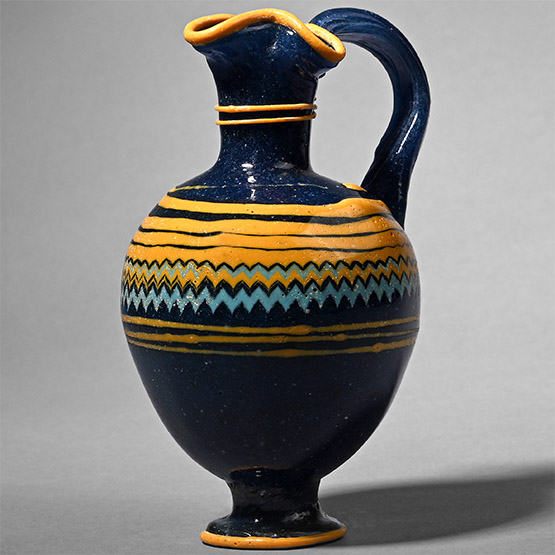
'The Cyrus Collection' Greek Core-Formed Glass Oinochoe
5th century B.C.Estimate: £15,000 - 20,000 (+bp*)
Opening Bid: £7,500
Ovoid blue body with narrow flared foot, pinched mouth and applied strap handle; marvered trail decoration in yellow to the shoulder, applied trails to the neck, marvered and dragged trails to the equator; cleaned and repolished; supplied with a custom-made stand. 197 grams total, 13.5 cm high including stand
Ex Antike Kunst Palladion, Basel. The Cyrus collection, 1970s. with Sotheby’s, New York, 9 December 2003, no.88. Accompanied by a copy of the relevant Sotheby's catalogue pages. This lot has been checked against the Interpol Database of stolen works of art and is accompanied by search certificate number no.13097-248080.
During the 5th century B.C., the colours of Mediterranean Group I vessels expanded from blue or opaque white to include dark green, golden brown, and opaque brick red. -
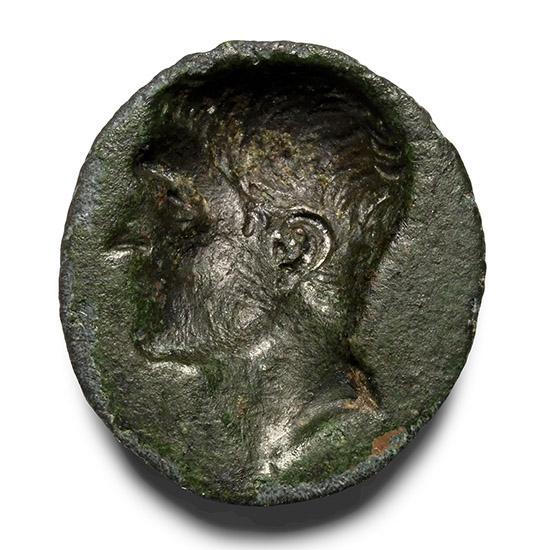
Engraved Bronze Seal of a Republican Period Male Portrait
2nd-1st century B.C.Sold for (Inc. bp): £1,235
Discoid in plan with a deeply engraved clean-shaven male bust; supplied with a museum-quality impression. 3.11 grams, 17 mm
Private English collection, formed between the late 1970s and early 1990s. Private collection, London, UK. -
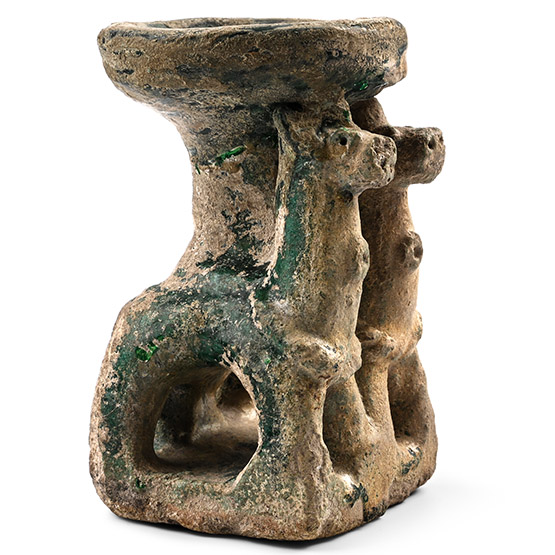
Parthian Faience Glazed Offering Chalice with Quadrupeds
Circa 3rd-1st century B.C.Sold for (Inc. bp): £546
Modelled in the round as two quadrupeds on a square base supporting a shallow bowl on a stem; the beasts with rope halter to the neck. 645 grams, 12.8 cm
Collected from 1979-1999. From the collection of the late Mr Shlomo Mousiaffee, London, UK. Acquired on the UK art market. Private collection, London, UK.
