
Loading, please wait...
LOT 0576
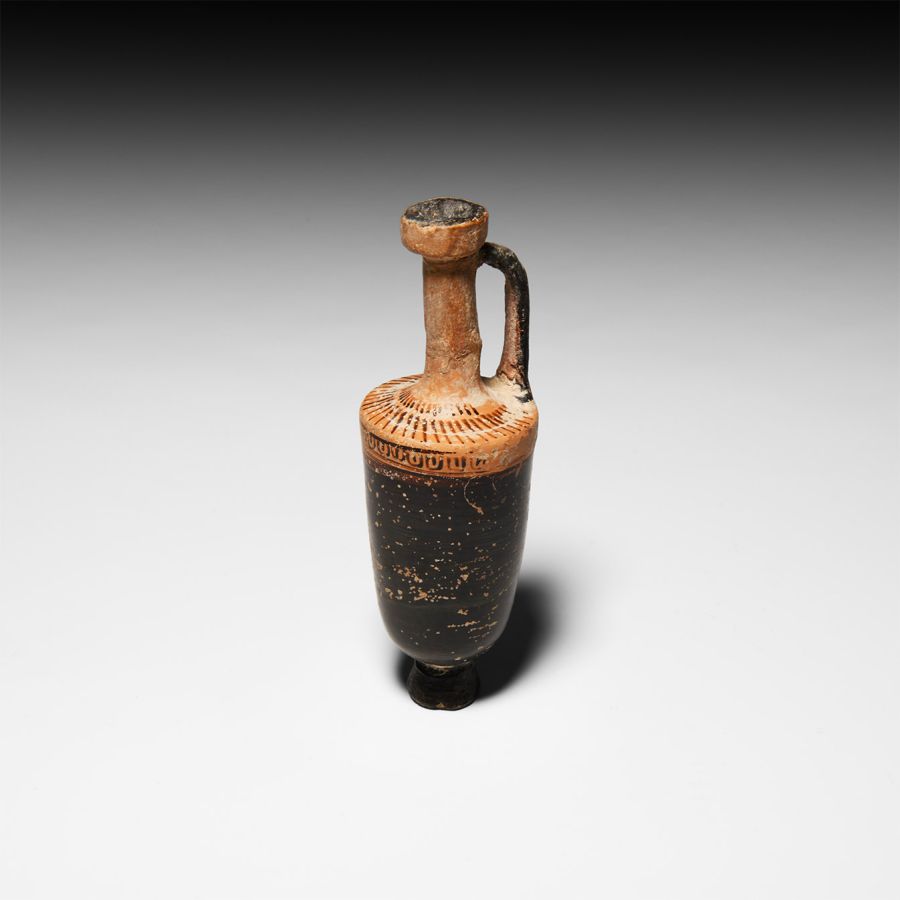
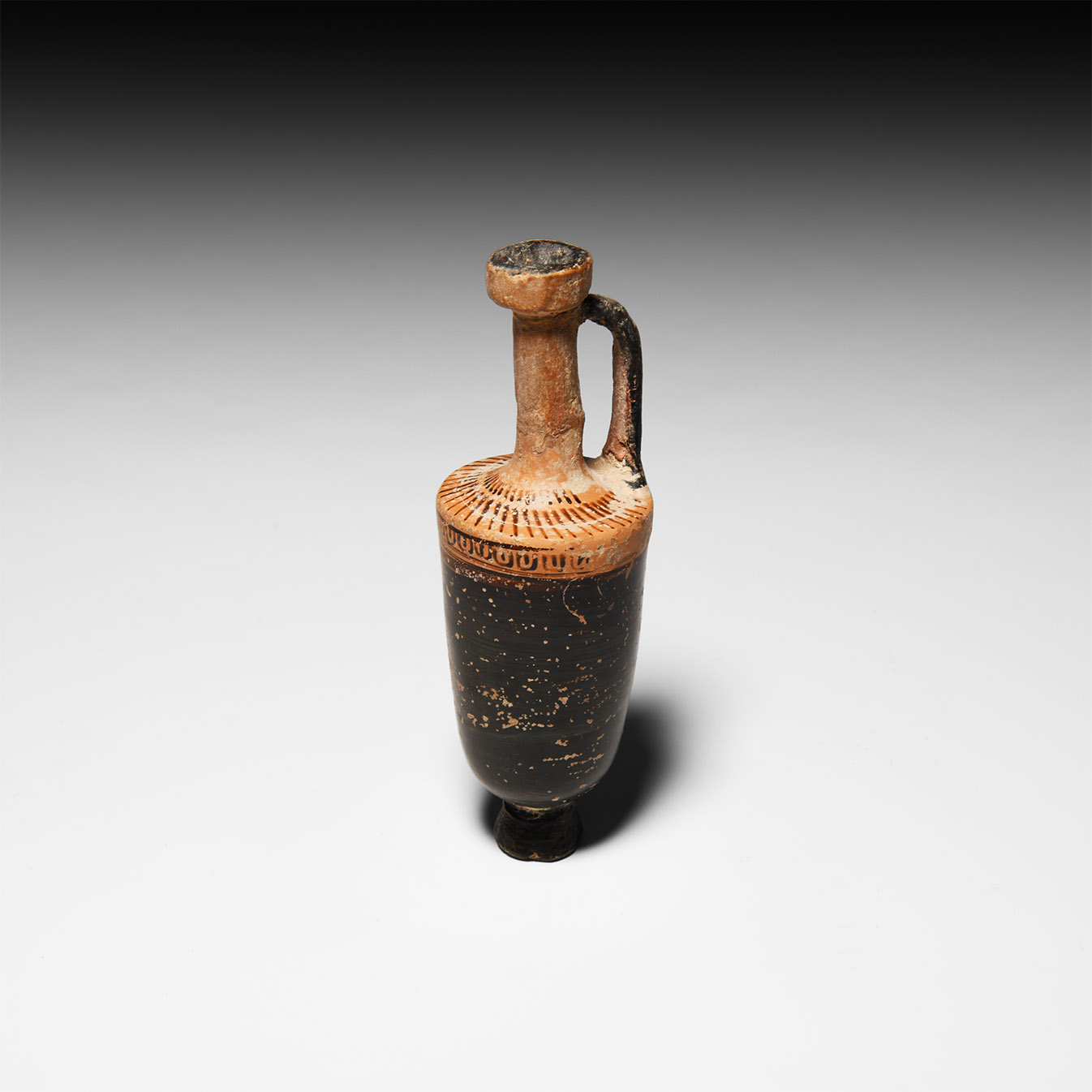
Greek Attic Lekythos
CIRCA 5TH CENTURY B.C.
5 in. (65 grams, 12.7 cm high).
A ceramic lekythos oil flask composed of a piriform body, broad shoulder, narrow cylindrical neck, D-section handle and splayed foot, black glaze to body with band of polychrome radiating lines around the shoulder, geometric motifs below.
ProvenanceAcquired 1970-1980s.
From the property of a German collector.
TimeLine Auctions follows a vetting process to ensure the authenticity and legality of all items, reinforcing our commitment to integrity and responsible trading. Each antiquity, antique, and coin lot undergoes thorough examination by a vetting committee of at least ten external specialists, professional trade association members, scientists, and archaeologists: Our Vetting Process
AUCTIONS:
TimeLine is a leading auction house specialising in antiquities, ancient art, collectables, natural history, coins, medals, and books. Our auctions offer museums, collectors, historians, and enthusiasts the opportunity to acquire unique and historically significant pieces.
-
.jpg)
Greek Marble Head of a Female
4th-1st century B.C.Sold for (Inc. bp): £715
A head of a female carved in white marble, modelled in the round with semi-naturalistic facial features and hair tied back into a chignon at the nape of the neck. 163 grams, 59 mm high
Acquired early 1990s. Ex private American collection; thence by descent. Private collection since 1998. -
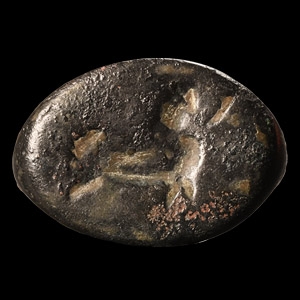
Hellenistic Ring with Horse
Circa 2nd-1st century B.C.Sold for (Inc. bp): £33
A copper-alloy ring composed of a slender hoop and oval bezel bearing an incuse stylised horse standing right. 6.94 grams, 23.20 mm overall, 19.51 mm internal diameter (approximate size British Q, USA 8, Europe 17.49, Japan 16)
Early 1990s London collection. Acquired on the UK art market. From a private collection, Lancashire, UK. -
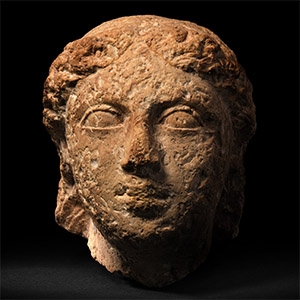
Greek Stone Head of a Female
4th-3rd century B.C.Sold for (Inc. bp): £2,340
A carved stone head modelled with semi-naturalistic facial features and dressed hair falling down the neck in tight curls. 4.2 kg, 17 cm high
Acquired early 1990s. Ex private American collection; thence by descent. Private Swiss collection since 1998. This lot has been checked against the Interpol Database of stolen works of art and is accompanied by search certificate no.11613-198981.
