
Loading, please wait...


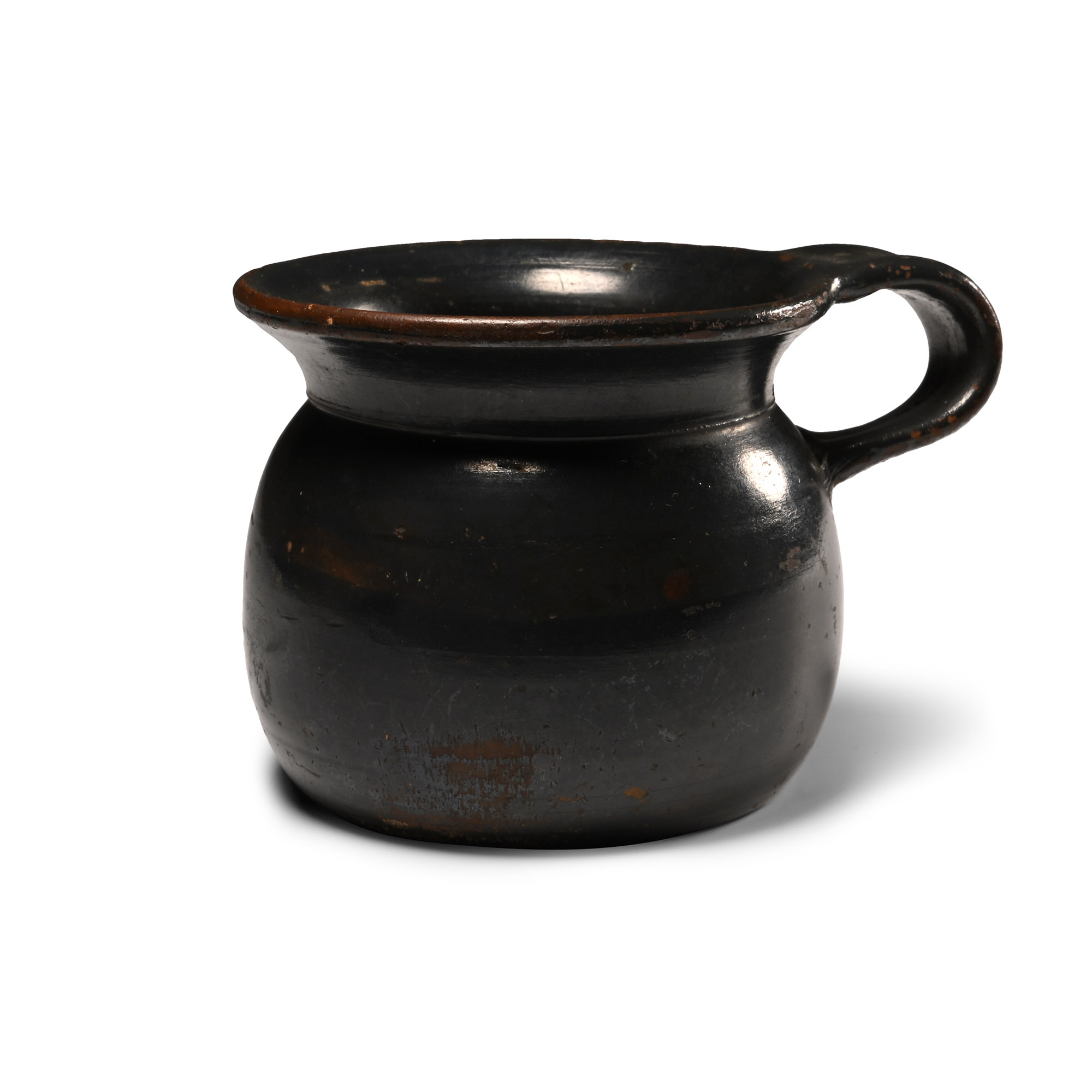
LOT 0519
Greek Attic Black-Glazed Terracotta Mug
5TH CENTURY B.C.
3 5/8 in. (102 grams, 93 mm wide).
Squat, flat-bottomed with everted rim and single strap handle; reserved underside offset by a groove at its edge, pierced at its centre within a small glazed circle.
ProvenanceFrom an American estate, acquired between 1970-1989.
Accompanied by a copy of an Art Loss Register certificate no.S00075794.
This lot is accompanied by an illustrated lot declaration signed by the Head of the Antiquities Department, Dr Raffaele D’Amato.
Cf. similar in Metropolitan Museum of Art under accession no. 41.162.244.
CONDITIONTimeLine Auctions follows a vetting process to ensure the authenticity and legality of all items, reinforcing our commitment to integrity and responsible trading. Each antiquity, antique, and coin lot undergoes thorough examination by a vetting committee of at least ten external specialists, professional trade association members, scientists, and archaeologists: Our Vetting Process
AUCTIONS:
TimeLine is a leading auction house specialising in antiquities, ancient art, collectables, natural history, coins, medals, and books. Our auctions offer museums, collectors, historians, and enthusiasts the opportunity to acquire unique and historically significant pieces.
LOT 0519
Greek Attic Black-Glazed Terracotta Mug
Estimate £400 - 600€460 - 700 (for guidance only)$540 - 810 (for guidance only)
-
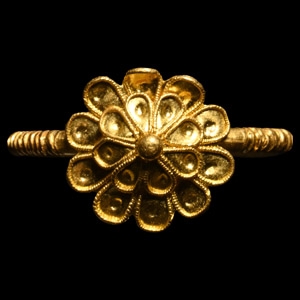
Greek Gold Ring with Flower
4th-3rd century B.C. and laterSold for (Inc. bp): £910
With ribbing to the shoulders, applied rosette with granule finial, with later hoop. 1.77 grams, 17.72 mm overall, 14.15 mm internal diameter (approximate size British E, USA 2 1/4, Europe 2.41, Japan 2)
Ex German art market, 2000s. Acquired from an EU collector living in London. From the collection of Surrey, UK, gentleman. This lot is accompanied by an illustrated lot declaration signed by the Head of the Antiquities Department, Dr Raffaele D’Amato. -
.jpg)
Greek Apulian Single-Handled Fluted Blackware Wine Cup
4th century B.C.Sold for (Inc. bp): £1,560
High-glazed with raised fluting decorating the body, broad c-section neck and everted rim, segmented openwork handle. 174 grams, 90 mm high
Acquired in the 1960s-1970s. Ex European private collection. This lot has been checked against the Interpol Database of stolen works of art and is accompanied by search certificate number no.11856-206542. This lot has been cleared against the Art Loss Register database, and is accompanied by an illustrated lot declaration signed by the Head of the Antiquities Department, Dr Raffaele D’Amato. -
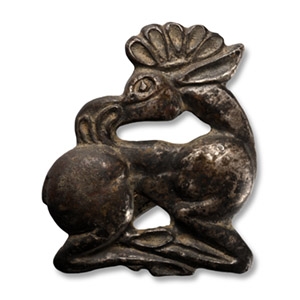
Greek Stag Looking Back Silver Belt Mount
5th-3rd century B.C.Sold for (Inc. bp): £585
Modelled in the half-round with hollowed reverse, stylised stag with radiating antlers on regardant head and curved neck, domed hips and shoulders; sliding loop to reverse. 50.7 grams, 53 mm
Ex German art market, 2000s. Acquired from an EU collector living in London. From the collection of Surrey, UK, gentleman. This lot is accompanied by an illustrated lot declaration signed by the Head of the Antiquities Department, Dr Raffaele D’Amato.
