
Loading, please wait...
LOT 0526
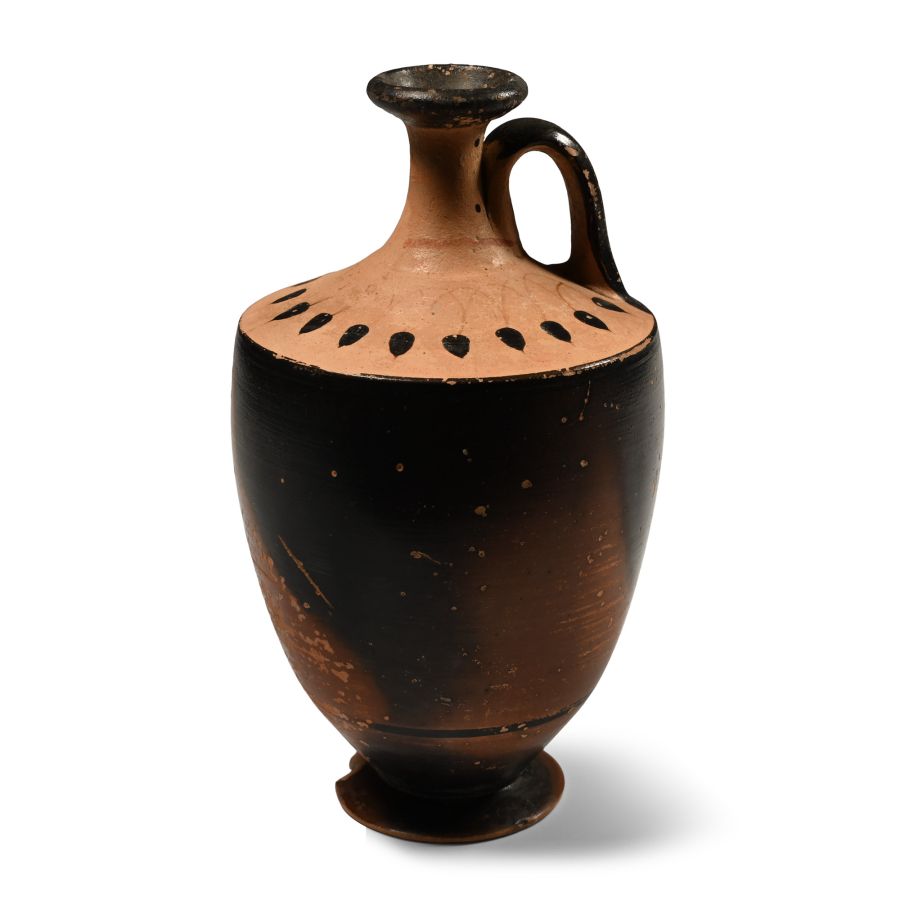
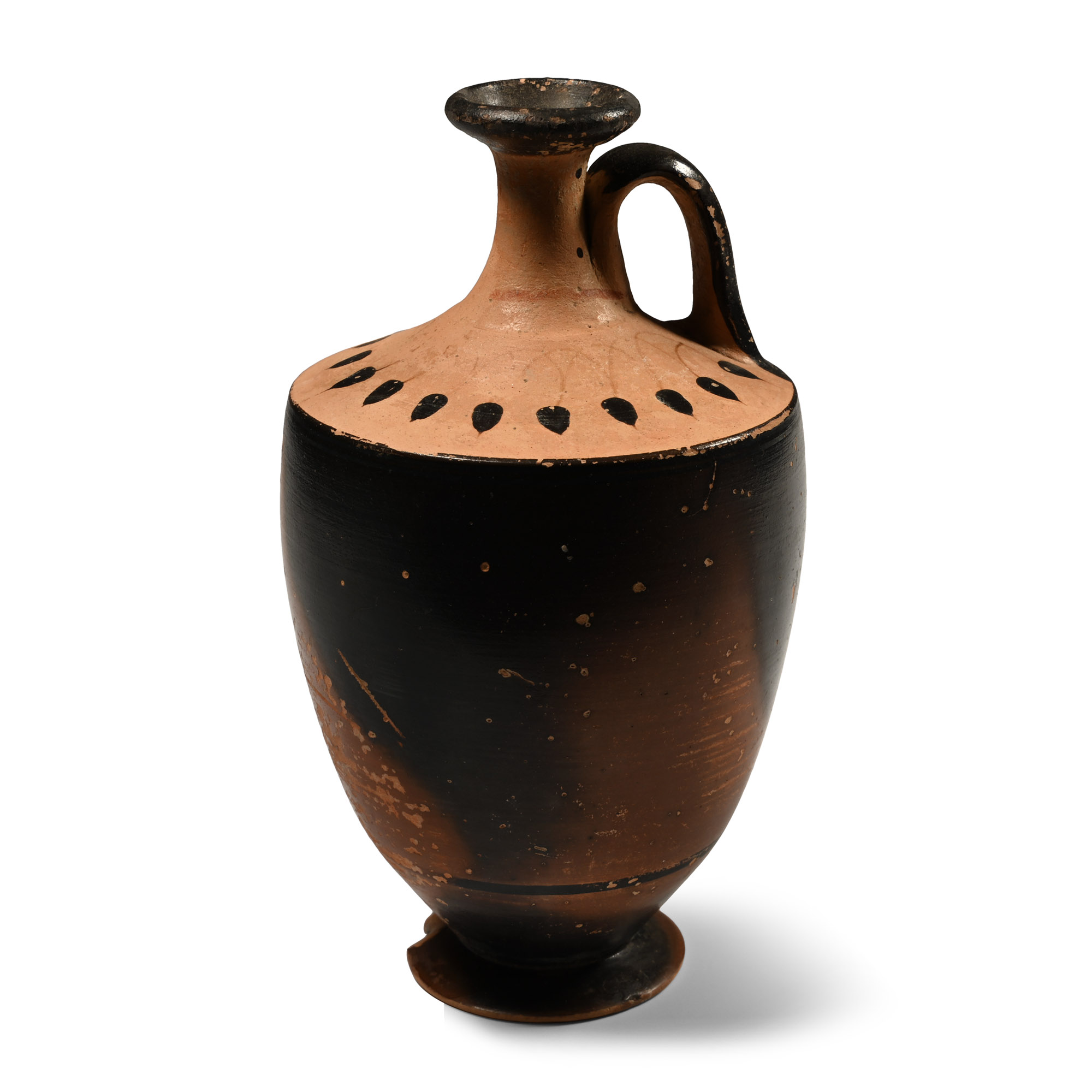
Greek Attic Black-Glazed Lekythos
5TH-4TH CENTURY B.C.
5 1/4 in. (134 grams, 13.3 cm).
Ovoid body with black sidewall, deep shoulder with radiating lotus buds, trumpet-shaped mouth and strap handle; with old record card 'Black-Ground Lekythos. Attic. inverted lotus buds. C.5th-4th B.C. (similar to RC7928 Tarquinia) / 01. (14.12.82) Sotheby's H.13.5 Sh 7.4 B 4.3 cm.'.
Provenancewith Sotheby's, London, 14 December 1982, lot 389.
Collection of the late Sir Clinton Charles Donald Cory (1937-2022), 5th Baronet of Coryton.
Private collection, UK.
Accompanied by an old handwritten collector's ticket, and copies of the relevant Sotheby's catalogue pages.
This lot is accompanied by an illustrated lot declaration signed by the Head of the Antiquities Department, Dr Raffaele D’Amato.
Cf. Metropolitan Museum of Art, New York, accession no.07.286.68, for type.
FootnotesSir Clinton Charles Donald Cory was a lifelong connoisseur with a deep appreciation for objets d’art and antiquities, particularly Attic pottery and numismatics. He took great pleasure in meticulously cataloguing and archiving his collection. The selection of pottery, glass, and stone fragments will be presented across twenty-four lots, many of which boast provenance from renowned dealerships and auction houses, including Charles Ede, Sotheby’s, and Bonhams.
CONDITIONTimeLine Auctions follows a vetting process to ensure the authenticity and legality of all items, reinforcing our commitment to integrity and responsible trading. Each antiquity, antique, and coin lot undergoes thorough examination by a vetting committee of at least ten external specialists, professional trade association members, scientists, and archaeologists: Our Vetting Process
AUCTIONS:
TimeLine is a leading auction house specialising in antiquities, ancient art, collectables, natural history, coins, medals, and books. Our auctions offer museums, collectors, historians, and enthusiasts the opportunity to acquire unique and historically significant pieces.
-
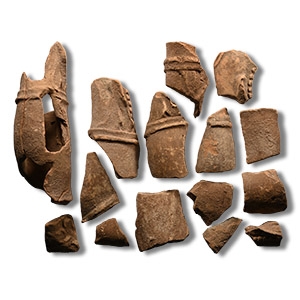
Hellenistic Terracotta Fragment Collection
5th-3rd century B.C.Sold for (Inc. bp): £33
Mixed group including portions of various vessels with moulded detail to the outer face, including a perching bird. 505 grams total, 3.8-17 cm
with H.A.C., Basel, prior 1999. This lot is accompanied by an illustrated lot declaration signed by the Head of the Antiquities Department, Dr Raffaele D’Amato. -
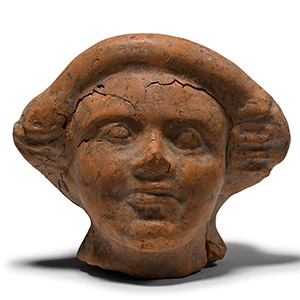
Hellenistic Terracotta Head of a Woman
3rd-1st century B.C.Estimate: £700 - 900 (‡+bp*)
Opening Bid: £350
Hollow-formed with flared neck, moulded face with shallow lentoid eyes, snub nose and wide mouth with enigmatic smile; band of hair framing the face. 499 grams, 12.3 cm wide
Acquired in the mid 1980s-1990s. Private collection, Switzerland, thence by descent. Private collection, since the late 1990s. This lot is accompanied by an illustrated lot declaration signed by the Head of the Antiquities Department, Dr Raffaele D’Amato. -
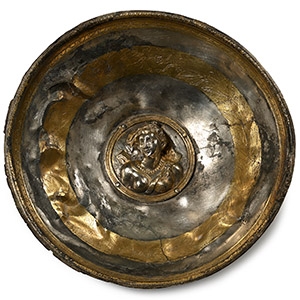
Hellenistic Silver-Gilt Bowl with Diana in Roundel
1st century B.C.Estimate: £50,000 - 70,000 (+bp*)
Opening Bid: £25,000
Comprising a deep hemispherical libation bowl with rolled rim bearing impressed egg-and-dart detailing, band of gilt wave-pattern ornament below the rim, separate broad band with ivy-leaf wreath; central tondo with repoussé bust of Diana with quiver over one shoulder, beaded necklace, deerskin mantle secured below her left shoulder, wayward hair fastened by an ivy-leaf diadem; beaded border with four studs; some restoration. 321 grams, 20 cm diameter
French art market, 1960s. Ex Kanter Collection, London, UK, 1975. Accompanied by an academic report by Dr Raffaele D'Amato. This lot has been checked against the Interpol Database of stolen works of art and is accompanied by search certificate no.12494-230333. This lot has been cleared against the Art Loss Register database, and is accompanied by an illustrated lot declaration signed by the Head of the Antiquities Department, Dr Raffaele D’Amato.
