
Loading, please wait...
LOT 0067
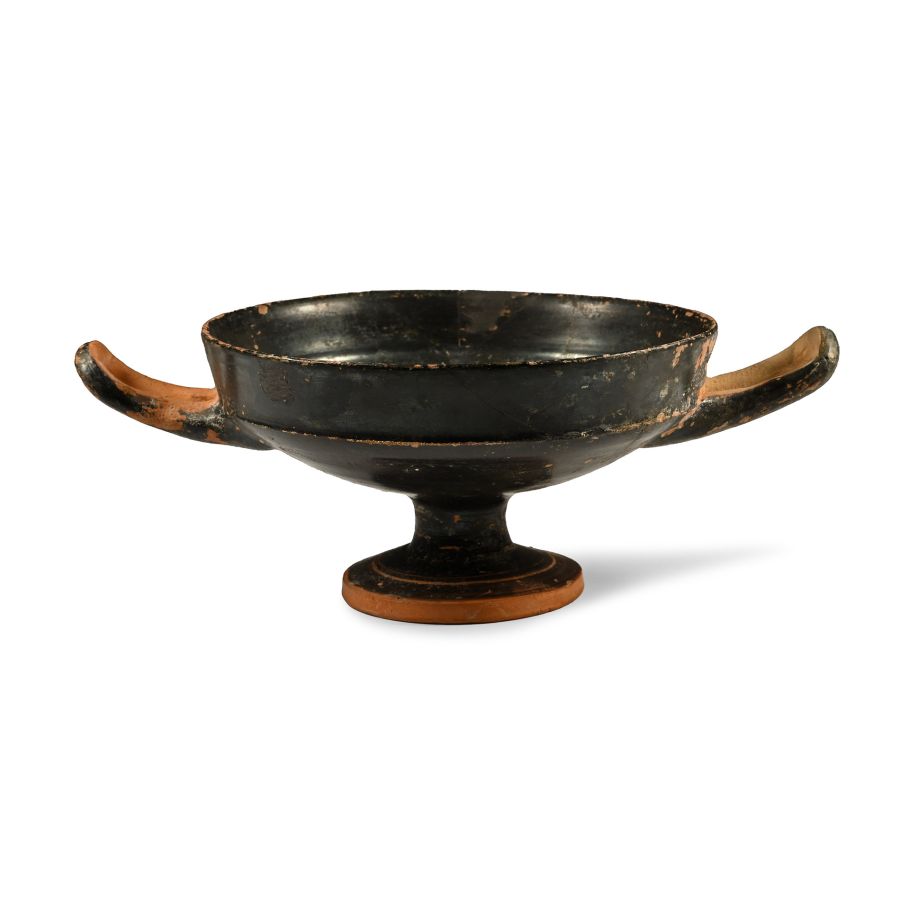
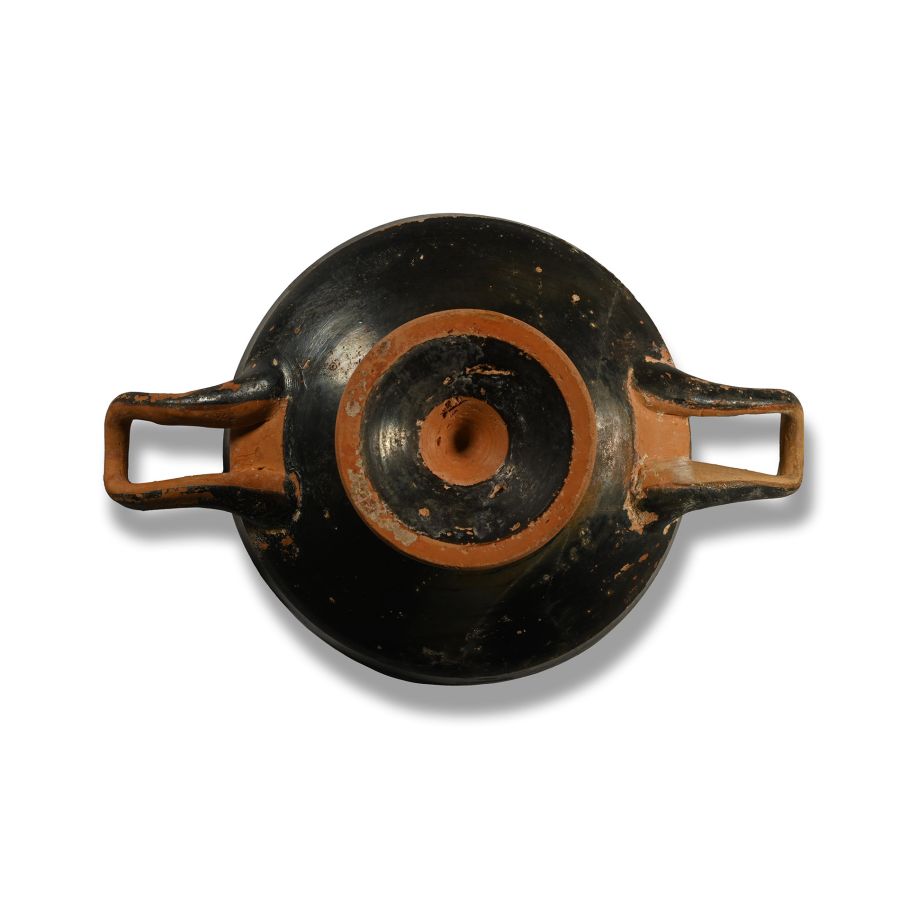
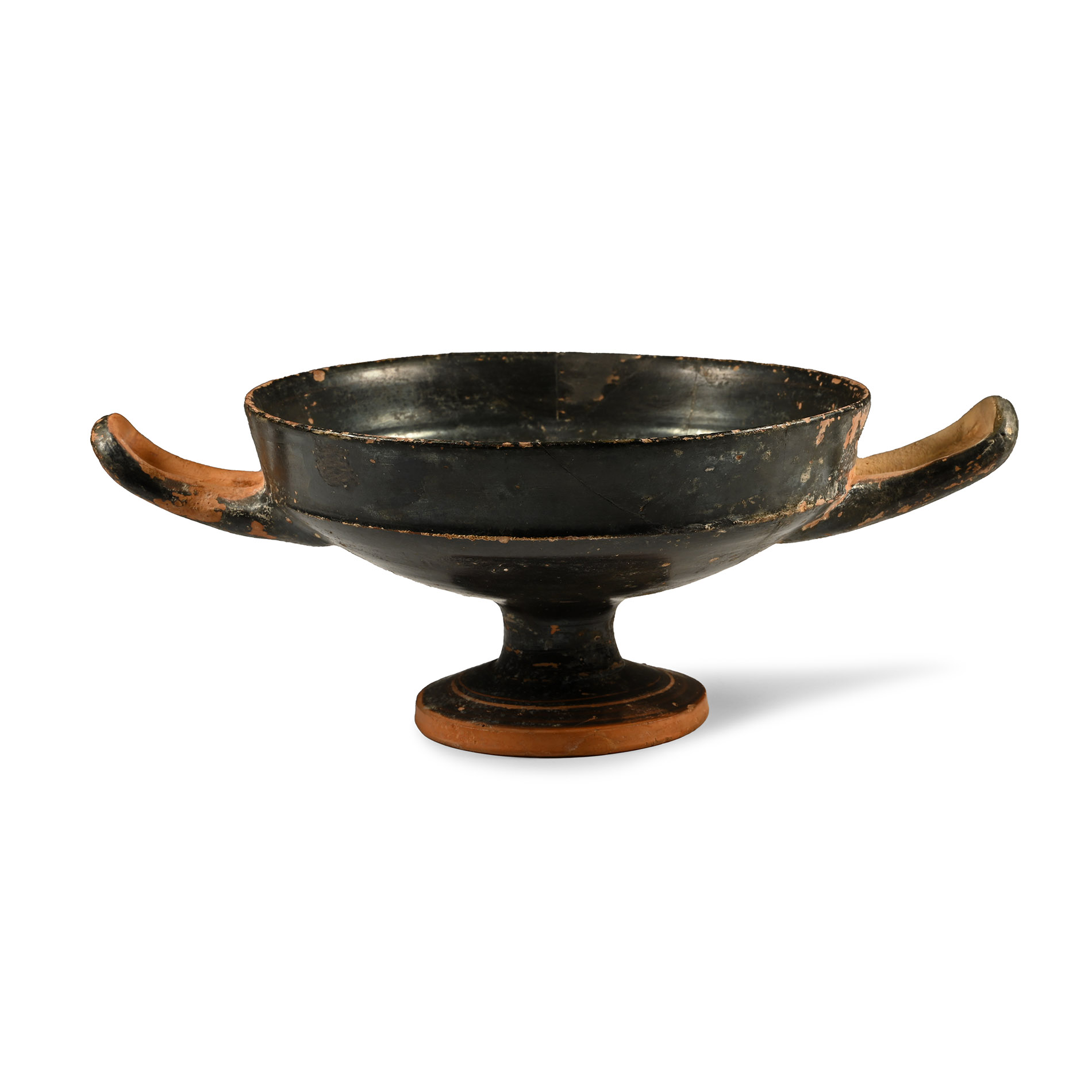
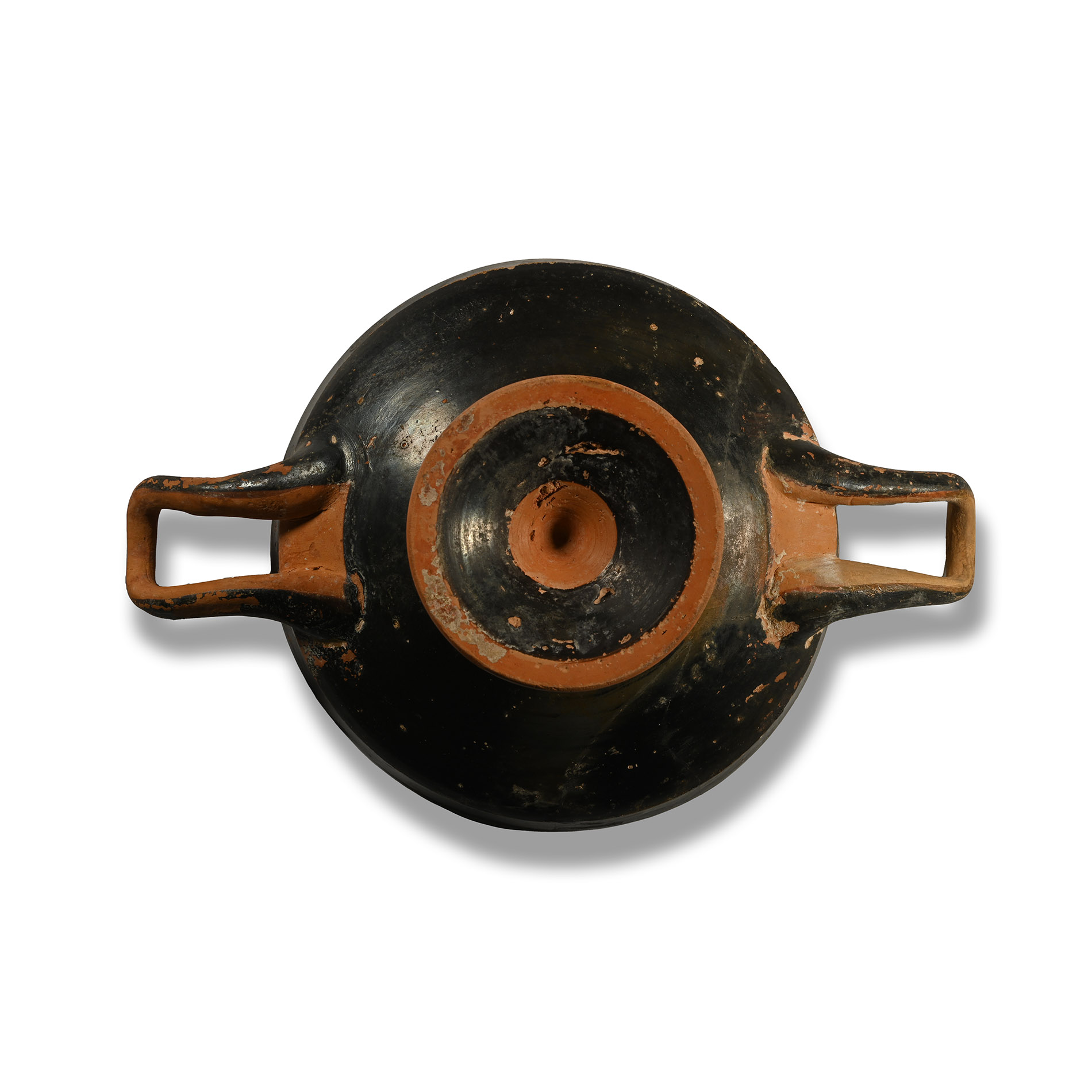
Greek Attic Black-Glazed Kylix
5TH CENTURY B.C.
8 in. (225 grams, 20 cm).
With trumpet-shaped foot, broad bowl with carinated profile, gently flared rim, two lateral D-shaped handles; with record card from Cory collection: 'Black-Glazed Kylix. Attic. C.5th B.C. 59. (8.5.89) Christie's. H 7.3. Dia. 13.4 to 20.0, B. 6.5 cm.'.
Provenancewith Christie's, 8 May 1985.
The collection of the late Sir Clinton Charles Donald Cory (1937-2022), 5th Baronet of Coryton.
Private collection, UK.
Accompanied by an old handwritten collector's ticket.
This lot is accompanied by an illustrated lot declaration signed by the Head of the Antiquities Department, Dr Raffaele D’Amato.
Sir Clinton Charles Donald Cory was a lifelong connoisseur with a deep appreciation for objets d’art and antiquities, particularly Attic pottery and numismatics. He took great pleasure in meticulously cataloguing and archiving his collection. The selection of pottery, glass, and stone fragments will be presented across twenty-four lots, many of which boast provenance from renowned dealerships and auction houses, including Charles Ede, Sotheby’s, and Bonhams.
CONDITIONTimeLine Auctions follows a vetting process to ensure the authenticity and legality of all items, reinforcing our commitment to integrity and responsible trading. Each antiquity, antique, and coin lot undergoes thorough examination by a vetting committee of at least ten external specialists, professional trade association members, scientists, and archaeologists: Our Vetting Process
AUCTIONS:
TimeLine is a leading auction house specialising in antiquities, ancient art, collectables, natural history, coins, medals, and books. Our auctions offer museums, collectors, historians, and enthusiasts the opportunity to acquire unique and historically significant pieces.
-
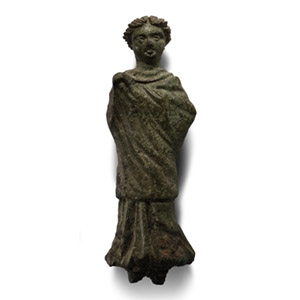
Etruscan Bronze Ceres Statuette
3rd-2nd century B.C.Estimate: £800 - 1,000 (‡+bp*)
Opening Bid: £400
Female with hair drawn up in a chignon, palla wrapped tightly around the upper body hiding the right arm bent with the hand at the shoulder, lower hem of robe flared; fixing lug to underside. 86 grams, 71 mm
Acquired in the mid 1980s-1990s. Private collection, Switzerland, thence by descent. Private collection, since the late 1990s. This lot is accompanied by an illustrated lot declaration signed by the Head of the Antiquities Department, Dr Raffaele D’Amato.
This is a figurine of a deity of difficult interpretation representing an ex-voto. This typology is widespread in the votive offerings of Etrusco-Roman sanctuaries, and by analogy with various statuettes could represent Ceres. -
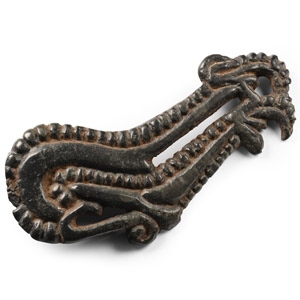
Scythian Bronze Zoomorphic Belt Mount
5th-3rd century B.C.Sold for (Inc. bp): £234
Formed as a quadruped with arched neck and slender body, beaded outline, attachment hole; high-tin bronze. 40.9 grams, 73 mm
Ex German art market, 2000s. Acquired from an EU collector living in London. From the collection of Surrey, UK, gentleman. This lot is accompanied by an illustrated lot declaration signed by the Head of the Antiquities Department, Dr Raffaele D’Amato. -
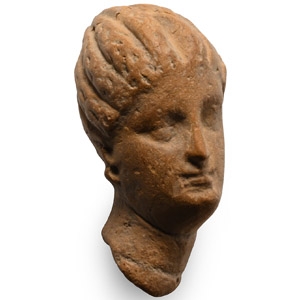
Greek Terracotta Head
Tarentine, 3rd-1st century B.C.Sold for (Inc. bp): £260
Female head moulded with a segmented conical cap, pierced ears visible beneath; the head slightly turned and tilted downwards on a slender neck. 22 grams, 49 mm
Acquired in the mid 1980s-1990s. Private collection, Switzerland, thence by descent. Private collection, since the late 1990s. This lot is accompanied by an illustrated lot declaration signed by the Head of the Antiquities Department, Dr Raffaele D’Amato.
