
Loading, please wait...

LOT 0071
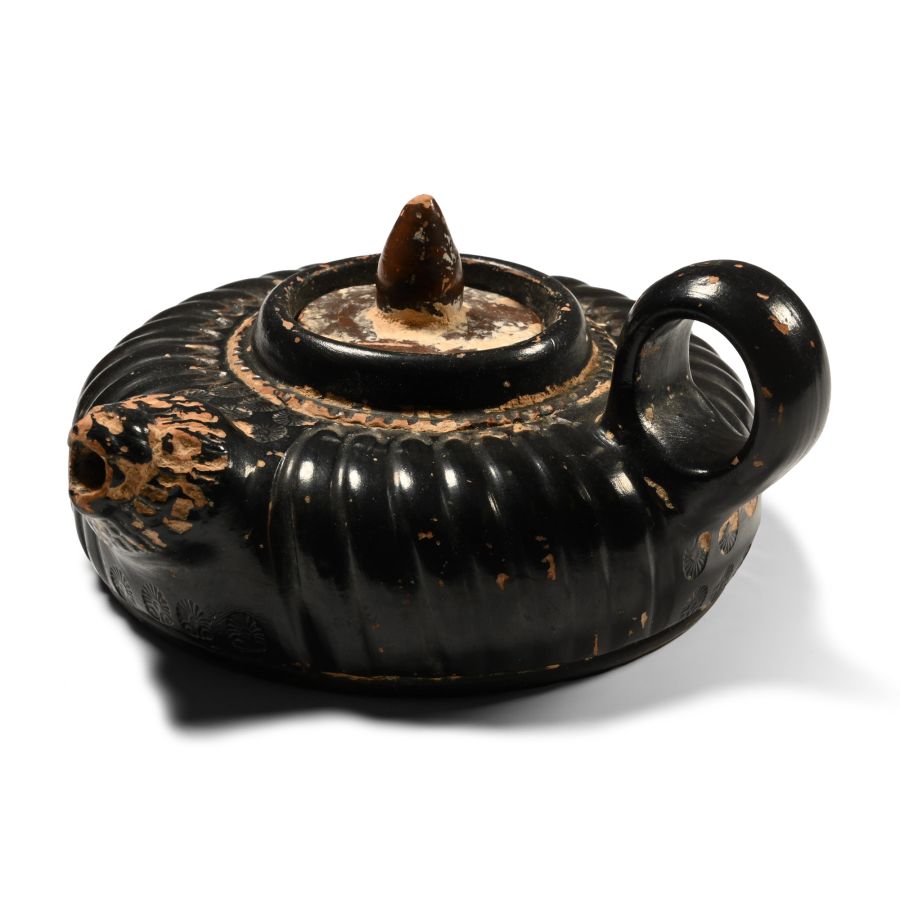
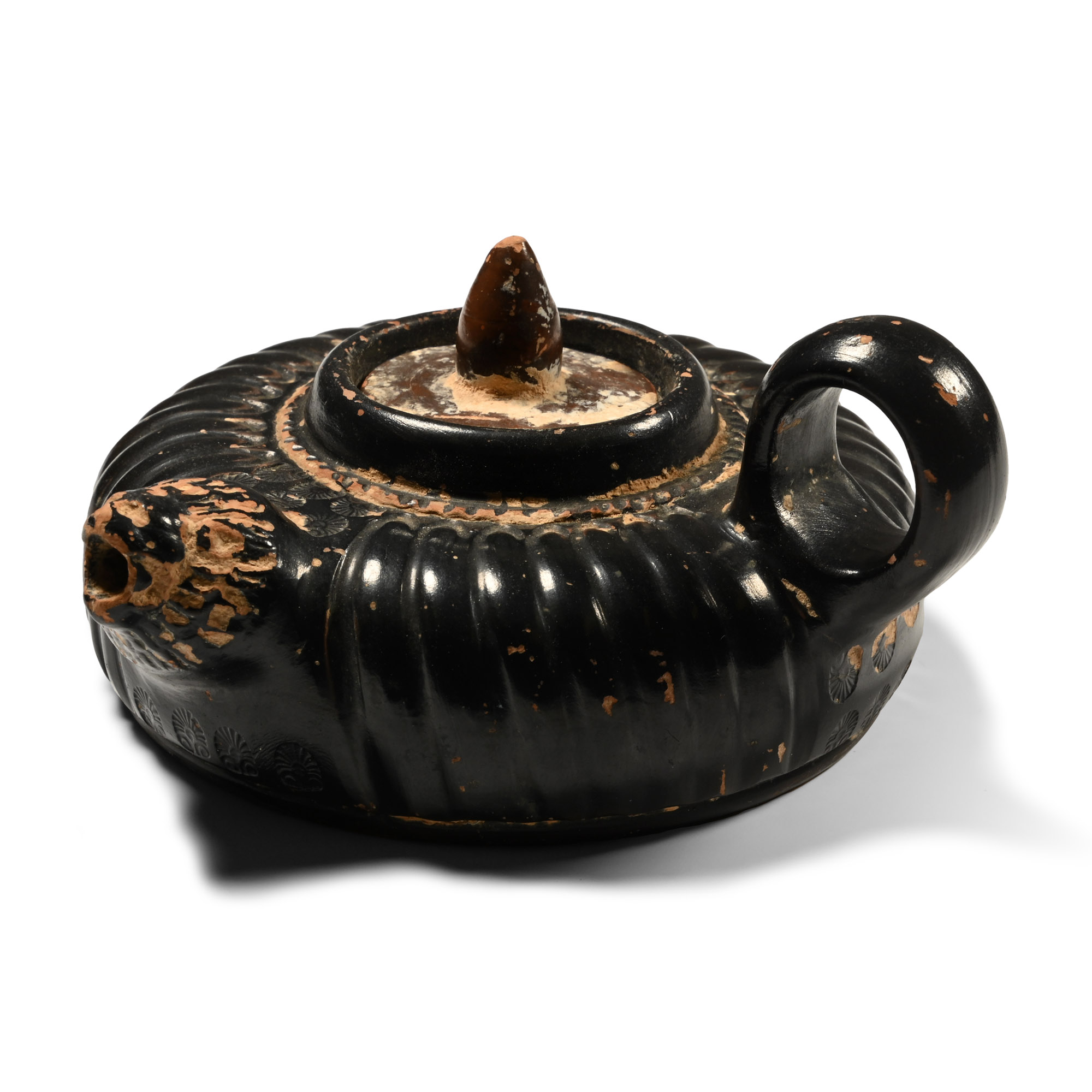
Greek Attic Black-Glazed Guttus
4TH CENTURY B.C.
4 3/8 in. (192 grams, 11.1 cm).
With basal ring, lion-head spout and ring handle; the discus moulded in relief with a series of radiating ribs; small lid with spike handle.
ProvenanceCollection of the late Sir Clinton Charles Donald Cory (1937-2022), 5th Baronet of Coryton.
Private collection, UK.
This lot is accompanied by an illustrated lot declaration signed by the Head of the Antiquities Department, Dr Raffaele D’Amato.
Sir Clinton Charles Donald Cory was a lifelong connoisseur with a deep appreciation for objets d’art and antiquities, particularly Attic pottery and numismatics. He took great pleasure in meticulously cataloguing and archiving his collection. The selection of pottery, glass, and stone fragments will be presented across twenty-four lots, many of which boast provenance from renowned dealerships and auction houses, including Charles Ede, Sotheby’s, and Bonhams.
CONDITIONTimeLine Auctions follows a vetting process to ensure the authenticity and legality of all items, reinforcing our commitment to integrity and responsible trading. Each antiquity, antique, and coin lot undergoes thorough examination by a vetting committee of at least ten external specialists, professional trade association members, scientists, and archaeologists: Our Vetting Process
AUCTIONS:
TimeLine is a leading auction house specialising in antiquities, ancient art, collectables, natural history, coins, medals, and books. Our auctions offer museums, collectors, historians, and enthusiasts the opportunity to acquire unique and historically significant pieces.
-
.jpg)
Hellenistic Gold Ring with Artemis Gemstone
2nd-1st century B.C.Estimate: £5,000 - 7,000 (‡+bp*)
Opening Bid: £2,500
Hollow-formed shank with broad plaque and inset garnet cabochon intaglio profile bust of Artemis in high-relief. 11.27 grams, 26.91 mm overall, 17.95 x 20.72 mm internal diameter (approximate size British R, USA 8 1/2, Europe 18 3/4, Japan 18)
European art market. This lot has been checked against the Interpol Database of stolen works of art and is accompanied by search certificate number no.12219-222340. This lot has been cleared against the Art Loss Register database, and is accompanied by an illustrated lot declaration signed by the Head of the Antiquities Department, Dr Raffaele D’Amato. -
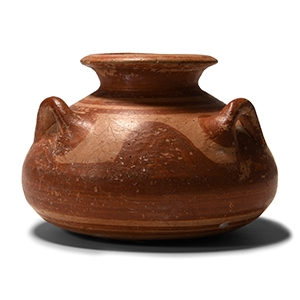
Mycenaean 'Wavy Line' Painted Alabastron
Late Helladic IIIA Period, 14th-13th century B.C.Sold for (Inc. bp): £1,170
Formed with a squat globular body, everted rim and three lug handles to the shoulder; painted reddish-brown over a cream slip with concentric bands and rings to the mouth, neck, shoulder and base, larger solid undulating forms covering the lower body. 70 grams, 69 mm
Acquired from Royal Athena Gallery, 2003. This lot has been checked against the Interpol Database of stolen works of art and is accompanied by search certificate number no.11851-206833. This lot is accompanied by an illustrated lot declaration signed by the Head of the Antiquities Department, Dr Raffaele D’Amato. -
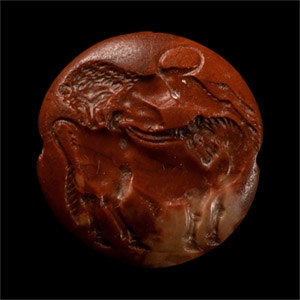
Minoan Red Jasper Seal Depicting a Lion Attacking a Bull
Late Helladic, circa 1400-1300 B.C. or laterSold for (Inc. bp): £5,720
Of lentoid form with domed reverse, showing a lion attacking a bull from above with its jaws and claws sunken into the bull's hindquarters, the bull shown standing with its head turned towards the lion in the act of trying to pry it off with its long horns; pierced horizontally. 7.45 grams, 26 mm
With Münzen und Medaillen A.G., Basel, prior 1980. Accompanied by an academic report by Dr Raffaele D’Amato. This lot has been checked against the Interpol Database of stolen works of art and is accompanied by search certificate number no.12465-228767. This lot has been cleared against the Art Loss Register database, and is accompanied by an illustrated lot declaration signed by the Head of the Antiquities Department, Dr Raffaele D’Amato.
