
Loading, please wait...
LOT 0593
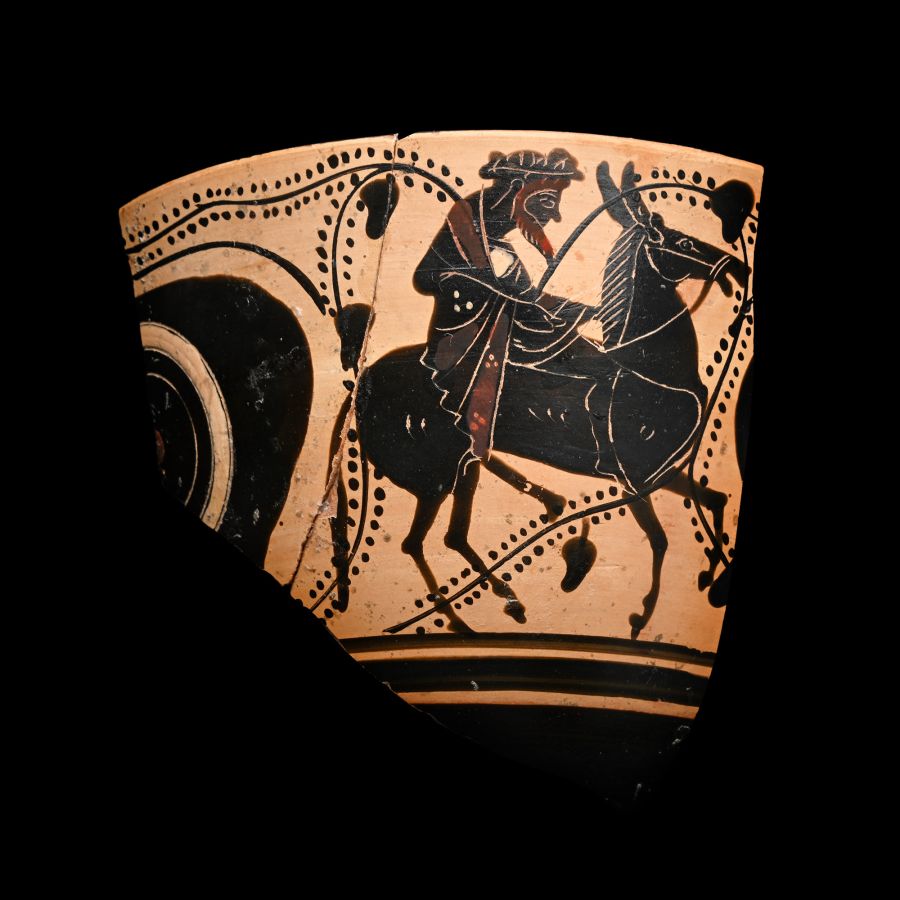
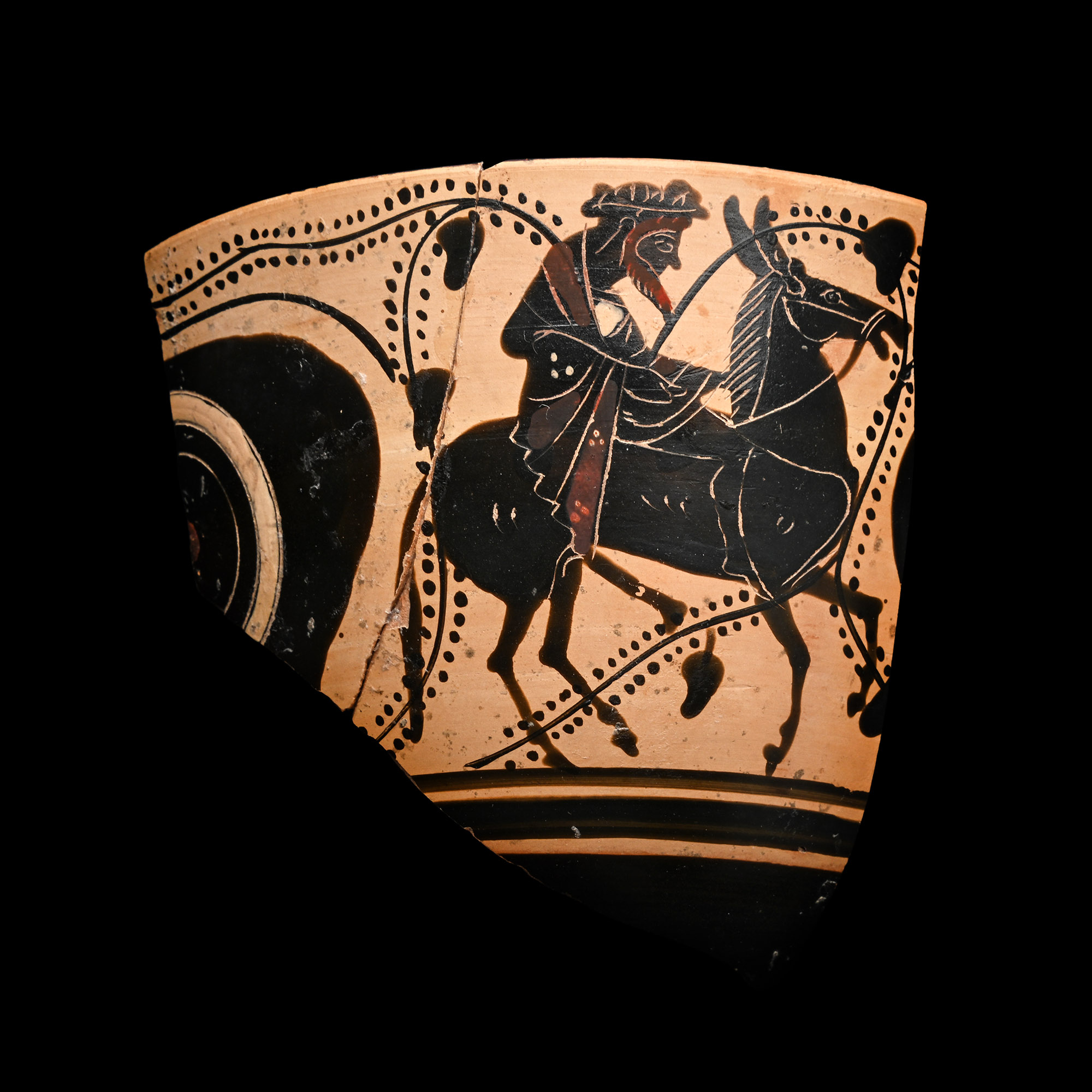
Greek Attic Black-Figure Eye Cup Fragment Depicting Dionysos Riding a Donkey
CIRCA 510-480 B.C.
3 in. (19 grams, 78 mm).
Irregular fragment depicting a bearded and draped figure of Dionysos riding a donkey; repaired.
ProvenanceFrom the stock of a former UK antiquarian, acquired at trade fairs and from private collection formed in the 1980s-1990s.
Private collection, Europe.
TimeLine Auctions follows a vetting process to ensure the authenticity and legality of all items, reinforcing our commitment to integrity and responsible trading. Each antiquity, antique, and coin lot undergoes thorough examination by a vetting committee of at least ten external specialists, professional trade association members, scientists, and archaeologists: Our Vetting Process
AUCTIONS:
TimeLine is a leading auction house specialising in antiquities, ancient art, collectables, natural history, coins, medals, and books. Our auctions offer museums, collectors, historians, and enthusiasts the opportunity to acquire unique and historically significant pieces.
LOT 0593
Greek Attic Black-Figure Eye Cup Fragment Depicting Dionysos Riding a Donkey
Sold for (Inc. bp): £650
-
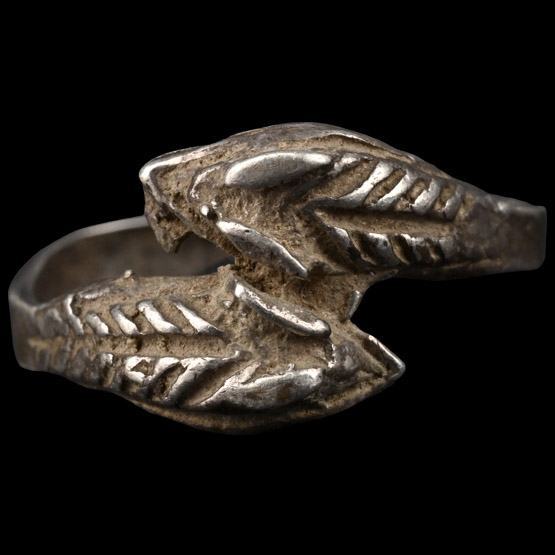
Greek Silver Ring with Hydra Heads
4th-3rd century B.C.Sold for (Inc. bp): £156
With a flat-section hoop, each finial formed as an offset serpentine head; hollow to the underside. 1.35 grams, 19.95 mm overall, 14.77 mm internal diameter (approximate size British H, USA 3 3/4, Europe 6.18, Japan 6)
Ex German art market, 2000s. Acquired from an EU collector living in London. From the collection of a Surrey, UK, gentleman. -
.jpg)
'The Smithsonian' Greek Terracotta Horse
Italy, 3rd-1st century B.C.Sold for (Inc. bp): £6,240
Modelled in the round, horse in advancing pose with one foreleg raised, flange base; old collector's number '170439' to base; old label '170[...]' and '102' to lower body; neck repaired. 1.15 kg, 19.4 cm
Private collection of Baron d’Ussés. Acquired by F.B. Spiridon, New York, believed before 1894. Acquired by Eleanor Magruder (1852-1906), and thence by descent to her heirs in 1906. Accompanied by photographs of the object on display at the Smithsonian Institution and of the corresponding accession catalogue entry. This lot has been checked against the Interpol Database of stolen works of art and is accompanied by search certificate number no.13108-248975. -
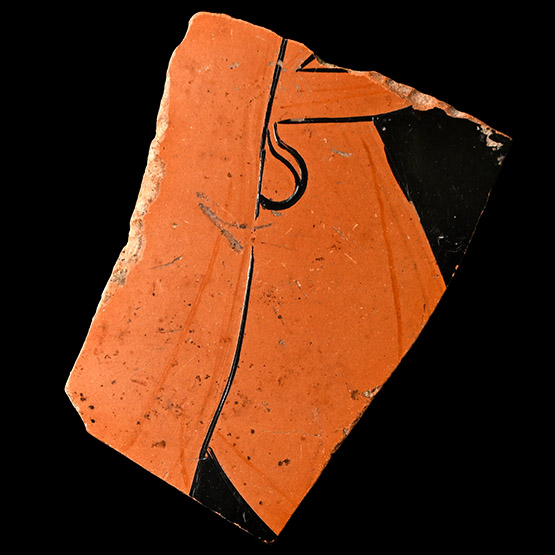
Greek Attic Red-Figure Fragment Depicting an Erect Phallus
Early 5th century B.C.Sold for (Inc. bp): £1,430
A rectangular fragment with a male hip area depicting thighs, an erect phallus and an emphasised pair of testicles; probably belonging to a satyr. 5.65 grams, 37 mm
From the stock of a former UK antiquarian, acquired at trade fairs and from private collection formed in the 1980s-1990s. Private collection, Europe.
