
Loading, please wait...
LOT 0081
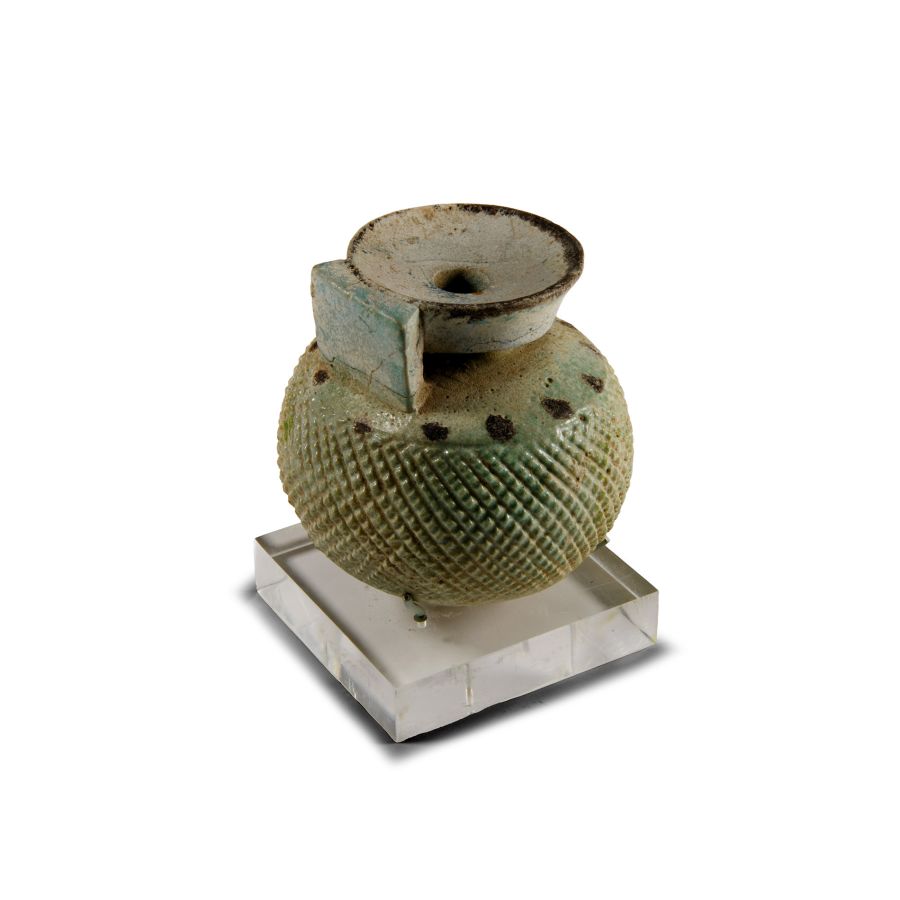
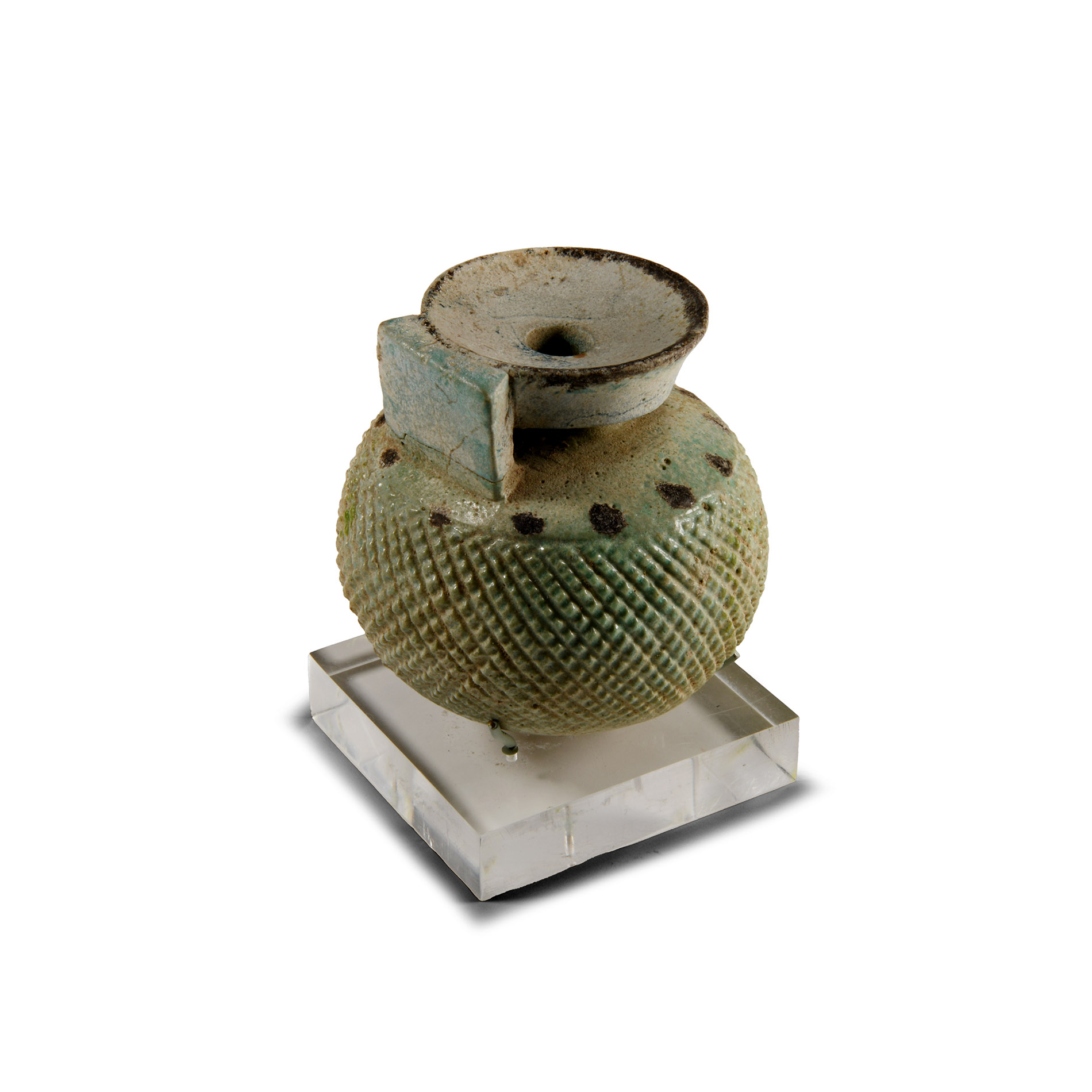
Greek Aryballos Perfume Jar
CIRCA 6TH CENTURY B.C.
2 1/2 in. (3 1/4 in.) (104 grams, 63 mm (149 grams total, 82 mm high including stand)).
Bulbous-bodied with dished rim ad short strap handle, decorative painted trail to the lip, spots to the shoulder and incised cross-hatching to the lower body; accompanied by a custom-made display stand.
ProvenanceEx Swiss private collection, C.A., Geneva (1961-2000).
Thence in a French collection.
with Charles Ede Limited, catalogue 183, item number 31, 2011.
Accompanied by a copy of French cultural passport number 116789, dated 15 April 2010.
Accompanied by a copy of an Art Loss Register certificate no.S00048851, dated 3 June 2011.
Cf. The Metropolitan Museum, New York, accession number 17.194.2276, for similar.
CONDITIONTimeLine Auctions follows a vetting process to ensure the authenticity and legality of all items, reinforcing our commitment to integrity and responsible trading. Each antiquity, antique, and coin lot undergoes thorough examination by a vetting committee of at least ten external specialists, professional trade association members, scientists, and archaeologists: Our Vetting Process
AUCTIONS:
TimeLine is a leading auction house specialising in antiquities, ancient art, collectables, natural history, coins, medals, and books. Our auctions offer museums, collectors, historians, and enthusiasts the opportunity to acquire unique and historically significant pieces.
-
Mycenaean Terracotta Stirrup Jar
14th-12th century B.C.Sold for (Inc. bp): £234
Carinated with slender cylindrical spout, stirrup-type handle and narrow foot; trace remains of painted geometric decoration. 106 grams, 79 mm high
Acquired in Europe before 1994. -
.jpg)
Villanovan Impasto Biconical Urn
Circa 8th century B.C.Sold for (Inc. bp): £650
Black burnished ceramic urn with conical lower body, two flared loop handles, bell-shaped upper body and flat everted rim; band of incised chevrons to the equator, horizontal linear bands and ropework key patterns; one handle restored. 2 kg, 25 cm high
Ex private Orange Country collection. with Ancient Resources Auctions, Auction 34, 14 September 2014, lot 246. Accompanied by a detailed collector's catalogue pages including description and photograph.
Such urns were often deposited with the cremated remains inside, one handle broken off (perhaps part of the funerary rites) and in some case a bronze crested helmet placed over the top of the urn. -
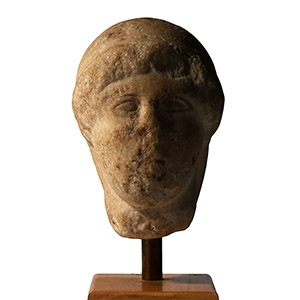
Greek Marble Head of a Youth
6th-5th century B.C.Estimate: £4,000 - 6,000 (‡+bp*)
Opening Bid: £2,000
Carved in the round; semi-naturalistic anatomic and facial detailing, hair gathered loosely at the neck and tied with a taenia knotted at the nape of the neck; mounted on a custom-made display base. 879 grams total, 18 cm high including stand
Ex old European private property, by inheritance to the current owner. Ex Schuler Auktionen, Zürich, 10 December 2020, lot 1211. Accompanied by an academic report by Dr Raffaele D’Amato. This lot has been checked against the Interpol Database of stolen works of art and is accompanied by search certificate number no.11817-206512.
The small statuette to which the head belonged was probably that of a naked youth, the so-called kouros, typical of archaic Greek sculpture from the 7th century B.C. onwards.
