
Loading, please wait...
LOT 1845
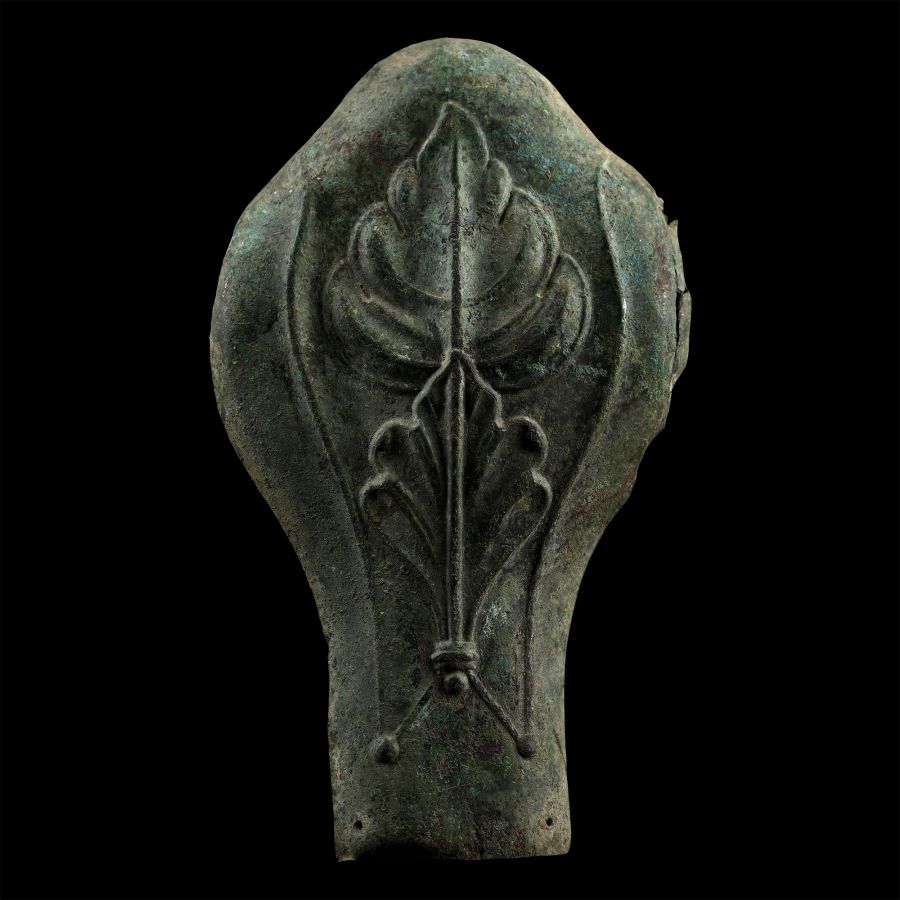
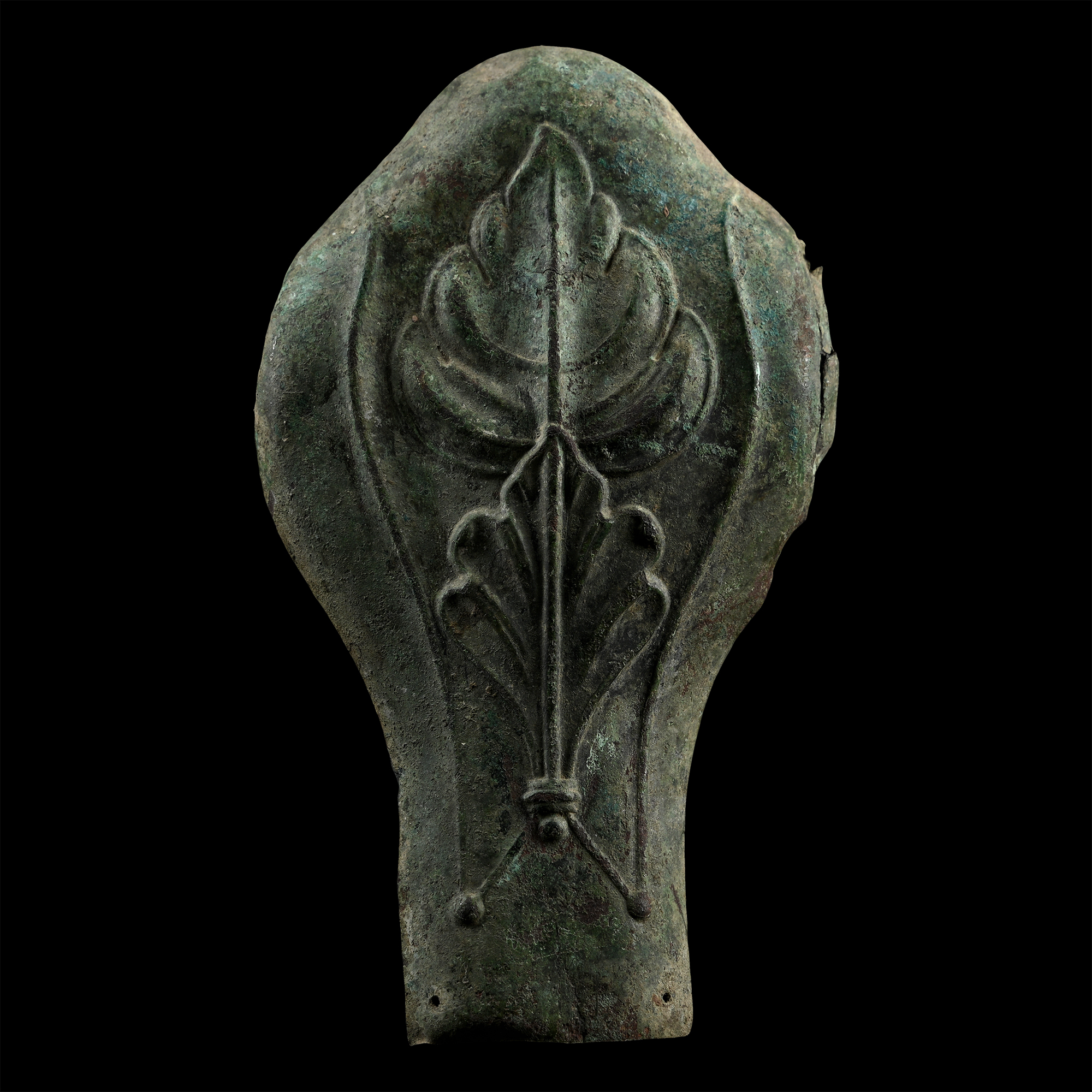
Greek Armour Plate with Palmette
HELLENISTIC, 2ND-1ST CENTURY B.C.
6 in. (39.6 grams, 15.3 cm).
Piriform in plan with convex surface, high-relief repoussé acanthus-leaf palmette; mounting holes at the narrow end, edge chipped.
ProvenanceFrom the late collection of a Cornish couple, formed from the early 1990s.
LiteratureSee Esposito, G. Armies of the Hellenistic States 323 BC to AD 30. Stroud, 2019 for discussion;
CONDITIONTimeLine Auctions follows a vetting process to ensure the authenticity and legality of all items, reinforcing our commitment to integrity and responsible trading. Each antiquity, antique, and coin lot undergoes thorough examination by a vetting committee of at least ten external specialists, professional trade association members, scientists, and archaeologists: Our Vetting Process
AUCTIONS:
TimeLine is a leading auction house specialising in antiquities, ancient art, collectables, natural history, coins, medals, and books. Our auctions offer museums, collectors, historians, and enthusiasts the opportunity to acquire unique and historically significant pieces.
-
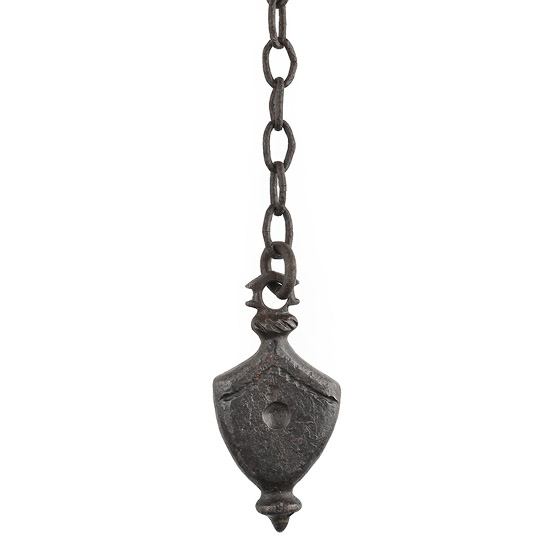
Medieval Socketted Iron Tournament Flail
Circa 15th century A.D.Sold for (Inc. bp): £676
Comprising: tubular socket with segmented lower ends pieced to accept attachment pins, decorative ring above; short length of chain with butted iron links; heater shield-shaped striker with knop finial and torque to the neck, punched design of a chevron and central pellet; one face with possible maker's mark above the pellet. 364 grams, 52.1 cm
Ex North American private collection, 1970s-1990s. -
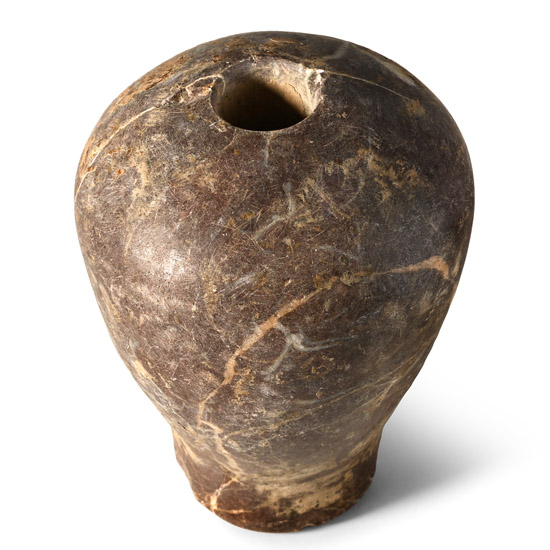
Western Asiatic Polished Stone Macehead
3rd-2nd millennium B.C.Estimate: £100 - 140 (+bp*)
Opening Bid: £50
With a globular body and a short cylindrical socket. 335 grams, 78 mm
From the collection of a London, UK, gentleman, 1990s. -
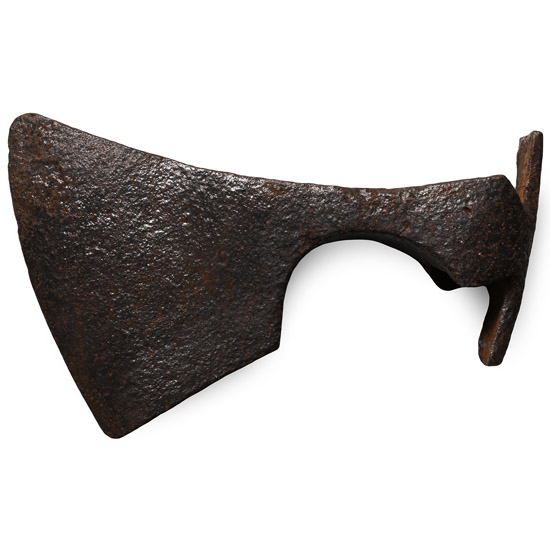
Viking Age Iron Bearded Axehead
Circa 9th-11th century A.D.Sold for (Inc. bp): £260
With a broad, curved blade and a narrow neck, a round socket with an extended edge to the reverse. 358 grams, 15.1 cm
Ex North American collection, 1970s-1980s.
