
Loading, please wait...
LOT 0554
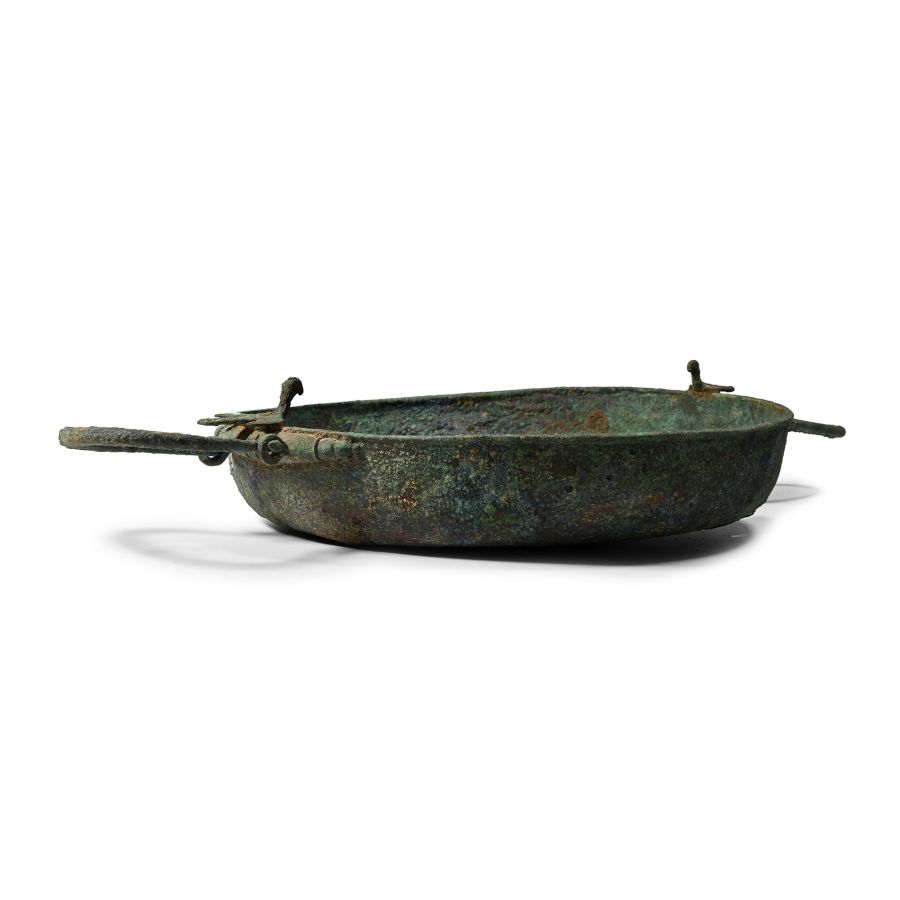
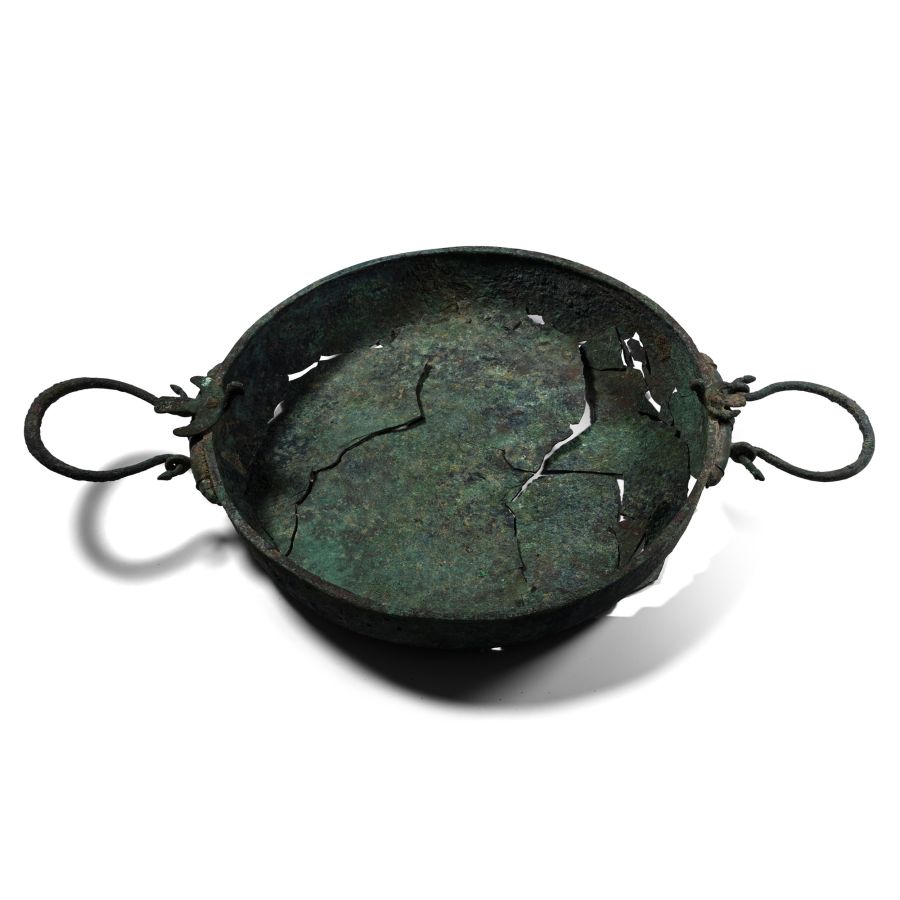
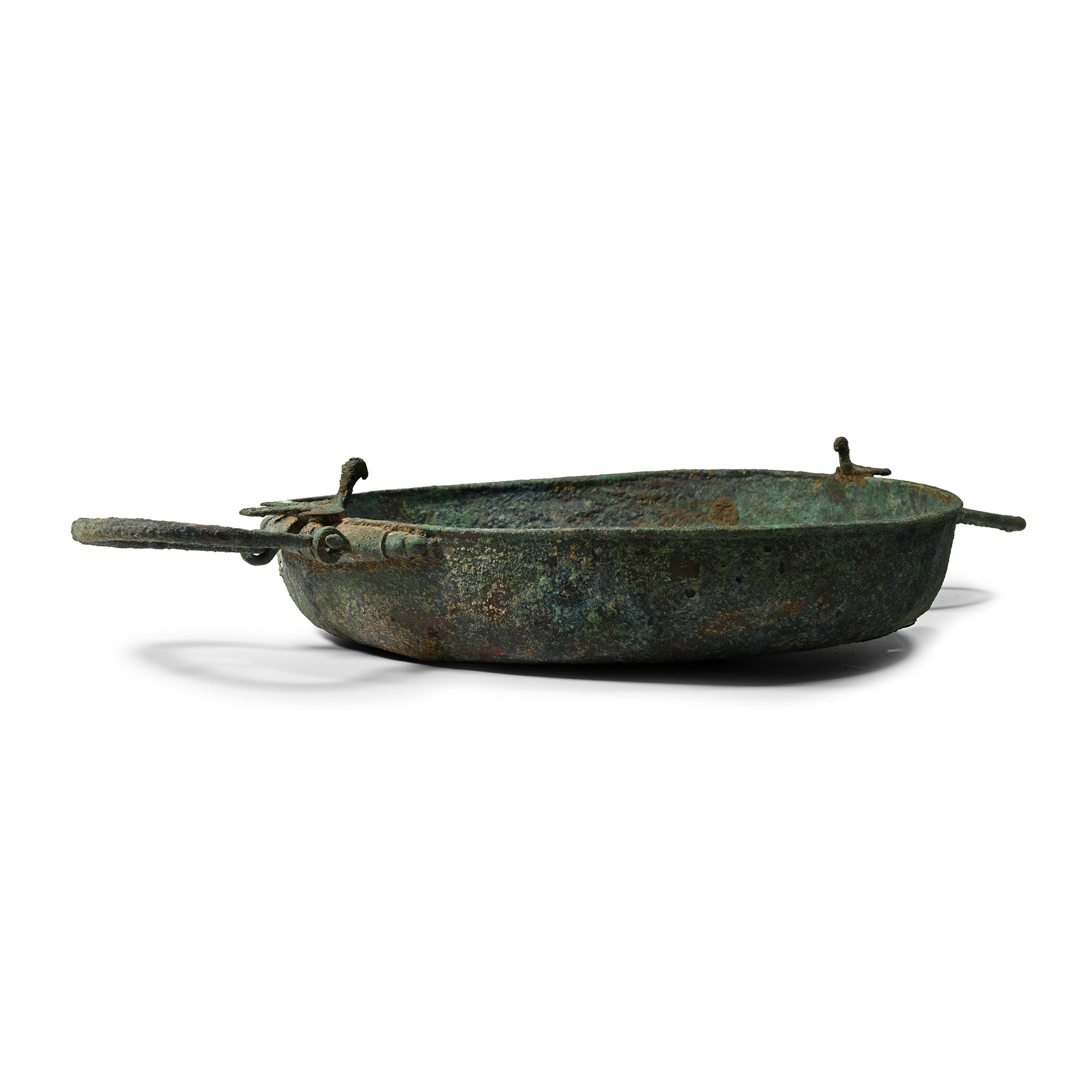
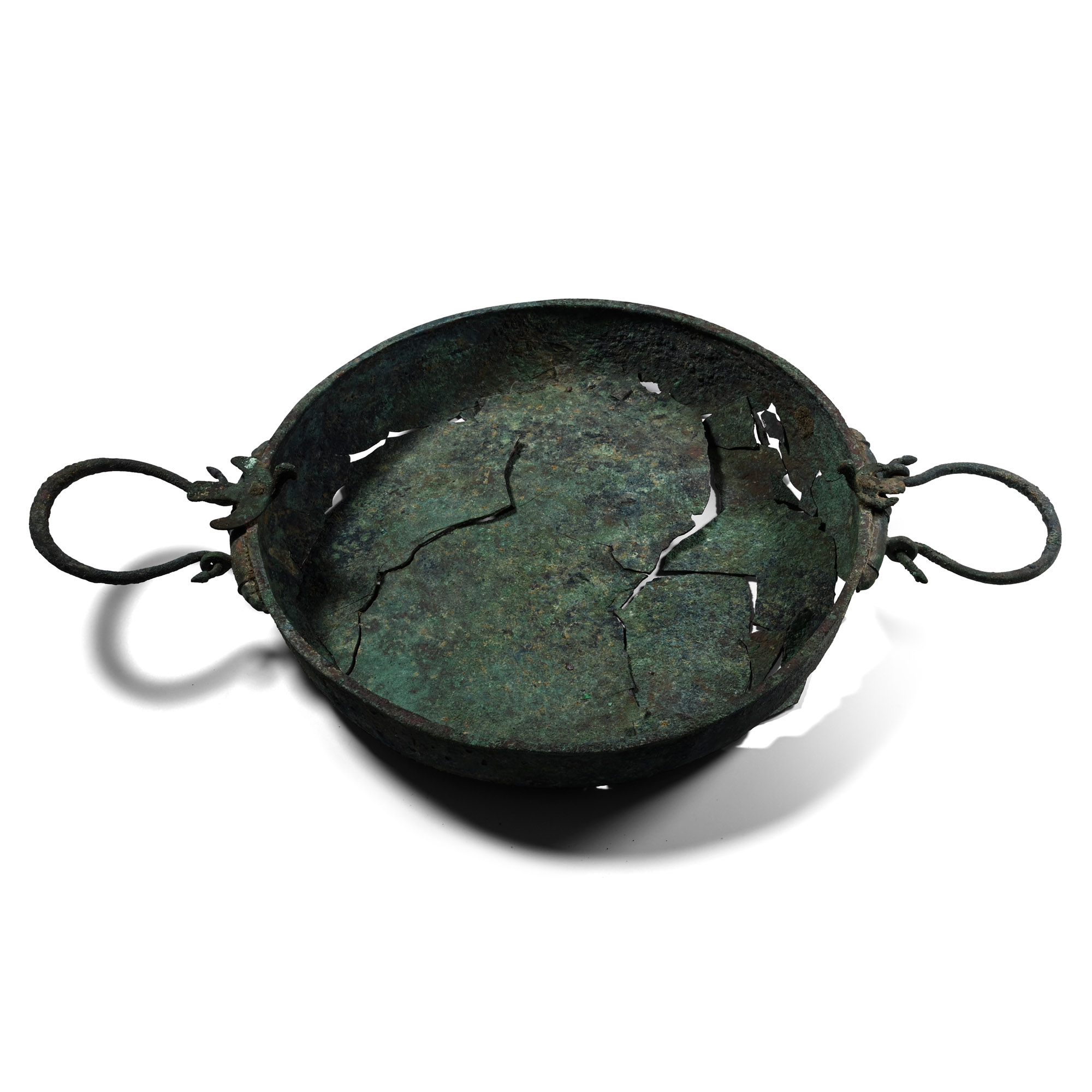
Greek Archaic Bronze Phiale with Handles
7TH-6TH CENTURY B.C.
17 1/4 in. (915 grams, 44 cm wide).
Broad and squat in profile with thickened rim, two lateral omega-shaped drop handles each mounted below the rim on a crescentic bar surmounted by a model bird facing inwards; base fragmentary.
ProvenanceAcquired in the mid 1980s-1990s.
Private collection, Switzerland, thence by descent.
Private collection, since the late 1990s.
This lot has been checked against the Interpol Database of stolen works of art and is accompanied by search certificate number no.12210-222327.
This lot has been cleared against the Art Loss Register database, and is accompanied by an illustrated lot declaration signed by the Head of the Antiquities Department, Dr Raffaele D’Amato.
Cf. similar item (without bird figures) in the Metropolitan Museum of Art under accession no. 03.23.47.
CONDITIONTimeLine Auctions follows a vetting process to ensure the authenticity and legality of all items, reinforcing our commitment to integrity and responsible trading. Each antiquity, antique, and coin lot undergoes thorough examination by a vetting committee of at least ten external specialists, professional trade association members, scientists, and archaeologists: Our Vetting Process
AUCTIONS:
TimeLine is a leading auction house specialising in antiquities, ancient art, collectables, natural history, coins, medals, and books. Our auctions offer museums, collectors, historians, and enthusiasts the opportunity to acquire unique and historically significant pieces.
LOT 0554
Greek Archaic Bronze Phiale with Handles
Estimate £2,000 - 3,000€2,320 - 3,480 (for guidance only)$2,700 - 4,050 (for guidance only)
-
Greek Macedonian Bronze Pyxis
8th century B.C.Estimate: £700 - 900 (‡+bp*)
Opening Bid: £350
'Sickle-type' pyxis composed of a lentoid-section body with integral bird protomes, incised detailing and scalloped openwork finial; lid elliptical in plan with a central stem crowned by a pierced discoid flange, also adorned with stylised bird protomes; corresponding perforations in lid and body used to fasten the component parts together. 69 grams total, 75 mm
Acquired in Germany in 2001. Acquired by the present owner from the above. This lot is accompanied by an illustrated lot declaration signed by the Head of the Antiquities Department, Dr Raffaele D’Amato.
Two pyxides of similar form were found at Samos, but the type is believed to have originated in Macedonia. -
Greek Red-Figure Lekythos
5th century B.C.Sold for (Inc. bp): £1,170
Of ovoid form with trumpet-shaped spout and strap handle, reserved image of a lady wearing a large himation, on a baseline with scrolled foliage. 106 grams, 11 cm
Ex German collection, 1970. with Galerie Chenel, Paris, 22 July 2008. This lot is accompanied by an illustrated lot declaration signed by the Head of the Antiquities Department, Dr Raffaele D’Amato.
The word lekythos had a wide meaning in ancient Greece, probably generally meaning all oil jugs, including the athletes' oil bottle (now called aryballos) as well as the types now given this name by archaeologists. Certain lekythoi resemble certain oenochoe superficially, at a first glance. Oenochoes, however, were wine-pitchers and in most cases were larger than the lekythoi, which were small jugs for oil, perfumes, etc. -
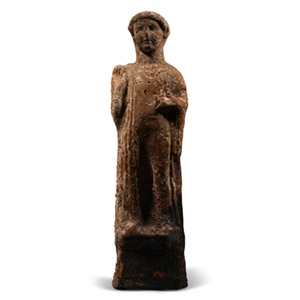
Large Greek Terracotta Draped Statue in Praying Attitude
4th century B.C.Sold for (Inc. bp): £1,820
Hollow-formed standing male in floor-length robe with copious sleeves, the left hand held across the chest and the right hand raised palm-outward; short hair combed forward in a severe style; tiered base. 1.53 kg, 37 cm
Acquired in the mid 1980s-1990s. Private collection, Switzerland, thence by descent. Private collection, since the late 1990s. This lot has been checked against the Interpol Database of stolen works of art and is accompanied by search certificate number no.12214-222196. This lot has been cleared against the Art Loss Register database, and is accompanied by an illustrated lot declaration signed by the Head of the Antiquities Department, Dr Raffaele D’Amato.
