
Loading, please wait...
LOT 0525
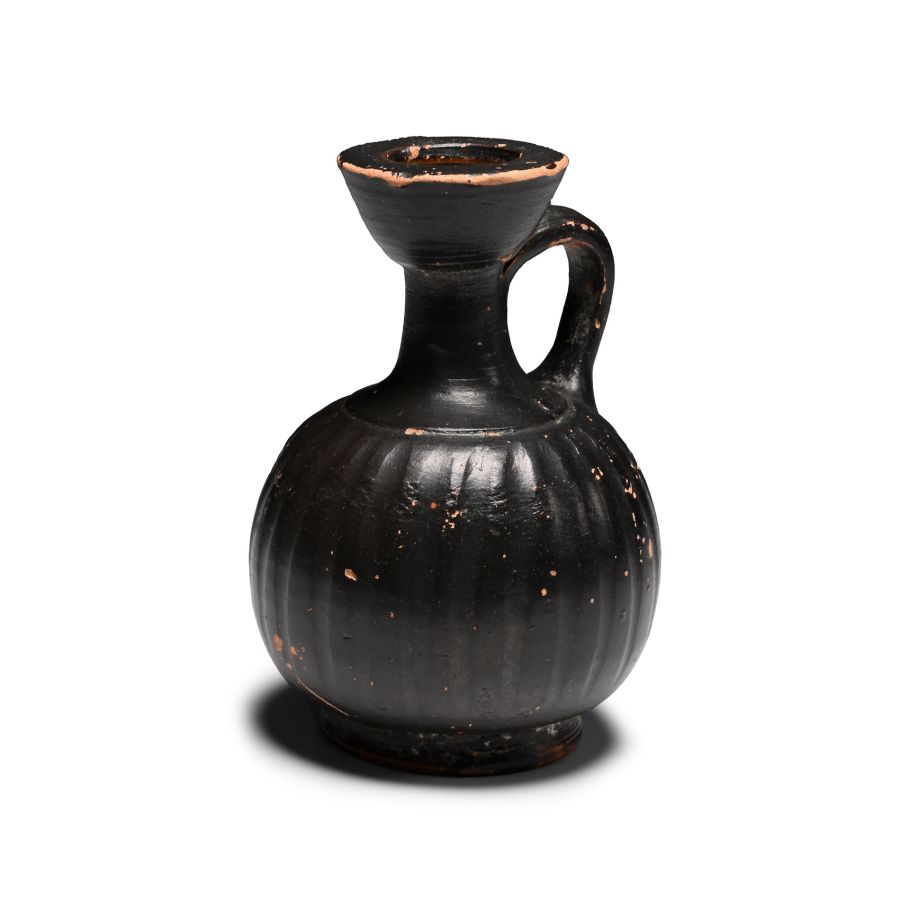
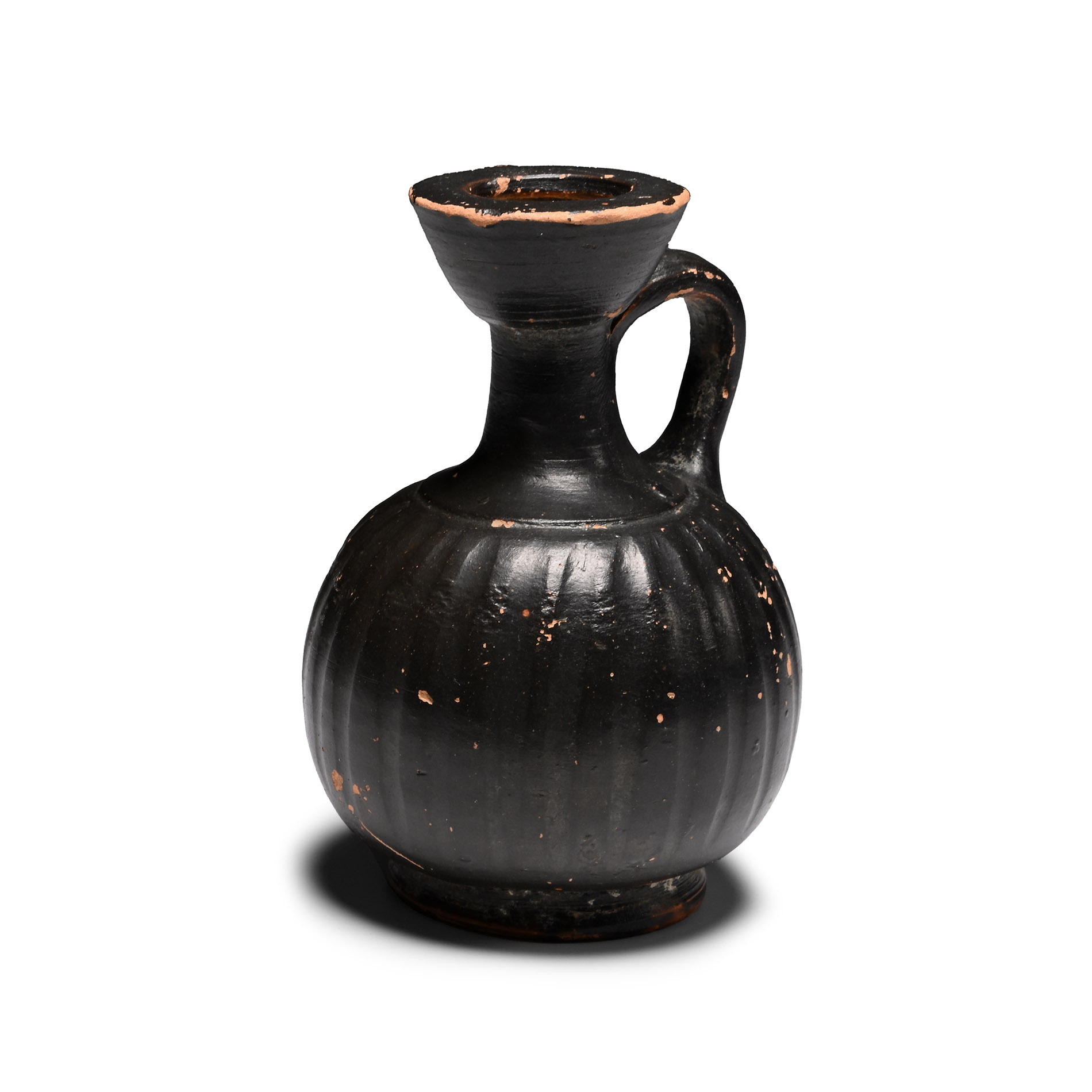
Greek Apulian Squat Terracotta Lekythos
4TH CENTURY B.C.
3 1/4 in. (73 grams, 81 mm).
Ovoid body decorated with low-relief vertical ribbing, conical mouth with flat inverted rim, strap handle and discoid foot.
ProvenanceAcquired on the French art market.
Swiss private collection.
This lot is accompanied by an illustrated lot declaration signed by the Head of the Antiquities Department, Dr Raffaele D’Amato.
Cf. Metropolitan Museum of Art, New York, accession no.41.162.238, for similar.
CONDITIONTimeLine Auctions follows a vetting process to ensure the authenticity and legality of all items, reinforcing our commitment to integrity and responsible trading. Each antiquity, antique, and coin lot undergoes thorough examination by a vetting committee of at least ten external specialists, professional trade association members, scientists, and archaeologists: Our Vetting Process
AUCTIONS:
TimeLine is a leading auction house specialising in antiquities, ancient art, collectables, natural history, coins, medals, and books. Our auctions offer museums, collectors, historians, and enthusiasts the opportunity to acquire unique and historically significant pieces.
LOT 0525
Greek Apulian Squat Terracotta Lekythos
Estimate £200 - 200€230 - 230 (for guidance only)$270 - 270 (for guidance only)
-
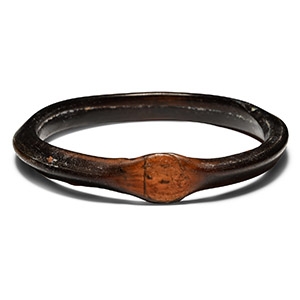
Hellenistic Brown Glass Bracelet
3rd-2nd century B.C.Sold for (Inc. bp): £169
D-section bangle with one flat panel at juncture. 32.64 grams, 87 mm
with François de Riqles Auction, Paris, 27 October 2000. Accompanied by a copy of an Art Loss Register certificate no.S00072881. This lot is accompanied by an illustrated lot declaration signed by the Head of the Antiquities Department, Dr Raffaele D’Amato.
This type of bracelet still reflects the old Celtic production technique of La Tène period, where the bracelets were formed by pressing two extremities to form a single body, giving the bracelet a brownish colour. -
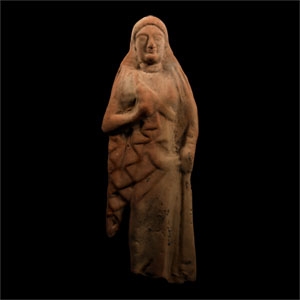
Archaic Greek Terracotta Statue of a Kore
Late 6th century B.C.Sold for (Inc. bp): £780
Modelled in the half-round figure of a youthful female standing erect with dressed hair falling to the shoulders, draped robe in tiers, crescent collar to the neck. 678 grams, 27.2 cm
with H.A.C., Basel, prior 1999. This lot is accompanied by an illustrated lot declaration signed by the Head of the Antiquities Department, Dr Raffaele D’Amato. -
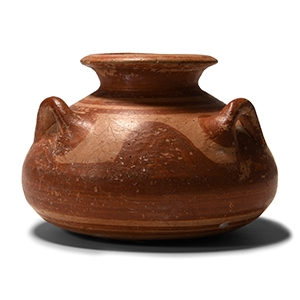
Mycenaean 'Wavy Line' Painted Alabastron
Late Helladic IIIA Period, 14th-13th century B.C.Sold for (Inc. bp): £1,170
Formed with a squat globular body, everted rim and three lug handles to the shoulder; painted reddish-brown over a cream slip with concentric bands and rings to the mouth, neck, shoulder and base, larger solid undulating forms covering the lower body. 70 grams, 69 mm
Acquired from Royal Athena Gallery, 2003. This lot has been checked against the Interpol Database of stolen works of art and is accompanied by search certificate number no.11851-206833. This lot is accompanied by an illustrated lot declaration signed by the Head of the Antiquities Department, Dr Raffaele D’Amato.
