
Loading, please wait...
LOT 0081
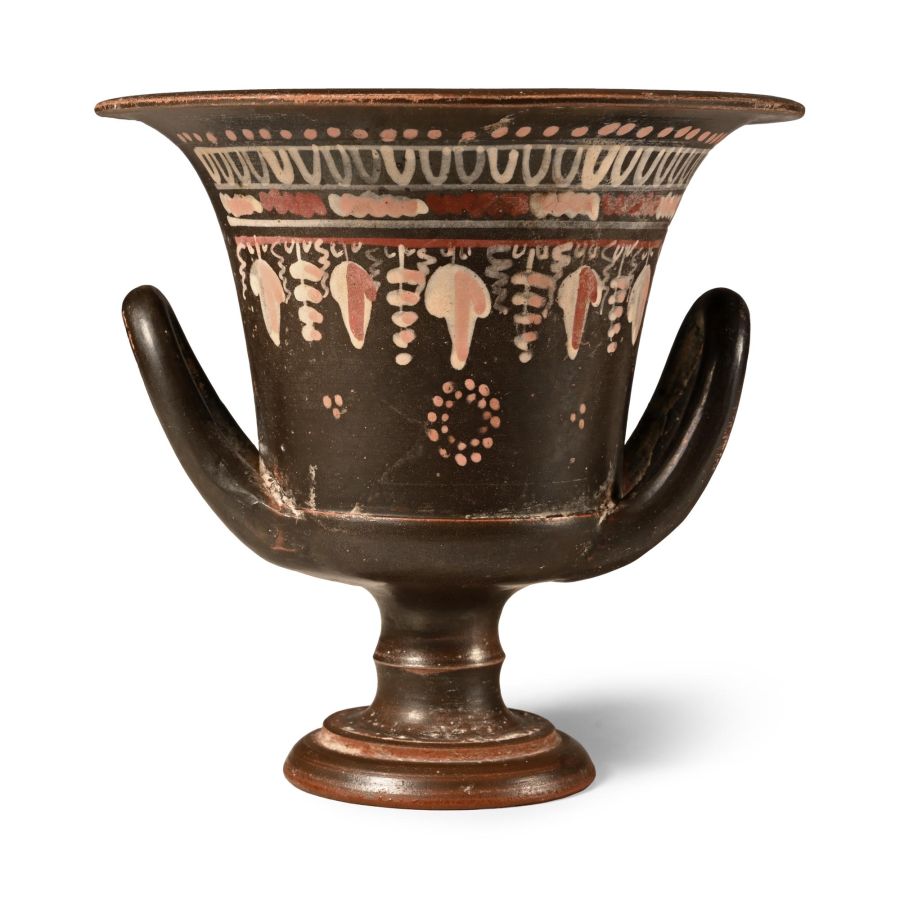
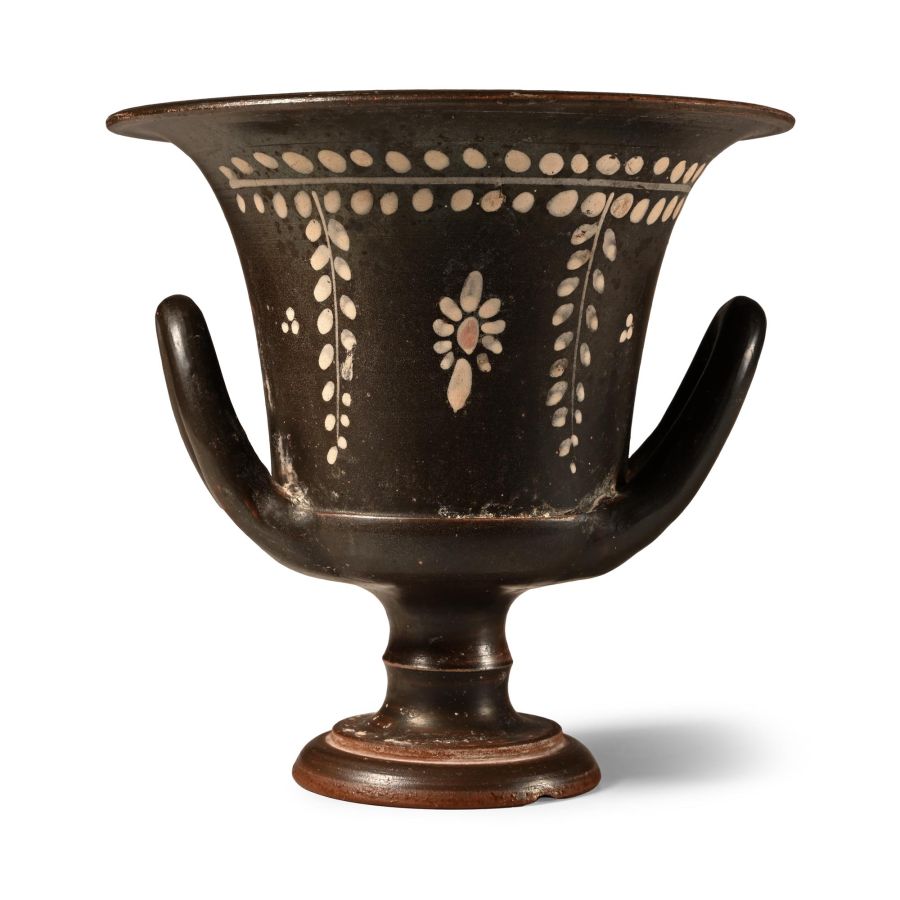
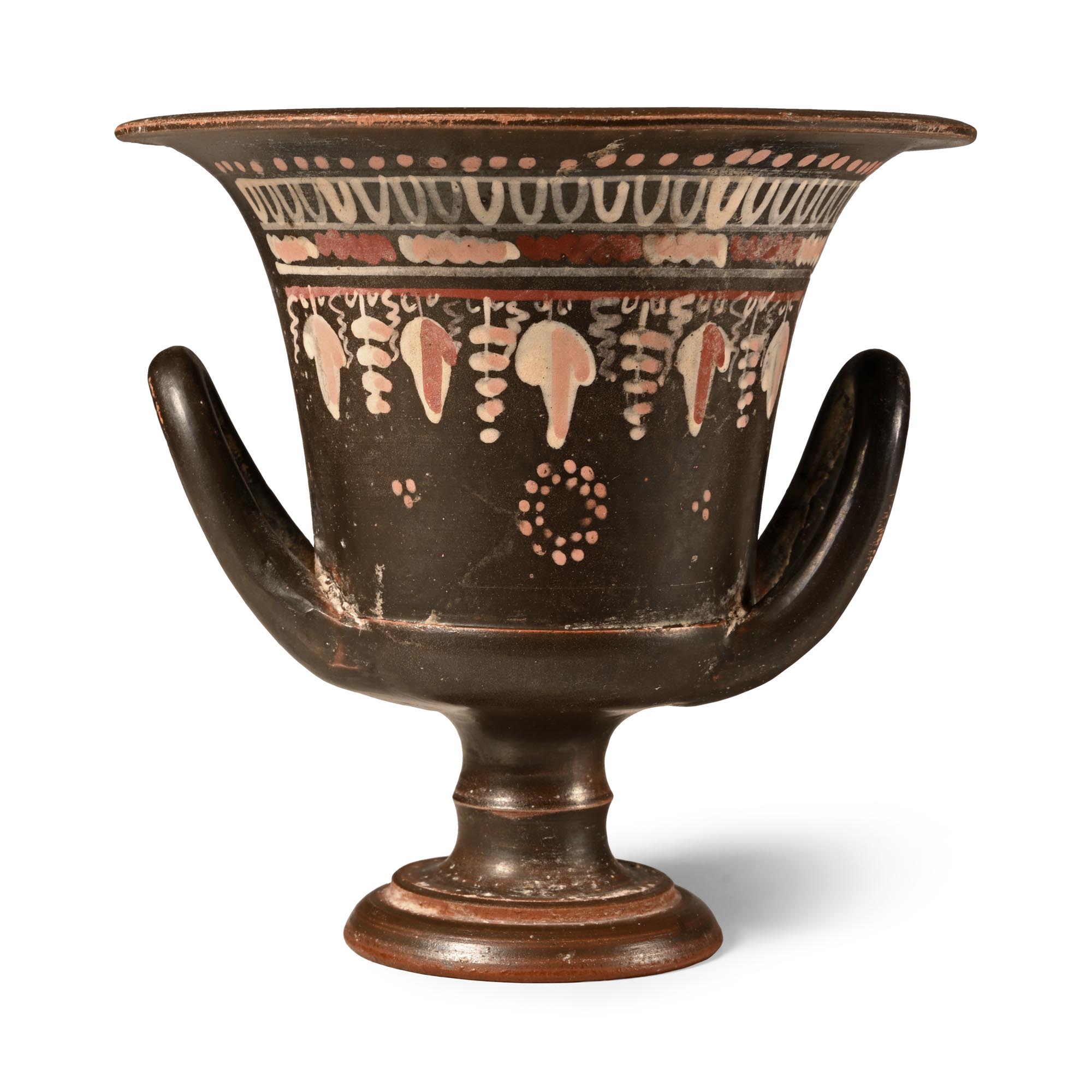
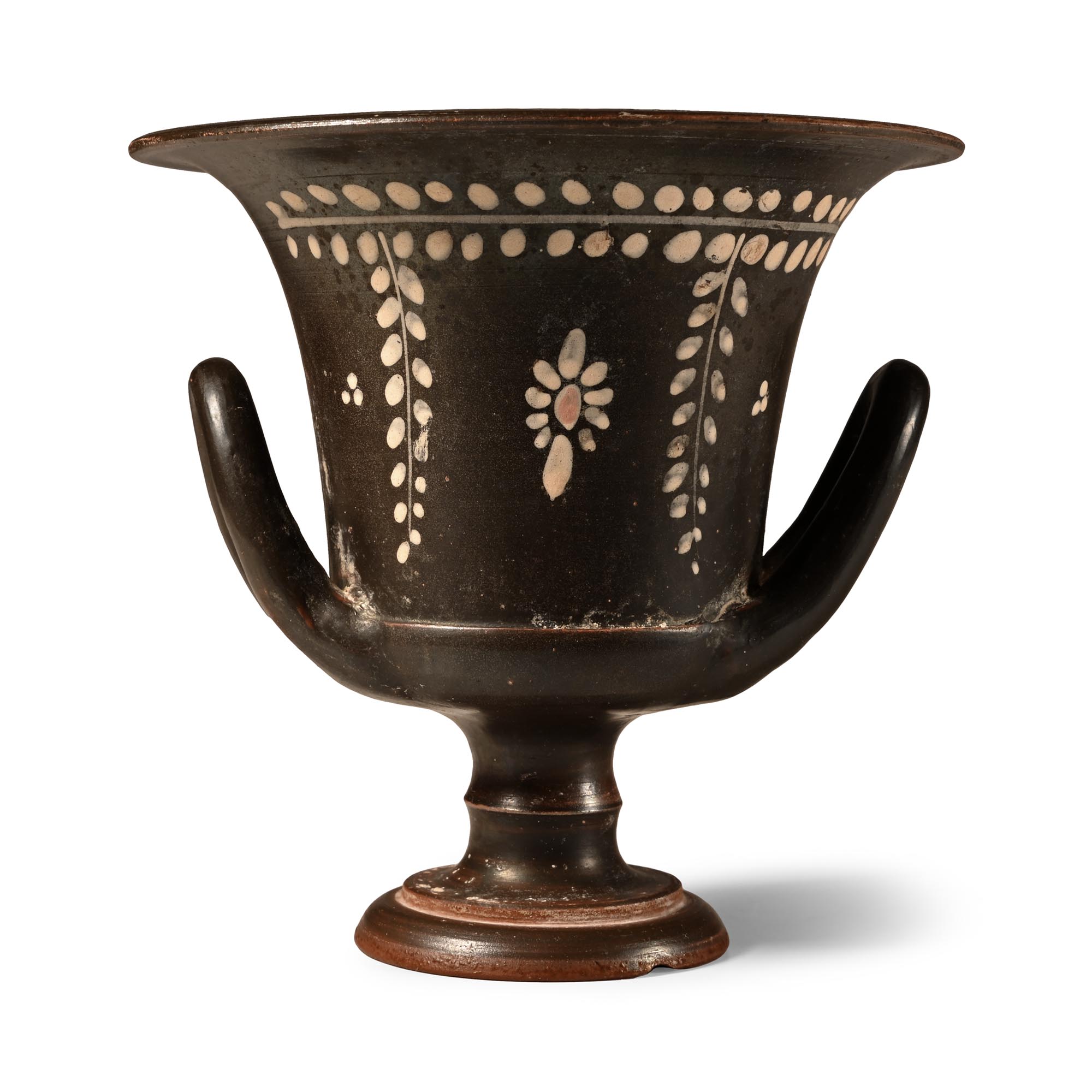
Greek Apulian Gnathian Ware Calyx Krater
MAGNA GRAECIA, CIRCA 4TH CENTURY B.C.
4 3/4 in. (209 grams, 12 cm).
Bell-shaped in profile with stepped foot and stem, two lateral loop handles, flared rim; Side A: horizontal laurel-leaf band with to smaller vertical one below, central rosette; Side B: egg-and-dart band with pellets, pendant leaves and bunches of grapes.
ProvenanceEx old UK collection.
Acquired from Cestrian Antiques, Chester, UK, 2006.
Ex Pemberton collection, Wales, UK.
Accompanied by an old professionally produced information card with collection reference C.928.
Accompanied by the original Cestrian Antiques invoice.
TimeLine Auctions follows a vetting process to ensure the authenticity and legality of all items, reinforcing our commitment to integrity and responsible trading. Each antiquity, antique, and coin lot undergoes thorough examination by a vetting committee of at least ten external specialists, professional trade association members, scientists, and archaeologists: Our Vetting Process
AUCTIONS:
TimeLine is a leading auction house specialising in antiquities, ancient art, collectables, natural history, coins, medals, and books. Our auctions offer museums, collectors, historians, and enthusiasts the opportunity to acquire unique and historically significant pieces.
-
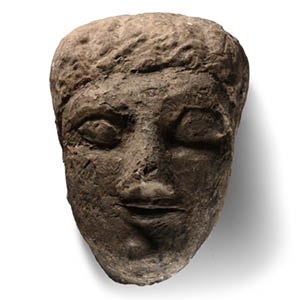
Cypriot Limestone Head
Iron Age, 600-400 B.C.Sold for (Inc. bp): £598
Carved in the half-round with nemes headdress. 3.2 kg, 22.5 cm
From a collection acquired on the UK art market from various auction houses and collections mostly before 2000. From an important Cambridgeshire estate; thence by descent. -
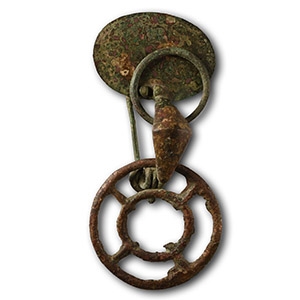
Italic Bronze Fibula and Proto Ring Money Assemblage
Circa 9th-8th century B.C.Sold for (Inc. bp): £104
Bow brooch with integral coiled spring and pin, carinated bow, ellipsoid footplate with two offset lugs forming the catch; with two bronze rings loped over the spring, one a round-section ring and the other an openwork disc. 66 grams, 86 mm
From the private collection of Dr Wladmir Rosenbaum, 1894-1984. Ex Helios gallery, Wiltshire, UK. Ex Den of Antiquity, Cambridgeshire, UK. Accompanied by a dealer's information display card. -
.jpg)
Greek Terracotta Female Bust
Circa 6th century B.C.Sold for (Inc. bp): £1,040
Modelled in the round wearing a polos headdress and large disc earrings, the segmented hair retained by a diadem and falling to the shoulders; finely modelled facial features with lentoid eyes and full pouting lips; mounted on a custom-made stand. 1.4 kg total, 24.5 cm including stand
with Petit Musée, Montreal, Canada, 1995. Acquired Bonhams, London, 28 November 2017, lot 74. Private collection of Professor Kenneth Graham, London, UK. Accompanied by the original catalogue page and a copy of the original invoice.
