
Loading, please wait...
LOT 0535
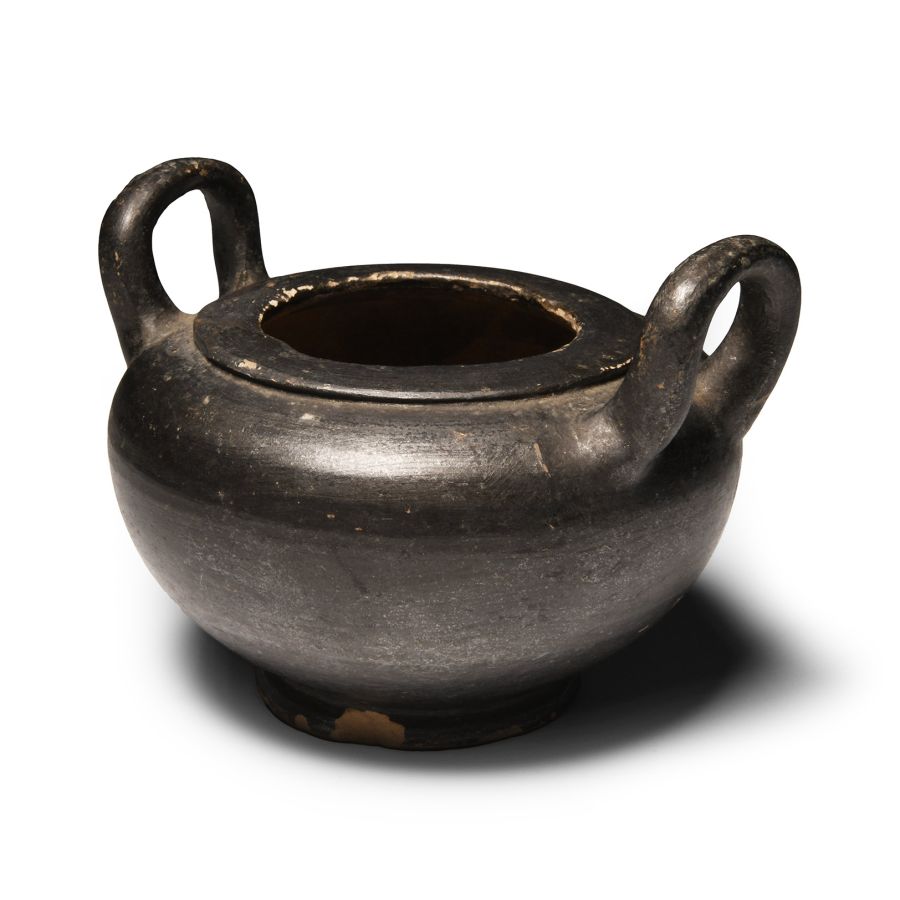
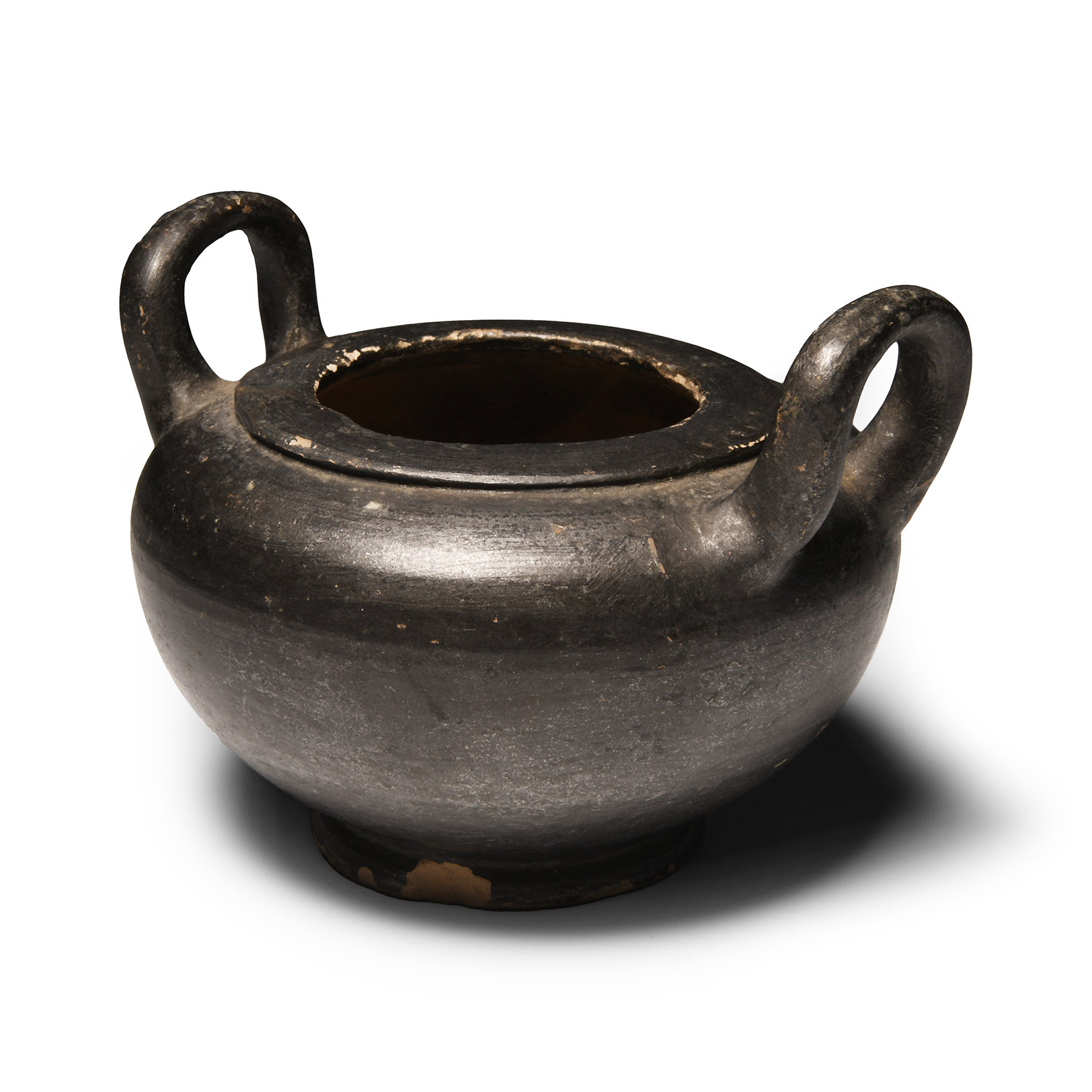
Greek Apulian Blackware Pyxis
CIRCA 4TH-3RD CENTURY B.C.
4 1/4 in. (143 grams, 10.8 cm wide).
Black-glazed rounded body with two upright loop-handles, raised base, keeled edge with a thickened disc rim.
ProvenanceEx P. A., Hertfordshire, UK, specialist collection of Greek art, 1980-1990s.
Accompanied by a copy of an old typed catalogue slip.
Cf. Sparkes, B., Talcott, L., Richter, G.M.A., The Athenian Agora, Vol. 12, Black and Plain Pottery of the 6th, 5th and 4th Centuries B.C., Athens, 1970, pl.43, pp.173 ff. (for various type of Pyxis).
FootnotesThis pyxis was once fitted with a lid for cosmetics, powder or jewellery. Greek pottery from southern Italy is most easily identified by its glossy black finish, as seen here. It was the product of the Magna Graecia, especially in Apulia, a region in southern Italy populated by Greek colonists from the 8th century B.C. onwards, which imitated the artistic workshops of Attica and developed its own style.
CONDITIONTimeLine Auctions follows a vetting process to ensure the authenticity and legality of all items, reinforcing our commitment to integrity and responsible trading. Each antiquity, antique, and coin lot undergoes thorough examination by a vetting committee of at least ten external specialists, professional trade association members, scientists, and archaeologists: Our Vetting Process
AUCTIONS:
TimeLine is a leading auction house specialising in antiquities, ancient art, collectables, natural history, coins, medals, and books. Our auctions offer museums, collectors, historians, and enthusiasts the opportunity to acquire unique and historically significant pieces.
LOT 0535
Greek Apulian Blackware Pyxis
Estimate £200 - 300€230 - 350 (for guidance only)$270 - 410 (for guidance only)
-
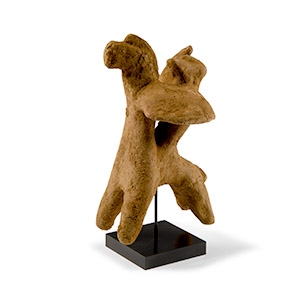
Archaic Greek Terracotta Figure of Mounted Warrior with Shield
7th-5th century B.C.Sold for (Inc. bp): £247
The horse with an elongated neck and stylised features; mounted by a bearded rider gazing towards the sky, holding a shield in his left hand and a sword(?) in his right hand; mounted on a custom-made display stand. 286 grams total, 15 cm high including stand
Acquired before 1990. From an old German collection.
Terracotta figurines of horse and rider were common grave offerings in Boeotia, northwest of Attica, particularly during the 6th century B.C. Representations of warriors on horseback were already widespread in the Geometric Period, and widely used in Cyprus, during this period. -
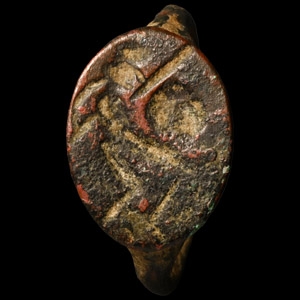
Hellenistic Bronze Ring with Warrior
Circa 2nd-1st century B.C.Sold for (Inc. bp): £91
With a round-section hoop and oval-shaped bezel, intaglio image of an advancing warrior holding a shield and a sword. 9.02 grams, 26.15 mm overall, 20.91 mm internal diameter (approximate size British T 1/2, USA 9 3/4, Europe 21.89, Japan 21)
Ex old English collection. London art market, pre 2000. Property of a London, UK, gentleman. -
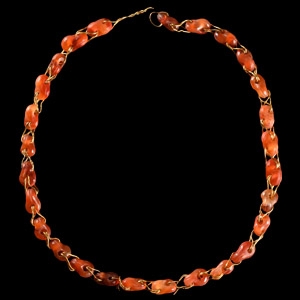
Greek Gold and Carnelian Necklace
1st century B.C.-1st century A.D.Estimate: £2,000 - 3,000 (‡+bp*)
Opening Bid: £1,000
A section of a necklace of carnelian drop-shaped beads, each pierced in two planes and linked loop-in-loop with thin twisted gold wires, possibly later. 8.16 grams, 26 cm long
The Gans collection, Hebling Dec, Berlin, 1929. with Christie's, New York, 8 December 1999, lot 51. Accompanied by a copy of the relevant Christie's catalogue pages. This lot has been checked against the Interpol Database of stolen works of art and is accompanied by search certificate no.11608-198969.
