
Loading, please wait...
LOT 0667
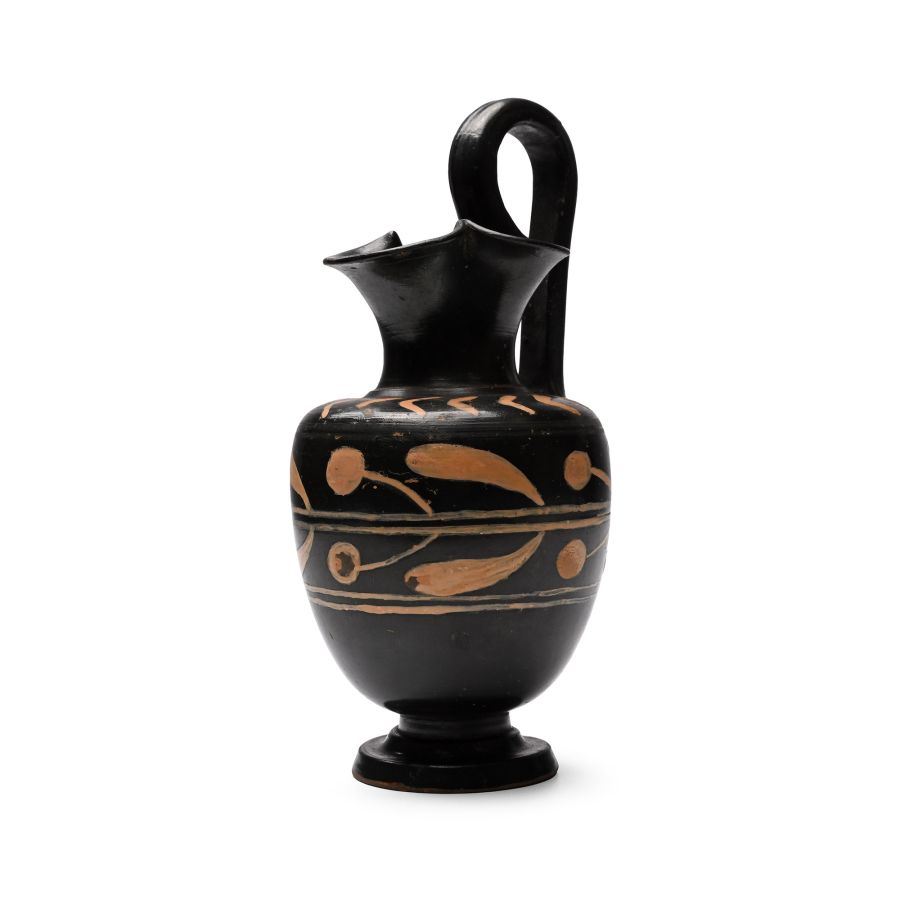
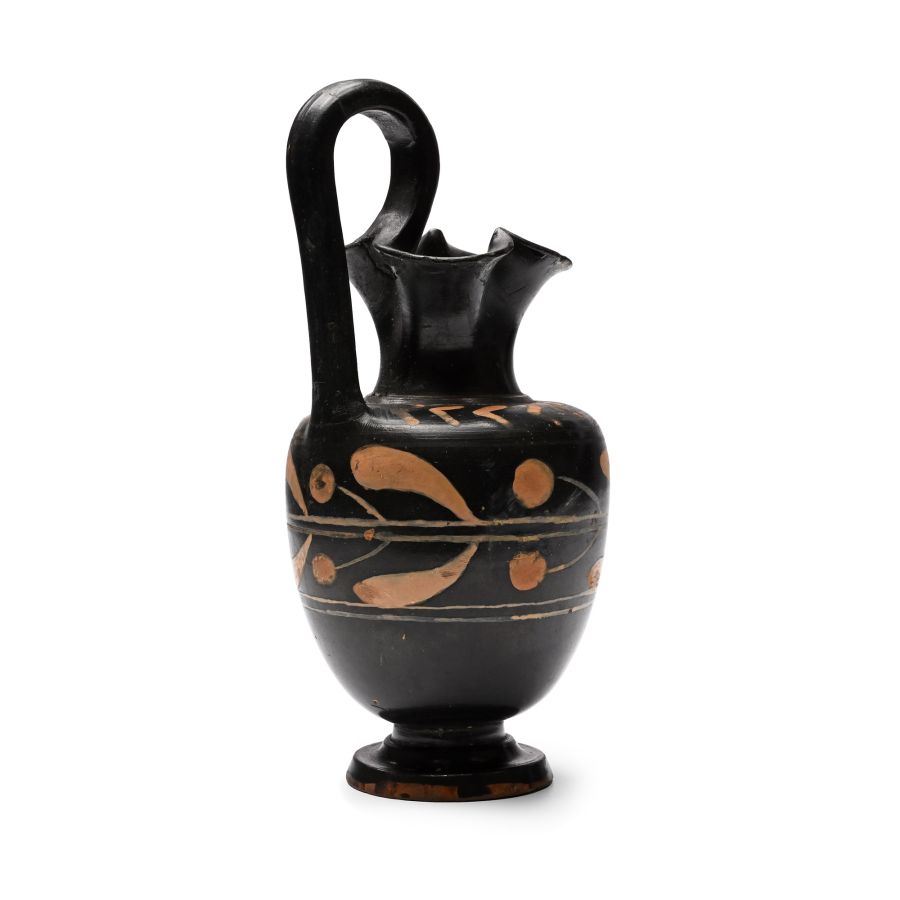
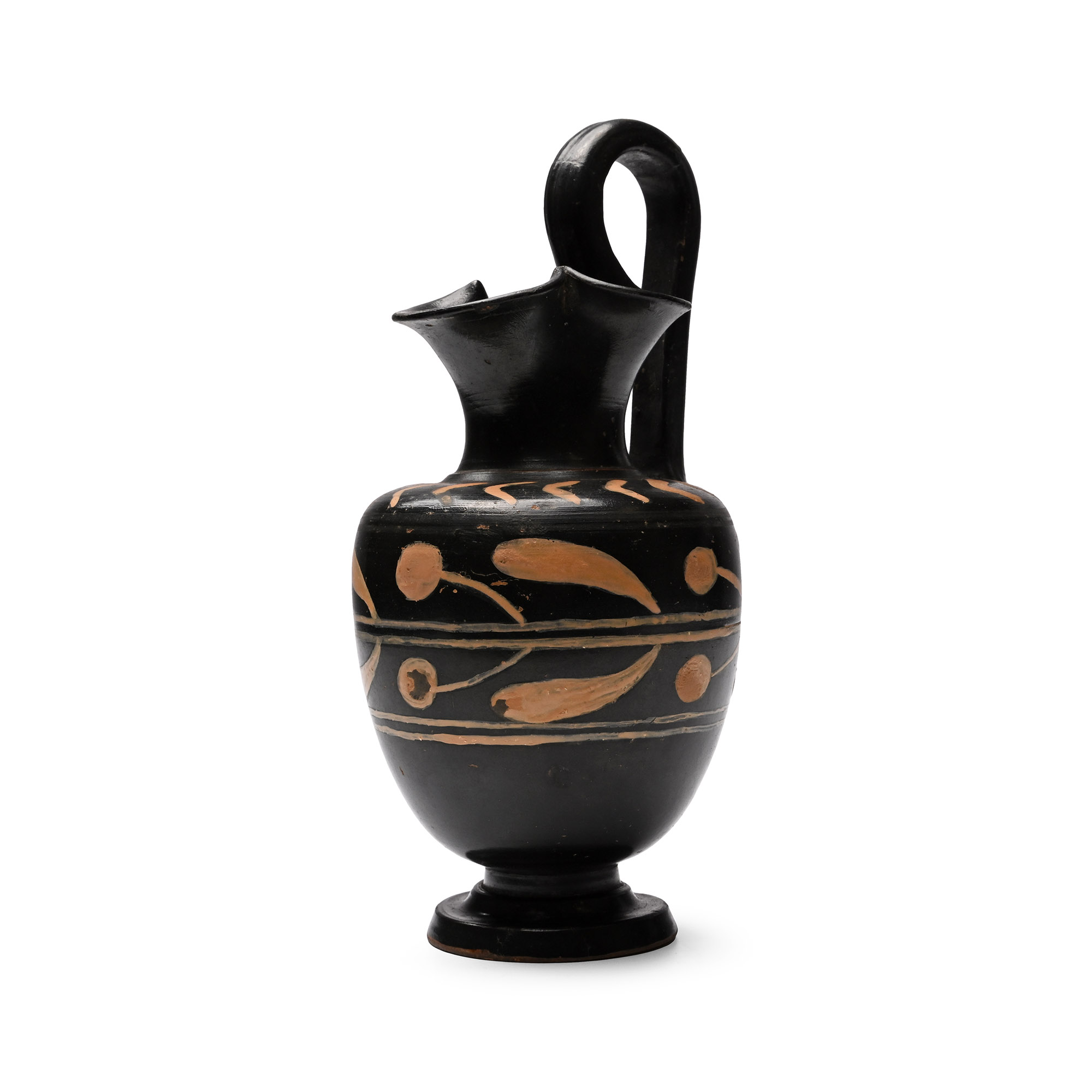
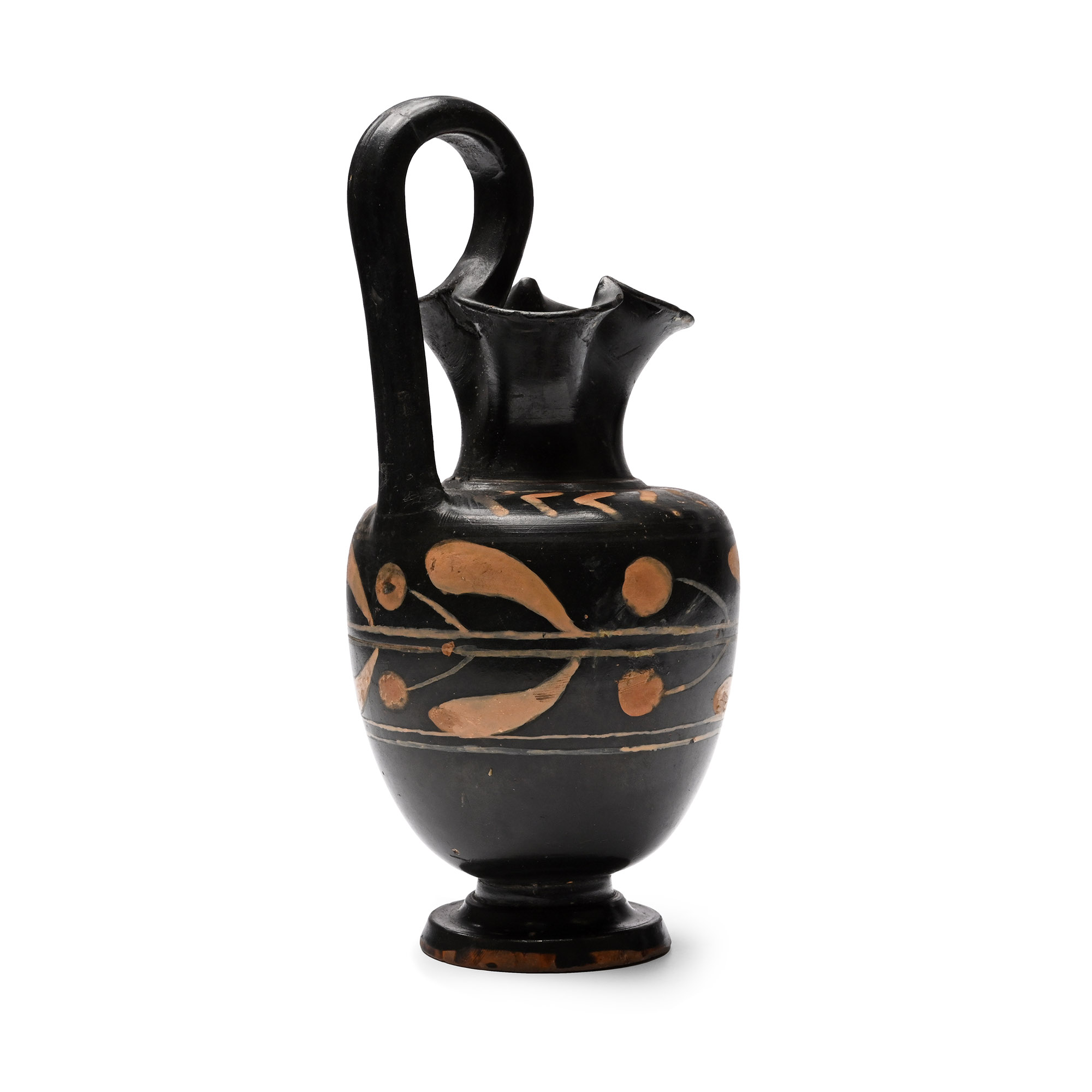
Greek Apulian Blackware Oinochoe with Laurel Leaves
SOUTH ITALIC, CIRCA 4TH CENTURY B.C.
6 3/8 in. (170 grams, 16.3 cm).
With tiered foot, ovoid body, tapering neck and scooped trefoil mouth; tall strap handle to the rear; painted laurel frond to the sidewall and chevrons to the shoulder. [No Reserve]
ProvenanceFrom the private collection of a Canadian gentleman living in Essex, UK, formed since the 1920s-circa 1990.
Property of an Essex lady until the late 1990s; thence by descent.
From the private collection of an Essex gentleman since the late 1990s.
This lot is accompanied by an illustrated lot declaration signed by the Head of the Antiquities Department, Dr Raffaele D'Amato.
Cf. Metropolitan Museum of Art accession no.1971.11.14, for a similar example.
CONDITIONTimeLine Auctions follows a vetting process to ensure the authenticity and legality of all items, reinforcing our commitment to integrity and responsible trading. Each antiquity, antique, and coin lot undergoes thorough examination by a vetting committee of at least ten external specialists, professional trade association members, scientists, and archaeologists: Our Vetting Process
AUCTIONS:
TimeLine is a leading auction house specialising in antiquities, ancient art, collectables, natural history, coins, medals, and books. Our auctions offer museums, collectors, historians, and enthusiasts the opportunity to acquire unique and historically significant pieces.
-
.jpg)
Greek Terracotta Female Antefix
Archaic, 6th-5th century B.C.Estimate: £2,000 - 3,000 (‡+bp*)
Opening Bid: £1,111
Mould-made figure of a female upper body with tall curved and conical headdress, hair dressed in braids falling to her shoulders and flanking her breasts, arms spread and right hand curled to grip a handle or sword-hilt; beneath, a tapering mounting peg for attachment to a roof. 411 grams, 26 cm
Acquired in the mid 1980s-1990s. Private collection, Switzerland, thence by descent. Private collection, since the late 1990s. Accompanied by an academic report by Dr Raffaele D'Amato. This lot has been checked against the Interpol Database of stolen works of art and is accompanied by search certificate number no.12207-222349. This lot has been cleared against the Art Loss Register database, and is accompanied by an illustrated lot declaration signed by the Head of the Antiquities Department, Dr Raffaele D'Amato. -
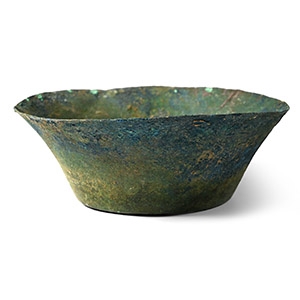
Archaic Cypriot Bronze Dish
7th century B.C.Sold for (Inc. bp): £260
Hemispherical with low profile and gently flaring walls, flat base. 52 grams, 10.7 cm
Ex London, UK, collections, 1990s-2000s. This lot is accompanied by an illustrated lot declaration signed by the Head of the Antiquities Department, Dr Raffaele D'Amato.
The Greek name for a shallow, round bowl, generally with a round boss in the centre, appears to have been phiale, which is described as resembling a shield (Aristotle, Rhetoric, III, 4, 1 1; Poetics, 21, 12), and as without handles. -
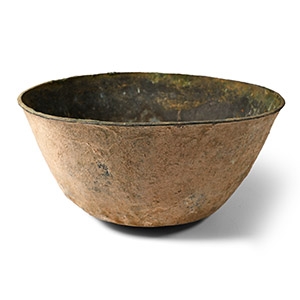
Villanovan Bronze Cup
750-730 B.C.Sold for (Inc. bp): £182
Hemispherical in profile with flat rim. 183 grams, 12.9 cm
Ex London, UK, collections, 1990s-2000s. This lot is accompanied by an illustrated lot declaration signed by the Head of the Antiquities Department, Dr Raffaele D'Amato.
In the necropolises of Southern Etruria, around the second half of the 8th century B.C., new technologies were used, which also involved metalworking. Alongside simple bronze cups intended for everyday use, similar magnificent examples containing a flourish of impressed or engraved geometric motifs were made.
