
Loading, please wait...
LOT 0527
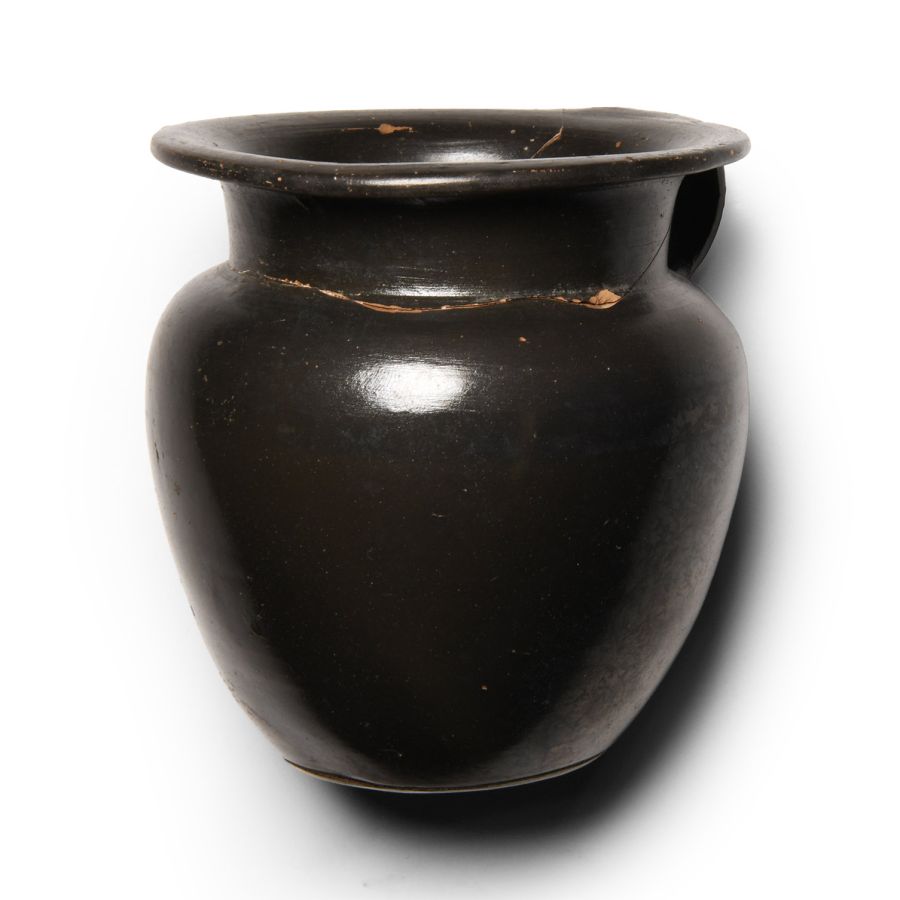
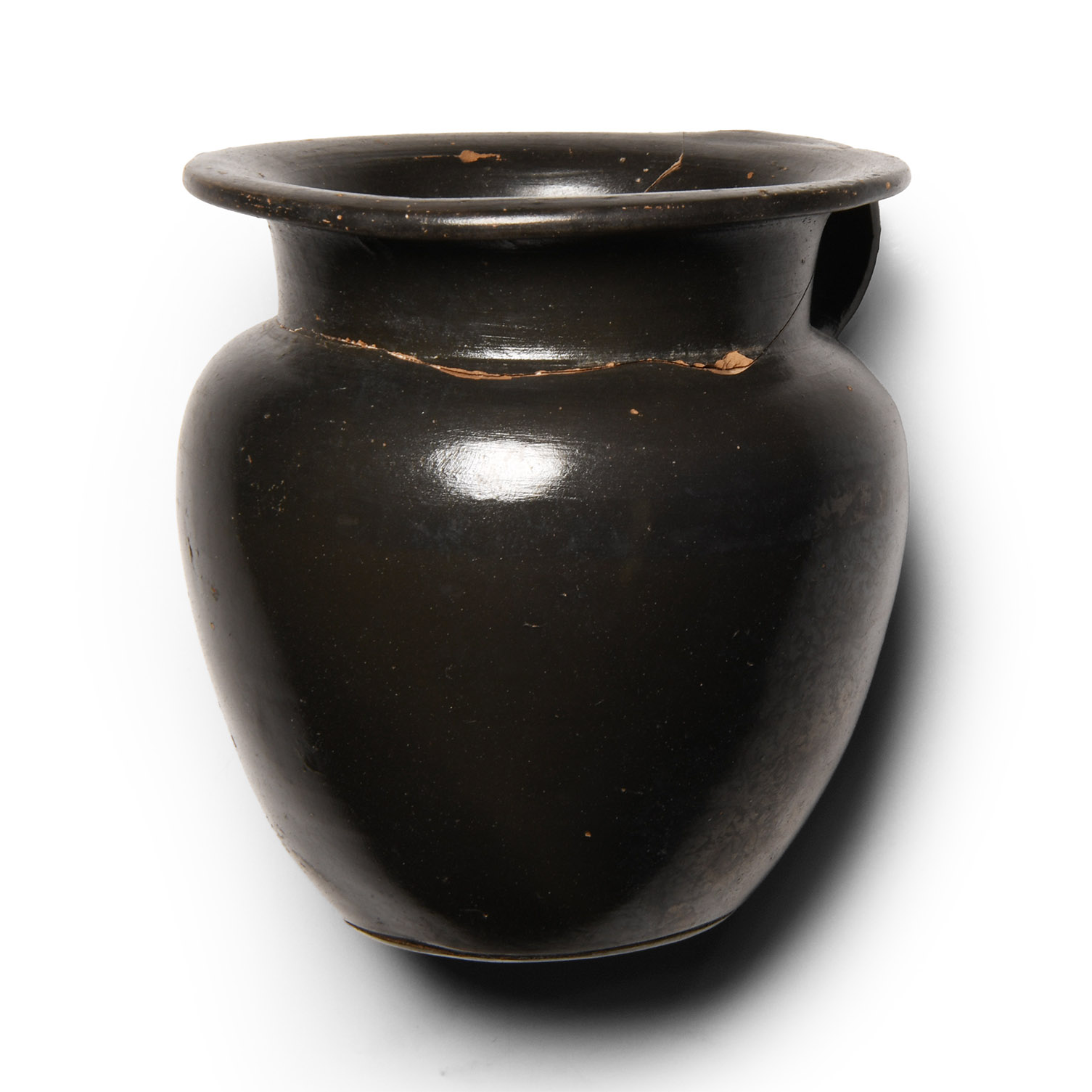
Greek Apulian Black-Glazed Mug
CIRCA 4TH-3RD CENTURY B.C.
3 3/4 in. (144 grams, 95 mm wide).
With a high-gloss black slip, ovoid body and a short wide neck with a flaring rim, a wide strap handle and a flat base.
ProvenanceEx P. A., Hertfordshire, UK, specialist collection of Greek art, 1980-1990s.
LiteratureCf. in Riccardi, A., 'Apulian and Lucanian pottery from coastal Peucetian context' in Carpenter, T.H., Lynch, K.M., E.G.D., The Italic People of Ancient Apulia: New Evidence from Pottery for Workshops, Markets, and Customs, pp.133-181, fig.6.3, p.137, for similar jug.
FootnotesThe black glaze technique uses the same glaze used by the Greeks on the red-figure and black-figure ceramics, but covering the entire piece, without figurative decoration. It was a transparent raw glaze, which took on its characteristic intense, glossy black tone after firing.
CONDITIONTimeLine Auctions follows a vetting process to ensure the authenticity and legality of all items, reinforcing our commitment to integrity and responsible trading. Each antiquity, antique, and coin lot undergoes thorough examination by a vetting committee of at least ten external specialists, professional trade association members, scientists, and archaeologists: Our Vetting Process
AUCTIONS:
TimeLine is a leading auction house specialising in antiquities, ancient art, collectables, natural history, coins, medals, and books. Our auctions offer museums, collectors, historians, and enthusiasts the opportunity to acquire unique and historically significant pieces.
LOT 0527
Greek Apulian Black-Glazed Mug
Estimate £300 - 400€350 - 460 (for guidance only)$410 - 540 (for guidance only)
-
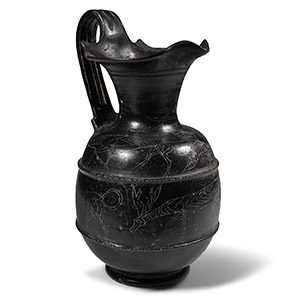
Etruscan Terracotta Bucchero Oinochoe with Incised Animals
Circa 6th century B.C.Sold for (Inc. bp): £1,755
With shoulder and belly encircled by two notched ribs, by two friezes with later carefully-incised, elongated animals (stag, snake, winged panther, horse, lion), restored. 740 grams, 25.5 cm
Late W.H. collection. With Kunst der Antike, Munich, Germany, 1977. Ex Gorny & Mosch, 16 December 2008, lot 261. with Artemission, London, UK. Property of a South Australian private collector, with collection reference 21.09. Accompanied by detailed collector's catalogue pages including description and photograph. -
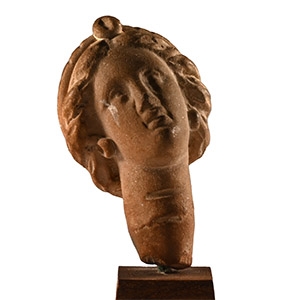
Greek Terracotta Head of a Goddess
4th-3rd century B.C.Sold for (Inc. bp): £390
With a delicately modelled face and full lips, hooped earrings visible from beneath her hair; the hair with central parting and pulled to a chignon at the nape of the neck; wearing a diadem with central embellishment; mounted on a custom-made display stand. 41.3 grams total, 75 mm high including stand
Ex French Sorbonne archaeology professor (deceased); 1960s -2000s.
These figurines were most probably manufactured in Hellenistic cities by craftsmen who used either light yellow or dark brown clay. After the firing, the surface of the clay became reddish, while the core became grey-brown. The majority of the figurines were made from untreated clay with many impurities, such as coarse grain. Due to the quality of the clay the surface of the figurines was often rugged, despite the retouch, but were painted with vivid colours. -
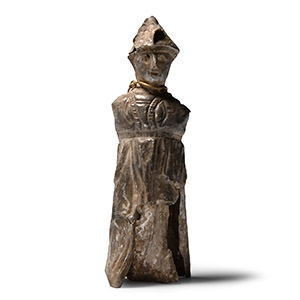
Graeco-Roman Silver Votive Figure of Pallas Athena
Circa 1st century B.C.Estimate: £400 - 600 (+bp*)
Opening Bid: £200
Sheet silver beaten over a former; Pallas Athena wearing a chiton gathered at the waist and a conical cap, a stylised aegis armour covering the chest; gold filigree torc at the neck; chiton repaired. 32 grams, 12.1 cm
Acquired on the UK art market before 2000. Property of a Surrey, UK, collector.
