
Loading, please wait...
LOT 1822
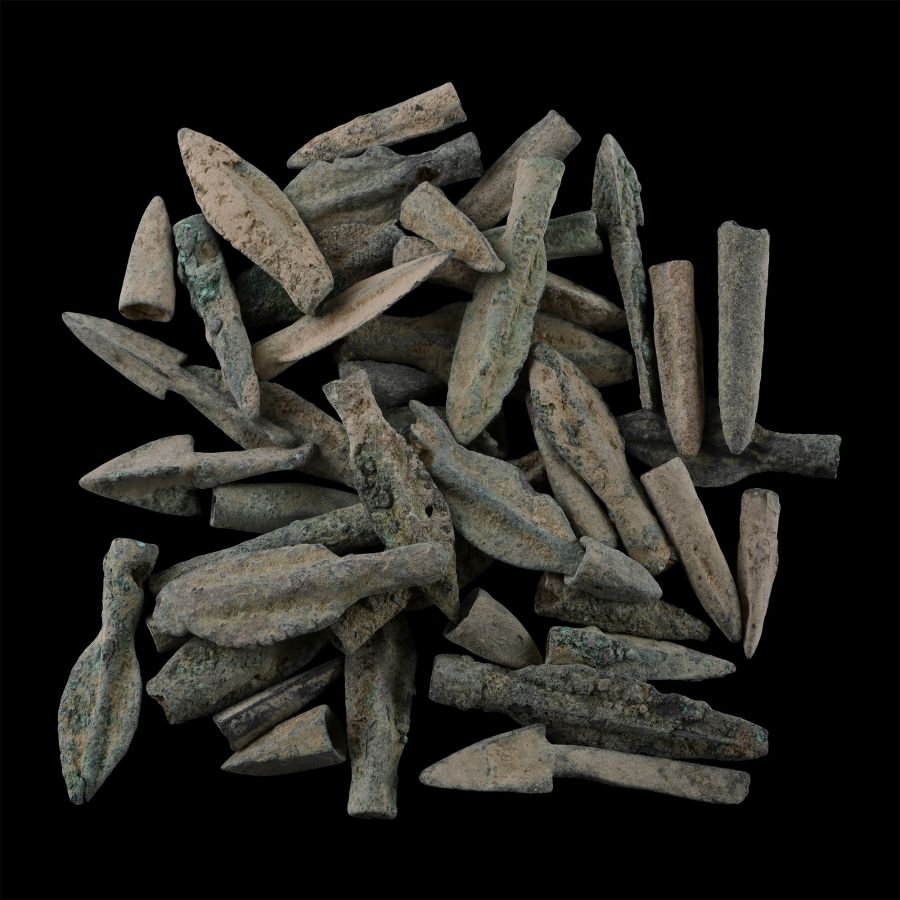
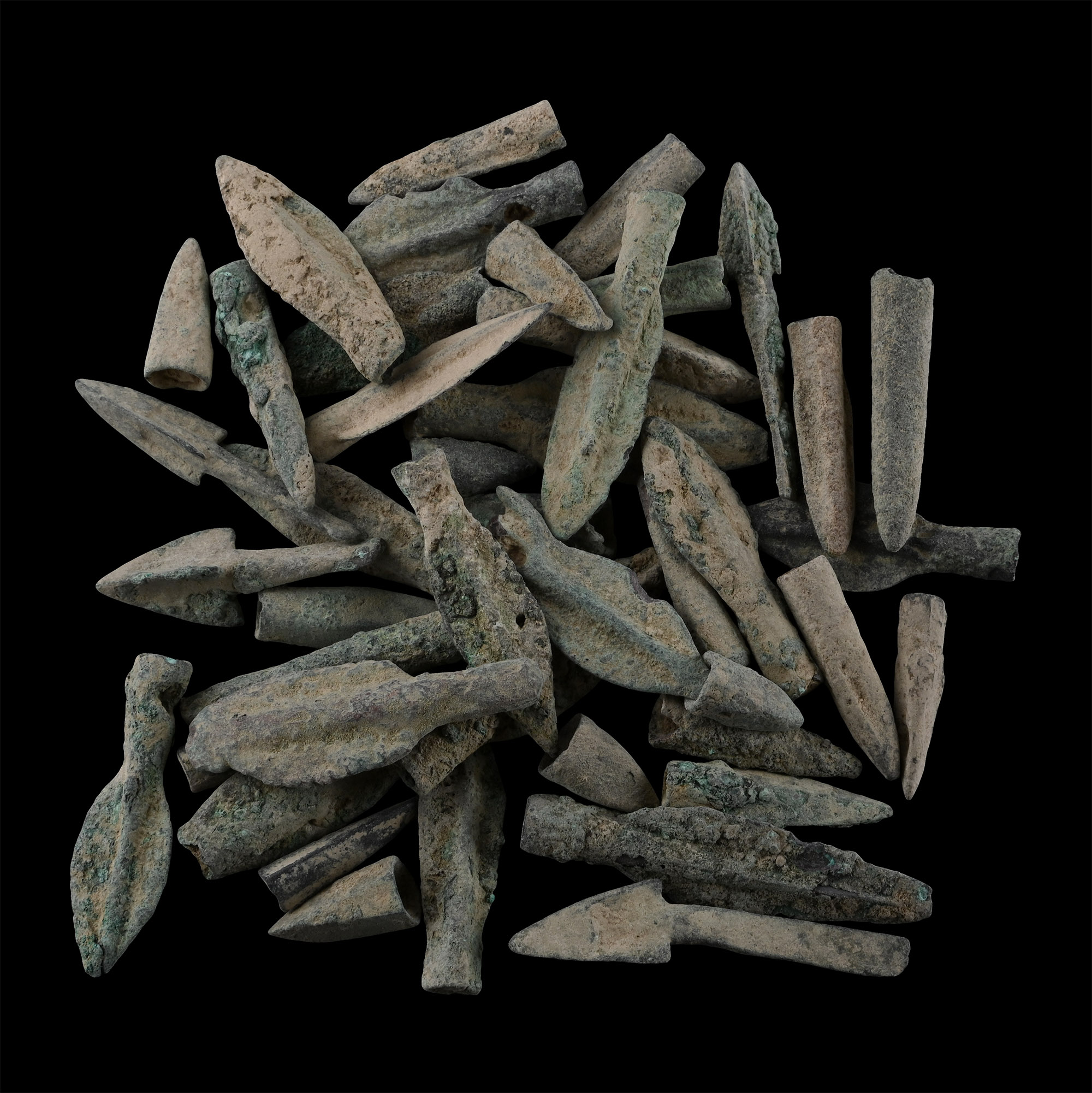
Greek and Scythian Bronze Arrowhead Collection
CIRCA 5TH-3RD CENTURY B.C.
5/8 - 2 in. (180 grams total, 16-52 mm).
A mixed group of socketted and tanged arrowheads.
ProvenanceLondon, UK, collection, 1990s.
LiteratureCf. similar Graeco-Persian arrowheads in Head, D., The Achaemenid Persian Army, Stockport, 1992, figs.13,16.
FootnotesIn ancient Greek warfare, archers were mainly employed by Scythians and Cretans. Both used composite bows made of wood, horn, bone and sinew. This explains the great range of Scythian arrowheads found on the Greek sites.
CONDITIONTimeLine Auctions follows a vetting process to ensure the authenticity and legality of all items, reinforcing our commitment to integrity and responsible trading. Each antiquity, antique, and coin lot undergoes thorough examination by a vetting committee of at least ten external specialists, professional trade association members, scientists, and archaeologists: Our Vetting Process
AUCTIONS:
TimeLine is a leading auction house specialising in antiquities, ancient art, collectables, natural history, coins, medals, and books. Our auctions offer museums, collectors, historians, and enthusiasts the opportunity to acquire unique and historically significant pieces.
-
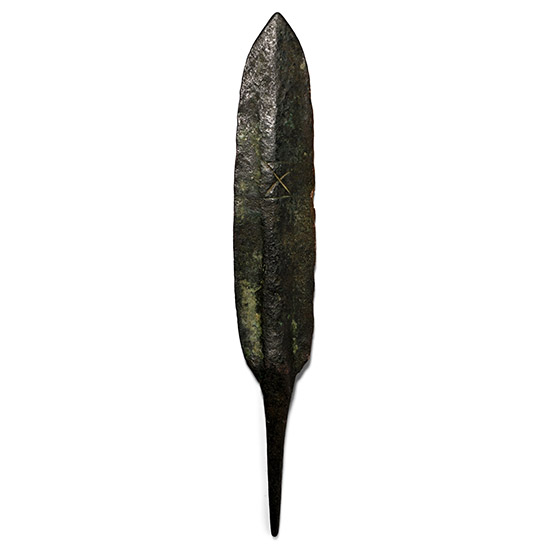
Western Asiatic Bronze Arrowhead or Javelin Head with Inscribed X
Late 2nd millennium B.C.Sold for (Inc. bp): £117
Leaf-shaped with two cutting edges and a broad point, low midrib, on the face an incised 'X' in a square. 15.17 grams, 11.34 cm
Ex Guttman collection, Germany. with Christie's, 28 April 2004, no.27 (part). Acquired from Bidancient and Artifacts UK, 2009. Ex important collection of Greek artefacts, London, UK.
The letter X has been found in various Semitic/Accadic or even Philistine Inscriptions in the Levant: dated between 13th-10th centuries B.C.: on the Lachish bowl no.1, on the Ruweiseh arrowhead, on a Byblian bronze spatula, on the Ahiram graffito, at Yehimilk. This suggests that the arrow or javelin head has been made in the Levant or the Fertile Crescent. -
.jpg)
Urartian Bronze Helmet with Embossed Decoration
9th-7th century B.C.Sold for (Inc. bp): £6,500
A Caucasian or Urartian helmet of domed profile, hammered from a single sheet of metal; radiating rows of small repoussé bosses with interstitial rows connecting larger examples; shallow recess at the forward edge; old accession label to inner face 'AG334'; later pseudo-inscription; some restoration. 1.5 kg total, 41 cm including stand
Ex Axel Guttmann Collection of Ancient Arms and Armour, Germany [1944-2001], AG 334, 1990. with Hermann Historica, Munich, Germany, 2008. Private collection, New York, USA. Accompanied by an academic report by Dr Raffaele D’Amato. This lot has been checked against the Interpol Database of stolen works of art and is accompanied by search certificate number no.13262-254403.
The Urartian craftsmen were especially famous for their metalworking skills. However, the shape of this helmet differs considerably from the usual pointed Urartian examples, and shows a strong influence from the Scythian and Moeotic military headgear, which is not surprising if we consider that Urartu had been at war with the Scythian tribes of Caucasus since the 7th century B.C. The remainder of the helmet is its bowl, embossed and decorated, and an unusual recess on the front part. The helmet was used with a padded cap, which probably formed an integral part of the same headgear. -
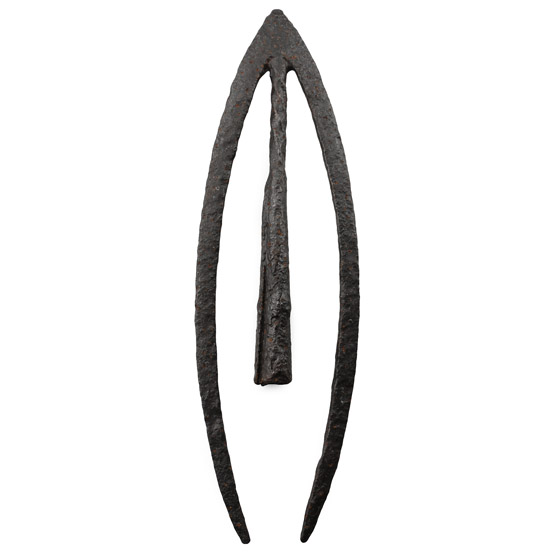
Very Large Medieval Socketted Iron Swallow-Tailed Arrowhead
Circa 13th-15th century A.D.Sold for (Inc. bp): £338
With elongated swept barbs flanking a butted socket. 29.3 grams, 14.5 cm
Acquired from a USA private collector in the 1990s. Ex Buckinghamshire, UK, collection.
