
Loading, please wait...
LOT 0582
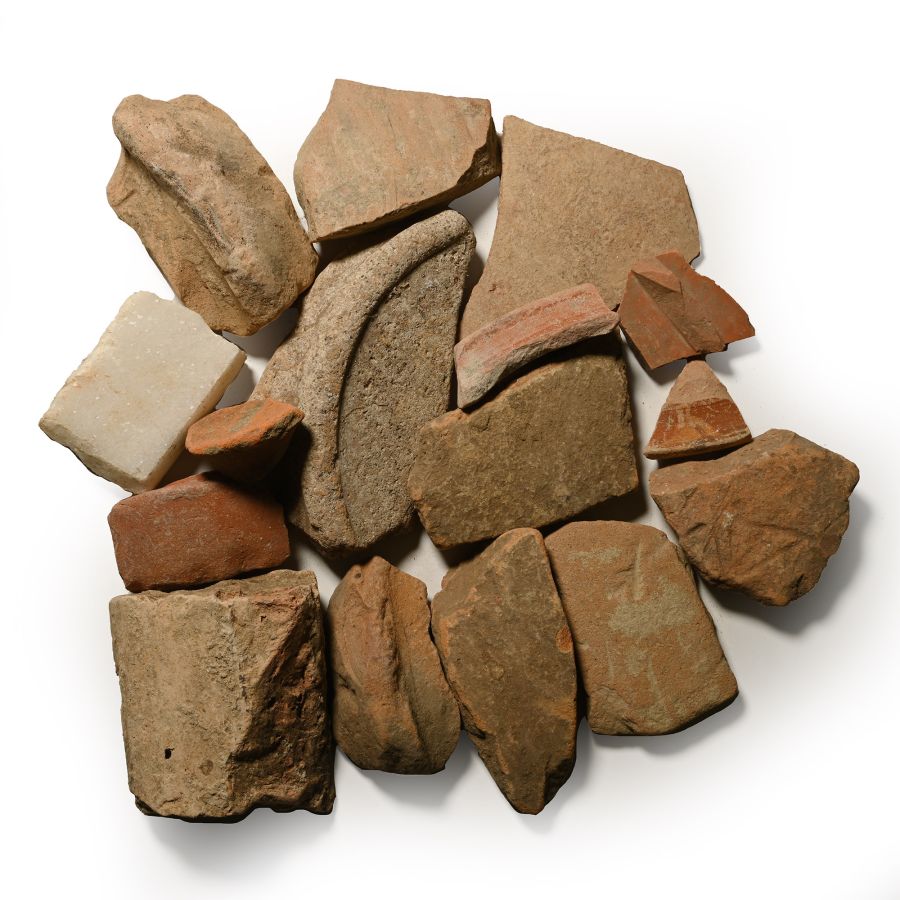
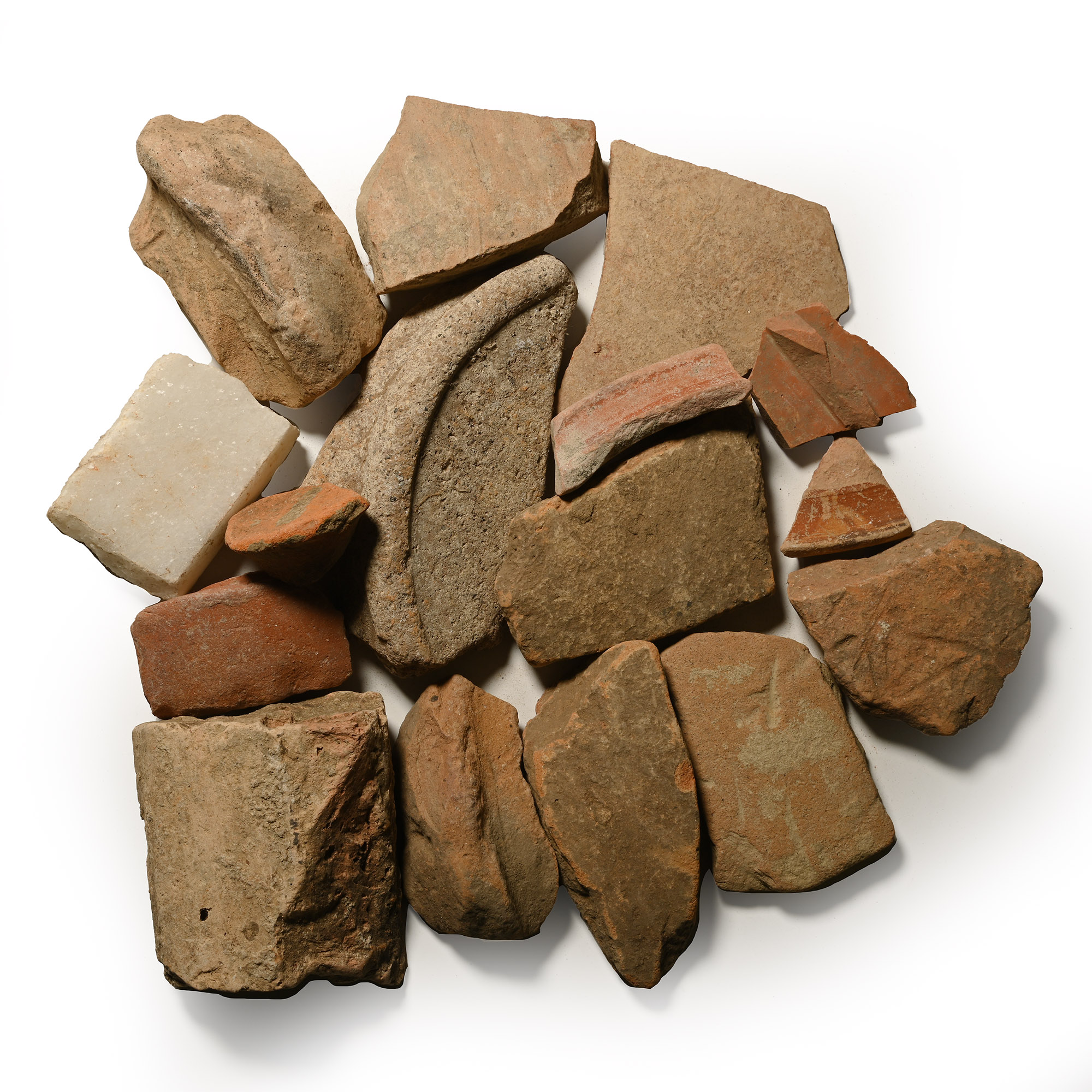
Greek and Roman Pottery Sherd Group
4TH CENTURY B.C.-4TH CENTURY A.D.
3/4 - 4 3/8 in. (868 grams total, 2-11.2 cm).
Including shards of bowl and other vessels, marble block and other items. [18, No Reserve]
ProvenanceAcquired from Brigantia Antiques, York, circa 2003.
Ian Wilkinson collection, Nottinghamshire, UK, formed since 1985.
This lot is accompanied by an illustrated lot declaration signed by the Head of the Antiquities Department, Dr Raffaele D’Amato.
TimeLine Auctions follows a vetting process to ensure the authenticity and legality of all items, reinforcing our commitment to integrity and responsible trading. Each antiquity, antique, and coin lot undergoes thorough examination by a vetting committee of at least ten external specialists, professional trade association members, scientists, and archaeologists: Our Vetting Process
AUCTIONS:
TimeLine is a leading auction house specialising in antiquities, ancient art, collectables, natural history, coins, medals, and books. Our auctions offer museums, collectors, historians, and enthusiasts the opportunity to acquire unique and historically significant pieces.
-
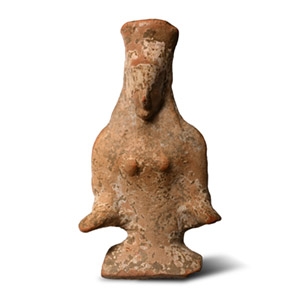
Greek Terracotta Antefix of a Goddess
Archaic, 6th-5th century B.C.Sold for (Inc. bp): £910
Mould-made figure of a female upper body with tall headdress and arms spread, hands palm-upwards; beneath, a C-section channel for attachment to a roof. 78 grams, 13.1 cm
Acquired in the mid 1980s-1990s. Private collection, Switzerland, thence by descent. Private collection, since the late 1990s. This lot is accompanied by an illustrated lot declaration signed by the Head of the Antiquities Department, Dr Raffaele D’Amato. -
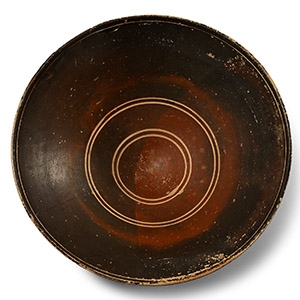
Greek Terracotta Deep Glazed Bowl
2nd-1st century B.C.Sold for (Inc. bp): £325
Broad conical vessel on a small flat base with interior and exterior glazed black; the inner face decorated with incised, reserved concentric circles and a partially-preserved rosette with a dotted frieze in added white; vertical fissure in the wall, two small fragments reattached to the rim; partially misfired, due to the way the vessels were stacked in the oven; supplied with a display stand. 335 grams, 21.5 cm wide
Property of a private collector. with Bonhams, London, 16 May 2002, no.551. Accompanied by a copy of an Art Loss Register certificate no.S00075157. Accompanied by copies of the relevant Bonhams catalogue pages. This lot is accompanied by an illustrated lot declaration signed by the Head of the Antiquities Department, Dr Raffaele D’Amato. -
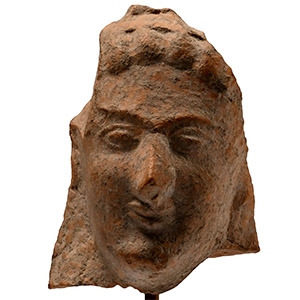
Greek Terracotta Female Protome
6th-5th century B.C.Estimate: £400 - 600 (‡+bp*)
Opening Bid: £180
Head of a girl with long hair and curls framing the forehead; elongated, oval face with almond-shaped eyes, slender nose and round chin; the lips forming an Archaic smile; mounted on a custom-made display stand. 33 grams total, 79 mm including stand
with Herbert A. Cahn, Basle, 1990s. Accompanied by a copy of an Art Loss Register certificate no.S00075470. This lot is accompanied by an illustrated lot declaration signed by the Head of the Antiquities Department, Dr Raffaele D’Amato.
Small mould-made heads were used for female divinities, sphinxes and sirens, or attached to pottery as plastic ornaments. The figure was wearing a polos, a small, drum-shaped headdress designating in this period a divinity.
