
Loading, please wait...
LOT 0512
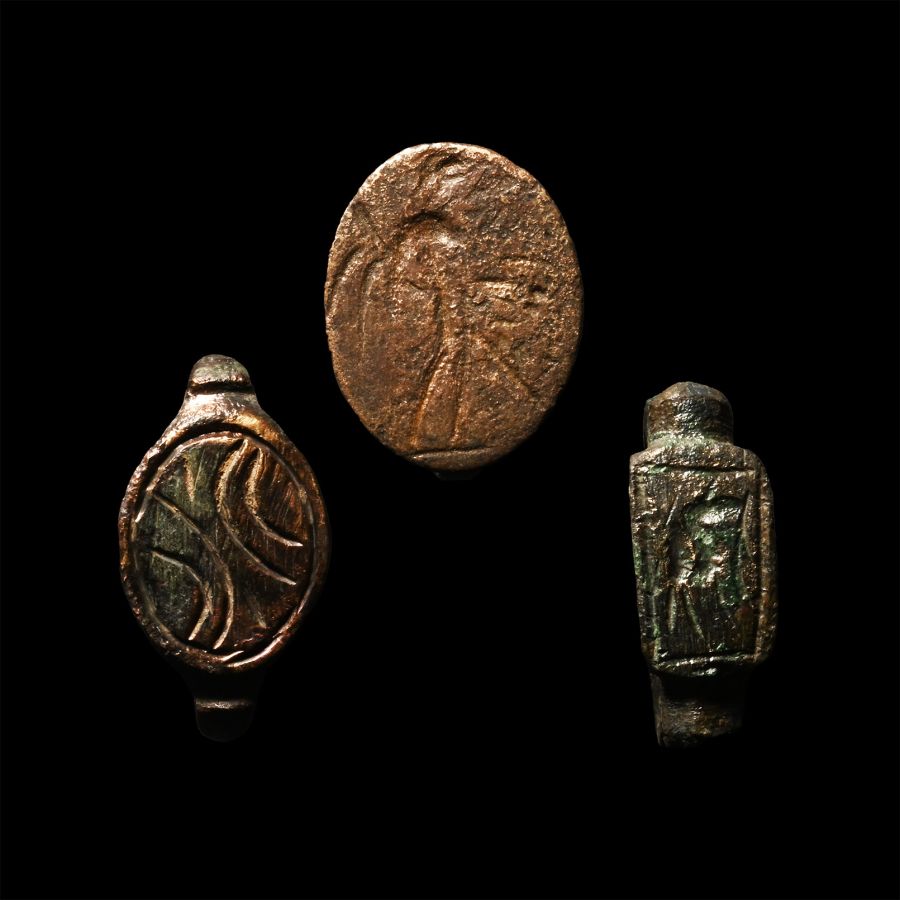
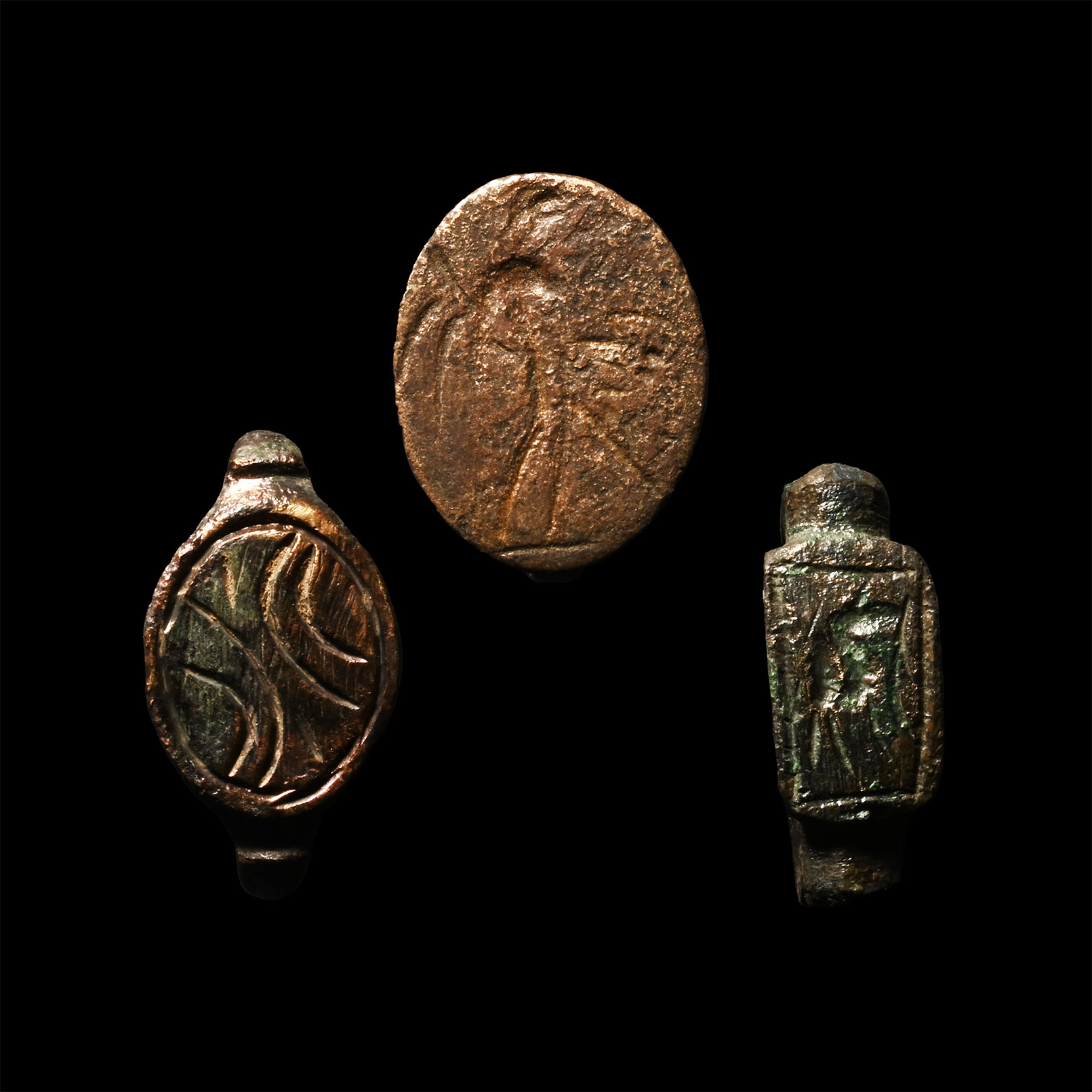
Greek and Roman Bronze Ring Group
CIRCA 2ND CENTURY B.C.-4TH CENTURY A.D.
7/8 - 1 in. (15.7 grams total, 23-27 mm).
Including one with rectangular bezel and incuse hare motif. [3, No Reserve]
ProvenanceEx old English collection.
London art market, pre 2000.
Property of a London, UK, gentleman.
TimeLine Auctions follows a vetting process to ensure the authenticity and legality of all items, reinforcing our commitment to integrity and responsible trading. Each antiquity, antique, and coin lot undergoes thorough examination by a vetting committee of at least ten external specialists, professional trade association members, scientists, and archaeologists: Our Vetting Process
AUCTIONS:
TimeLine is a leading auction house specialising in antiquities, ancient art, collectables, natural history, coins, medals, and books. Our auctions offer museums, collectors, historians, and enthusiasts the opportunity to acquire unique and historically significant pieces.
-
.jpg)
Nuragic Bronze Head of a Tribal Chief
Circa 8th century B.C.Sold for (Inc. bp): £520
The head covered by a small low-top cap; sharp and pronounced nose, prominent eyebrows, small swollen mouth; the hair divided into two braids; mounted on a custom-made display stand. 53 grams total, 91 mm including stand
Ex Frank Sternberg collection, Zürich, Switzerland, circa 1980-1985. Property of an East Sussex, UK, private collector.
Despite being stylised representations, these bronzes detail the material culture of warriors, tribal leaders, priests, athletes, men and women of the late Bronze Age and Iron Age Sardinian society. -
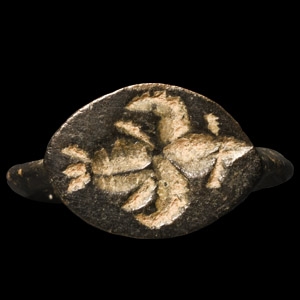
Hellenistic Bronze Ring with Flying Bird
Circa 4th-2nd century B.C.Sold for (Inc. bp): £52
With carinated hoop, scaphoid bezel, intaglio bird in flight. 4.71 grams, 24.38 mm overall, 18.80 mm internal diameter (approximate size British R 1/2, USA 8 3/4, Europe 19.38, Japan 18)
Ex old English collection. London art market, pre 2000. Property of a London, UK, gentleman. -
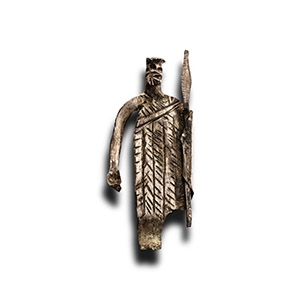
Phoenician Silver Votive Warrior Figure
6th-4th century B.C.Estimate: £400 - 600 (+bp*)
Opening Bid: £200
Sheet-silver figure with vertical banding to the cloak, one curled edge enfolding the shaft of a spear; old collector's label '4' to the reverse. 3.57 grams, 47 mm
Acquired in the late 1980s-early 1990s. Important North West London collection.
