
Loading, please wait...
LOT 1492
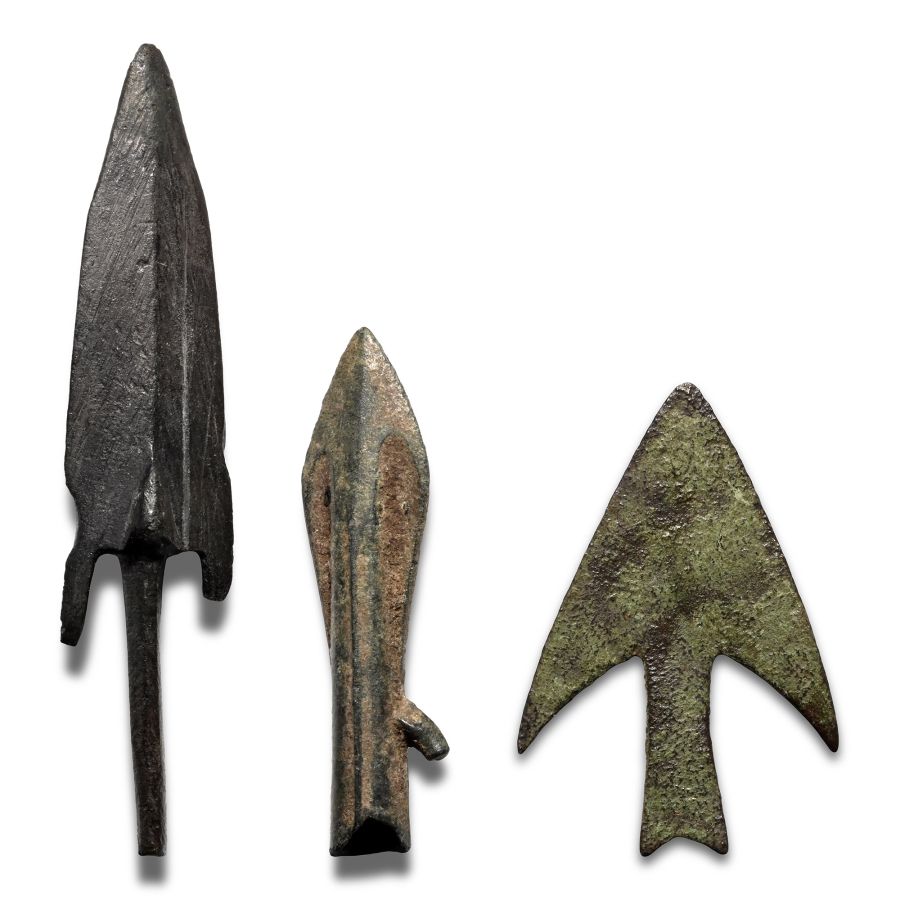
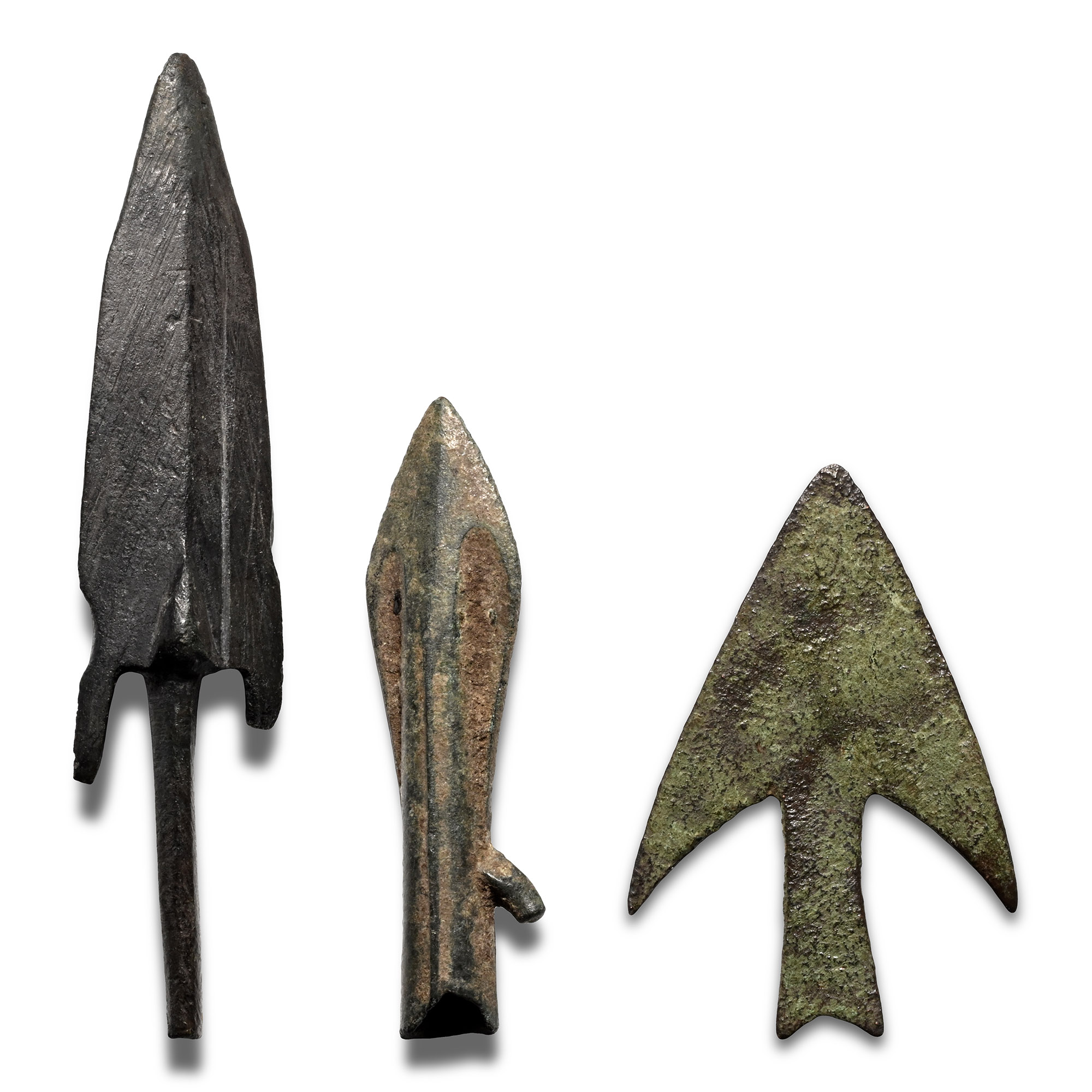
Greek and Other Bronze Arrowhead Group
4TH CENTURY B.C. AND LATER
11/2 - 2 5/8 in. (20 grams total, 39-67 mm).
Comprising three arrowheads, one socketted with a lateral spur, one barbed and tanged, and the third a flat-section barbed and tanged type. [3, No Reserve]
ProvenanceEx German art market, 2000s.
Acquired from an EU collector living in London.
From the collection of a Surrey, UK, gentleman.
Cf. for similar arrowheads Tsaravopoulos, A., ‘Evidence of war in a Pirates ’City of the Hellenistic Period (Island Antikythera/Aigilia Greece)’ in Sirbu, V., Schuster, C., Hortopan, D., Warriors and their weapons in Bronze and Iron Ages, Proceedings of the 21st International Colloquium of Funerary Archaeology 25th-28th May, 2023, Târgu Jiu, Gorj County (Romania), Braila, 2023, pp.301-320, figs.9-10.
CONDITIONTimeLine Auctions follows a vetting process to ensure the authenticity and legality of all items, reinforcing our commitment to integrity and responsible trading. Each antiquity, antique, and coin lot undergoes thorough examination by a vetting committee of at least ten external specialists, professional trade association members, scientists, and archaeologists: Our Vetting Process
AUCTIONS:
TimeLine is a leading auction house specialising in antiquities, ancient art, collectables, natural history, coins, medals, and books. Our auctions offer museums, collectors, historians, and enthusiasts the opportunity to acquire unique and historically significant pieces.
-
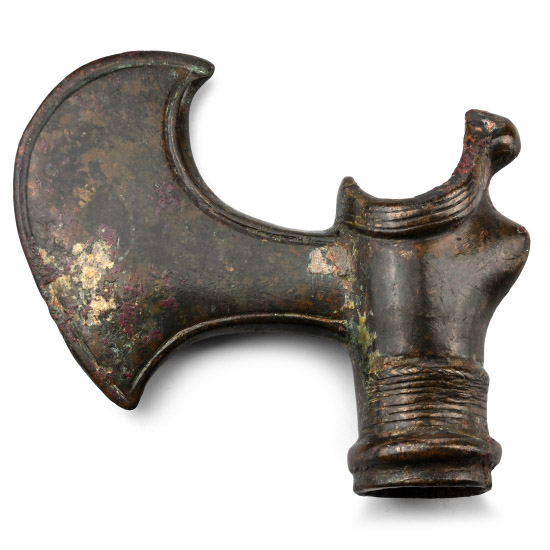
Luristan Bronze Socketted Axehead
Circa 2200-1600 B.C.Sold for (Inc. bp): £416
Curving blade and a tubular socket with decorative collars. 246 grams, 10 cm
From the collection of Martin Doyle, Leverstock, UK, 1980s-2000s. -
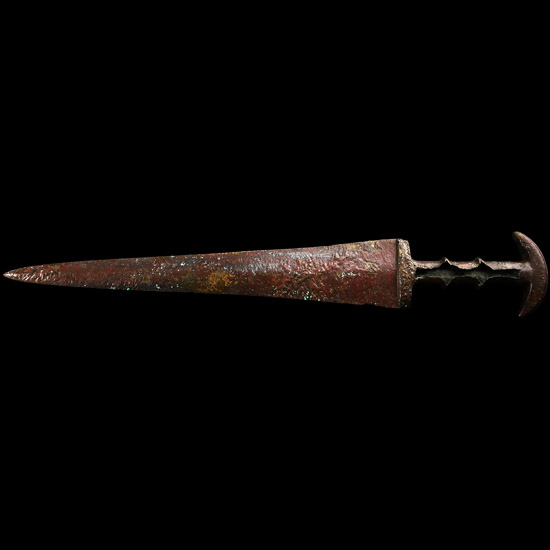
Luristan Bronze Short Sword with Crescent-Shaped Pommel
10th century B.C.Sold for (Inc. bp): £520
Comprising a triangular blade with integral ribbed handle and a crescentic pommel. 450 grams, 40 cm
Ex Abelita family collection, 1980s-2000s.
These kinds of bronze daggers or dirks, typical of Marlik culture, were cast in a one piece mould according to Negahban, although in some specimens the guard was later cast into the blade. The separate sets of encircling ribs on the grips are again typical of swords from the Marlik area. In our specimen the grip is opened on one side to receive organic filling. -
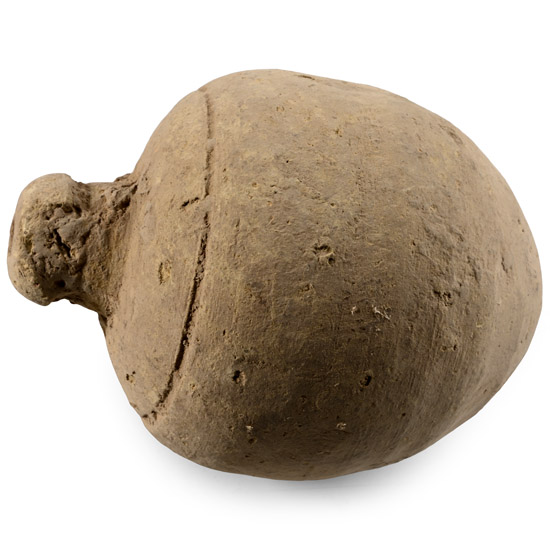
Byzantine 'Greek Fire' Ceramic Fire Bomb or Hand Grenade
9th-11th century A.D.Sold for (Inc. bp): £85
Ovoid body with pointed base and domed filler-hole, circumferential band above the shoulder; intended to be filled with explosive liquid and a wick, and used as a hand grenade. 380 grams, 11 cm
From an important specialist collection, London, UK, 1990s. Accompanied by an academic paper by military specialist Dr Raffaele D'Amato, dated 15 July 2019 and titled 'Eastern Roman Empire - Greek Fire Bomb or Hand Grenade (μεσαίον kακάβιον) 9th-11th century AD'.
Apart from the use of siphons or manual flame-throwers called cheirosiphona, special corps of Roman soldiers employed terracotta grenades, in the form of small jars, abundantly evidenced in archaeological excavations. They were called μεσαία kακαβιά or κυτροκακάβια, where the former had a bulbous shape and the latter a more cylindrical form.
