
Loading, please wait...
LOT 0615
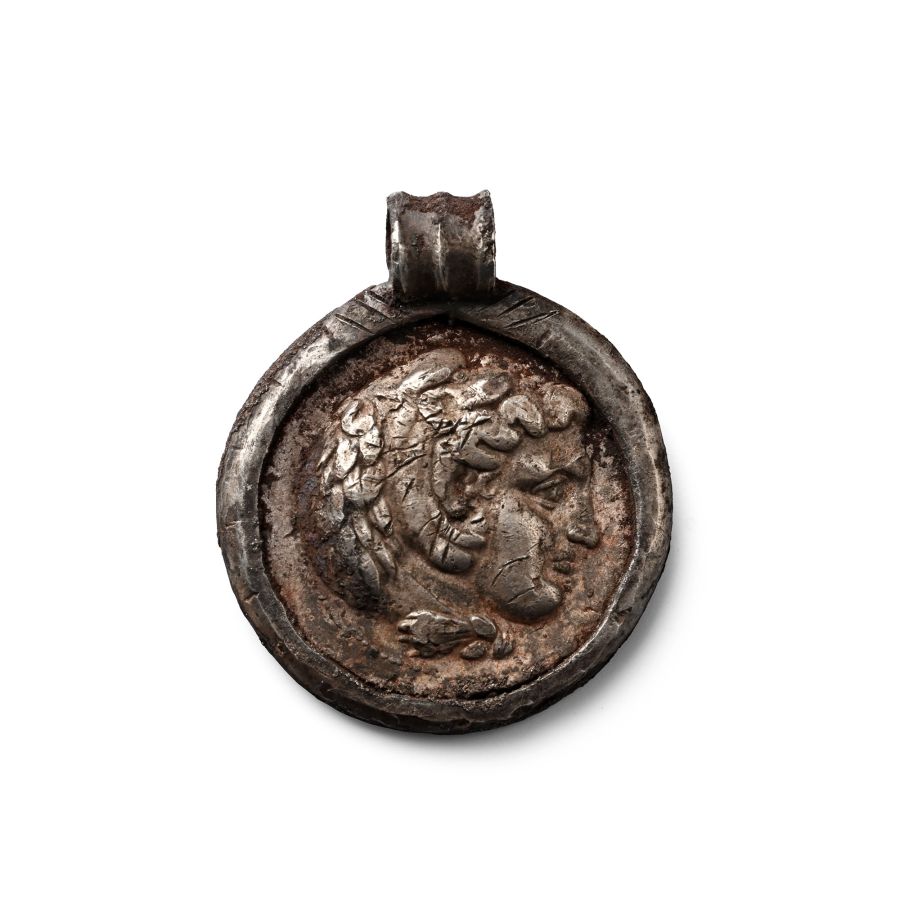
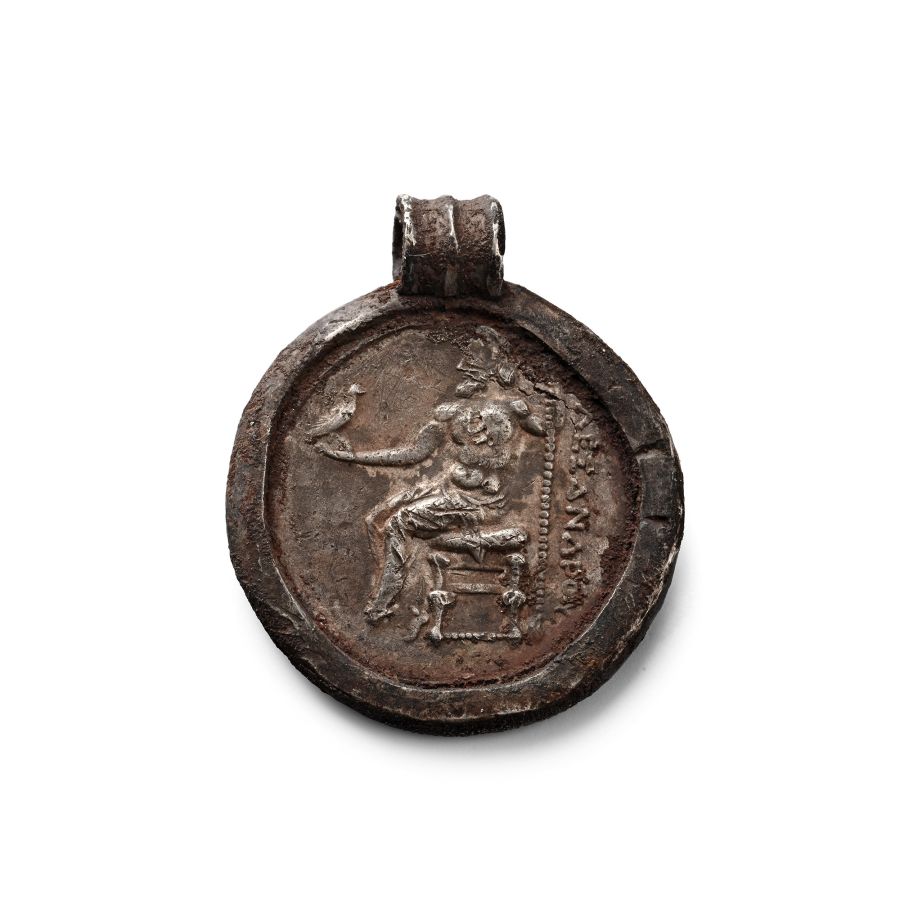
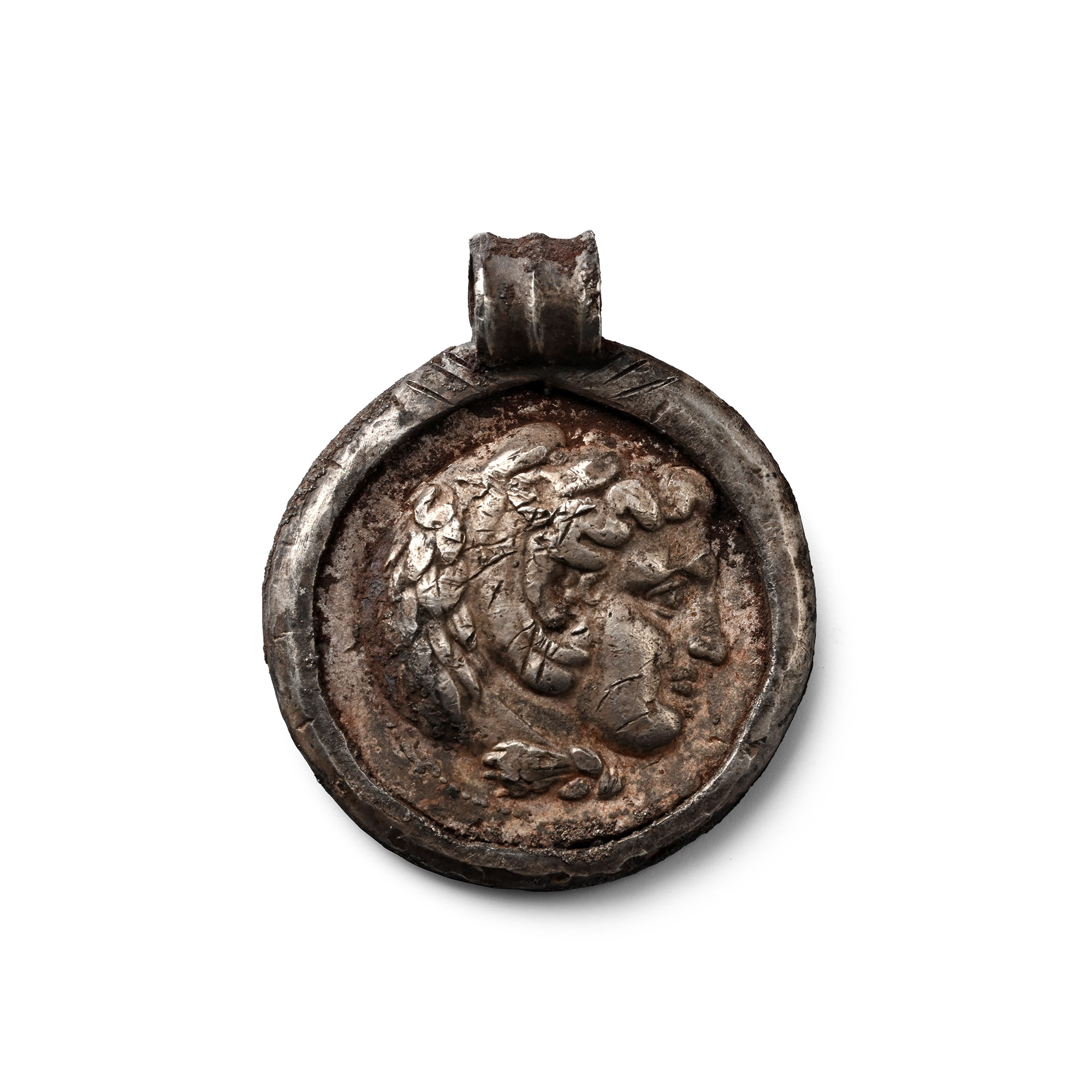
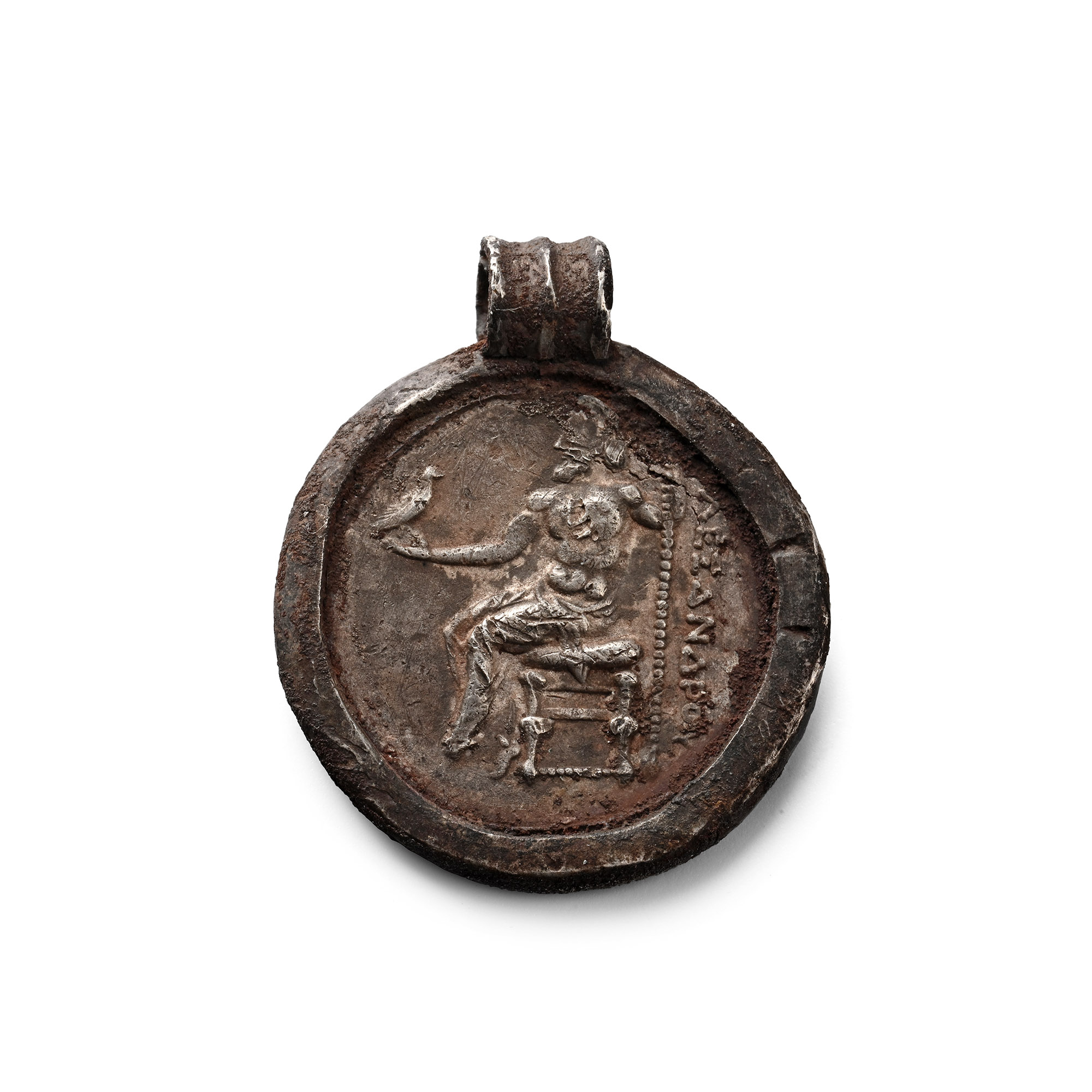
Greek Alexander the Great Tetradrachm in Silver Pendant
3RD-2ND CENTURY B.C.
1 3/8 in. (16.66 grams, 34 mm).
Coin encased in silver frame with ribbed suspension loop; bust of Alexander the Great to obverse, seated figure holding a bird to reverse with 'ΑΛΕΞΑΝΔΟΣ' legend.
ProvenanceEx German art market, 2000s.
Acquired from an EU collector living in London.
From the collection of a Surrey, UK, gentleman.
This lot is accompanied by an illustrated lot declaration signed by the Head of the Antiquities Department, Dr Raffaele D'Amato.
TimeLine Auctions follows a vetting process to ensure the authenticity and legality of all items, reinforcing our commitment to integrity and responsible trading. Each antiquity, antique, and coin lot undergoes thorough examination by a vetting committee of at least ten external specialists, professional trade association members, scientists, and archaeologists: Our Vetting Process
AUCTIONS:
TimeLine is a leading auction house specialising in antiquities, ancient art, collectables, natural history, coins, medals, and books. Our auctions offer museums, collectors, historians, and enthusiasts the opportunity to acquire unique and historically significant pieces.
LOT 0615
Greek Alexander the Great Tetradrachm in Silver Pendant
Sold for (Inc. bp): £442
-
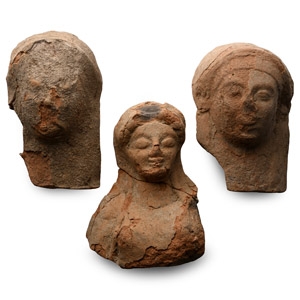
Greek Terracotta Female Protome Group
Early 5th century B.C.Sold for (Inc. bp): £156
Each tongue-shaped in plan and hollow to the reverse, female bust in high-relief with palla head-covering. 376 grams total, 10.5-11.5 cm
with H.A.C., Basel, prior 1999. This lot is accompanied by an illustrated lot declaration signed by the Head of the Antiquities Department, Dr Raffaele D'Amato. -
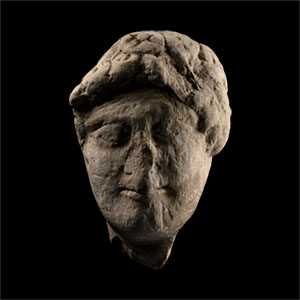
Greek Head of a Youth with a Floral Crown
Late Archaic, late 6th-early 5th century B.C.Sold for (Inc. bp): £975
Modelled in three-quarter view, limestone face of a youth with almond-shaped eyes with broad upper lids under a flat brow; eyeballs contoured by a fine outer groove and lips with the 'archaic' smile; rosette wreath over spiral-shaped, voluminous curls framing the forehead; the surface abraded and some curls lost; reverse trimmed and smoothed at an angle; mounted on a custom-made display stand. 958 grams total, 24.6 cm including stand
Jean-Louis Debauve (1926-2016). with Jean Renaud Geoffroy & Yves Becquet Auction, Paris, 16 November 2018, no.225. This lot is accompanied by an illustrated lot declaration signed by the Head of the Antiquities Department, Dr Raffaele D’Amato. This lot is accompanied by an illustrated lot declaration signed by the Head of the Antiquities Department, Dr Raffaele D'Amato.
The head probably originally belonged to one of the votive statuettes, mostly hewn from limestone, which are frequently documented for the Cypriot region at this period. -
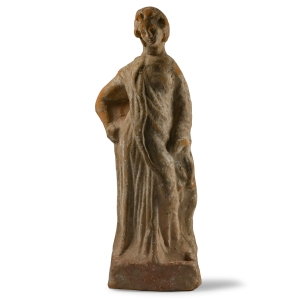
Hellenistic Terracotta Statuette of a Wreathed Young Woman
Late 4th-3rd century B.C.Sold for (Inc. bp): £286
Standing on a rectangular base, hair divided in regular stripes with voluminous locks, head slightly bowed, the bare arm resting on her right hip; the left leg is visible under the pleated undergarment chiton and slanted himation. 257 grams, 17.5 cm
Traces of white engobe and polychromy in the folds of the robe and on the base. The added chignon lost, otherwise intact.
Ex Belgian art market, 2020. This lot is accompanied by an illustrated lot declaration signed by the Head of the Antiquities Department, Dr Raffaele D’Amato. This lot is accompanied by an illustrated lot declaration signed by the Head of the Antiquities Department, Dr Raffaele D'Amato.
The statuette finds comparisons among examples that can be dated between the 4th century and the middle of the 3rd century B.C. It shows some traces of the original polychromy, characterised by strongly contrasting hues, keeping in with the local style.
